What to read: Rwanda genocide, disappearing body, Netherlands adventures & refugee experience
Realnoe Vremya has selected seven striking books for teenagers by contemporary Russian-language authors
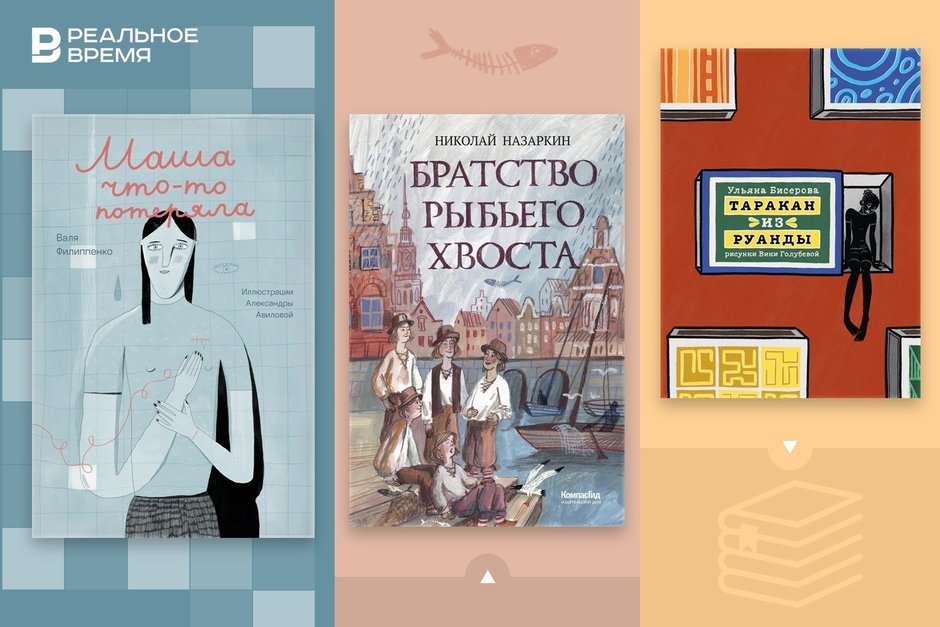
Parents often offer their children books that they themselves loved in their own childhood. Today, these works have become classics. But contemporary Russian-language authors offer today's teenagers books that are no less interesting, and sometimes even more important. They speak not only about lofty categories — family, love, friendship — but also weave into the narrative themes that concern teenagers here and now. These are the problems of bullying, identity, and the search for one's own place in a rapidly changing world. The literary critic of Realnoe Vremya, Ekaterina Petrova, has selected seven striking books by contemporary authors that speak to teenagers in their own language.
Nikolai Nazarkin. “Brotherhood of the Fishtail”, CompassGuide (12+)
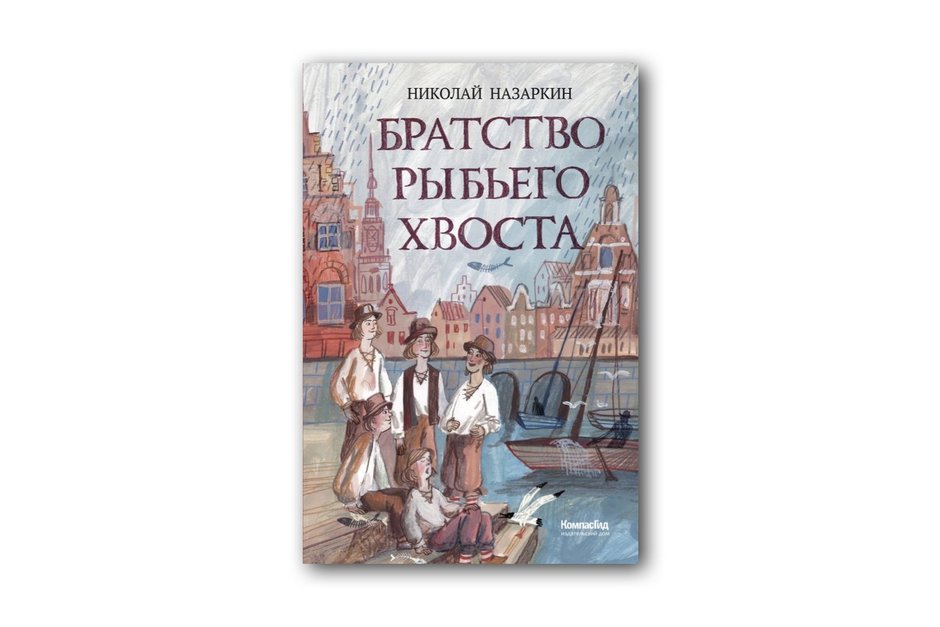
Nikolai Nazarkin's “Brotherhood of the Fishtail” transports the reader to the Netherlands of the 17th century. The main character, Jantje, is eleven years old. After his father's death, his mother sends him from his native village to a port city to learn a trade. Along with his father's cap, the boy also receives a new status: he is now an apprentice in a rope-making workshop, where he has to work at a heavy machine from morning until evening. An unfamiliar city, strict rules, hard labor, and the need to make his own decisions force him to say goodbye to his childhood. But along with the trials, friends appear in Jantje's life — the same boys from poor families who have united in the “Brotherhood of the Fishtail.” Their friendship saves him when the hero faces betrayal and a dangerous criminal story.
In terms of genre, this is simultaneously a historical novella, an adventure novel, and a coming-of-age story. The book has investigation, conflicts, chases, and a detective intrigue, but the main thing here is observing how Jantje changes. He is not an ideal hero: he can be naive, touchy, envious, prone to reckless actions. Gradually, the boy learns to take responsibility for his decisions, understand people, and appreciate the value of trust.
Nikolai Nazarkin lived in the Netherlands for more than twenty years and worked in a historical museum. The author shows in detail the everyday life of a 17th-century Dutch city: the structure of craft workshops, the operation of guilds, the life of poor families, traditions, food, clothing, and even the peculiarities of urban speech. Interestingly, the focus of the book is not on the merchants and navigators usually associated with the Dutch Golden Age, but on children from poor families forced to start working early. “Brotherhood of the Fishtail” resembles classic novels about the musketeers: here, too, the principle “all for one and one for all” applies, but instead of nobles and virtuosos of the sword — workshop apprentices, journeymen, and a boy from the “guild” of beggars.
Maria Aksenova. “Child of the Forest”, MIF (16+)
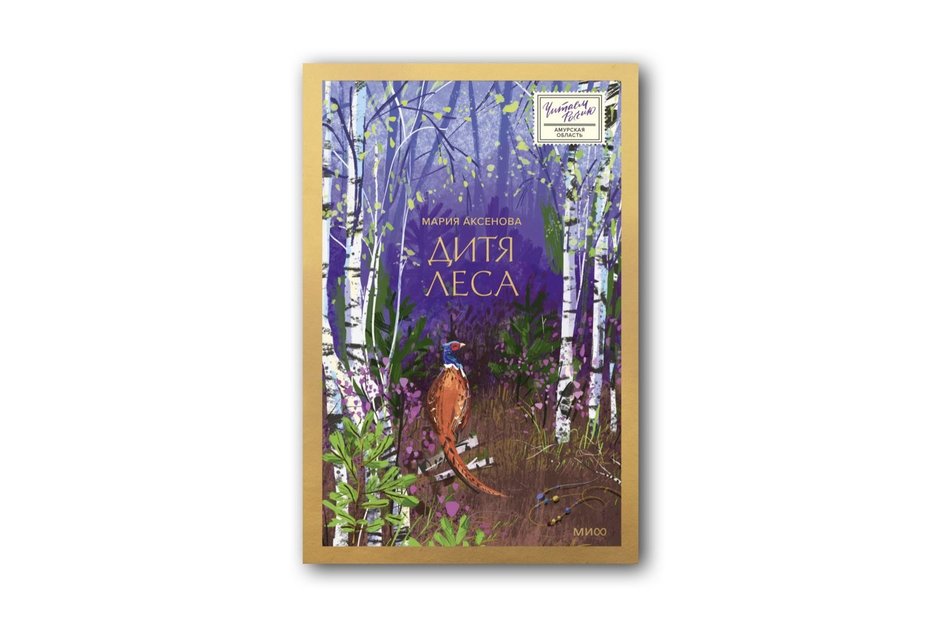
Maria Aksenova's novel “Child of the Forest” is adolescent socio-psychological prose about childhood, loneliness, and the search for support in a world that is not always ready to support a child. The main character, Masha, grows up in a small village in the Amur region. She never knew her parents: her mother left her right after birth, and her father is also absent. The girl is raised by her grandmother and grandfather. The grandmother is harsh and busy constantly struggling to survive; her grandfather, a hunter, is rarely home, but he is the one who instills in his granddaughter a love of nature and introduces her to books about Native Americans. These books become a way for Masha to cope with loneliness, poverty, and the feeling of being unwanted.
Before school, the girl dreams that life will change for the better. However, reality turns out differently. In class, she faces ridicule and bullying; at home, she faces the emotional coldness of adults. Gradually, her imagination becomes the only safe space. In the invented world of the Cherokee Indians, Masha turns into the Daughter of the Sun and a heroine of her own tribe, capable of influencing the fate of those around her. This parallel world is an important part of the narrative. It shows the inner life of a child trying to cope with circumstances beyond his control. And, despite the complexity of the themes raised in the book, the novel is incredibly bright and kind, reminiscent in mood of Tove Jansson's “Summer Book.”
“Child of the Forest” is the debut novel of Maria Aksenova, a writer and poet who grew up in the Amur region. The book is largely based on the author's personal experience: Aksenova herself called the novel partially autobiographical and said that it was based on memories of childhood, people she knew, and her own experiences. The story began with a short text about her great-grandfather's house, which over time grew into a full-fledged novel. “Child of the Forest” won the second literary residency of MIF and ASPIR, made it onto the long-list of the “Lyceum” award, and was nominated for the “Yasnaya Polyana” award.
Maria Pasternak. “Khravn's Gold”, Pink Giraffe (12+)
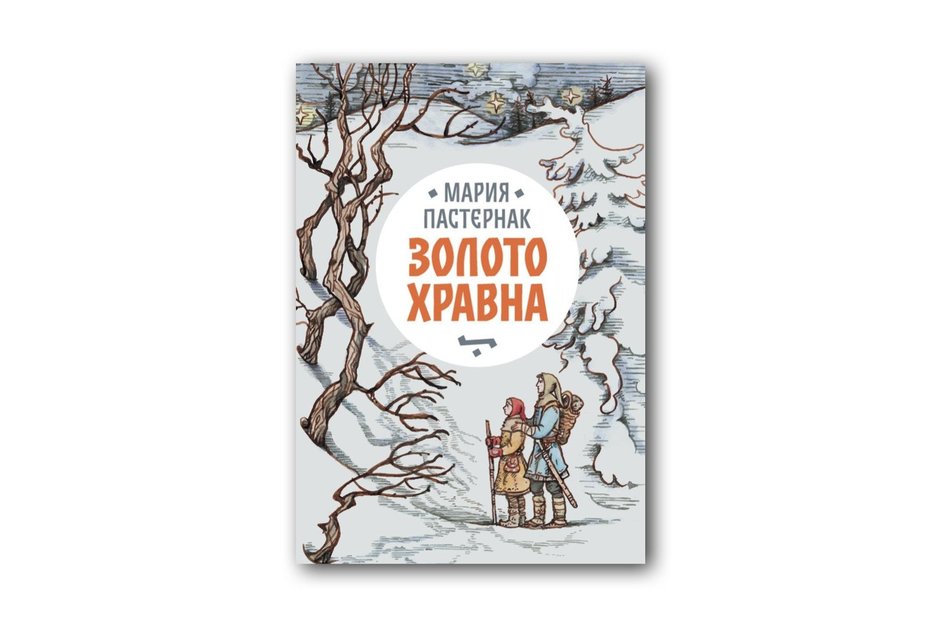
What is more important — the gold left by a legendary Viking, or the people willing to risk everything for it? This question is answered by Maria Pasternak's novel “Khravn's Gold” — a historical adventure book for teenagers in which a detective search for treasure is mixed with a coming-of-age story, a journey through medieval Norway, and reflections on the choice between greed, honor, and loyalty. The action takes place in the 13th century. Seventeen-year-old Vilhelmina lives with her father, a wealthy merchant named Sturla, on a small island. Their quiet life collapses when Sturla disappears without a trace. At the same time, people appear who are convinced that the family keeps the secret of the legendary gold of Khravn the Mad — a Viking who supposedly brought countless treasures back from his campaigns. Together with her friend Torleiv, Vilhelmina sets off to find her father. Ahead of them lie a long journey through snow-covered forests and fjords, encounters with robbers, ancient legends, wolf tracks in the snow, and mysteries connected to the family's past.
Pasternak meticulously recreates the daily life of medieval Norway: laws, clothing, weapons, household management, and relationships between people. Historical details help to feel the era in which Christian beliefs, ancient Scandinavian beliefs, tales of witches, trolls, and werewolves coexist side by side.
Interestingly, Maria Pasternak not only wrote the novel but also illustrated it herself. By profession, she is an artist — a book graphic designer — and the work on the book grew out of a long-standing interest in the history and culture of Scandinavia. The edition includes the author's own illustrations, maps, and a kind of visual encyclopedia of medieval Norway that explains the structure of houses, ships, clothing, and weapons.
Valya Filipenko. “Masha Lost Something”, Polyandria (16+)
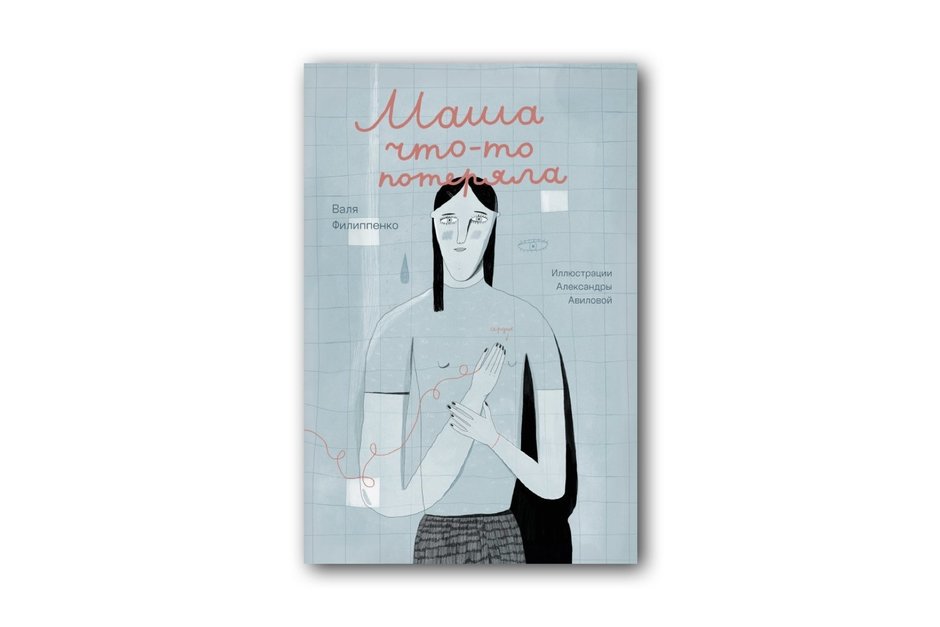
How literally can a teenager lose themselves? In Valya Filipenko's book, this question is part of the plot. Here, teenagers' body parts really disappear: someone loses an ear, someone loses their hair, and thirteen-year-old Masha one day loses something much more important. “Masha Lost Something” is a teenage novella written in the form of a personal diary. At first glance, this is a story with a fantastic premise, but at the center of the book are very real experiences: parental divorce, first love, anxiety, self-doubt, relationships with friends, and an attempt to understand what is happening to one's own body and feelings. Masha tries to figure out why a void has appeared inside her and whether what was lost can be regained.
The plot revolves around the heroine's gradual coming of age. She observes herself and those around her, records changes, makes mistakes, feels jealous, goes through awkward situations, and faces experiences familiar to many teenagers. At the same time, the disappearing body parts are a way to show Masha's internal state. The loss of hands, voice, heart, or other “parts” becomes a language through which the book speaks about anxiety, confusion, loss of contact with oneself, and attempts to restore that contact.
Interestingly, the story began with a single image. According to Valya Filipenko, she imagined a girl without hands standing on a pedestal in an art school. This image gradually turned first into a short synopsis, and then into a full-fledged novella-diary. Many of the heroine's experiences are connected to the author's personal experience: Filipenko has said that she herself was an anxious teenager, had a hard time with her parents' divorce, and vividly remembers the constant attention to her own body and the fear of getting sick.
Valya Filipenko came to literature from journalism and today remains one of the notable authors of contemporary children's prose. Her books are published by leading Russian children's publishers, and her debut novella “Dad is Looking for a Job” was translated into Chinese. In “Masha," this experience of working with real stories is felt especially well: despite the fantastic premise, the book remains a conversation about things that can never be fully outgrown — the fear of being rejected, the desire to be understood, and the search for inner support.
Nina Dashevskaya. “The Non-Existent Pier”, Samokat (12+)
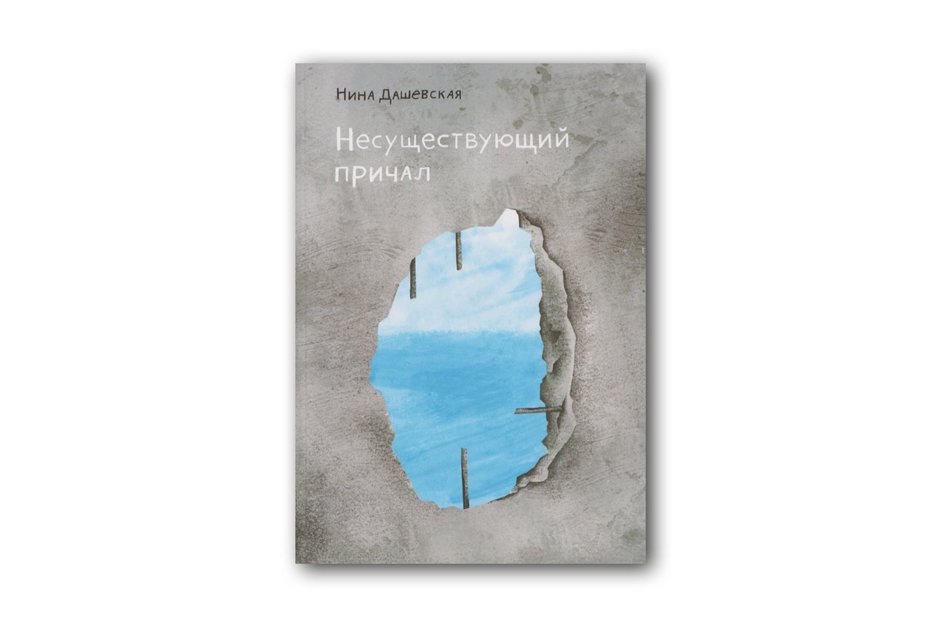
For teenagers who have grown up in a world of total control, the most dangerous act is the desire to know the truth. This is the basis of Nina Dashevskaya's dystopian novella “The Non-Existent Pier.” The action takes place in a future where two warring countries have agreed to protect children from conflicts. For this purpose, Protection Bases were created — huge closed territories where children are taken from their families at an early age and where they live until adulthood. Here there are modern technologies, a well-thought-out education system, and clear rules. But there is also a prohibition: you cannot go beyond the concrete walls separating the base from the outside world. The main character, Kirill, grew up on one such base and is used to living by the established rules. Everything changes when he meets the curious and independent Pascale. Together, they decide to venture outside the protected territory. Beyond the wall, they find not only a world about which there are dozens of contradictory legends, but also many questions that adults do not want to answer. After this journey, Kirill becomes a violator of the order and an object of public pressure. And his younger sister Dasha begins her own investigation, trying to understand who is really telling the truth — the children or the adults.
The plot develops as an adventure story with elements of dystopia and a road story. The heroes explore an unknown space, face the consequences of their own decisions, and gradually realize that growing up begins where ready-made answers end. One of the main images of the book is the mysterious “non-existent pier," which is spoken of as a legend on the base. The search for it becomes a way for the teenagers to go beyond the imposed picture of the world. The novella raises questions rarely discussed directly in adolescent literature: can a person be protected by completely depriving them of freedom, where is the line between care and control, and are children capable of making independent decisions?
For Nina Dashevskaya, this novel was an unusual experience. The writer is known primarily for her realistic teenage books, in which music, mathematics, and everyday life play an important role. A graduate of the Moscow Conservatory and a professional violinist, Dashevskaya usually explores the inner world of a teenager through familiar reality. In “The Non-Existent Pier," she transfers the same questions about the search for self and the right to one's own choice into the space of dystopia.
Saniya Bikkina. “Displaced Persons”, Belaya Vorona (12+)

“Displaced Persons” is a teenage novella and at the same time a coming-of-age novel. Its heroine, fourteen-year-old Adelia (or Delya), lives with her father in a refugee camp. They left their home because of the war and are now trying to adapt to a new reality: a foreign country, a new school, an unfamiliar language, and rules of life dictated by other people. The girl is irritated by almost everything around her — classmates, adults, the constant need to adapt to circumstances. But gradually she begins to notice that every person around her is experiencing their own loss and fighting their own battle.
The plot's inciting incident is a school project that Delya initially perceives as yet another meaningless obligation. While working on a documentary film and communicating with other teenagers and neighbors in the camp, she begins to see those around her and herself differently. The story develops not around loud events, but around the process of adaptation, the restoration of trust, and the search for an answer to the question of what home is if the former home is lost.
The book's uniqueness is largely connected to the author's professional experience. Saniya Bikkina is a practicing psychologist who worked in a refugee camp for a year and a half. This experience formed the basis of the novella, although the story itself is entirely fictional. Bikkina deliberately does not name either the country the heroes left or the place where they ended up. Thanks to this, the book transcends any specific conflict and speaks about the universal experience of people forced to leave their homes. The manuscript of “Displaced Persons” made the short-list of the “Belaya Vorona” literary competition, and the book itself received the “Yasnaya Polyana” award in the “Youth” nomination in 2025.
Ulyana Biserova. “The Cockroach from Rwanda”, Abrikobuks (12+)

The main character of Ulyana Biserova's historical novella “The Cockroach from Rwanda” is twelve-year-old Olivia Karemera. She once lived in the city of Gitarama in Rwanda with her parents and older brother. But in 1994, her life split into “before” and “after.” Against the backdrop of the genocide of the Tutsi, her family dies; the girl herself miraculously survives and ends up in Canada through the Red Cross. Now her world is a boarding school, a foreign country, loneliness, and memories that she tries to organize in her diary. Several years later, a new female pupil from Rwanda appears at the boarding school. At their first meeting, she calls Olivia “inyezi” — “cockroach.” That is exactly what Hutu radicals called representatives of the Tutsi people during the genocide. It turns out that it's impossible to escape the past even to another continent. The heroine will have to re-understand not only her family's history but also her own identity.
Here, a large-scale historical catastrophe is shown through the eyes of a child. Olivia does not understand the political causes of the conflict and does not discuss geopolitics. She tries to come to terms with the loss of loved ones, to survive feelings of guilt, to cope with loneliness and bullying. The book speaks not only about Rwanda but also about themes understandable to teenagers in any country: memory, family, friendship, human dignity, and the ability to go on living after severe upheavals.
Ulyana Biserova is a writer and journalist who worked in business media for many years. The idea for the book came after she stumbled upon materials about “Radio Télévision Libre des Mille Collines," which incited ethnic hatred before the genocide. Working on the text required serious research: the author studied historical sources, eyewitness memoirs, and materials on the culture and traditions of Rwanda. It is no coincidence that the book turned out to be rich in details of African daily life: from proverbs and mythology to local words and customs. “The Cockroach from Rwanda” was among the winners of the literary competition “The Short List, or Salamander” at the manuscript stage. For Biserova herself, this novella became her first historical book.
Ekaterina Petrova — literary critic for the online newspaper Realnoe Vremya, host of the Telegram channel «Булочки с маком».