The First Russian Vampire: How Alexei Tolstoy's “The Vampire” Opened Russian Gothic
185 years ago, a novella was published that began Russian horror literature
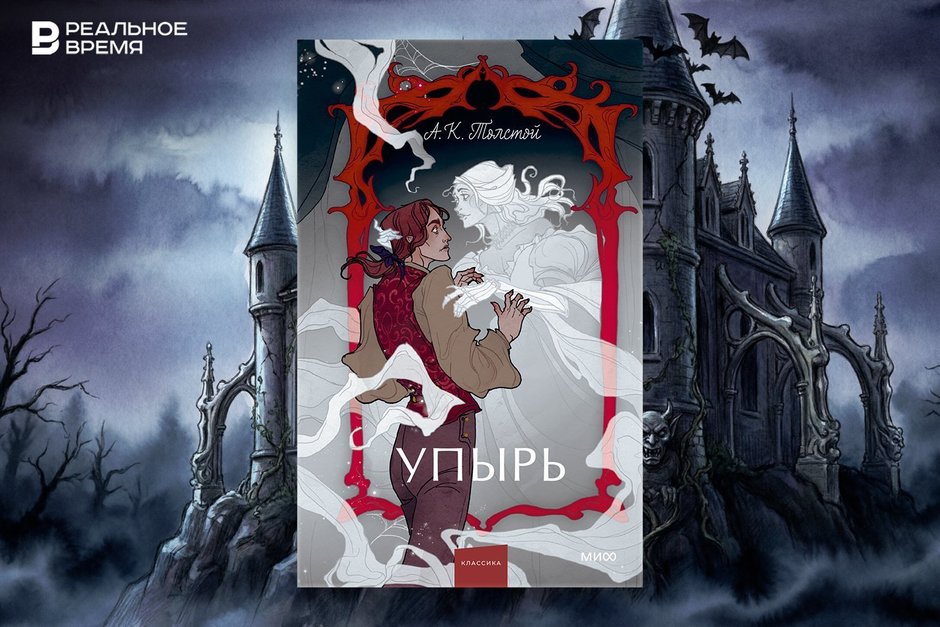
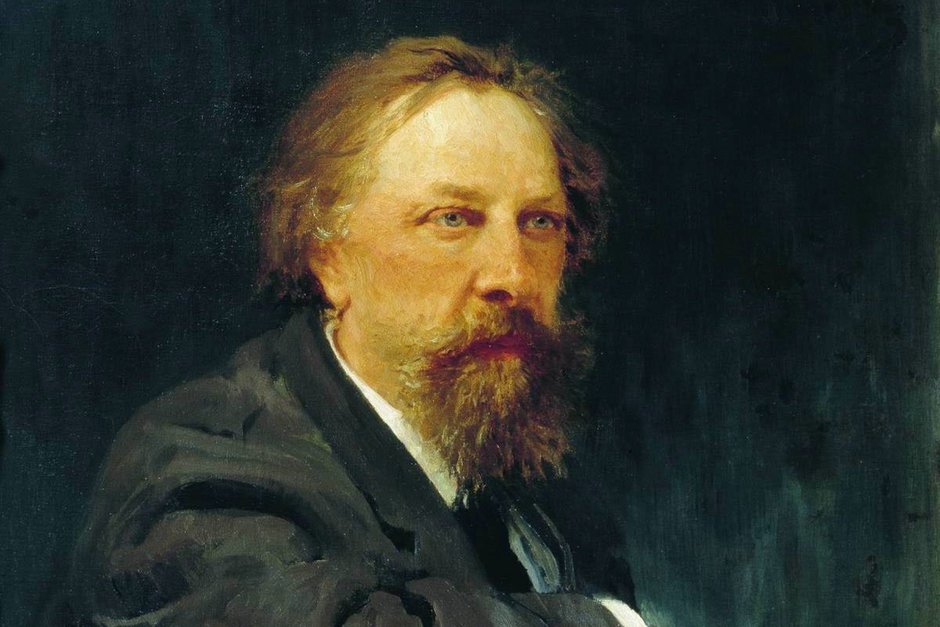
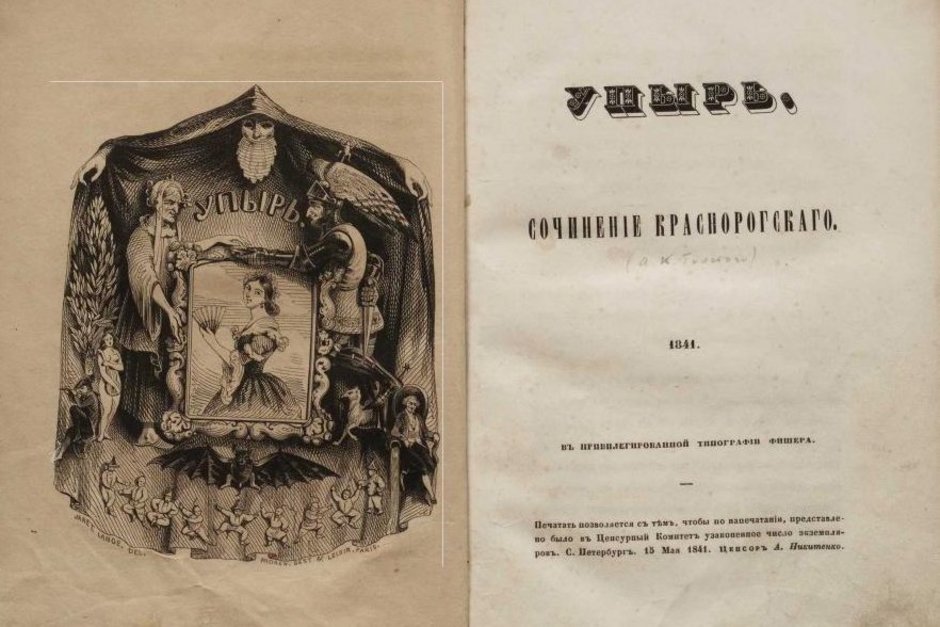
In May 1841, Alexei Konstantinovich Tolstoy published “The Vampire” under the pseudonym Krasnorogsky. A month before publication, the writer read the manuscript at Vladimir Sollogub's salon. Among the listeners were Vasily Zhukovsky and Vladimir Odoevsky, and in roughly the same circle, Mikhail Lermontov was reading his mystical “Shtoss.” “The Vampire” became Tolstoy's first published book; he would later write “Prince Serebrenny," historical dramas, and the satire of Kozma Prutkov. Ekaterina Petrova, literary critic for Realnoe Vremya, tells the story of how Russian vampire prose began.
Vampires and the fear of the unknown
Alexei Tolstoy's novella “The Vampire” was immediately noticed by critics. Vissarion Belinsky called the author a man of “decided talent” and wrote that the book “can saturate any young imagination with the charm of the terrible.” The critic noted the “power of fantasy," “masterful exposition," and “beautiful language” of the author, although he considered Tolstoy's fantasy more external than philosophical. Almost half a century later, the thinker Vladimir Solovyov saw a different quality in the text. In the preface to the novella, republished in 1890, he called the work “an astonishingly complex fantastic pattern on the canvas of ordinary reality” and drew attention to how Tolstoy inscribed the supernatural into secular life.
The plot itself begins almost routinely: at a ball, Runevsky meets a gray-haired young man, Rybarenko. He calmly informs him that vampires are walking among the guests and advises him to listen for a “clicking of the tongue” — a sound by which the unclean spirits supposedly betray themselves.
Russian Gothic already existed by that time, but it developed differently from English Gothic. The English Gothic novel built its action around castles, monasteries, dungeons, and a pleasant, aestheticized feeling of horror. Russian writers quickly transferred this fear into a familiar environment: into manor houses, Little Russian villages, St. Petersburg apartments, and secular salons. The main feature of the genre is the constant oscillation between reality and the supernatural. The hero encounters ghosts or corpses and cannot understand whether they really exist or are born from his imagination.
In the Russian Gothic tradition, the plot was most often built around a philosophical, symbolic, and psychological conflict. The words “terrible," “death," “horror," “pale” constantly appeared in the texts, and the supernatural emerged through the fusion of the real and the unreal world, motifs of dreams, ancestral curses, and folklore images.
Russian Gothic grew out of Romanticism and combined European mysticism with local folklore. Nikolai Karamzin published “Bornholm Island” in 1794 — a novella with a gloomy island, secrets, and a castle, where the hero heard a “terrible story.” Later, Antony Pogorelsky wrote “The Lafertovo Poppy Seed Cake” (1825), Orest Somov transferred unclean spirits into Little Russian legends, and Alexander Pushkin in “The Lonely House on Vasilyevsky Island” (1829) and “The Queen of Spades” (1834) showed how the mystical enters everyday life. Tolstoy embedded “The Vampire” precisely into this tradition. He abandoned medieval castles but preserved the principle of Gothic — the anxiety before the supernatural that suddenly emerges amidst ordinary life.
Between the ball and the nightmare
At the ball, the gray-haired stranger points out to Runevsky the “restless corpses” who “pretend to be alive in order to continue their long-standing profession of sucking blood from young men and maidens.” Alexei Tolstoy was one of the first to transplant the vampire plot into the Russian noble environment, combining salon conversation with the folk fear of the “unclean corpse.”
The Russian upyr differs from the Western vampire primarily in its origin. Slavic belief connects the upyr not with a romantic seducer but with a corpse that rises from its grave at night, returns to the homes of the living, and drinks the blood of sleepers. Tolstoy preserves this connection with folklore. His characters discuss the conventional signs of upyrs, notice a strange “clicking” of tongues, and try to recognize a corpse among familiar faces.
The writer does not show the monster directly and does not fully confirm its existence. The novella is built like a “nesting doll," where one story is embedded within another, and Rybarenko's narration blends with Runevsky's impressions. This connects the text with classical Gothic, where a story within a story creates a sense of instability and distrust of what is happening. The reader constantly wavers between several explanations. Some characters believe in unclean forces, others consider the events a consequence of madness, and Runevsky remains between these versions.
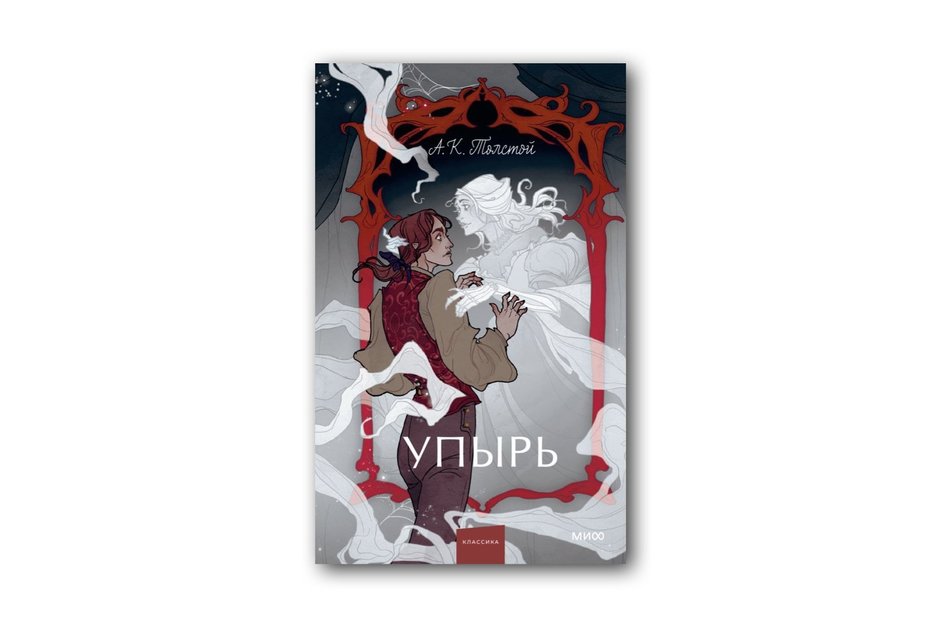
Particularly strong in “The Vampire” is the fear of one's own among strangers. The upyrs here do not live separately from people and do not look like monsters. They come to the ball, talk, smile, and easily blend in with the guests. In folk beliefs, upyrs also retain a human appearance and easily penetrate people's homes. Tolstoy transfers this fear into the secular salon, which turns into a Gothic space, although outwardly it remains an ordinary drawing room.
Tolstoy takes another important step for Russian Gothic — he transfers the source of horror inside human perception. The author shows how fear changes the hero's view of people and events. Runevsky constantly doubts, and the reader, along with him, tries to understand where the boundary lies between a painful delusion and the supernatural.
European shadows
Tolstoy knew English and German prose well and was clearly aware of the success of John William Polidori's novella “The Vampire” (1819), which was published in Russian translation in Moscow as early as 1828. Polidori was the first to turn the vampire into a hero of secular society. His Lord Ruthven appears among aristocrats and hides his monstrous nature behind impeccable manners. Polidori established the model of the aristocratic vampire, which later influenced Tolstoy, Gogol, Dumas, and the entire genre of vampire prose.
Behind the English Gothic in “The Vampire," the German Romantic tradition immediately emerges. From childhood, Tolstoy was influenced by his uncle, Antony Pogorelsky, an admirer of Ernst Theodor Amadeus Hoffmann, and became acquainted with German literature early on. Alexei Konstantinovich was fluent in German and translated Goethe and Heine. Researchers have repeatedly linked “The Vampire” with Hoffmann's “The Devil's Elixirs” (1815), “Vampirism” (1821), and “Adventures on New Year's Eve” (1815).
Alexei Tolstoy adopted the very principle of the dual world from the German Romantic. His characters live in ordinary Moscow but constantly encounter hints of another world: with animated portraits, strange dreams, a man in a black domino, Kabbalistic signs, and stories about ghouls. Even household objects begin to behave like living creatures:
“I was surrounded by a crowd of porcelain dolls, faience mandarins, and clay Chinese women.”
At the same time, the writer does not give the reader a definitive answer as to whether unclean forces actually exist. This uncertainty became one of the main features of Romantic fantasy. Literary scholar Isaac Yampolsky wrote that Tolstoy built his stories on the collision of “the real and the supernatural” and deliberately left a feeling of understatement.
Runevsky constantly wavers between a rational explanation and fear of mysticism. At one moment he considers Rybarenko insane. But then the hero sees strange coincidences, scars, ghosts, and recurring details that are already difficult to dismiss as delirium. Tolstoy almost always hides mysticism under the guise of a dream, rumor, hallucination, or family legend. Even the ending leaves the question open. Dasha receives a mysterious mark on her neck, but the author never directly confirms that she fell victim to a vampire.
In addition to literary works, the novella was also based on Tolstoy's personal impressions of Italy, which he visited in 1838. The Italian chapters of the novella are filled with concrete details: Don Pietro's villa, the ancient temple of Hecate, underground passages, and a fresco of a girl who seems to come to life on the wall. In Italy, the characters encounter for the first time a space where the boundary between reality and legend almost disappears. Alexei Konstantinovich combines European demonology, ancient myths, and personal travel impressions here, and “The Vampire” fits quite organically into the European Romantic tradition of the 19th century.
From Runevsky to pop culture
The gray-haired stranger at Tolstoy's ball appeared almost ten years before the publication of Bram Stoker's “Dracula” and set a different tone for Russian mysticism. Tolstoy blurred the boundary between reality and delusion, combined love, fear, and death, and introduced the motif of the dual world and the “living corpse.” This line later ran through all of Russian horror. Tolstoy was one of the first to transplant Gothic into Russian everyday life and showed the vampire not as an exotic creature from an old castle, but as part of St. Petersburg's high society. His characters do not understand where mysticism ends and madness begins.
This psychological approach was later used by writers of the Silver Age and authors of Soviet mystical prose. Leonid Andreev, Alexei Remizov, and Alexander Blok also combined everyday reality with irrational intrusion in their works. Even in Soviet literature, where open mysticism remained undesirable, this tradition continued to live through grotesque, anxious satire, and plots about hidden evil within the familiar world.
Contemporary Russian horror has inherited from Tolstoy another important thing: the image of an intelligent and almost invisible monster that acts not through force but through penetration into the human environment.
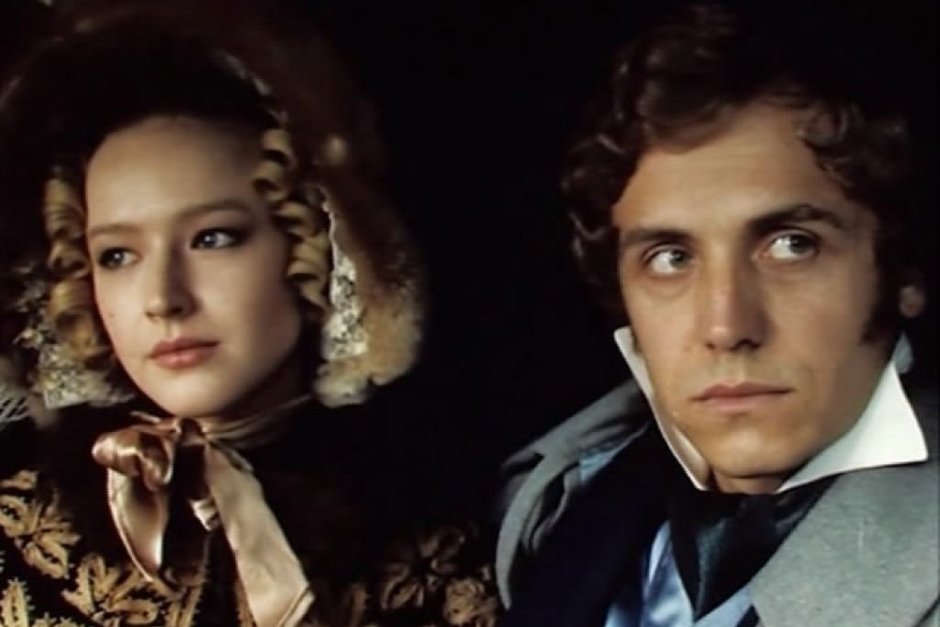
Cinema quickly noticed this potential. “The Vampire” has been filmed twice: in Poland in 1967 and in the USSR in 1991 under the title “Those Who Drink Blood.” In Yevgeny Tatarsky's film, the gray-haired stranger repeats the key line from the novella: “I find it strange that at today's ball I see vampires!” The film preserved the main thing — the feeling of anxiety within a familiar space. The filming took place at Lenfilm, some scenes were shot in Italy, and French actress Marina Vlad agreed to work almost without a fee for the sake of collaborating with the director.
The interest in “The Vampire” is easy to explain even today. Contemporary culture repeatedly returns to vampires: from Anne Rice's novel “Interview with the Vampire” (1976) and Stephenie Meyer's “Twilight” series (2005) to anime, video games, and TV series. The vampire has ceased to be merely a monster. He has become a metaphor for power, dependence, parasitism, and the hidden desire to live off someone else's energy. Against this backdrop, “The Vampire” looks like the Russian answer to Dracula before Dracula.
Ekaterina Petrova — literary critic for the online newspaper Realnoe Vremya, host of the Telegram channel «Булочки с маком».