Dmitry Sotnikov: In rally raids, you can drive very fast, but the winner spends less time stopped on the track
The KAMAZ-master driver on his first win of the season in Astrakhan, the physical challenges of the Dakar, and how new drivers are trained
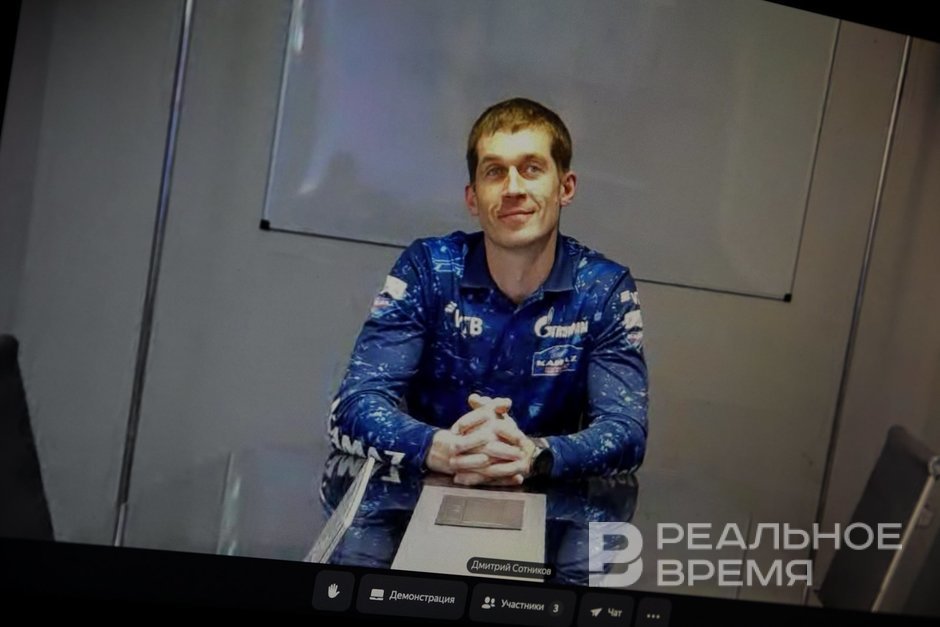
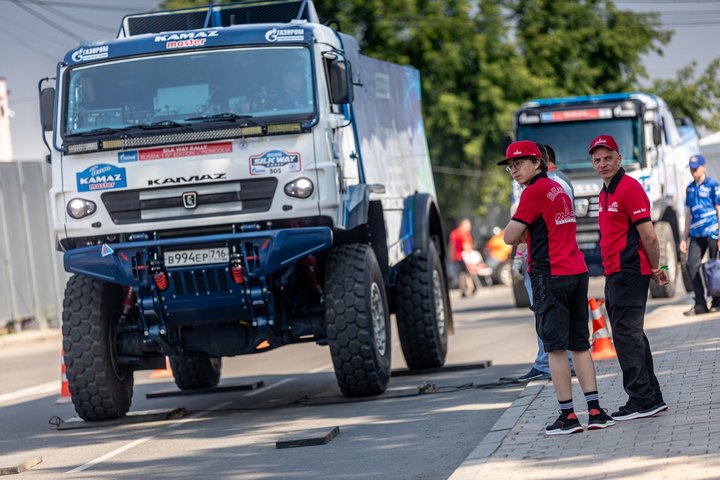
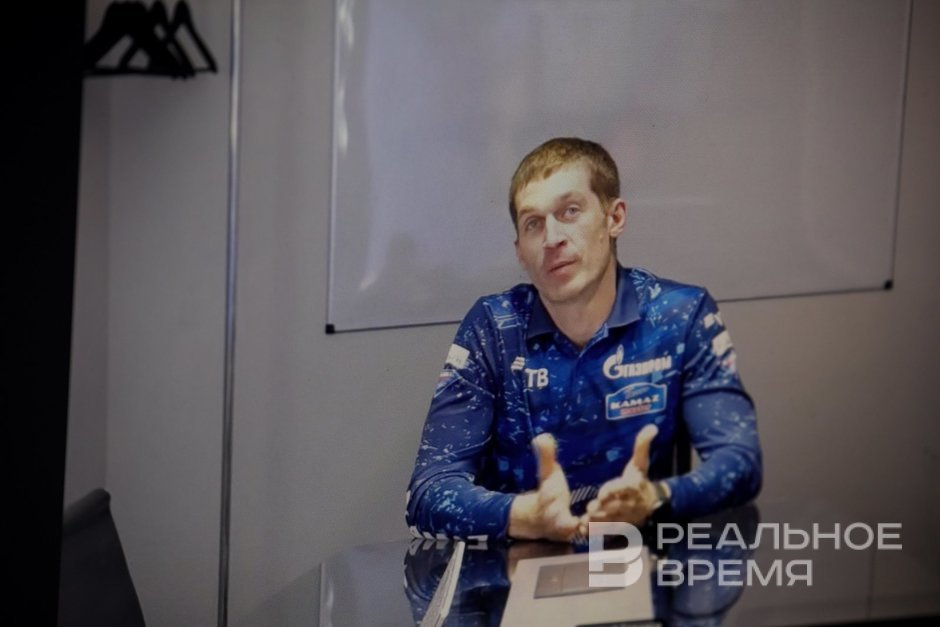
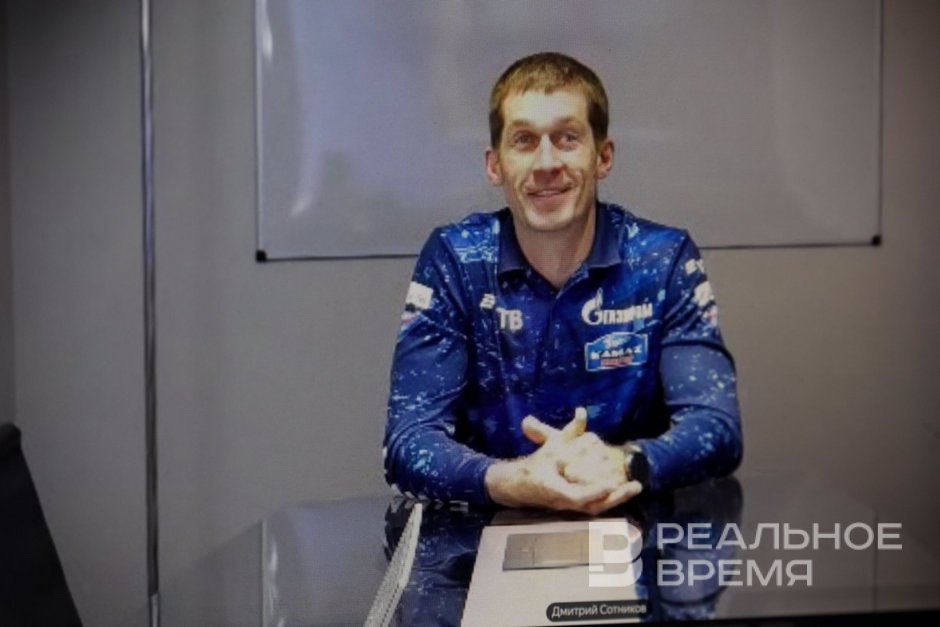
The “Blue Armada” of KAMAZ-master trucks is once again showing its class: two crews climbed the podium at the “Golden Horde-2026” baja — the first race of the Russian Rally Raid Championship. During an online conference, Dmitry Sotnikov, a driver for the KAMAZ-master team, Honored Master of Sports of Russia, two-time Dakar Rally winner, and five-time Silk Way Rally winner, spoke to Realnoe Vremya about this race and his professional journey.
“Major problems arose with the GPS signal”
— At the end of April, you won the “Golden Horde-2026” baja in Astrakhan. Please tell us about your impressions of this race and how it went for the “Blue Armada”?
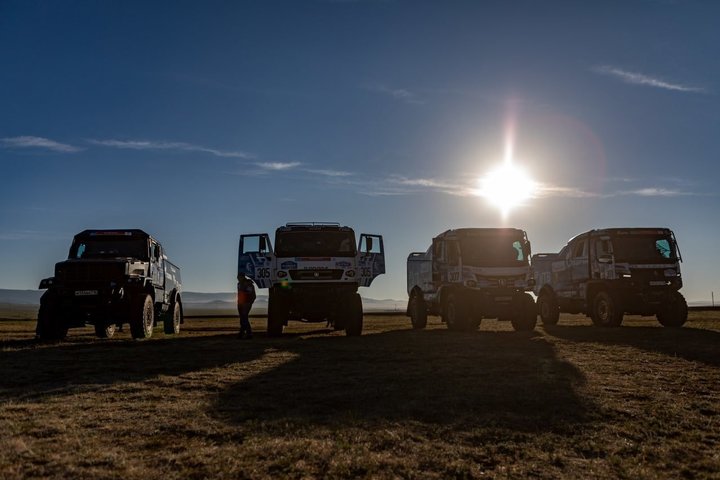
— This was the first race of the Russian Championship. It traditionally takes place in Astrakhan, and it is one of the most difficult races in the Russian Championship. The Astrakhan region is rich in sands and off-road terrain. We arrived there with a large contingent — six trucks from the KAMAZ-master team. There were also two trucks from the VAZ team, and in recent years, the MAZ team has also provided strong competition in the truck category.
This race was no exception; they prepared well, arrived early, and from the very start, they challenged us. The battle was measured in seconds. The MAZ team tried to outmaneuver their rivals tactically and seize the initiative. But we managed to win the first stage from the very beginning. The pace of the race increased each day. At first, we drove carefully, then we tried to speed up and catch up, and we were only a minute behind the rival — with two whole days of racing still ahead!
In rally raids, it is difficult to drive first, so MAZ managed to close the gap. But on the final day, the situation turned in our favor. Because we started behind their MAZ truck, we managed to make up the lost time, and even with two crews. Tactically, we performed better. Yes, it was tense and not entirely clear whether we would be able to recover the deficit. We drove fast, at the limit, fighting for seconds. But paradoxically, what saved us was difficult navigation. We accomplished our task — to win the stage.
— What was different about this year's track in Astrakhan?
— The situation in the country is tense right now, so major problems arose with the GPS signal. While last year such difficulties occurred only at the beginning, now there are off-road sections far from the city where the signal often disappears. In rally raids, navigation is done using GPS devices. But they do not build a picture of the road, as we are used to in the city. We see an arrow showing the direction we are moving. And if it disappears, we cannot see the course we need to follow. The direction disappears, the speedometer disappears, and you do not understand how you are moving. Of course, all the navigators were nervous, but the main difficulty falls on the leading crew, which is charting the route. Here, the one who performs better, who orients themselves without additional information, gains the advantage.
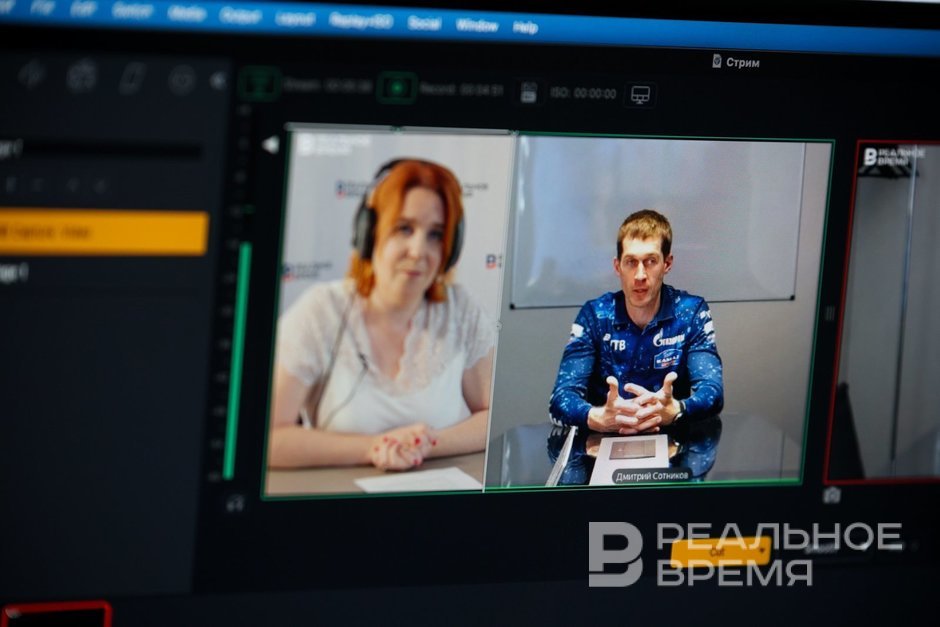
— This year, are the GPS signal interruptions a feature only of the Astrakhan tracks, or a general problem? In the following stages of the race, you will most likely encounter these problems again, right?
— Time will tell. Of course, this is a difficult issue, because driving without navigation is impossible. In the Russian Championship, we are allowed to use a tracking app on our phones, and now we have to bring phones with different operating systems so that they can back each other up. True, sometimes both do not work. But this is one of the “highlights” — you have to rely only on yourself. We are all in the same conditions. So we will continue to try. Whoever is cleverer and more resourceful will be lucky.
“We stood on the podium, it was completely ours, we sang the anthem. I had dreamed of this since I was 14”
— You are a two-time winner of the Dakar Rally and a five-time champion of the Silk Way Rally. Which of these titles was the most difficult for you, emotionally and physically?
— There are no easy victories at all, especially in rally marathons that last two weeks. This is an endurance race that you have to sustain day after day. There are good days and bad days, and that throws you off emotionally; you have to readjust.
Each victory was difficult in its own way. But the most emotional was still the first one at the Dakar — that was in 2021. The Dakar is the strongest race in the world for trucks, the equivalent of a world championship. And even when you are leading it, you cannot believe in your victory until the very end. The tension builds. The last section of that race was short but very tricky in terms of navigation. The tension in the cab was rising, there was very little left, but we could not calm down and cool off a bit.
But what I remember most about that race was not even that, but the fact that in 2021, the Russian anthem was played and the Russian flag was raised during the awards ceremony. We stood on the podium, it was completely ours, we sang the anthem. I had dreamed of this since I was 14, when I watched on TV how the Formula 1 champions were awarded. That is priceless. A big dream, and its fulfillment was very significant. And that happened only once in my life. Because when we won in 2022, the awards ceremony took place without the anthem and without the flag.
— And which victory are you most proud of? Still the same Dakar?
— It is hard to say. The Dakar, of course, is one of the most respected races in the world; it is over fifty years old. But there were also the Silk Way races; some were more difficult, both in terms of route and length. For example, in 2017, we won the Silk Way Rally, which was attended by all of our main Dakar rivals. That was one of the longest races, lasting 15 days across Russia, Kazakhstan, and China. The battle lasted right up to the finish line.
I remember it most because our truck did not have air conditioning. On one of the very decisive stages, it was especially tough: sands, dunes, and I had a new truck that was very difficult to drive on sand. We came up with ideas, put on different wheels to ease the situation... And then I noticed that the supply of water with ice had run out, leaving only warm water. That is when I realized that I had missed the moment when water could have helped. I decided not to drink — warm water only made things worse. The pace was very slow, the route was difficult, winding, with bumps. My arms became like cotton, as if I had spent many hours working out on a simulator. I turned the steering wheel as best I could. I saw rivals far ahead and thought we were losing the race. We reached the finish line, journalists met me, I got out of the cab — and then I felt unwell. I became so dizzy that I could not even give an interview. And then it turned out that we had won that section — and the whole race as well!
In short, this race was memorable, among other things, for how physically difficult it was...
“At the bivouac, everyone can rest, but the mechanic goes off to work further”
— In the team, you have come a long way from mechanic to senior driver. Which role in the team is emotionally and temperamentally closest to you?
— Probably, the driver is a more responsible role. But the mechanic is also part of a racer's journey. Every driver must become a good mechanic in order to know the truck inside out. During my first race as a mechanic, I could only watch how much was happening on the race track — someone overtaking someone, cars and motorcycles driving by, so much action all around... But when you are behind the wheel, you not only watch this but also control it all.
Emotionally, it is more difficult to be the driver, because you are responsible for everyone who is with you in the cab. You arrive at the bivouac, everyone looks at you with great hope and expects results from you. It is honorable, but it is hard.
But the mechanic is not just a person who tightens a nut. A great deal depends on him. He participates in working towards the result just as much as the others. He experiences the same loads, is in the same state of concentration as the others, but at the bivouac, everyone can rest. But the mechanic goes off to work further — if there is a lot of work, he may be busy until the morning. So it is certainly difficult for them. For example, I always give my mechanic the opportunity to sleep in the cab while we drive to the start of the next stage — that can be 100-150 kilometers on asphalt. A great deal depends on him, and it requires colossal patience and endurance from him.
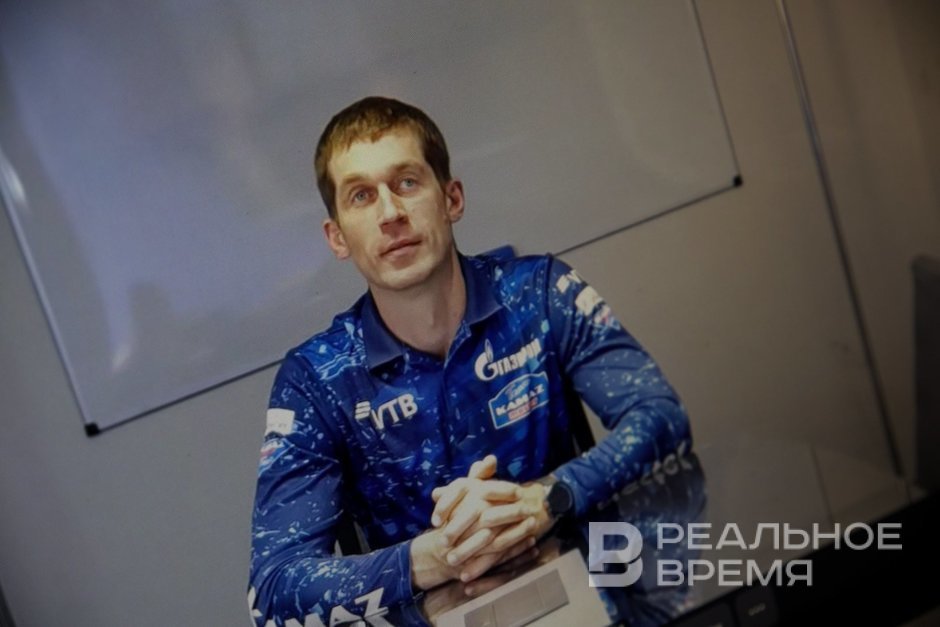
— A huge part of the result depends not only on the people but also on the truck. In one interview, you yourself said that success depends 50% on the team and 50% on the truck. How have the racing trucks of your team changed in recent years, and what work is currently underway?
— Work is ongoing constantly. We are always searching for something, doing something — the main thing is to have ideas. For example, right now our team is at a rally in China, and we returned from the test track an hour ago because we are fine-tuning the trucks. We are looking for ways to improve the suspension and select optimal settings.
Nowadays, trucks are no slower than cars. Despite the fact that we have a speed limit of 140 km/h, while cars have 170 km/h, we can still be faster than them off-road. We are gaining speed very quickly; we have high power — more than 1100 horsepower.
As for external changes, we have changed and refreshed the front part. But we have also made changes to the interior. Work is constantly being done in all directions. Together with engineers, we are constantly looking for reserves of power, and most importantly, reliability. After all, in an off-road rally raid, you can drive very fast, but the winner is the one who spends less time stopped on the track. And that depends on the reliability of your vehicle. Because the trucks experience heavy loads. The truck is very fast, but the crew inside it must also be able to optimally use all the capabilities that the engineers and mechanics have built into it.
— So the crew, together with the engineers and mechanics, participates in what happens to the truck between starts?
— Of course, feedback from the drivers is very important. Each driver tries to share his feelings with the engineers, and the engineers, in turn, think about how to implement his ideas. I will tell you more: some of our engineers are also crew members. For example, the navigators. Accordingly, they also see everything from the inside. This is a normal process. Probably, no one but us can improve our truck — after all, we know it better than anyone.
“Everyone works to ensure that KAMAZ is first, no matter which crew”
— How is the transfer of experience structured within the KAMAZ-master team to maintain the team's enormous reputation for decades?
— Since 2016, we have been actively supporting children's motorsports — starting with karting. Some come from motocross or similar sports. The guys who participate there understand technology from childhood. Some of them are so passionate about it that they eventually come to us. After all, the principles in a big truck are the same as in a small one.
And when the guys come to us, we immediately see their attitude to work, their desire, and how inclined they are towards technology. We try to attract them, take them into the cab on training trips so they can help. Gradually, we start testing some of them behind the wheel. Everyone has a different approach and feel for the vehicle — it is, after all, very large. For example, now Almaz Akhmedov is driving — last year we tried putting him behind the wheel and tested his skills in sands and dunes. We saw his confident driving, recognized his potential, and decided to give him a try. There are a number of other guys we took from the children's team; they have grown up and matured. Some of them become mechanics, some become navigators.
We certainly try to engage, teach, and take under our wing the guys who are passionate about this and pick it up quickly. We need people who will become professionals just like us. After all, to drive powerful trucks, you need strong teams and specialists, whom we train ourselves.
— And how did you come to the team?
— That was many years ago, in 2008. At first, it was a little easier for me because my father was a mechanic on the team. They traveled for the USSR to the European Championships. Those were completely different times; I “raced” in karting in racing and circuit series.
I entered a technical university and literally after my first year, I went to my father for an internship. That was during the African Dakars, and I was turning wrenches for the trucks that participated in them. So later, when I came to apply for a job here — everyone already knew me.
— How are relationships structured between crews? Is there competition among you? In the same “Golden Horde” race in Astrakhan, second place after you was taken by another crew from the “Blue Armada.” Does internal jealousy or rivalry arise between you?
— We have always had internal competition. But it is mostly related to motivation. For example, in my generation, there are five drivers, and we always tried to keep up with each other. Someone is stronger in one area — say, in dunes, someone in sand, someone on rocks. Yes, we competed, but at the Dakar, for example, we always understood that we had to help each other. No one could drive past a stopped crew. Someone is leading, while someone else has already lost minutes — but our tactical instructions are such: everyone works to ensure that KAMAZ is first, no matter which crew. Everything must always be within the bounds of correctness on the track. Even if you cut someone off, after the finish line, you will still have to look that rival in the eye. That is not sporting.
Many questions about who should act how are always discussed “on the shore," and we all know them clearly. On the track, we can literally communicate with our own crews using gestures — for example, whether we need to stop. This is all worked out in advance.
— Which race this year is the most anticipated and most interesting for you personally?
— Of course, the team was created largely thanks to the Dakar Rally, and we really want to return there. But, unfortunately, not everything depends on us. We are preparing for it, negotiations are underway about how we can return. But there is no certainty yet. We have even tried to modify our trucks to comply with the International Federation's regulations, so if such an opportunity suddenly arises, we will be ready.
In the world of sports, everything changes very quickly. That means we need to be ready to return to the international stage at any moment. Right now, a race is taking place in China. For various reasons, only two of our crews went there — these are young guys who went to gain experience. Unfortunately, not everything exists in Russia — there are no high dunes or rocky sections. But in China, all of that is there.
Of course, we will continue to compete in the Russian Championship. In July, that will be Ulyanovsk; in September, we will compete in the Urals, in Miass; in October, in Kalmykia. But these are all short races, 3-4 days long. But I would like to do a long race. The Silk Way Rally is still uncertain for us. It will take place at the end of August or beginning of September, and it would be great to take part in it. Long races are always very interesting!
— Let us move on to everyday life. When you drive on city roads, do you ever get the reflex to overtake everyone there as well? What driving style do you prefer?
— I prefer a calm and comfortable driving style. Here, people are unprepared; they are not driving on a race track. And even if you try to drive fast, overtaking everyone, they are simply not ready for such behavior and do not know what to expect from you. So on public roads, I drive in a calm manner. For racing, there are special tracks — please, go out on them and prove yourself.
— Over the past four years, serious changes have taken place on Russia's roads. I mean the reorientation of the Russian automobile market towards Chinese manufacturers. How do you personally assess passenger cars from China, and would you choose any of them for yourself?
— Indeed, there are many such cars now. At first, I treated them with caution — a new brand, unknown what they are like. They are all beautiful on the outside, with a lot of electronics. But as an athlete, I am always interested in the risks. What is the engine like? What are the specifications?
In the end, I can say that I really like some models — for example, hybrid or electric ones. Probably, this is the future. I am interested in what new ideas manufacturers are introducing into their cars. The world is changing, so why should we not drive “Chinese” cars if they turn out to be better than European cars? Of course, they are all successful, but among them there are very dynamic, fast, reliable, and modern cars. I believe that we need to adapt to the new reality.
— Thank you for the conversation, and good luck in your future starts and victories!