The Great Oza: Writer and memoirist Zoya Boguslavskaya has died
Realnoe Vremya publishes memories of the writer's friends and colleagues
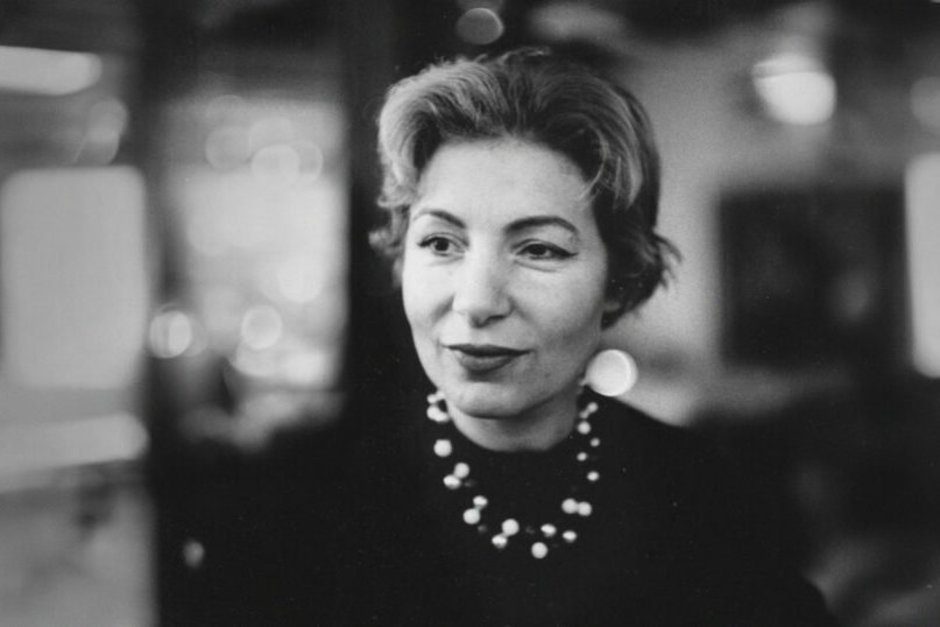
Zoya Boguslavskaya lived for over a hundred years and remained within Russian culture for almost that entire century. She wrote books, edited screenplays, gathered artists, actors, musicians and poets around her, and invented prizes and cultural institutions. For several generations, she remained above all “Oza” — the heroine of Andrei Voznesensky's poem. Realnoe Vremya's literary critic Ekaterina Petrova tells us who Zoya Boguslavskaya was, and also shares memories of this great woman from colleagues and loved ones.
Zoya Boguslavskaya was born in Moscow in 1924 into the family of engineer Boris and physician Emma Boguslavsky. Her parents instilled in her the idea, which she often repeated later, that a person must achieve everything through their own abilities. As a child, she lived for several years in Germany, where her father was sent, and learned German early. While still a schoolgirl, she began writing texts for literary evenings and drama clubs. During the war, the family ended up in Tomsk. Boguslavskaya studied, worked in a hospital and entered the evacuated theatre institute. Later, she graduated from the theatre studies faculty of GITIS and completed postgraduate studies at the Institute of Art History of the USSR Academy of Sciences.
In Soviet culture, Boguslavskaya quickly occupied a prominent place. She worked as an editor at the Sovetsky Pisatel publishing house, taught, was involved in the literary section of the committee for Lenin and State Prizes, and edited screenplays at Mosfilm. Important films of the era passed through her hands. Boguslavskaya was part of the legendary Creative Association of Writers and Filmmakers, where films by Andrei Tarkovsky, Marlen Khutsiev and Mikhail Schweitzer were created.
Initially, Boguslavskaya worked as a literary and theatre critic. In the 1960s, she published books about Leonid Leonov and Vera Panova. Then came her own prose. The story “And Tomorrow” was immediately translated in France. Subsequently, the books “Seven Hundred New," “The Defense," “Obsession," “Close Ones” appeared. Her prose was compared to the works of Yuri Trifonov, although Boguslavskaya herself constructed her texts more anxiously and experimentally.
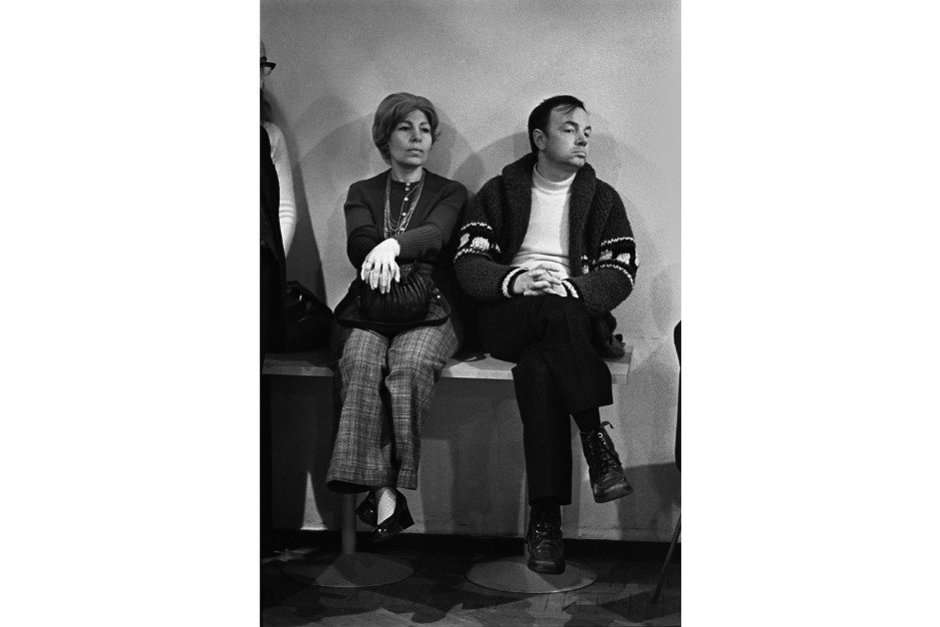
For many, the main story of her life became her romance with Andrei Voznesensky. They met in the early 1960s. Voznesensky dedicated the poem “Oza” to her, in which Zoya's name is encrypted. Boguslavskaya recalled sitting in the hall during the first reading of the poem and feeling terrified. She understood that it was about her. Soon they married and lived together for forty-six years. Their home became one of the main cultural addresses in Moscow and Peredelkino. They were visited by Vladimir Vysotsky, Bob Dylan, Marc Chagall, American politicians and artists.
After Voznesensky's death, she took on the task of preserving his legacy. Together with her son Leonid Boguslavsky, she created the “Parabola” prize and the Voznesensky Center on Bolshaya Ordynka. But even earlier, in 1991, Boguslavskaya invented the first independent Russian prize in the arts — “Triumph.” The writer wanted to create an award that would unite literature, theatre, music and cinema. Among the laureates were Sviatoslav Richter, Fazil Iskander, Marlen Khutsiev and Oleg Menshikov. Contemporaries often said that Boguslavskaya created not only books, but also the very connections within culture. Literary critic Igor Virabov emphasized that she was never an “appendage” to Voznesensky's figure, but remained an independent creative personality.
Zoya Boguslavskaya died on May 14, 2026, at the age of 102.
Anastasia Ryzhkova, literary critic for Snob magazine:
— I was introduced to Zoya Borisovna Boguslavskaya by my former boss, at that time the editor-in-chief of Snob magazine, Sergei Nikolaevich. It was 2020, the pandemic summer, everyone was still wary even of relatives, but she invited me to her dacha in Peredelkino and let me into the house. She was 96 then, but she was almost in full force: she worked, followed the news, planned to hold the “Parabola” prize. An extremely sharp and witty mind — it was always fun with her. She loved people, loved noticing their traits — they remained interesting to her until the very end. And she loved Andrei Andreevich and was very careful with his legacy. His study on the second floor of the writer's dacha had long become something like a personal museum space.
She taught us, her “girls” (I briefly became one of them), to work in a way that is no longer taught: to handle sent letters with care, not to forget birthdays and other anniversaries, to be hospitable (she loved to treat everyone and was incredibly generous in this), and to be sure to send flowers. This is the old school of mutual respect that we have all somewhat lost. She also taught femininity: she always wore dresses, always wore makeup, always (and almost until her last day) had a salon hairdo and a manicure. Her notebook — a folio of contacts for every occasion, with the schedule for the next few days as well. Everything important was underlined the old-fashioned way in red pencil, with marginalia left in the wide margins. It was printed out every day and brought personally.
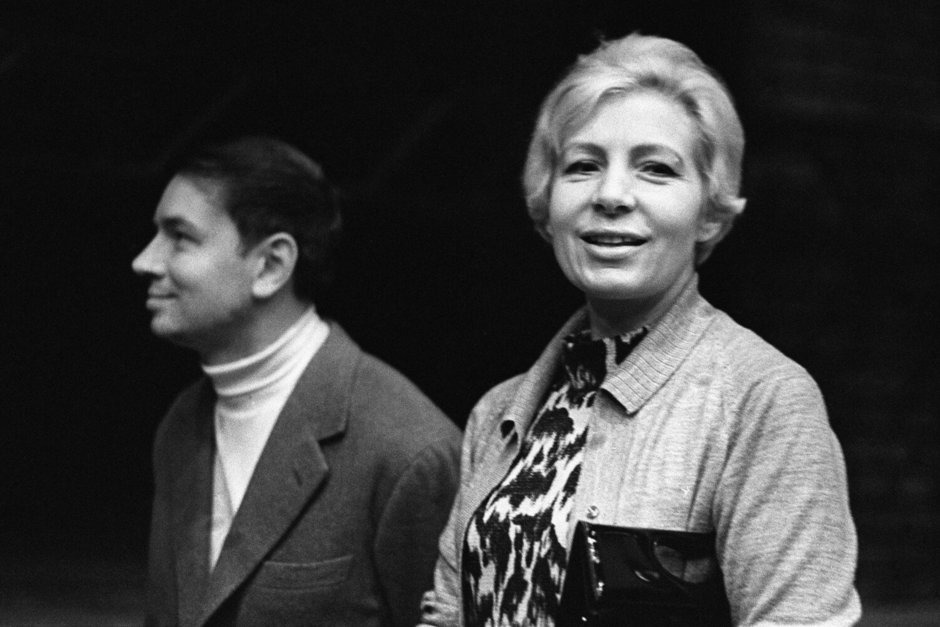
The circle of her acquaintances grew ever narrower, but what names among us: Hibla Gerzmava, Elena Pasternak, Yuri Kublanovsky, Alla Demidova, Yuri Rost... Zoya Borisovna, or, as we called her, Z.B., was not only a guide to the Sixtiers, but a true pillar of Russian culture, which today, alas, has suffered an irreplaceable loss. It is good that the Voznesensky Center will remain, an extensive personal archive awaits its hour, and perhaps a new museum will appear in Peredelkino... She thought all this through in advance, as she knew how. And she left on her own, having waited for both her own birthday and Andrei Andreevich's birthday. Even in this, she seemed to be following a clear plan. As always.
Sergey Shargunov, writer, editor-in-chief of Yunost magazine:
— I was lucky to know Zoya Borisovna and communicate with her. Moreover, recently, when I was working on a book about the writer Yuri Kazakov, I contacted her and asked her to clarify certain details. And each time she amazed me with her remarkable memory and sharpness of mind. She would literally reproduce dates, names, details. For example, she remembered the attending physician who, during difficult periods, helped both Vasily Aksyonov and Vladimir Vysotsky.
It must be said that Zoya Borisovna was very different and at the same time amazingly integral. Fragile and strong-willed simultaneously, gentle and demanding. Her entire life was connected with art, with the history of art, with supporting talented people. For me, as the editor-in-chief of Yunost, it was especially interesting to talk with her, who, by the way, remained on the magazine's public council until the very end, about its history. She remembered an incredible number of things and spoke about things that, probably, no one else will speak about.
And, of course, for me she will forever remain that very Oza from the poem by her husband, Andrei Voznesensky, and simultaneously a completely separate, unique phenomenon. Because, being the wife of a famous and talented poet, she managed to remain an independent creative unit, a person who exists on her own, “walks by herself.”
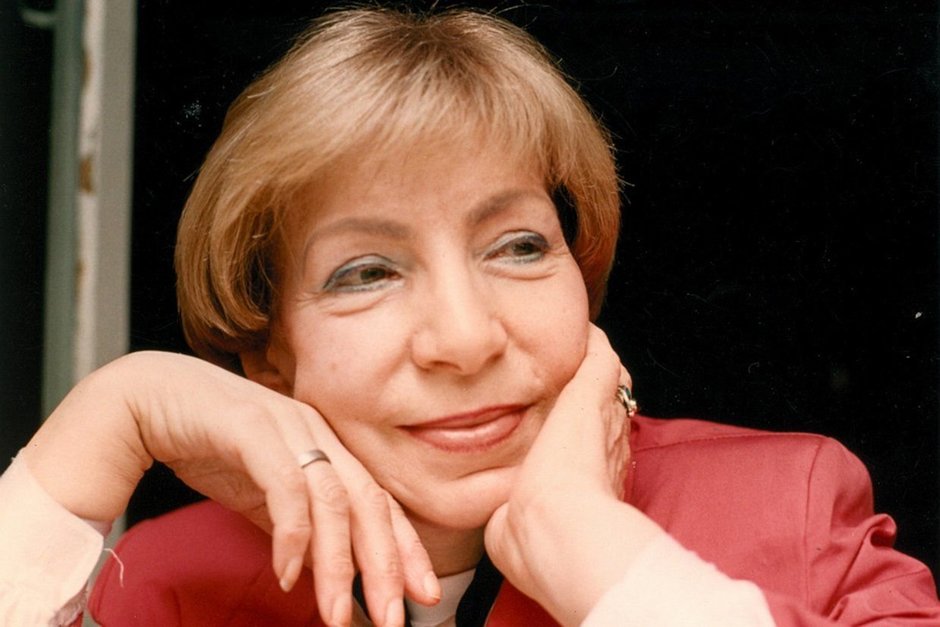
I was always amazed by her inner composure, her cheerfulness and some kind of unquenchable curiosity about life and people. Two years ago we celebrated her centenary. Zoya Borisovna herself treated her age with great humor. In fact, she often said that she believed in fate: what is destined for someone will be. So she didn't even seem proud of her longevity. She treated everything a little fatalistically. And with this fatalism, one still felt some kind of infinite love of life.
Evgenia Zhuravleva, director of the applied literature department at Kolibri Publishing House:
In 2025, Zoya Boguslavskaya received the “Big Book” award for her memoirs “The Robe Life.” This work became the culmination of her many years of work on the memory of an era. Boguslavskaya gathered stories about writers, poets, artists and politicians she knew personally. A special place in the book was occupied by pages about Andrei Voznesensky.
— We are very proud of winning the “Big Book” award with “The Robe Life," which the editorial team worked on for almost 3 years, personally participating in the analysis of unique family archives — both textual and photographic materials.
The previously released albums “Always, Zoya!” and “We Wrote History. Asymmetric Time” are, in essence, a vivid final documentary testament of an entire era of the Sixtiers...
Maria Nikolaeva, lead editor at Kolibri Publishing House and project editor-in-chief:
— “Asymmetric Time," “Always, Zoya!," “The Robe Life” — these three books became almost a trilogy about the life of the Voznesensky-Boguslavskaya family and a chronicle of our life through almost the entire twentieth century.
Zoya Borisovna entered my life in the mid-90s as the head of “Triumph” and the boss of my sister, her assistant. I helped only one month a year during the award ceremony and festival, communicating with her among everyone, but she accepted me into “Zoya's girls.” Our first personal and lengthy communication happened at the beginning of this century, when our travel schedules coincided in London. There we met, had lunch together and walked a little. And we talked. We talked about life, about love (I was about 27—28 then), and it was then that Zoya Borisovna emerged from the image of a leader, organizer and writer for me and became a senior comrade — attentive, listening, never speaking just for the sake of speaking. I think that's how she was with friends and those who became interesting to her, as she loved people, loved communication and was very caring in friendship.
When, 20 years later, the idea came to publish books: for Andrei Voznesensky's anniversary — “Asymmetric Time," for Zoya Boguslavskaya's centenary — “Always, Zoya!," and even more so her autobiography “The Robe Life," I began working on the texts with a feeling and understanding of personal involvement and responsibility. I knew all the stories from Zoya Borisovna herself, I remembered her intonations, I remembered how she told them, and the most important thing for me was to preserve and convey that.
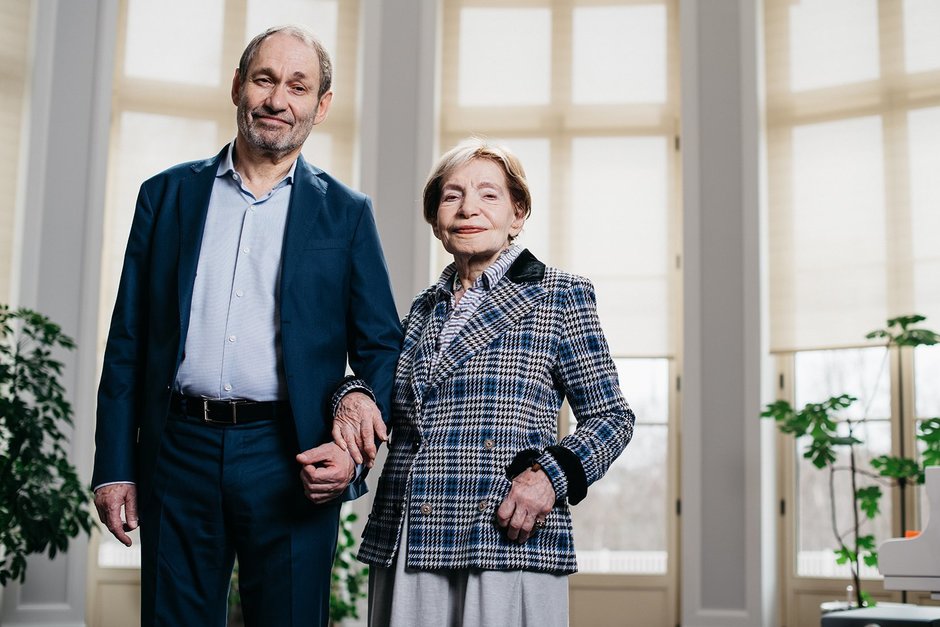
For the first two books, Zoya Borisovna allowed us to take Andrei Andreevich's funny notes to her and letters from friends — she herself was surprised and delighted looking at the forgotten texts. For the book “Always, Zoya!” we received her permission to include previously unpublished texts: a story about Yalta in July 1966 and “Instead of an Autobiography.” She was interested that they had been found in the archive.
We discussed the book ideas, Zoya Borisovna trusted both me and the publishing house, and we presented her with the finished version. She only chose the covers and immediately approved both the photographs and our selection of texts.
The most interesting was the work on “The Robe Life.” The title of the book was suggested by Zoya Borisovna herself, explaining that “robe” is a way of life and a way of perceiving the world outside the window and turning to one's own past. The text was assembled from 900 pages of material — notes spanning more than 30 years. Four “Zoya's girls” worked on it, constantly calling each other and sharing: “Can you imagine!..” For us, it was a new discovery of both the main character and author of the notes, and the entire history of the 20th century, however pretentious that sounds. Details of great history and cultural life, details of everyday life — much became clearer in Zoya Borisovna's retelling.
The book succeeded, although it was very difficult to compress 900 pages, but it was necessary to remove repetitions and give coherence and structure to the disparate notes. We immediately decided to keep the dates — this makes the context and intonations clearer, not only of the stories about a specific day, but also of the memories that came to Zoya Borisovna on that day. It was no accident that she called her notes “Flashes.” Something in today reminded her of a yesterday, and it flared up, and sometimes something was illuminated differently than before. Many episodes of the personal lives of Zoya Borisovna, her family, and her friends came together like a mosaic.
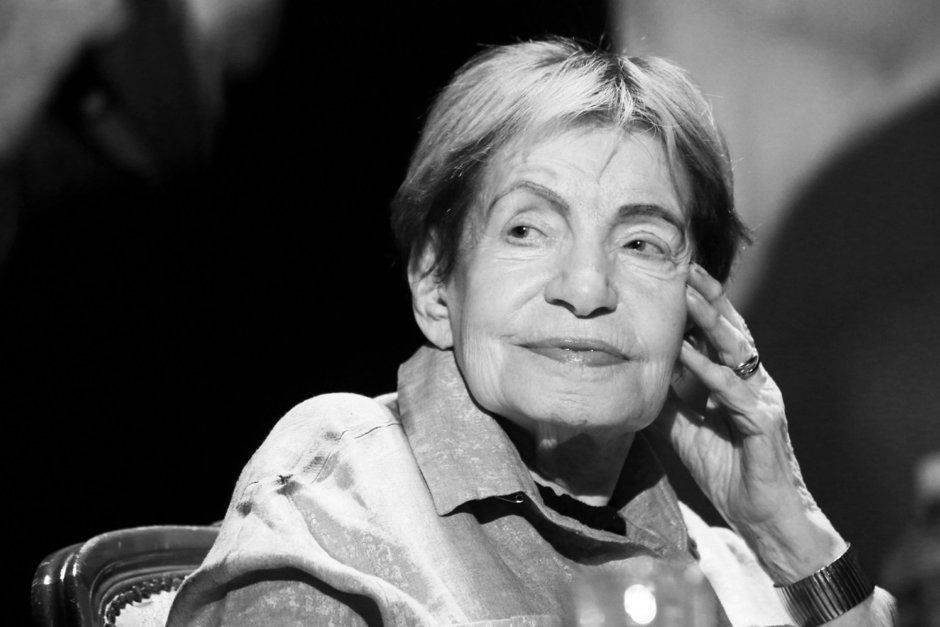
I was very sad to finish my editorial work on the book. Usually I am glad to put a full stop and take on a new project, but this time... Honestly, I wanted to keep reading the notes, records, letters and old texts long ago edited by Zoya Borisovna herself. She is a good writer, strong, without superfluous words.
That's how she was — without anything superfluous. And in her house in Peredelkino, everything is extremely simple and laconic, even her collection of frogs. And Zoya Borisovna always communicated without superfluous words, simply, matter-of-factly, but very warmly, with complete acceptance of the interlocutor. She always accepted life and others, which was endearing. And this very rare trait in people will now be missed. Read “The Robe Life” — it was written for each of us.