Rinat Yusupov: “Sports equipment must be substituted, otherwise there will be nothing to compete with”
Interview with a man who was one of the first to promote Tatarstan's sport on Channel One
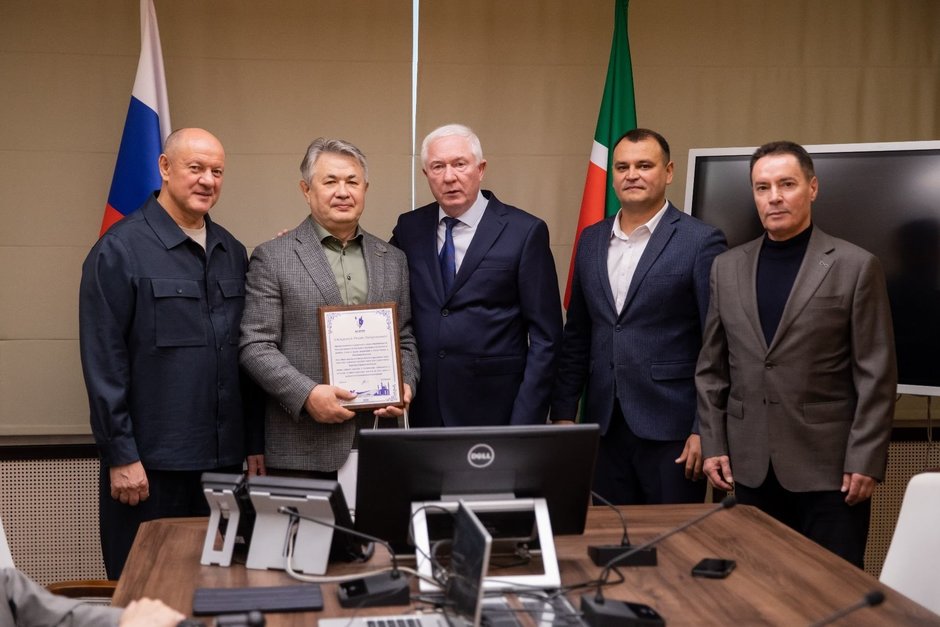
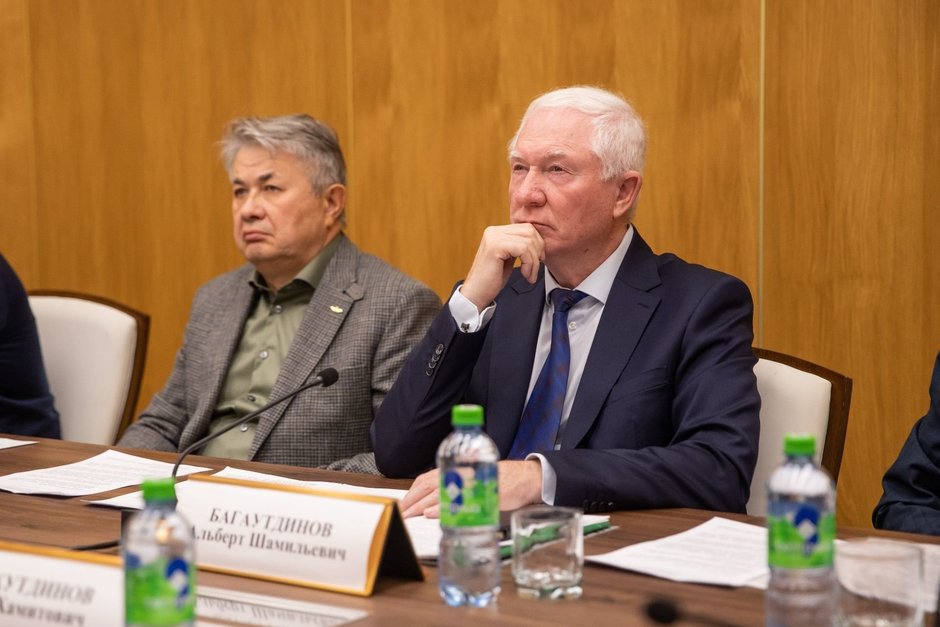
On November 27—28 the International scientific-practical conference “Physical Education and Student Sport Through the Eyes of Students” will take place on the basis of KNRTU-KAI. Among the speakers and participants leading representatives of sports universities are expected. Before the start of the event “Real Time” talked with the professor of the Department of Physical Culture and Sports of KAI, Rinat Yusupov, who recently celebrated his 70th anniversary.
“In a year or two we may be left without the products necessary in the sports industry”
— Rinat Andarzyanovich, accept congratulations on your past anniversary. The same congratulations you will surely hear from colleagues from other regions and countries. What problems will you discuss at the conference?
— The conference will include several sections where leading representatives of sports science will speak. These are also our associates in sports science, representatives of the Volga Region University of Sport, including our fellow countryman Ildus Akhmetov, who now works in England and earlier headed the department of sports medicine of this university. The venue itself was chosen at our KNRTU-KAI, where the idea of sports engineering is actively promoted.
This is connected among other things with the fact that sports equipment, components, spare parts — all this becomes outdated, goes out of use, and we need to actively import-substitute, otherwise there will simply be nothing to compete and train with. In connection with this at our fifth faculty of KAI a specialized direction has been opened, since the path once chosen — that we would produce nothing but only buy — led us to the wrong place, which is seriously felt in many industries, starting with aircraft construction, about which at KNRTU-KAI they can speak not from hearsay, and now also in relation to sports equipment.
— In Soviet times everyone knew about “Verkhovyna” motorcycles, “Mukachevo” hockey sticks, “Tisa” cross-country skis and so on. Then we lost the products of these enterprises, which ceased to exist.
— Yes. From my side I will add about the widely known sports products under the name EFSI, the Experimental Factory of Sports Inventory. Import substitution did not justify itself, and in a year or two we may be left without the products necessary in the sports industry. Therefore a new specialty is being created — sports engineering, which will train specialists in such areas as the operation of sports facilities and the creation of the necessary equipment and inventory. To simply introduce you to the matter, when our track and field coach Denis Kapustin worked, he told that a pole vaulter must have in his arsenal about 16 poles of various lengths and stiffness. This is a very spectacular variety of track and field athletics, but also a very expensive one, especially considering that all the poles have to be purchased abroad. With this introduction I have designated the themes of my report at the conference, which will concern sports engineering.
Another most important direction — is sports genetics. But this is already the sphere of our respected speaker, Doctor of Medical Sciences Ildus Ilyasovich Akhmetov.
“I would like to note the enormous support from the first president Mintimer Sharipovich Shaimiev”
— In the 2000s there was a period between the 1000th anniversary of Kazan and the World Universiade when our city in Russia was known thanks to the holding here of professional boxing with broadcasts of the best bouts on Channel One. And this happened thanks to the presence here of your team of professional boxers.
— Here I would like to note the enormous support from the first president of Tatarstan, Mintimer Sharipovich, who supported our idea of holding professional boxing evenings in Kazan. At our meeting Mintimer Sharipovich told that while resting in Turkey he watched on television a live broadcast of the fight of Vadim Tokarev with the German Firat Arslan; apparently, this was that rare case when Shaimiev did not come to the boxing personally. Besides the fight itself, Mintimer Sharipovich very much liked how Tokarev's seconds carried out the flag of Tatarstan, and this was a broadcast on Channel One too, while Mintimer Sharipovich watched in Turkey on Euronews.
— And when did your enthusiasm for boxing begin?
— This happened rather trivially. I grew up in Kazan, studying music, and tried the violin, then played the trumpet in an orchestra. And so with this set of skills I went to rest in the village for the summer, to my mother's uncle. There at the village disco, being at that moment 13 years old, I caused a certain rejection among the locals, and they were older than me. And there was also such a circumstance that I had earlier broken my leg when I was playing football at a pioneer camp; it was healing after the operation, but the metal pins still remained. After the disco the locals met me, they did not beat me, it did not come to criminality, but they rolled me in the dust, which was very insulting. The impossibility of either answering physically, since I was weaker, or running away because of the leg not fully healed, or even filing a complaint with the police, since there was objectively nothing to complain about by law.
Having returned to Kazan, I went to the sports club named after Uritsky, where Viktor Mikhailovich Kuznetsov trained, a young then mentor who was 10 years older; he recently turned 80, and God grant him health. Moreover Viktor Mikhailovich at that moment worked at a factory and trained in the evening, that is, in his time free from his main work. Having started training with him, I quite quickly got drawn into the practical lessons and began to be carried away by boxing as a spectacle. And then at the peak of attention were the Olympic champion Boris Popenchenko, about whom a feature film was made, and even more — Viktor Ageev, who was inimitable in the ring both in his manner of conducting the fight and in his free command of the body and stance, when he could maneuver with his arms lowered, but leaving the line of fire thanks to his phenomenal reaction.
“I began to appear again and again on the pages of 'Komsomolets Tatarii,' 'Sovetskaya Tatariya'"
— Having started training at the end of 1969, already two years later I was a witness to the fights of the best boxers of the country, since Kazan in 1971 hosted the USSR championship. Now we are the “capital of champions," but then such a start was a rarity, often one in ten years.
— I remember that championship; it took place within the walls of the Palace of Sports, already mentioned by me more than once as the venue for fights. But at my then 15 years I remembered only the atmosphere in general, and not specifically some boxers or champions, even our local ones who became prize-winners (Kazan residents Vladimir Indyukov and Alexander Andriyanov became bronze prize-winners in their categories, — author's note). After all, I repeat, for me the beauty of boxing was personified by Ageev, whom I consider an example of the ideal boxer, whom many later copied both here — the same Kuznetsov, Tarasyan — and abroad — like Roy Jones or Zab Judah.
Having got drawn into boxing, I quite quickly achieved successes, being a prize-winner of city and republican competitions, tournaments of the “Zenit” sports society, which included the sports club named after Uritsky. And a plus of that time, when we did not have some globally significant international successes, was that the media wrote also about such local victories as mine. So I began to appear again and again on the pages of “Komsomolets Tatarii," “Sovetskaya Tatariya.” And this allowed my village uncle to put moral pressure on my offenders, since he met them, showed them newspaper notes with my photographs, and added on his own that I was preparing to come to the village and settle accounts with them. In short, they did not wait for that and went into the army, saving me from the inevitable fight, which could not have taken place anyway, since I had begun going to sports training camps.
And additional pluses in boxing at that moment were the presence of hot water in the gym and visits to the shower, since at that moment, and this is the beginning of the 70s, most of us lived in barracks premises where there was simply no hot water. And only once a week could one wash properly by going to the public bathhouse.
— This is familiar, since when moving from the slum on Ostrovsky in 1995 the karate coach sensei Artem Barabanov said, they say, now you will learn what the absence of hot water in summer is. And with us even the cold water was at a standpipe in the yard.
— Today's youth will not understand at all that atmosphere, when a large room was divided into three parts, when in one weightlifters trained, in the other track and field athletes were throwing something there, throwing into the curtain that separated our part where boxers trained. The cacophony of sounds inherent in three completely different sports still comes back to me.
In the seventies I still set sports goals for myself, aiming at getting into the Olympic roster of 1980, when it became known that the Olympics would be held in Moscow. But, having entered the sports department of the pedagogical institute, where the now living Erik Ilyasovich Aukhadeev taught us, who became rector of the sports university, already after his move to Naberezhnye Chelny (at that moment the city bore the name Brezhnev), I took note of the words of my own uncle Ravil Avzalovich Nizamov that I would need to put the emphasis on science. In the end, having finished my studies and having come to work at KKhTI, where Oleg Andreyevich Novak worked (earlier the first rector of the mentioned sports university, which opened in Kazan in 1974, — author's note), I accepted his offer to go to study in postgraduate school in Moscow, at the department of my future scientific adviser Nikolai Alexandrovich Agadzhanyan, an outstanding Soviet and Russian physiologist.
“My wife threatened: if you do not defend, you may not come back”
Enrollment in postgraduate school coincided with the enrollment of my son Shamil in the first grade, and my wife, frankly speaking, was not glad about the prospect that her husband would live and study in another city. She even threatened that if I did not defend, I might not come back (Laughs). I defended in 1988.
— In the period when at the Olympics in Seoul the now Russian citizen Roy Jones lost in the final to Park Si-Hun, who was trained by a native of Soviet Uzbekistan Boris Gitman, now living at his 92 years, do you regret that you did not reach heights in the sport whose beauty you fell in love with in childhood?
— I did not become a great boxer, but in science I reached the title of Doctor of Biological Sciences, now working as a professor of the department of physical culture and sports. Initially my desire to engage in sports science coincided with the wishes of my uncle Ravil Avzalovich, who during the TASSR worked as minister of education of our republic. But later the skills and abilities helped to promote republican kickboxing from the initial stage to an international scale, which became for me and my associate Alexander Abrosimov a first try of the pen, and then we fully realized our possibilities in the sphere of professional boxing. Then, when Kazan was chosen as the host of the International Summer Universiade of 2013, the rector of KAI Yuri Fedorovich Gortyshev made me an offer to return to the scientific-administrative environment, taking up the construction and further promotion of such a machine as the sports complex “KAI-Olimp.” Already in 2013 we became an integral part of the Universiade, having hosted 4 sports at our facility, more than any other. Over time there were other competitions too, but the main thing is that like-minded people were growing nearby: both the current executive director of the Rugby Federation of Tatarstan Vladislav Maksimov, and Alexey Zayneev, head of the international activity department, and Shamil Yusupov, candidate of political sciences, head of the department of physical culture and sports — all these are fledglings of our school of management, who went through the proper practice during work at the numerous sports events held at the university and beyond its walls.