Yuldash, of course, is guilty. But he is not guilty!
The play “The Bridge”: Farid Bikchantaev presented a new playwright — Rail Safin
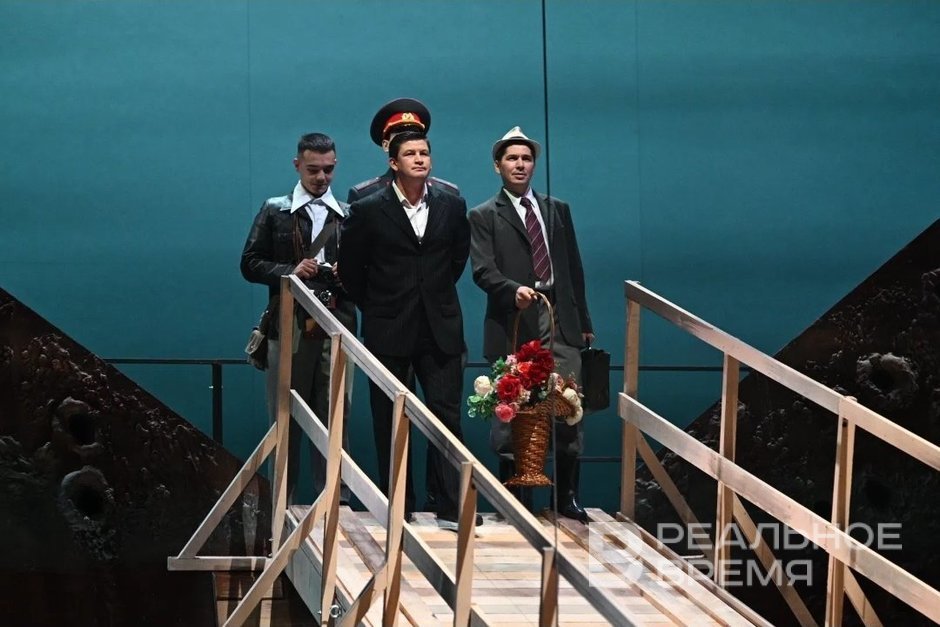
Farid Bikchantaev presented his first premiere — the dramedy “Küper”/“The Bridge” (16+) based on the play by a participant of the dramaturgical laboratory, Rail Safin. The author moved the action to the 80s in a remote village, where the problems begin with the fact that it is connected with the mainland. The story, which picks up speed not immediately, in the spirit of Shukshin, it seems, may receive a long repertoire fate.
It is the eighties!
The play, which was originally called “Bogau” (“Shackles”), is called a debut, although in 2025 another work by Safin, “Hat al y hatlar”/“Letters with Mistakes," won at the competition for the best literary work for children and youth named after Robert Minnullin. Safin wrote “Bogau” during the dramaturgical laboratory, which several times replaced the competition “New Tatar Play” — all last summer the playwright Mansur Gilyazov conveyed his thoughts regarding the writing of plays, in the autumn they were created, and at the beginning of 2026 readings took place, moreover the actor Almaz Garaev, who did this alone, afterwards thanked the author from all his heart, so it was immediately clear that some stage fate was shining upon it.
Bikchantaev several times in recent years has taken up the works of new playwrights — he staged “Fog” by Guzel Sagitova (then not yet vice-mayor of Kazan), “At Sunset” by Artur Shaidullin, “Autumn Echo” by Rustem Galiullin — the latter is still running in the theater, the rest have already been taken off the repertoire. “The Bridge” has chances to stay — this is a quite simple, at first glance, story that ends quite unsimply.
As Safin admits, after Bikchantaev decided to stage “Küper," he rewrote the text four times. Since the reading the changes are noticeable — some secondary lines have gone or weakened, tragic elements were removed (during the play itself no one dies). At the same time, of course, it is unclear why the action takes place in the 80s — there is even a direct reference to the match with Maradona's “Hand of God," so it is the summer of 1986. Probably this is simply a safe time for telling about the fact that not everything is in order with us on the ground. At the same time there are no games with nostalgia here — it is simply indicated that the pension then was 35 rubles.
“The Oddball” and other stories
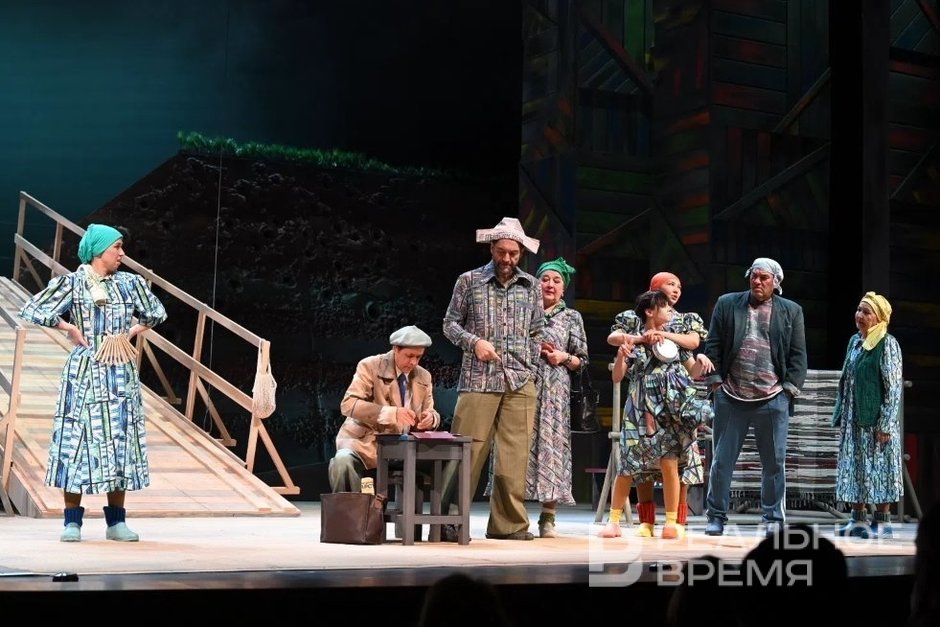
In the annotation the heroes are called “sweet eccentrics," at the beginning something Shukshinesque reigns in the action. The actors, by the efforts of Marina Maryanich, are dressed in the colors of the whole spectrum of the rainbow.
The play begins with a musical improvisation, at the base of which is Saidash's march “The Lights We Lit," that is, “The Bridge That We Built.” Here the tone is set by Sabira — this is the wordless role of a girl with special needs, Ilyusa Kamalieva, who jauntily plays the trumpet and creates now and then a light lawlessness, now and then for unclear reasons.
The main hero is the postman Yuldash, that is, the Traveler (Ildus Gabdrakhmanov), who both delivers letters, and helps with medicines, and issues the pension, and takes the children by boat to school, in short, ensures the connection with the outside world. It is precisely he who steps onto the huge bridge built by someone, dooming himself, according to the beliefs, to misfortunes.
Actually it was precisely the bridge that hooked Bikchantaev; it was around it that he spun the action, and it became the main decoration of Sergei Skomorokhov, along with stylizations of swallow's nests and log huts sheathed in clapboard.
In a rather densely populated play not all the heroes have time to reveal themselves, and a couple could have been removed. It is indicated that this is a play in the genre of a detective story, but no serious investigation is conducted here; everything becomes clear almost by itself.
And the matter begins with the fact that the village acquires a connection with the district center: a bridge is built. And from there suddenly the authorities arrive, Ramil Rashitovich and Ildus Rifkhatovich (Almaz Burganov and Zufar Nurtdinov), to congratulate the old woman Bibisar on her centenary, who has been lying in the cemetery for 15 years, and Yuldash receives the pension for her. Where did he spend this money? The spoiler is in the poster, in which the bridge is built of banknotes.
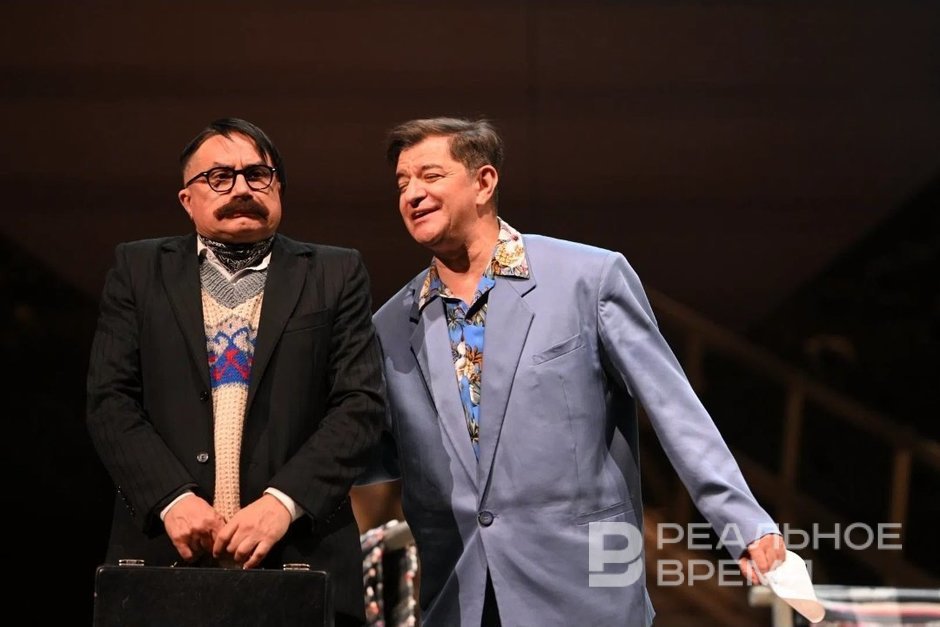
Yuldash is dragged for interrogation to the investigator Gusman Gazizovich (Radik Bariev), and he is defended by the lawyer Arnold Mudarisovich (Ramil Vaziev) — note that all representatives of the authorities have patronymics. The jealous wife of the hero, Gulsh at (Aigul Shakurova), is indignant that her husband did not share the money even with the children. The mother of Mukatdis (Zulfira Zaripova) brings him knitted socks. And the neighbor Sattar (Fanis Ziganshin) constantly reminds that Yuldash also has a land plot a little bigger…
We do not need the neighboring shore
The first act is unhurried; in it each one, as was illustrated at the beginning in the musical interlude, pulls the blanket over himself. The joker Bariev and the stoop-shouldered Vaziev are especially diligent in this. After the intermission the trial begins, and here the orchestra already plays as if by the notes — the hall, which had mostly been silent before this, bursts with laughter when on the tribune each hero finds several witticisms, and the judge (Venera Shakirova) every now and then has to pacify those present. At some moment the comedy mimics a farce, and even the speech that Detochkin — forgive me, Yuldash — is guilty but not guilty sounds like a parody of motivational speeches, and Sattar begins to shout “Freedom” as if in the 90s.
“There was no need for this bridge," the villagers reason in the break between the sessions. On the one hand, now it is easier for the children to walk to school, and the services can come. On the other — the power that came from that shore destroyed the established house of cards of the social contract, where there was always a plus for every minus.
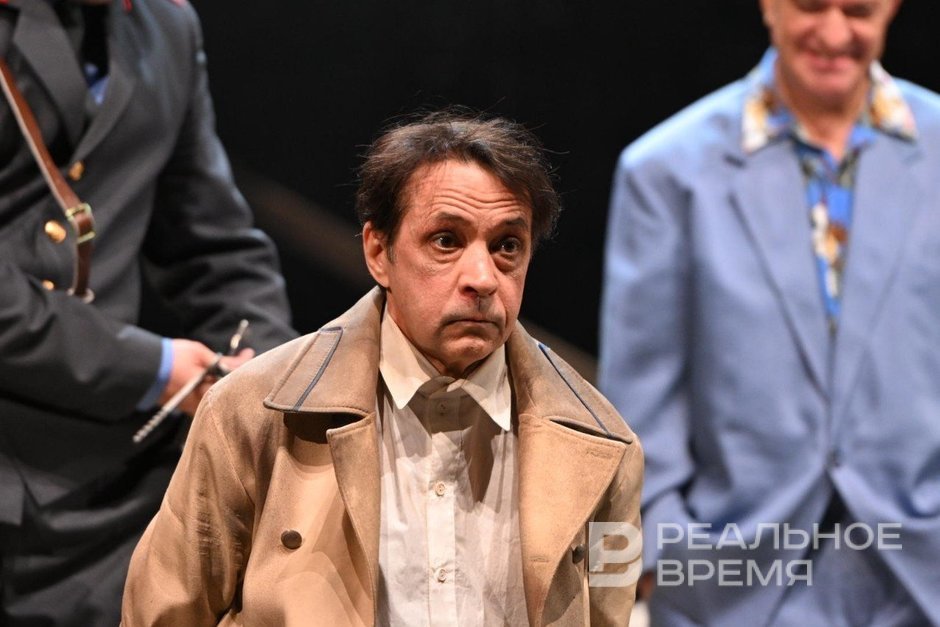
“A simple, understandable story," the spectators in the neighboring row reason. “And sometimes you look and do not understand what is happening.” Wait, think about why Yuldash so meekly accepts the arguments of the prosecutor (Irek Kashapov) and is in general ready, being a father of many children, to serve time in prison. For what does he blame himself?
As is proper in classical dramas, this is the second unexpected turn of the play, which by the will of the author and the director toward the finale has slightly lost its tragedy, probably out of respect for the feelings of the spectators.
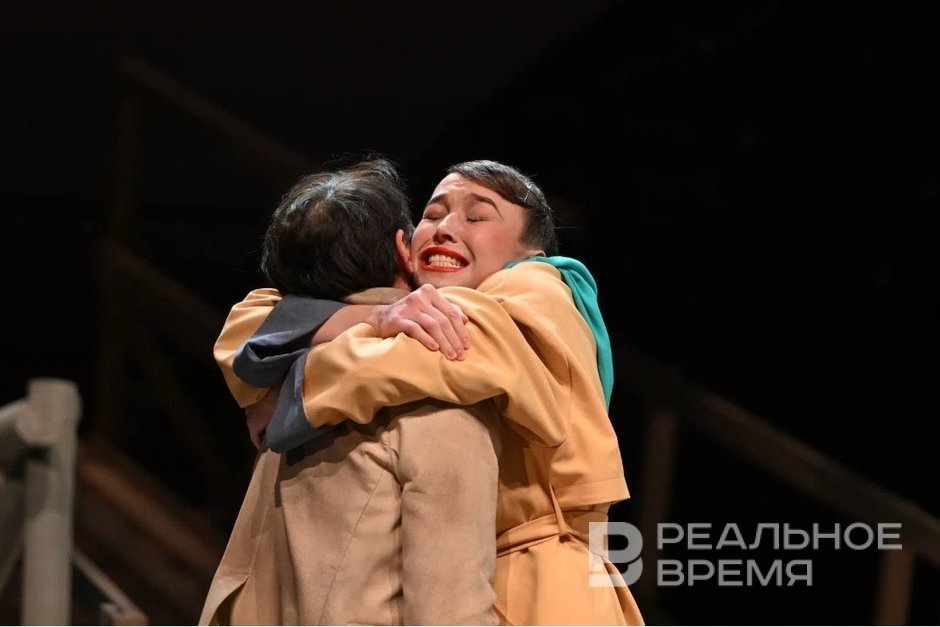
In the finale Sabira, who has not acquired a voice, whirls in a dance from Marcel and Maria Nuriev under the recognizable trumpet of the composer of the play, Yusuf Bikchantaev. And meets the hero, who returns home across the bridge. If the film “Beware of the Car” grew out of the same-name novella, then “The Bridge” too has a chance to establish itself in the repertoire and, possibly, to become the basis for a film.