“Voyager-1” a light day from Earth, potatoes in lunar soil, AI solved a millennium problem
Interesting science news of the week
NASA's “Voyager-1” probe crossed the boundary of one light day from Earth — no man-made object has ever traveled this far. Scientists have found a bacterium that is capable not only of decomposing the “forever chemicals” from firefighting foam but also of thriving with their help. The mathematician Levent Alpoge stated that together with the Claude neural network he solved one of the mathematical Millennium Problems — the Riemann hypothesis. To return the climate to normal, scientists propose moving not to zero carbon dioxide emissions but to “negative” ones — that is, to removing CO2 from the atmosphere. At the University of Oregon several varieties of lunar soil (in an Earth simulation) were tested for growing potatoes.
The “Voyager-1” probe has flown a light day's distance from Earth
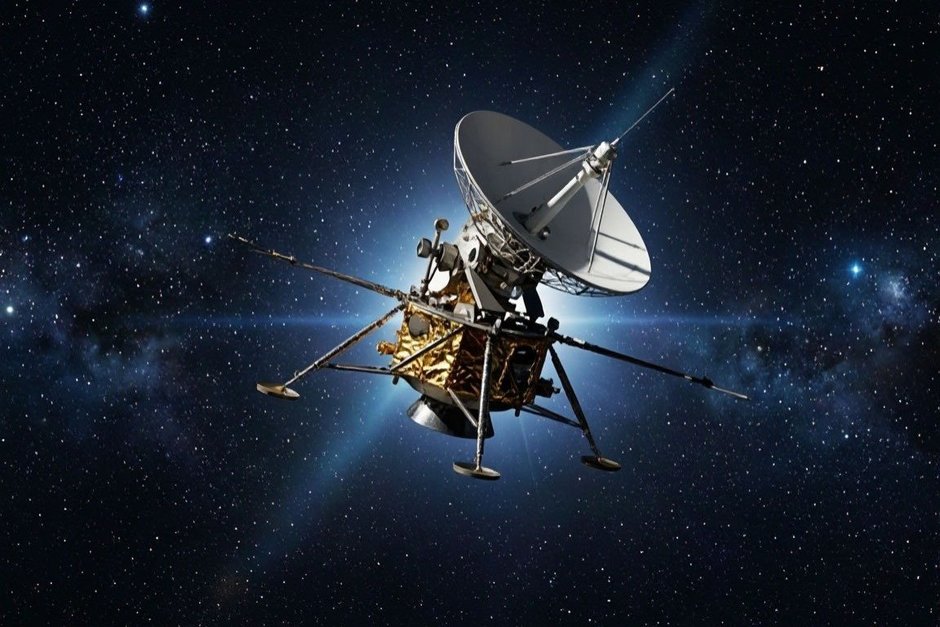
“Voyager-1” has accomplished a historic achievement: on November 18 at 13:16 Moscow time the NASA probe crossed the mark of “1 light day” — 25.9 billion kilometers from Earth. “Voyager-1” has flown away from its home planet farther than any other object ever created by man.
The probe has been flying in space for more than 49 years already — but during this time it has covered only a negligible part of the path to the star nearest to the Solar System, Proxima Centauri. It is located at a distance of 4.2 light years from us. The twin brothers “Voyager-1” and “Voyager-2” set off into space in 1977 — their main task was to explore the outer part of the Solar System, after which to set off into interstellar space.
Past Jupiter, Saturn, Uranus and Neptune the probes flew in the period from 1979 to 1989 — and this completely changed the scientific idea of the Solar System. They discovered volcanoes on Io (a moon of Jupiter) — and this is the first case of volcanic activity found beyond Earth. Their next discovery was the icy crust on Europa, which is covered with cracks and, as scientists believe, may hide beneath itself an ocean suitable for life.
Both space wanderers left the heliosphere long ago: the first probe — in 2012, the second — in 2018. Now they are flying in interstellar space. The plutonium batteries with which the probes are supplied are already being depleted, therefore NASA is sequentially switching off from Earth the scientific instruments located on board the “Voyagers” in order to keep communication with them as long as possible. Now on the second probe three of the ten originally installed instruments work, and on the first — two. With their help, literally “on their last energetic breath," the probes transmit to Earth unique data. After all, these are to date the only direct observations of interstellar space available to Earth scientists. For example, they sent data about shock waves in interstellar space that are caused by especially strong ejections of solar matter passing through the whole heliosphere and bursting out into the “interstellar.”
“Voyager-1” will lose communication with Earth approximately in 2029, and “Voyager-2” — in 2031. But on board they carry a message for extraterrestrial civilizations that may come across the probes ever during their journey into eternity. These are plates with recordings of sounds and images of Earth.
A “forever chemical” turned into a fertilizer for the growth of a bacterium
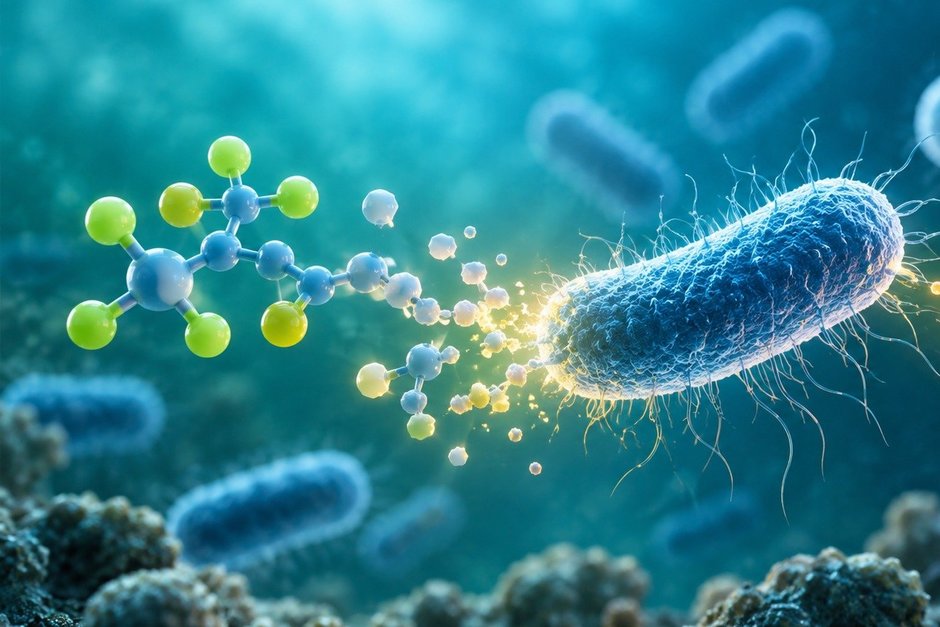
“Forever chemicals” are called substances that almost do not decompose in nature. They can remain in soil and water for decades, and it is not simple to get rid of them. Scientists from the USA discovered a bacterium that is capable of destroying one of such compounds, obtaining from it energy and a stimulus for rapid growth. That is, they found a living creature that feels excellent on a substance from which they had already given up hope of getting rid of in a safe way.
The bacterium Sedimentibacter of strain ZM-1 was isolated from soil and water at a site polluted with fluorine-containing substances from firefighting foam. In the laboratory the scientists checked how it copes with one of such compounds — PFMeUPA. And they were very surprised: in samples where the substance was present in a low concentration, the bacterium neutralized it in less than a day — it replaced the fluorine ions in the molecule with hydrogen. At a high concentration of the substance in the water three days were required for this; at a low one — only a day.
The most interesting thing: the fluorine-containing pollutant turned out to be a “fertilizer” for the growth of the bacterium! When it was given simultaneously a nutrient substance arginine and PFMeUPA, it grew three times faster than on arginine alone. It turned out that the bacterium uses the fluorine-containing compound in its homeostasis, gradually destroying it. And the toxic fluorine ions, which kill other bacterial cells, this astonishing creature has learned to quickly expel outside and thus save itself from their destructive impact.
The discovery may help in the search for new ways of cleaning polluted soil and water. If scientists manage to understand how exactly this bacterium works, its abilities may possibly be used in ecological biotechnologies.
But for now it is a question only of a laboratory experiment. The researchers tested the action of the bacterium on one specific substance. Besides, it does not disappear without a trace after all: the bacterium changes its chemical structure, but scientists have yet to study what happens with the products of this reaction.
Claude helped solve one of the mathematical “Millennium Problems”
The mathematician Levent Alpoge from Anthropic stated that together with the artificial intelligence Claude he found a proof of the Riemann hypothesis. This mathematical problem was formulated back in 1859, and since then not a single researcher has managed to prove that it is true.
This concerns the regularities of the distribution of prime numbers — those that are divisible without remainder only by one and themselves. Alpoge published the result in the form of a huge archive of mathematical code containing about 17.4 million lines. The first independent checks showed that the computer accepts all the presented reasoning. If the correctness of the solution is confirmed, this will become one of the largest discoveries in the history of modern mathematics. The “Millennium Problems” included 7 mathematical problems. One of them — the Poincaré conjecture — was solved by the Russian mathematician Grigory Perelman. The rest to this day remained unproven. Now a duo of a human and an AI lays claim to the proof of one of them.
Prime numbers surround us from the first lessons of mathematics: 2, 3, 5, 7, 11, 13, 17... The other integers consist of them as of factors. For example, 12 can be decomposed into 2 × 2 × 3. At the same time prime numbers are distributed among the others strangely. Sometimes they stand very close — like 11 and 13. And sometimes between them there are tens, hundreds, thousands of other numbers. The further along the number series, the more rarely prime numbers are encountered. Mathematicians have learned to calculate how many prime numbers will be encountered in a certain range. But how precisely do these calculations work and what are the limits of possible deviations?
It is precisely with this that the hypothesis of the German mathematician Bernhard Riemann is connected. He supposed that the distribution of prime numbers is not chaotic, and there is a regularity in it. If his supposition is true, the errors in counting prime numbers can be limited far more precisely than many known mathematical methods allow. Riemann himself formulated the hypothesis through a special function that is now called by his name. Without going deep into the formulas, it allows linking the distribution of prime numbers with certain mathematical points at which the value of the function becomes equal to zero.

Riemann supposed that all these points, with the exception of a few special cases, are located on one vertical line. Mathematicians have checked a huge multitude of such points, and all of them corresponded to the supposition. But to check a finite number of cases — is not yet to prove that the regularity works always. What if among millions of points there is found one that does not fit the hypothesis?
On November 20, 2026, Levent Alpoge, a mathematician working at Anthropic, published a statement that in just several months he together with the LLM Claude managed to find a proof of the Riemann hypothesis. In his words, the developed method allows proving not only the classical Riemann hypothesis but also its generalized version relating to a broader class of mathematical functions.
To present the result in the form of an ordinary scientific article he so far does not manage. According to Alpoge's estimate, the textual exposition of the proof would take more than 250 thousand pages. Instead the mathematician published an archive with software code in the Lean language. It contains about 17.4 million lines and more than 175 thousand separate files. Lean — is a special language for recording and checking mathematical proofs. Its main advantage is that the computer checks not the persuasiveness of the explanation but the logical correctness of each step. If from the previous statements the next conclusion does not follow, the system will not accept the proof.
The publication of a huge archive in itself does not yet mean that the Riemann hypothesis is proven. One must make sure that the program really checks the needed mathematical statement, and that there are no errors or unproven assumptions in the reasoning. There is a fundamental difference between computer verification and the recognition of a scientific discovery. The program can confirm that the proof is logically correct. But scientists still need to sort out what exactly stands behind these millions of lines of code, whether the initial problem is formalized correctly and which mathematical ideas allowed obtaining the result. Alpoge himself admits that he has so far not managed to fully sort out all the constructions that Claude used.

If Riemann's supposition is confirmed, this will give scientists new possibilities for studying the distribution of prime numbers. This will allow developing among other things cryptography and other important branches of science. Besides, many mathematical results that today are formulated with the caveat “if the Riemann hypothesis is true” will be able to be considered proven without additional conditions.
However, for now scientists have yet to finish the check and understand how exactly the solution was obtained. Therefore it is premature to speak about the fact that the Riemann hypothesis is already definitively proven. But if Alpoge's statement is confirmed, mathematics will receive an answer to a question that remained open for almost two centuries. And some scientists say that this will become the death of classical mathematics and prophesy a crisis of “human science.”
Zero emissions are no longer enough: scientists propose removing carbon dioxide from the atmosphere
The world, most likely, will not be able to keep global warming within the 1.5 degrees Celsius provided by the Paris climate agreement. Even if all countries fulfill the obligations to reduce emissions and come to carbon neutrality (net zero), the temperature on the planet will exceed this threshold in the coming years — according to UN data, by the end of the century even by the most optimistic forecasts warming will amount to about 1.8 degrees. Each tenth of this value increases the risk of natural catastrophes — powerful hurricanes, forest fires and other severe consequences.
Therefore the participants of the COP31 climate summit, which is taking place right now in the Turkish Antalya, are discussing a new goal — negative emissions (net negative). This means that humanity must remove more carbon dioxide from the atmosphere than it produces. According to estimates of the UN Environment Programme, to return to the target level of warming it will be necessary to extract from the atmosphere not less than 330 billion tons of CO.
How to do this? Now humanity uses first of all natural mechanisms of removing carbon dioxide. For example, trees absorb it during growth. Projects for the restoration of forests and ecosystems annually allow removing from the atmosphere about 2 billion tons of CO. But this is insufficient for solving the climate problem. It will be necessary to develop technologies of direct extraction of carbon dioxide from the air with the help of special chemicals and subsequent storage.
For now such technologies are at an early stage of development. According to Nature data, all existing installations in aggregate have extracted from the atmosphere about 1.7 million tons of CO. This is less than 0.1% of the minimum volume that will need to be removed annually to return from the climate overshoot. At the same time ecological organizations fear that the hope for future technologies will distract governments from the main task — reducing the use of coal, oil and gas.

Thus the struggle against global warming may pass to a new stage: humanity will have to not only stop polluting the atmosphere but also gradually remove from it the carbon dioxide accumulated over decades. The international coalition Group of Negative Emitters (GONE), uniting eight states, is trying to promote the new climate goal. Among its participants — Denmark, Ethiopia, Finland, Panama, Kenya, the Netherlands, Sweden and Suriname. Finland intends to achieve negative emissions by 2035. Panama and Suriname already consider themselves countries with a negative carbon balance thanks to vast forests.
How will lunar potatoes grow?
If people are going to settle on the Moon for a long time, they will have to solve not only the question of housing and oxygen but also of food. Constantly delivering products from Earth is expensive and difficult, therefore scientists are looking for ways to grow crops right on the Moon. It is logical that they are going to grow potatoes: it is nutritious, gives many calories from a small area and is well suited for experiments.
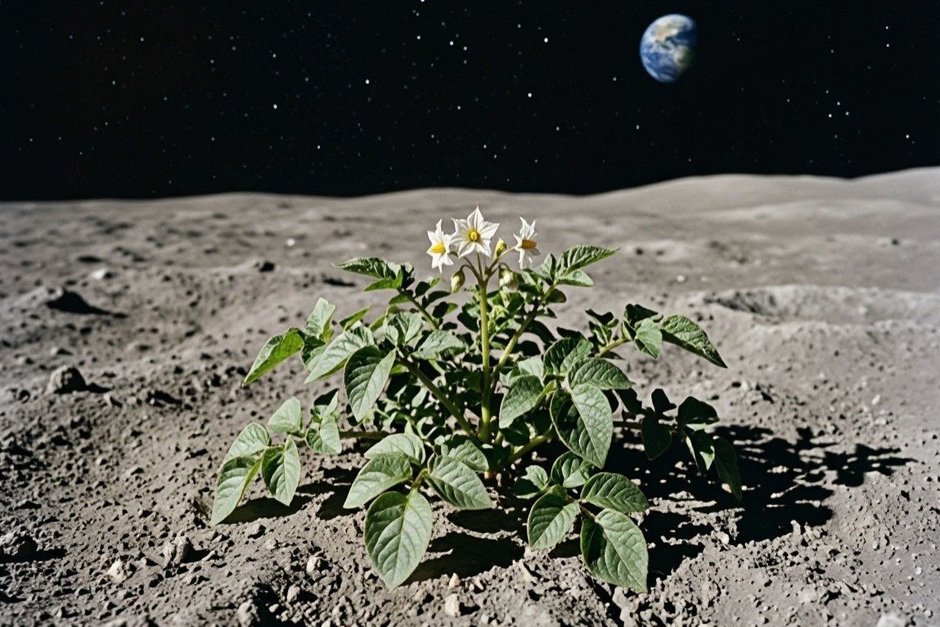
Researchers from the University of Oregon (USA) checked how potatoes will grow in lunar soil. Of course, not in the literal sense — there is still not enough real lunar regolith for experiments on Earth. Therefore five varieties of lunar soil were modeled from Earth materials, trying to reproduce the original composition as much as possible.
In the pure regolith simulator the potatoes developed very poorly: the plants remained small, the roots hardly formed, and the harvest of tubers was minimal.
But as soon as organic matter was added in the form of vermicompost (an organic fertilizer obtained with the help of earthworms), everything became much more cheerful. When the compost made up 15% of the mixture, the plants felt better. At 30% of the mixture the potatoes grew approximately as in ordinary Earth soil. And sometimes even gave heavier tubers.
Then the scientists compared five types of lunar soil simulator, to each of which only 5% of compost was added. The potatoes managed to pass the full life cycle and form tubers in all the variants, but the harvest in each of them turned out lower than in Earth soil. Most of all the plants suffered in one of the simulators: the sprouts appeared almost a month after planting, and the tubers formed only in three of the five plants.
The researchers checked not only the yield but also the composition of the tubers. They were interested in whether the plants accumulate dangerous substances, in particular glycoalkaloids — natural compounds to which solanine and chaconine belong. In large quantities they are toxic to humans. No substantial changes in the content of these substances were found. On the whole the composition of the tubers turned out close to potatoes grown in Earth soil. True, in some samples the content of copper, zinc and aluminum increased. Therefore the safety of such a harvest is yet to be studied.
The authors emphasize: the experiment was conducted not with real lunar soil but with its Earth analogues. They may differ from the regolith delivered to Earth by space missions. Besides, the plants received a complex mineral fertilizer, since the soil simulators in themselves do not provide the potatoes with the necessary nutrients.
Nevertheless the experience showed that growing potatoes in materials similar to lunar soil is in principle possible. For this it will be necessary to add organic matter, control the composition of the substrate and monitor which substances get into the tubers. This is one of the steps toward creating systems that will allow the future inhabitants of the Moon to produce part of their food independently.