What to read: “convenient” dead Jews, the gloomy world of the “Hungarian Kafka” and an angel at war
“Real Time” selected three bright book novelties of October
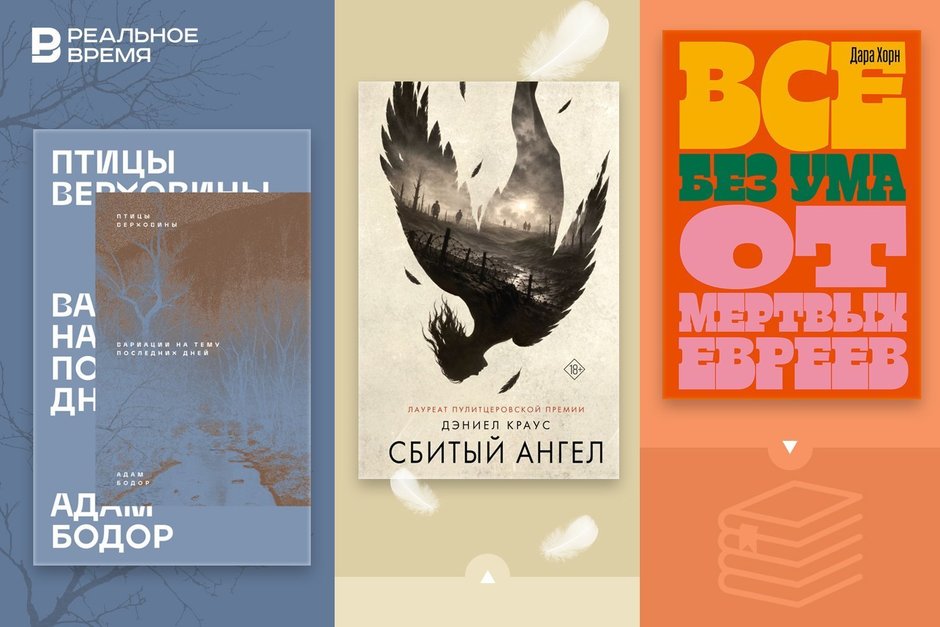
Choosing the book novelties of October was quite difficult. The publishers saved all the most interesting for November, closer to the non/fiction fair. But that made all the more valuable the finds that could have gone unnoticed among the abundance of book hits in other months. In the end the literary reviewer of “Real Time” Ekaterina Petrova found furious essays about the perception of Jewish culture, a novel by a living Hungarian classic about the disintegration and disappearance of a world, and also a horror about the cyclicity of war and its undisguised physiology.
Dara Horn. “Everyone Is Crazy About Dead Jews," “Knizhniki” (translation from English by Darya Fedoseyeva, 240 pp., 16+)
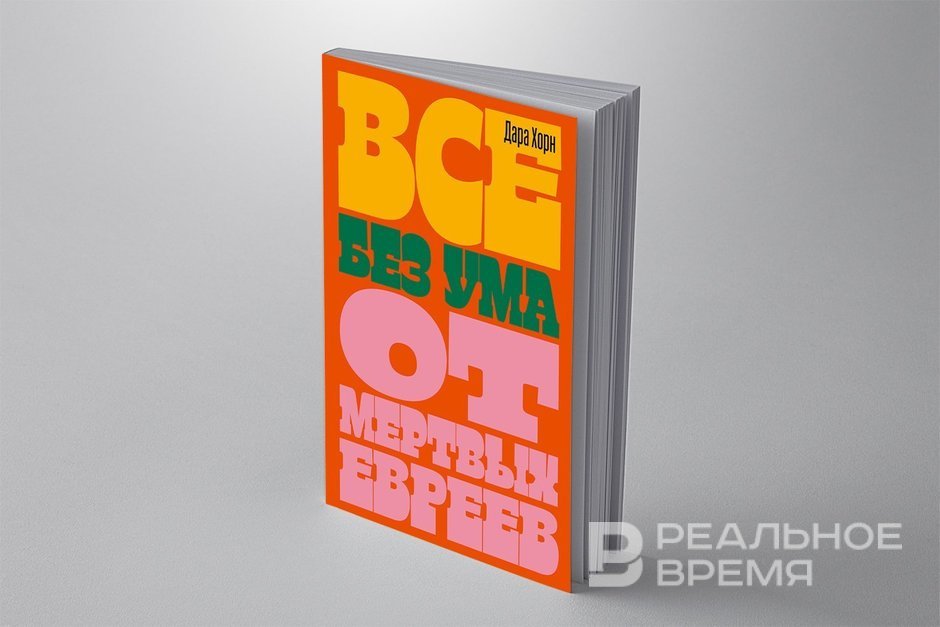
In 2018 a scandal broke out connected with the Anne Frank House museum in Amsterdam. One of the employees (a Jew) was forbidden to wear a kippah so as not to focus attention on his Jewish identity. The representatives of the museum then explained this by the neutrality of the institution in relation to all confessions. It took several months to resolve this conflict and allow the wearing of the kippah. This case (as well as many analogous ones) made the novelist and researcher of Jewish culture Dara Horn reflect on the paradox: why does a museum dedicated to the memory of a Jewish girl killed by the Nazis show intolerance toward a living Jewish identity. The result of the reflections became a collection of 12 essays under the title “Everyone Is Crazy About Dead Jews," in which the scattered notes turned into a whole investigation.
Horn asserts that the world has a passion for dead Jews but is absolutely indifferent and even hostile to the living. She investigates how the memory of the Holocaust and Jewish history are exploited and turned into a convenient instrument for the self-reassurance of non-Jewish society. For example, the writer analyzes the phenomenon of the worldwide fame of Anne Frank and supposes that she would hardly be so loved if she had survived. Horn analyzes in detail how the main and only work of the girl is constructed, and also compares it with other recollections of Jews, less successful by virtue of their frankness and naturalistic description of the experience of survival in the concentration camps. Unlike these books, the image of Anne Frank was smoothed out, made a “convenient” victim.
Or that same Varian Fry — an American journalist who saved thousands of Jewish intellectuals and artists from the Nazis. Who knows about him? Practically no one. Horn tells his story and creates a subtle psychological portrait, and also asks the question why his feat is so little known compared with other stories of rescue, for example that of Oskar Schindler. Or the completely outrageous case with the Jews of Harbin, who were destroyed or expelled, their whole property and business confiscated. Now the history of the Jewish community in China is a bright example of commercialization in the form of a tourist attraction deprived of connection with a living culture.
Horn writes emotionally and furiously and does not spare the reader's feelings, which sobers one up. She gives a completely different point of view on Jewish history, living and dead. This is a quite unconsoling read, rather an intellectual challenge that forces one to reconsider one's attitude to the monuments of preservation of “Jewish heritage” and to think about what actually stands behind them.
Ádám Bodor. “The Birds of Verbó," NoAge (translation from Hungarian by Yuri Gusev, 288 pp., 18+)
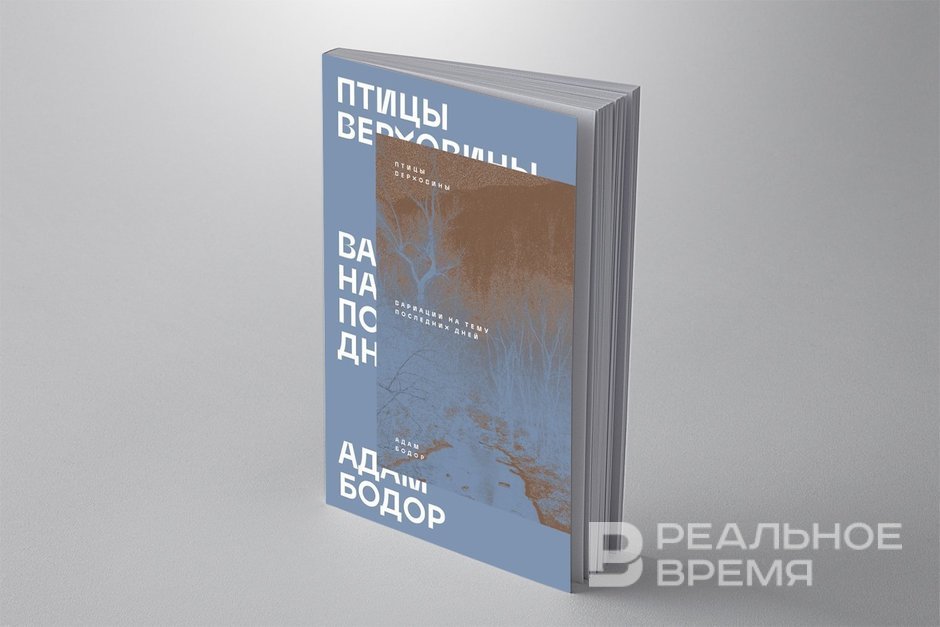
Ádám Bodor is a living classic of Hungarian literature. He was born in 1936, spent his youth in totalitarian Romania, and in 1982 emigrated to Hungary. “The Birds of Verbó" is a late work of his, published in the original language in 2011. Although this book is called a novel, formally “The Birds” is still a collection of novellas. Initially they came out in various publications as separate, independent works. But the writer and the editor decided to unite them into a novel, removing the table of contents and leaving the titles of the chapters only in parentheses, in order to emphasize the integrity of the work.
The action of the book unfolds in the fictional mountainous locality of Verbó. It turned out cut off from the rest of the world after the closure of the railway. The main hero, a young man named Ádám, lives here and tries to become “one of their own” in this strange place. He has come to the station where he must meet a barefoot young man from the correctional colony, Dániel Vandeleur. At the same time another central character of the novel is inexplicably arrested — the foreman of the water supervision, Anatol Korkodush, around whom the main intrigue is built. The local inhabitants are to match the settlement itself, just as strange: the extremely dissolute priest Ambrosius, Nika Karanika who resurrects children with her tears, the deaf-mute girl Roswitha, the spouses Augustina and Delphina suspected of killing children, who, according to rumors, hanged her husband. And also the hotel owner Edmund Pohoriles, the seamstress Alivanka, Madame Isidora and Klara Bursen.
The world of Verbó is gloomy and cruel; betrayal is perceived as a forced inevitability. Everything that happens is absurd, which is why Bodor's “Birds” is often compared with the works of Kafka. But, unlike Kafka, here the reader is horrified and at the same time laughs at the senselessness of what is happening. And all this is covered by the hand of totalitarian power, which the writer does not depict directly. Totalitarianism here is invisible; it has no center. But it, like a deadly virus, penetrates everything living and slowly destroys, according to the subtitle of the novel — “Variations on the Theme of the Last Days.” By the way, the title “The Birds of Verbó" also speaks of this, because there have long been no birds there. Disintegration, decline, the destruction of the way of life and the disappearance of a whole world — this is what Ádám Bodor's strange but strong novel is about.
Daniel Kraus. “Whalefall” (“The Downed Angel”), “Astrel-SPb” (translation from English by Natalia Osoyanu, 352 pp., 18+)
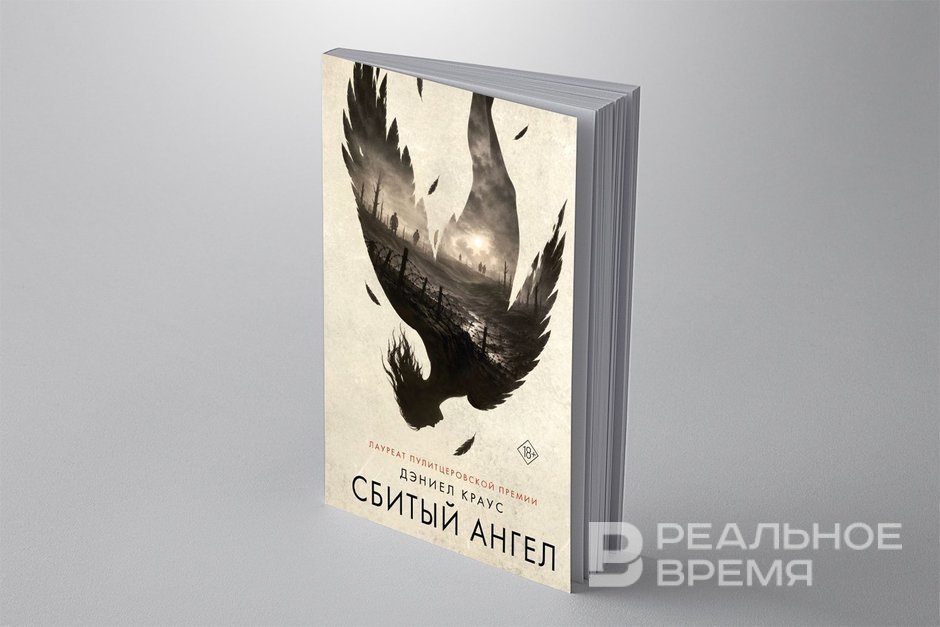
“The Downed Angel” is a military-historical horror and an anti-war manifesto at the same time, and also a literary experiment of Daniel Kraus that brought him the Pulitzer Prize in May of this year. Kraus became the first horror author to be awarded this prize. The whole text is written in one continuous sentence, and each paragraph begins with the conjunction “and.” By this, according to the writer, he wanted to convey the horror and cyclicity of war. Kraus himself specializes in somewhat different literature — classic horror and speculative fiction. He is also known for joint works with Guillermo del Toro and George A. Romero.
The idea of “The Downed Angel” came during work on another historical project. During the research of materials about World War I Kraus understood that the theme would not let him go. The action of the novel takes place in October 1918, in the last days of the Meuse-Argonne Offensive — the deadliest battle in US history. Private Cyril Bagger, who in peaceful life was a cynical swindler and cardsharp, miraculously survives after being hit by a mortar shell. Across the battlefield a non-human cry spreads that drives the surviving soldiers insane. At the same time Bagger hears a weak voice calling him by name and asking to save.
Major General Reis sends Bagger together with four other soldiers to No Man's Land to find the source of the cry and “pacify” it. Only they find not a wounded soldier at all, but a downed angel — a woman in a red dress and blue cloak tangled in barbed wire. The angel becomes a “mirror” for the soldiers. Each sees in her what he most desires: Bagger — an object of protection, the young Arnaud — a mother, Popkin — his beloved, Weck — a daughter, and Goodspeed — a commodity on which one can make money. But not all the soldiers manage to return to the detachment: while they carry the angel, their own vices (greed and lust) literally tear them apart from within.
This human physiology and the physiology of war itself — is the strongest part of the novel. In the rest it is hard to call “The Downed Angel” something noteworthy. No, this is a well-written book. In it there is an excellent rhythm, it draws one in, but no more. The experimental device of the stream of consciousness, when the book is written in one sentence, is not new. The novels of Mike McCormack “Solar Bones” (a little more than 200 pages) and László Krasznahorkai's Herscht 07769 (about 400 pages) are written in the same way. But the most impressive work — the monumental novel (more than 1 thousand pages) of the British writer of American origin Lucy Ellmann “Ducks, Newburyport," written in the form of the stream of consciousness of a housewife from Ohio who bakes cakes and reflects on politics, ecology, anxiety and motherhood.
Ekaterina Petrova — literary reviewer of the online newspaper “Real Time," host of the Telegram channel «Булочки с маком».