The hell chicken, the clever crow, harmful tobacco heating systems
Interesting science news of the week
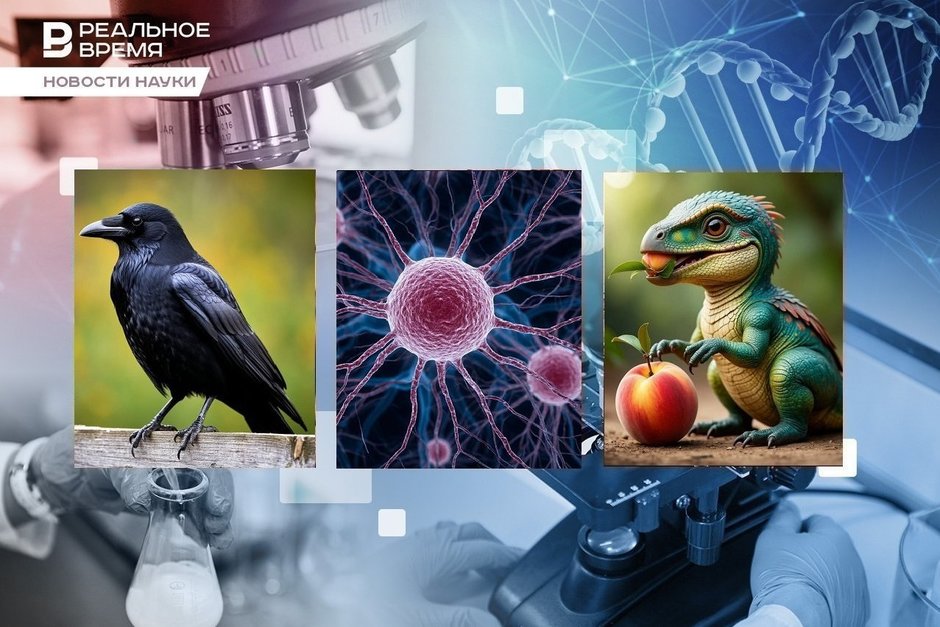
Hell chicken: the first dinosaur that fed on fruits has been found
The first flowering plants — and therefore juicy fruits — appeared about 130 million years ago, in the era of the flourishing of the dinosaurs. Ancient birds briskly began to feed on them. But the dinosaurs, it seems, did not much like the new delicacy. Surprisingly, until now paleontologists have never found the remains of dinosaurs that specialized in feeding on fruits. But they could not believe that an incredible food resource had appeared and the dinosaurs simply did not react to it. Now this ecological niche has finally found its first inhabitant.
67 million years ago in the west of the present-day USA stretched humid forests. Now this is the geological formation Hell Creek, which reliably supplies fossil remains of animals of the Cretaceous period. In July 2011 the remains of a hitherto unknown dinosaur from the group of caenagnathids were found here. It was studied for a long time, the fossilized bones were separated from the rock for many years. It was clear that this was one of the ancient relatives of modern birds, and the new species was given the name Infernogallus jamesi (in direct translation from Latin — the hell chicken of James).
And now, when the scientists have meticulously studied the skeleton, they confidently say: this is the first found dinosaur that fed predominantly on fruits. The structure of its skull hints at this. The hell chicken lived simultaneously with the tyrannosaurus and triceratops familiar to us. It was about the size of a turkey and weighed about 12 kilograms. It had no teeth, and the beak was very similar to the beak of modern parrots. And its whole skeleton strikingly resembles a parrot's.
The diet was determined by the bones of the skull: from them it is clear where strong muscles were developed and where weak ones were. Everything indicates that the hell chicken did not possess a powerful bite force, but it moved its lower jaws quite intensively — like all animals that feed on plants and grind them. On the beak of the hell chicken there are characteristic ridges. All this is present only in one group of modern animals — in those very parrots. And parrots feed predominantly on fruits.
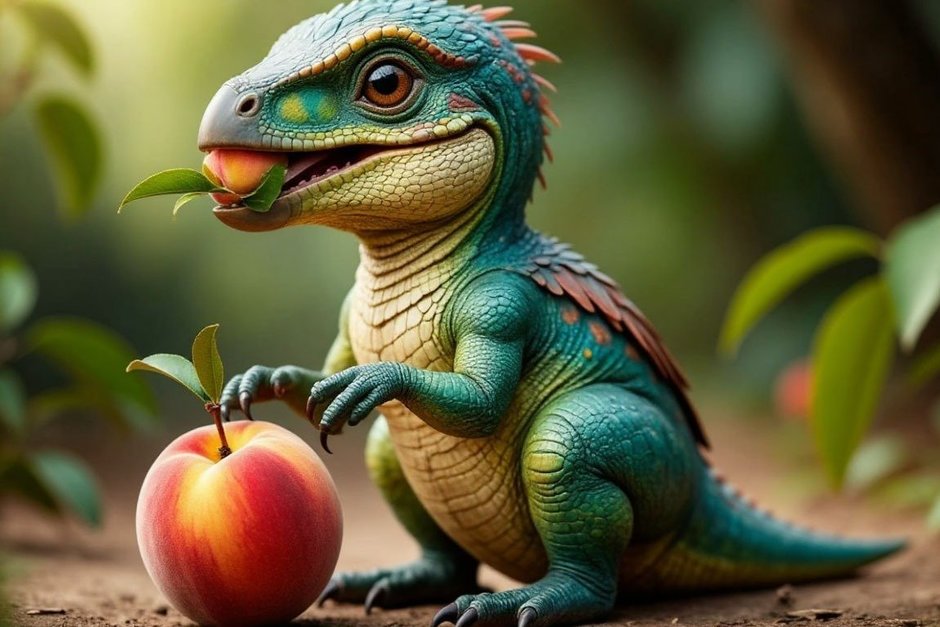
The scientists consider that the hell chicken ate mainly fruits with tender flesh and a hard pit. The line of these animals began to specialize and stand out precisely at the moment when such fruits appeared — they are called drupes. So the dinosaurs of the Cretaceous period did not only actively devour each other and gnaw ferns. The “novelties” of evolution — ancient peaches and cherries — also attracted separate gourmets of the Cretaceous world.
Even before birth the brain conducts a general cleanup and throws out mutant neurons
In the developing human brain a kind of quality control system may operate, which rids it of nerve cells with genetic disorders. To such a conclusion came American medics from Boston Children's Hospital, who analyzed more than 2.3 thousand neurons from brain samples of people of various ages. It turned out that during intrauterine development a significant part of the nerve cells have disorders of the chromosome structure, however after birth such neurons become far fewer.
The scientists studied the brain tissues of people of various ages — from embryos at the 14th week of pregnancy to people older than 90. They paid the main attention to the neurons of the cerebral cortex, which participates in the processes of memory, learning and consciousness.
The researchers analyzed the genomes of individual nerve cells and looked for changes in which individual sections of chromosomes are lost or, on the contrary, begin to duplicate. Such disorders were found in more than a quarter of the studied neurons of the 14-week fetus. Among the brain cells of full-term and successfully born infants their share was already about 6%.
Thus the prevalence of neurons with genetic deviations after birth decreased more than fourfold. Does this mean that the brain “sifts out” them in the process of development? Why the brain rids itself of some neurons while preserving others is not yet established. However the authors of the work discovered a possible clue: cells with a large number of chromosomal disorders more often demonstrated deviations in the activity of genes responsible for the formation of synapses — the contacts through which neurons transmit signals to each other.
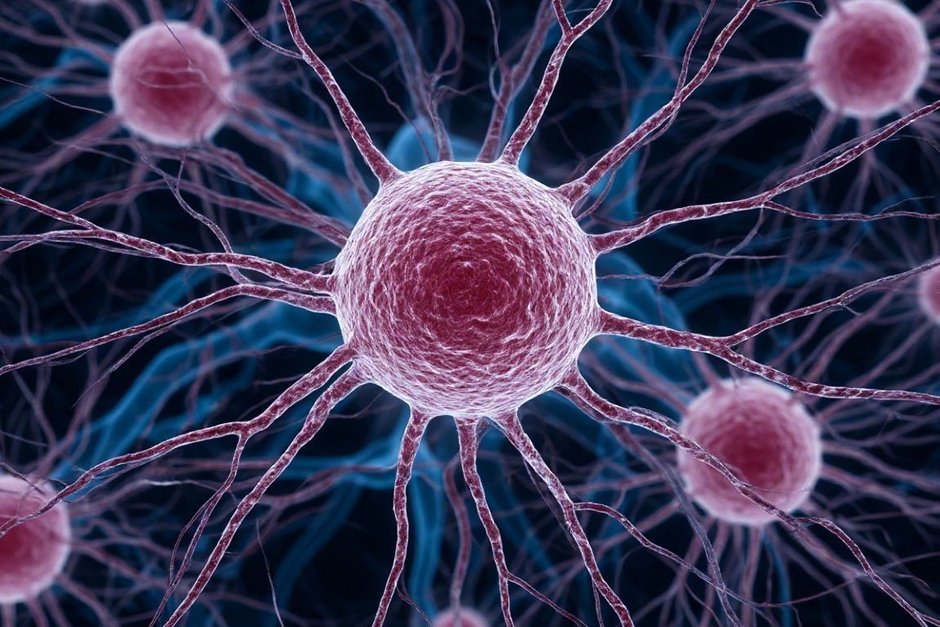
According to one hypothesis, the brain may eliminate cells that are not capable of correctly building connections with other neurons. Moreover this may happen even in the case when such cells have no genetic disorders. The researchers suppose that a similar mechanism helps regulate not only the quantity of nerve cells but also the quality of the forming neural networks. If the control system works incorrectly, non-functional neurons may remain in the brain, or, on the contrary, cells necessary for its normal operation may be eliminated.
The study of this process may help better understand the origin of some disorders of the development of the nervous system, including autism spectrum disorders and epilepsy.
Crows make decisions twice as fast as humans and monkeys
Crows are capable of making conscious decisions with astonishing speed. In an experiment of German scientists the birds determined the direction of movement of objects on average in 235 milliseconds — approximately twice as fast as humans and monkeys cope with comparable tasks. At the same time the high speed did not hinder the accuracy of the answers.
The experiment was conducted by scientists from the Institute of Neurobiology of the University of Tübingen. The scientists trained two carrion crows (Corvus corone) to distinguish the direction of movement of dots on a touch screen. On a black background a multitude of white dots appeared: part moved predominantly to the left or to the right, the rest moved in random directions. The task of the birds consisted in determining the prevailing direction and pressing with the beak on the corresponding target. For a correct answer the bird received a treat — a little worm.
The difficulty of the task varied depending on the number of dots moving in a coordinated way. When there were many of them, it was not hard to determine the direction of movement. But even if only 3% of the dots moved in one direction, the birds coped with the task noticeably better than random guessing. With more obvious visual signals the accuracy of the answers approached 100%.
To understand how the brain manages to process information in such a short time, the researchers simultaneously recorded the activity of 248 neurons in that area of the bird's brain which is responsible for cognitive capabilities. It turned out that the activity of the neurons allowed predicting the crow's choice 70 milliseconds after the appearance of the moving dots on the screen. This happened 170 milliseconds before the bird answered the task. As visual information accumulated, the activity of the corresponding neurons grew, and by the moment of the answer converged to a certain level.
A similar principle of information processing was earlier observed in primates: neurons accumulate the incoming signals until their activity reaches the threshold necessary for making a decision. The new results show that a similar mechanism works in the brain of birds too, although its anatomical structure substantially differs from the brain of mammals.

Birds do not have the layered cerebral cortex characteristic of mammals. Nevertheless they are capable of performing complex cognitive tasks using differently organized brain structures. According to the researchers, this testifies that for complex information processing and decision-making it is not obligatory to have precisely such a cortex as in humans.
The scientists suppose that the high speed of processing visual information could have formed in the course of evolution under the influence of the peculiarities of the bird way of life. During flight it is necessary to quickly assess the position of obstacles, orient in space and coordinate movements. Equally important is the speed of reaction in the search for and capture of food.
At the same time the authors of the work emphasize that additional research will be required for understanding the mechanisms of such fast decision-making. After all, the experiment was conducted on only two birds — this is hard to call a representative sample. And the comparison with humans and monkeys is based on the results of previous studies, and not on direct testing of all three species under identical conditions.
Two smoked sticks disrupted the work of vessels and damaged the DNA of blood cells
Tobacco heating systems, which are not rarely positioned as a less harmful replacement for ordinary cigarettes, are capable of causing unfavorable changes in the organism already after a single session of use. To such a conclusion came a group of researchers from the University Medical Center of Mainz (Germany). In an experiment with the participation of 30 healthy smokers the scientists discovered a worsening of the function of blood vessels, an increase of systolic arterial pressure and signs of DNA damage in blood cells. And all this — after a single session of using tobacco heating systems.
The participants of the study were offered to use two heated sticks. The procedure took place under the observation of specialists and took about 8—12 minutes. Before and immediately after it the scientists measured arterial pressure, assessed the state of the vessels and took blood samples for analysis. The average age of the volunteers was 34.5 years.
One of the main indicators became the so-called flow-mediated dilation of the brachial artery. This is a method of assessing the function of the endothelium — the inner layer of blood vessels, which regulates their expansion and contraction. Normally with increased blood flow the vessels expand. If such a capability is disrupted, this may be an early sign of increased cardiovascular risk. After the sticks the endothelial function noticeably worsened. Simultaneously the participants' systolic arterial pressure rose — the upper value when measuring pressure.
The indicators of the gas composition of venous blood also changed. After the session of using the device the oxygen saturation in it decreased, and the content of carbon dioxide grew. Besides, the level of methemoglobin increased — a form of hemoglobin that is not capable of fully carrying oxygen. The scientists also recorded an increase in the concentration of glucose and a decrease in the level of lactate.
Another result of the experiment concerns the state of DNA. After the use of the tobacco heating system the signs of DNA damage in blood cells intensified. However this analysis was conducted only in six participants, therefore the result requires additional verification on a larger sample.
The authors of the work consider that the discovered changes may be connected with the impact of nicotine and other components of the aerosol formed during the heating of tobacco. Nicotine is capable of activating the sympathetic nervous system, narrowing the peripheral vessels and raising the pressure. The aerosol contains fine-dispersed particles and chemical compounds capable of causing oxidative stress — a state in which the damaging action of reactive oxygen forms exceeds the possibilities of the organism's antioxidant defense.
The authors consider that the results cast doubt on the idea of tobacco heating systems as a safe alternative to smoking for the cardiovascular system. Even if such devices reduce the impact of some substances formed during the burning of tobacco, they do not exclude the impact of nicotine and other potentially harmful components.
How the Universe ceased to be dark: scientists modeled the birth of a transparent cosmos
After the Big Bang the Universe gradually cooled, and atoms of hydrogen and helium formed in it. But the cosmos was not yet transparent: neutral hydrogen absorbed light, not allowing it to spread freely over great distances. The situation began to change with the appearance of the first stars and galaxies. Their radiation deprived the atoms of electrons, gradually changing the properties of the intergalactic medium — increasing its transparency. This process is called reionization.
An international team of astrophysicists created a computer model Lumina, which allows tracing how the transformation of the early Universe into a medium transparent for light occurred. The model reproduces the joint evolution of galaxies, active galactic nuclei and intergalactic gas. This is the first model of such enormous scale in which both the movement of gas and the radiation of light are taken into account. For the calculations the scientists modeled a cosmic cube with a side of 500 megaparsecs in comoving coordinates (1.5 billion light years). In it they reproduced how gas, dark matter and radiation interacted with each other after the Big Bang. How stars, galaxies and supermassive black holes were built.
One of the main results of the work — the separation of two important stages of cosmic history. The first is connected with the reionization of hydrogen, the second — with the reionization of helium.
Hydrogen reionization began around the first sources of light. The ultraviolet radiation of young stars knocked electrons out of hydrogen atoms, forming around galaxies regions of ionized gas. Gradually they expanded and connected. The next stage was connected with helium. To remove the second electron from its atom, more energetic radiation is required. The main sources of such radiation became active galactic nuclei — the regions around supermassive black holes that absorb the surrounding matter and release an enormous quantity of energy.
Reionization influenced not only the transparency of the cosmos but also the temperature of the intergalactic gas. Absorbing radiation, it heated up. The model recorded an especially noticeable additional rise in temperature during the ionization of helium.
The researchers checked the results of the calculations by comparing them with observation data. In particular, the optical thickness of the scattering of the relic radiation obtained by the model agrees well with the measurements of the Planck space observatory. On the whole the calculated history of heating and ionization of gas corresponds to the available observational constraints.
The authors count on using Lumina for the further study of the formation of galaxies, the distribution of active black holes and the properties of the intergalactic medium. The large volume of the model allows studying not only typical cosmic structures but also rare objects and large-scale differences between individual regions of the Universe. Lumina is considered as a unique platform for testing absolutely new cosmological hypotheses. By comparing images of the real cosmos with the predictions of the simulation, astronomers will be able to check whether we correctly understand the laws of physics.