“During the sanctions period we became stronger, then the Chinese caught up”
Interview with Kirill Kozlov, one of the leaders of the Russian national trampoline team
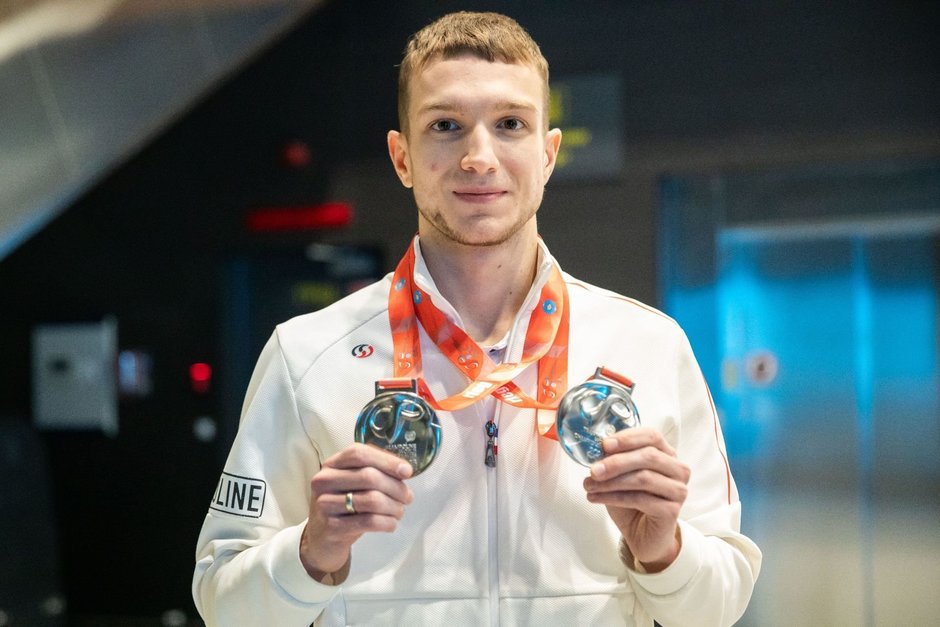
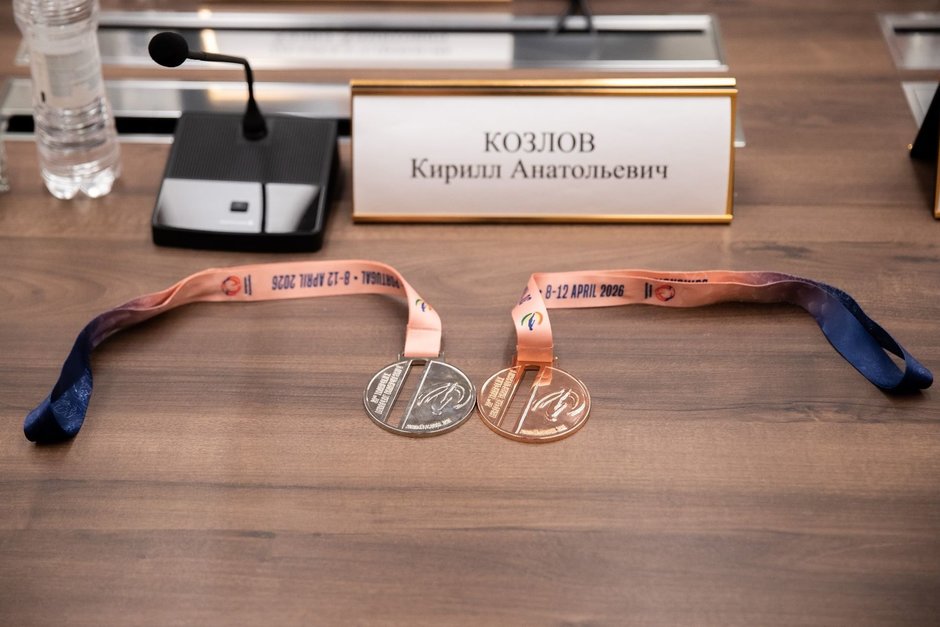
Last summer, Russian athletes were reinstated in international trampoline competitions. Already in November, the Russians performed successfully at the World Championships, winning several medals. They repeated their medal success in the spring at the European Championships. One of the leaders of the Russian national team is Kirill Kozlov, originally from Naberezhnye Chelny. At the first tournaments after a three-year suspension, the athlete from Tatarstan won two silver and two bronze medals. How foreign competitors reacted to the return of the Russians and what difficulties trampolinists from Tatarstan face, Kirill Kozlov told in an interview with Realnoe Vremya.
“You need to perform with a cool head”
— Kirill, what emotions did you experience from the European Championships? On one hand, you won two medals, but on the other, you just missed out on gold.
— First and foremost, joyful emotions. At first, you don't realize that you've achieved a result. But then you need to quickly forget that joy. Because soon there are new competitions, and you gradually start preparing for the next events.
— Was there any moment during your performance when you caught yourself thinking that the medal was already in the bag?
— Usually, when such thoughts appear during a performance, you immediately make a mistake and can forget about the medal. I've had that happen several times. When I would realize towards the end of a routine that I had achieved a result good enough for a medal, the routine would immediately end, cut short, and I would be left without a medal. So you always need to try to perform with a cool head.
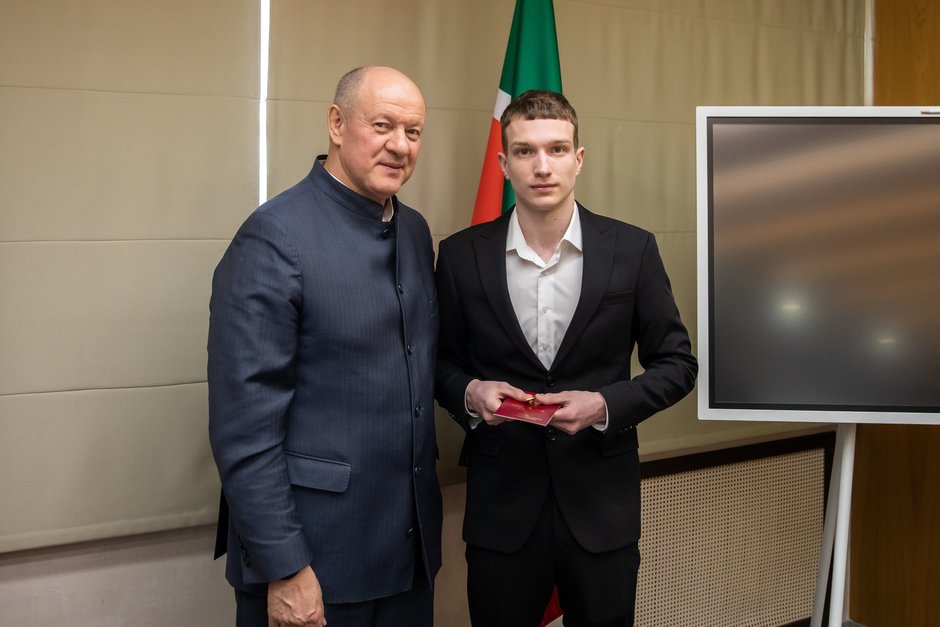
— At a meeting at the Ministry of Sports of Tatarstan, you said that at the European Championships, athletes from other countries treated the Russians well. How was it at the first competitions after the lifting of sanctions?
— It was just as calm as now. Nothing changed at all, everything remained as it was before the suspension.
— Do athletes from other countries talk and interact?
— Those who know the language communicate. No problems at all. At all our events, we interact with the same people. Because at major competitions, a country can enter four athletes per discipline — four men and four women. The lineup rarely changes.
— How did the sanctions affect the Russian team? Did it worsen its position on the world stage or were there any advantages?
— On the contrary, during the sanctions period, we became stronger. During the suspension, we had many training camps. We trained, worked hard, refined our skills, and improved significantly during that time. When we returned, in the first World Cup stage semifinals, the top five places were occupied by athletes from Belarus and Russia — those who had been suspended. Afterwards, the Chinese caught up with us.
“We lack our own training hall”
— Next up is the Russian Championship. What are your plans before the tournament? Will you work on increasing the difficulty of your routine or focus on consistency?
— The focus is on consistency; we will refine my routine. I have a decent difficulty coefficient. If something is lacking, there is potential to add difficulty. For now, we'll work on stability. I'll practice jumping; my routine is new anyway. I've only just assembled it.
— Do you feel any particular support from the state or the republic after your successful performance on the world stage?
— Of course, it's felt. Before the World Championships, I had several requests to the Ministry of Sports. After the tournament, they were promptly fulfilled. They invite me, congratulate me — that wasn't the case before. The support is felt very strongly.
— And financially?
— Financially as well. Support has also increased in that regard, which is pleasing.
— Is that through scholarships or some other awards?
— No, the scholarships and salaries are sufficient.
— Medals at the European Championships, World Championships, and World Cup are an excellent result. But athletes never stop there. What particularly hinders you from taking the next step?
— I already mentioned at the meeting at the Ministry of Sports that we lack our own training hall. We have to go to training camps in other regions where we get into shape and improve our results, but when we return home, our training results drop. We don't have a constant, single form of preparation. We come home — we reduce the load because there isn't enough space, ceiling height, or even basic safety systems. You need to understand that when there's little space, you start to compress your jumps. This limits you not only externally but also psychologically. In a spacious hall, you even feel freer.
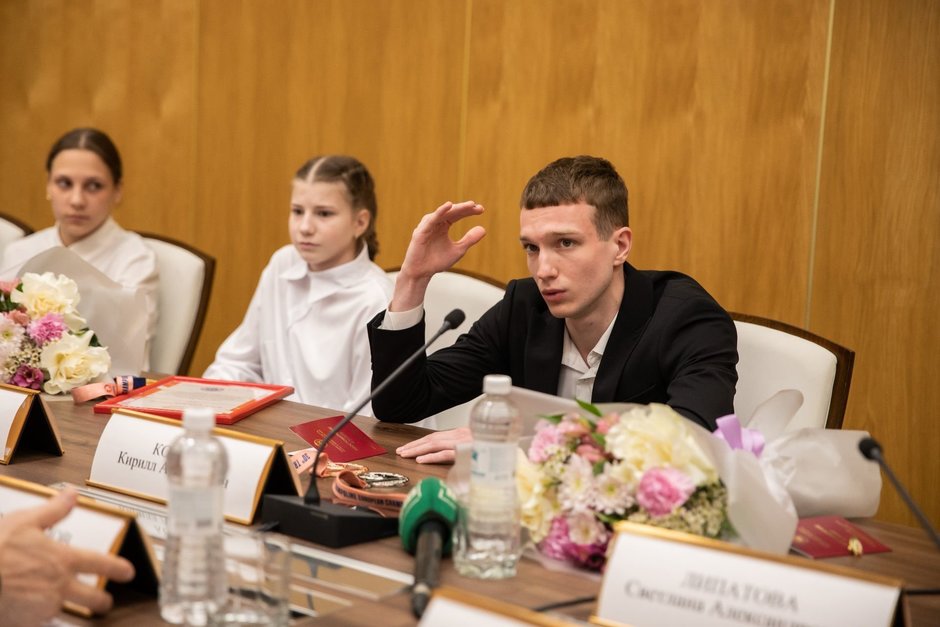
— Are you referring to the “Olympic” complex in Naberezhnye Chelny?
— Yes, where, besides us, athletes from other sports also train. I'm glad they promised to help us with a new facility.
Over the past three years, the level of trampoline jumping has increased significantly
— How did you get into trampoline jumping? Was it a spontaneous decision or did you purposefully choose this sport?
— My father brought me into it. He himself practiced this sport. Back in his youth, he decided that he would put his son into trampoline. And here I am, still doing it.
— Do you regret going into this sport?
— No, not at all. Sport gives a lot and teaches a lot. Here you experience many emotions, both negative and positive. Sport is a completely different life.
— How much more difficult have trampoline jumping become now? About ten years ago, there was no talk of trampoline or competitions at all.
— That was probably the case in Tatarstan, but in Russia, this sport was actively developing. Tatarstan didn't have athletes, so there wasn't much news.
— Trampoline started being talked about actively when Angela Bladtceva became one of the neutral athletes at the Olympic Games during the sanctions era.
— They started writing more about it. Before that, we also had plenty of great athletes. Many traveled, like Dmitry Ushakov, a silver Olympic medalist. Another factor was that our gymnastics federation became unified. So our sport began to develop more actively.
— Does all this affect the difficulty of winning medals, given that athletes and coaches accumulate more knowledge?
— Of course it does. Now the difficulty of performing routines and specific elements has increased significantly. If you compare, say, three years ago and now, it's a completely different level of difficulty in the jumps.
— How often do you change your programs and routines?
— It depends on the situation. We base it on what is happening, on our opponents, and on the competition.
“It's better not to dwell on mistakes”
— At the end of last year, you won medals at the World Cup, and now at the European Championships. Is there anything you feel you've improved on in this period?
— I've improved psychologically. I won't say I've changed drastically. Last year, I seriously changed my mindset. And this year, I've only strengthened it psychologically. Still, I have to change things, look at different approaches depending on the competition.
— How often do you watch your own performances?
— Only occasionally, to energize myself before training.
— And for studying your mistakes?
— Our sport is such that it's hard to correct all mistakes. It doesn't work that way; they still happen. If there's some major error, you can watch and fix it. But after you've gone through a routine, you'll always find some mistakes anyway. And trying to correct them might only make things worse.
— So you shouldn't dwell on mistakes?
— Yes, it's better not to dwell on them. Especially if it's a small, insignificant error.
— Before your final jumps at competitions, do you try to let go of the situation or, on the contrary, focus even more?
— I try to let go of the situation, to distance myself. It's calmer to jump in the final than in the preliminaries. It's not as disappointing to be eliminated in the final. In the preliminaries, it's sad when you get eliminated on the first day.
— Do you have any ritual before getting on the trampoline? Maybe you call your mom or your parents?
— No rituals. On the contrary, I've distanced myself from that. If you get too attached to it, you could go crazy. I think it's better to move away from such things.