Alba de Cespedes: “Freedom is a much more difficult, daily, and arduous thing”
Today marks the 115th anniversary of the birth of Italian writer Alba de Cespedes, who showed that personal life is also politics
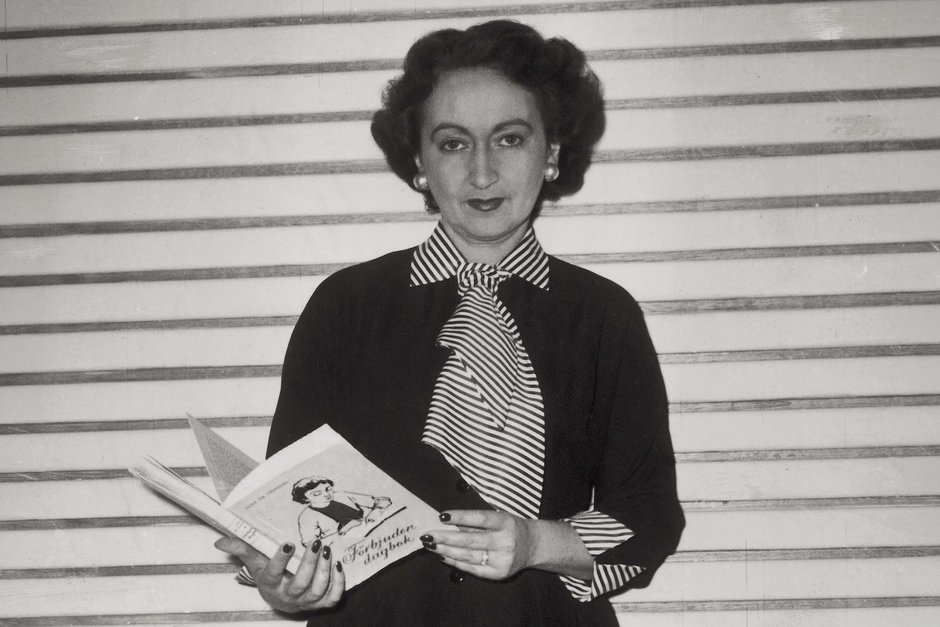
Today, March 11, marks the 115th anniversary of the birth of Alba de Cespedes — one of the most unusual figures in 20th-century European literature. An Italian of Cuban origin, a participant in the anti-fascist resistance, editor of an influential literary journal, and author of novels about the inner lives of women, she wrote about freedom as arduous daily work. In her books — from “Forbidden Notebook” to “Her Side of the Story” — domestic life transforms into a space of conflicts where a “slow moral crime” is committed, or where the heroine might begin a dangerous conversation with herself. Why read de Cespedes's books today is detailed in this report by Yekaterina Petrova, literary columnist for Realnoe Vremya.
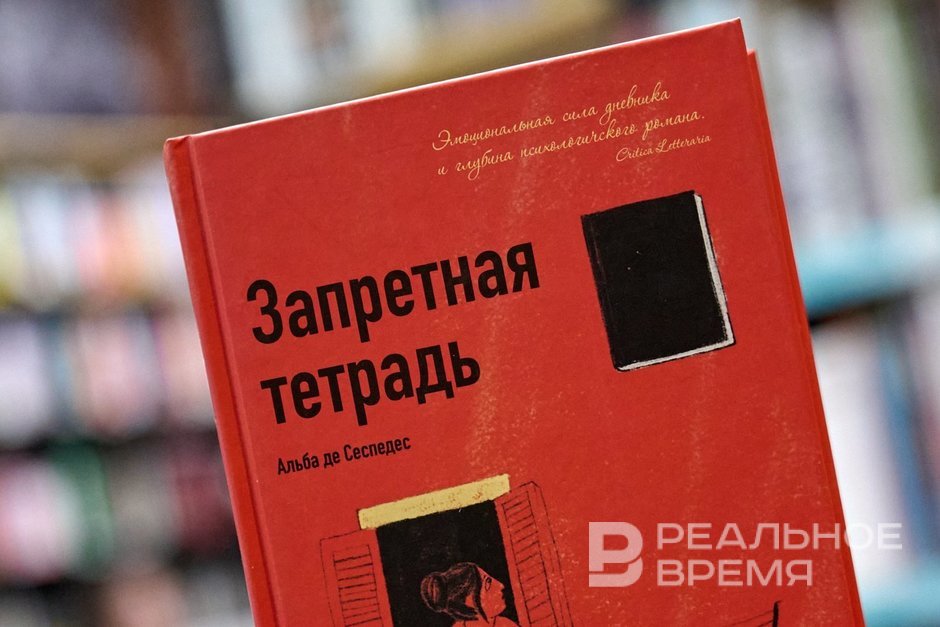
Granddaughter of the “father of the Cuban nation”
Alba de Cespedes (1911–1997) was an Italian writer of Cuban origin, journalist, and participant in the anti-fascist resistance. She was born on March 11 in Rome to Cuban diplomat Carlos Manuel de Cespedes y Quesada and Italian Laura Bertini Alessandri. Her grandfather, Carlos Manuel de Cespedes, was one of the leaders of the Cuban independence struggle and is considered the “Father of the Cuban Nation.” Politics and public affairs were frequent topics of discussion in the family. The writer herself recalled: “At home, they only talked about politics, and for me, politics is everything except writing and the search for freedom.”
She grew up in an affluent and politically active environment, spoke several European languages, and wrote primarily in Italian. As a teenager, she married early (at 15), had a son, but soon separated from her husband. Later, she married Italian diplomat Franco Bounous, with whom she lived for many years, although their relationship was complex, and the couple often lived in different countries.
de Cespedes began her writing and journalism career in the early 1930s. She published in newspapers and magazines — including Piccolo, Epoca, La Stampa, and Il Messaggero. In 1935, her first collection of short stories, “The Soul of Others," was published when the author was just twenty-four years old. Her first novel, “No One Returns," appeared in 1938 and quickly became an international bestseller: five thousand copies sold in three days, and the book was subsequently translated into dozens of languages. The novel tells the story of a group of young female students and their lives in pre-war Italy. In the book, the writer dared to give voice to a free and self-aware femininity, rejecting the traditional image of the “angel in the house.” Overall, de Cespedes's prose was shaped under the influence of the cultural and political events related to World War II.
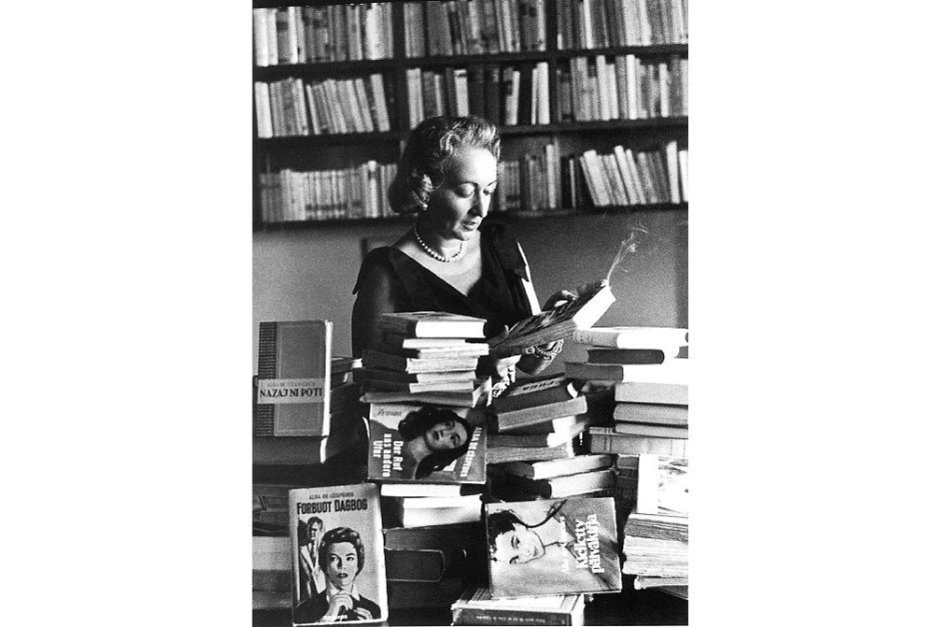
From the very beginning of her career, Alba de Cespedes was connected to the anti-fascist milieu. In February 1935, she was arrested on charges of anti-fascist activity and spent several days in the women's section of Rome's Regina Coeli prison. Later, two of her works — “No One Returns” and “The Escape” (1940) — were banned by the censorship of the fascist regime. During the war years, Alba de Cespedes actively participated in the resistance: in 1943, after the German occupation of Rome, she and her husband hid in Abruzzo and crossed the front line. In her diary from that time, she recorded the news of peasants being shot by the Germans and added:
The thought that I might be saved only because I am a woman deeply humiliates me.
Later, in Bari, she spoke on the resistance radio station Radio Partigiana under the pseudonym Clorinda and was arrested again.
After the liberation of Rome, de Cespedes became an important figure in the cultural life of post-war Italy. During the war in 1944, she founded the literary-political journal Mercurio, which was published until 1948. The journal combined fiction, political texts, and journalism, featuring many well-known authors. Among its contributors were Alberto Moravia, Ernest Hemingway, Massimo Bontempelli, Sibilla Aleramo, Corrado Alvaro, and Giuseppe Saragat. The publication also featured texts by Eugenio Montale and other famous writers. Mercurio held significant cultural weight. It was not a women's magazine but a broad intellectual platform, although its editor considered women's issues as important as other topics.
Although de Cespedes was often associated with early feminism, she distanced herself from this label. In interviews, she said she was explained that feminism meant a habit of “saying the word 'damn' ten times a day," but according to the writer, “freedom is a much more difficult, daily, and arduous thing than four swear words.” She emphasized that she stood “for all the oppressed," adding that women had been oppressed for centuries, so she was “on their side.”

In a literary correspondence with Natalia Ginzburg, published in 1948 in Mercurio, de Cespedes developed the idea of women's specific experience. Responding to Ginzburg's reflections on the “well of melancholy” into which women often fall, she wrote:
I, too, like all women, often fall into that well... But it is precisely there that our strength lies, because when we return to the surface, we bring back an experience that allows us to understand what men will never understand.
The main themes of de Cespedes's work are connected to the inner lives of women and their position in society. Already in her early works, her analysis focuses on the family sphere, where in the 1930s-1940s, a woman lives a bitter domestic life and is dependent on social norms. At the same time, the writer's interest was not so much sociological as moral and psychological: she was concerned with how women evaluate their own actions and make decisions.
In the novels “Her Side of the Story” (1949), “Forbidden Notebook” (1952), “Before and After” (1955), and others, de Cespedes examined family relationships, marriage, guilt, personal freedom, and the social changes of post-war Italy. Her prose sought to combine artistic form with ethical and intellectual depth, while maintaining the author's political engagement.
The dangerous thoughts of a housewife
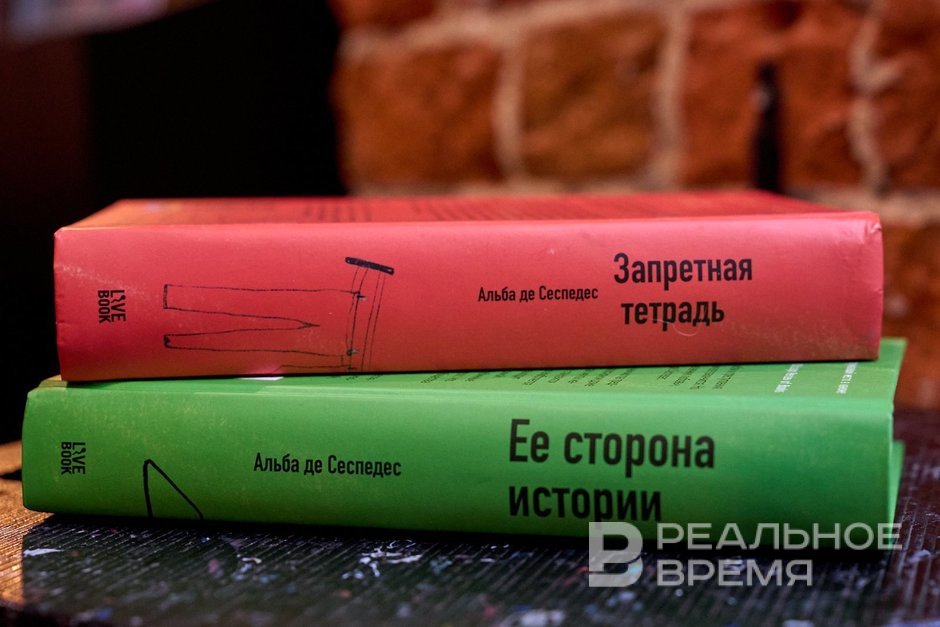
The novel “Forbidden Notebook” was first published in Italy in magazine form. From December 23, 1950, to June 16, 1951, the text appeared in twenty-six issues of the illustrated weekly La Settimana Incom illustrata, with which the writer collaborated. In December 1952, the novel was published as a separate book by Mondadori. This novel is often called Alba de Cespedes's main work. Its plot form is a diary: the heroine's entries cover the period from November 26, 1950, to May 27, 1951, coinciding chronologically with the text's initial publication.
The action of the novel takes place in post-war Rome. The main character, forty-three-year-old Valeria Cossati, is married to Michele. They have two adult children — Riccardo and Mirella. One Sunday morning, Valeria accidentally buys a black notebook at a tobacconist's, even though selling stationery was prohibited on Sundays. Already in the first entry, she admits:
I should never have bought this notebook, it was a mistake. But it's too late for regrets; what's done is done.
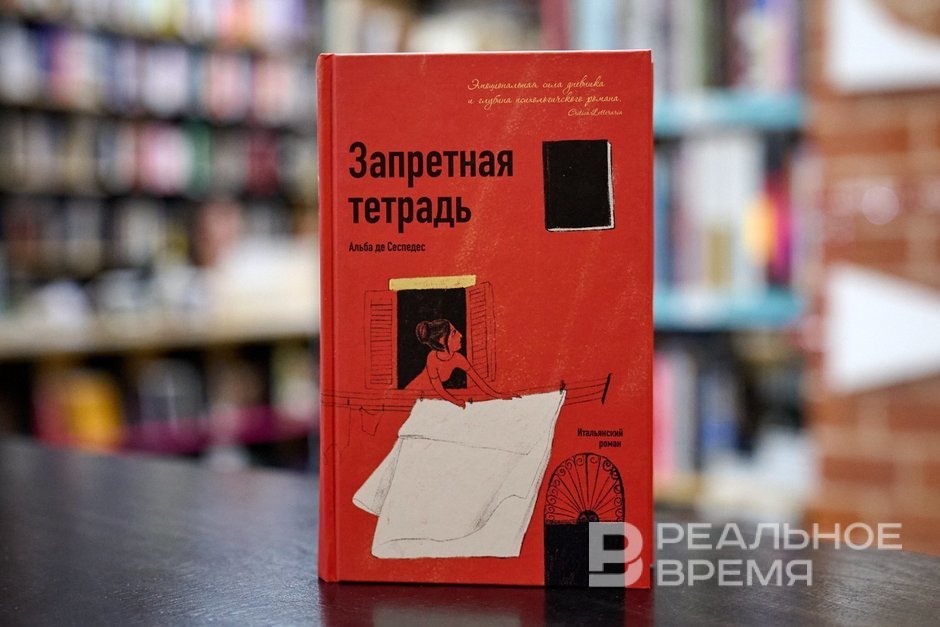
She hides it at home and begins keeping a secret diary. Initially, the entries concern daily family events, but gradually the diary turns into a space for reflecting on her own situation, marriage, and family. Valeria notices that the notebook seems dangerous to her. When she writes, she feels she is committing a grave sin, a sacrilege: it seems to her as if she is conversing with the devil.
The plot develops as gradual self-observation. For a long time, Valeria considered herself “understandable, simple," one who holds “no surprises for herself or others.” However, the entries change her perception: she begins to notice the coldness in her relationship with her husband, internal conflicts with her children, and her own sense of dissatisfaction. Putting thoughts on paper forces her to look at her life differently. She writes that by recording what happens, she learns more about herself, but at the same time feels bewildered:
Facing these pages, I am afraid: all my feelings, gutted, rot, turn into poison, and I realize that the more I try to be a judge, the faster I become a criminal.
The diary form allows de Cespedes to show the process of the heroine's changing consciousness. A random, seemingly insignificant act — buying a notebook — becomes a turning point, after which the woman begins to rethink her life. The entries gradually reveal her position in the family, where she fulfills the role of wife, mother, and helper, subordinated to the needs of her husband and children. Writing itself becomes an act of analysis: Valeria notes that events recorded on paper begin to seem different, and even things that are essentially not bad look entirely different in writing.
The novel is built around this process of realization. The notebook becomes a tool for internal struggle: the heroine tries to free herself from the conventional image of the post-war housewife but simultaneously fears the consequences of her reflections. In Valeria's own words, the secret presence of the notebook “gives life a new flavor," although it doesn't make her happier.
“Forbidden Notebook” is a family novel with a tense, thriller-like structure, where an ordinary school notebook gradually destroys the family's established order. In the end, the diary becomes a means of exposing family and social conventions: once feelings are named and recorded, the conspiracy of silence is broken.
“A slow moral crime”
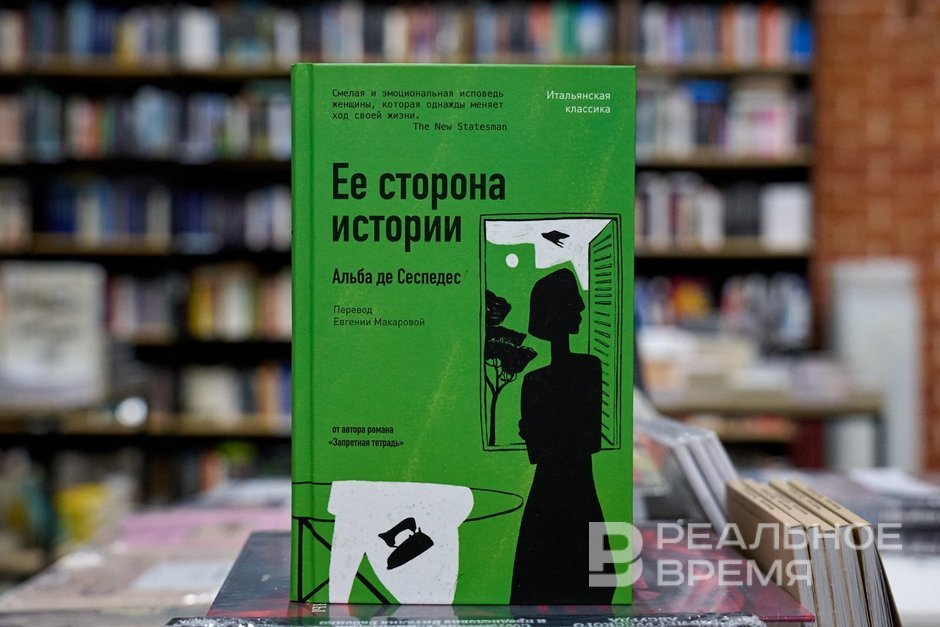
The novel “Her Side of the Story” was first published in August 1949 by Mondadori. The book's title is linked to the eponymous column the writer later ran in Epoca magazine from 1952 to 1960. In 1994, de Cespedes prepared a new edition of the novel, significantly shortening it: the length was reduced by more than a quarter — from 549 to 405 pages in the original. In the preface to the 1994 Italian edition, Alba de Cespedes explained that these cuts were made “with great reasonableness, removing nothing essential to the book's structure, but giving the narrative rhythm and continuity.”
The novel is structured as a memory of the main character, Alessandra Corteggiani, who recounts her life against the backdrop of Italian historical events from the fascist period through the end of World War II and post-war reconstruction. The plot begins with her childhood in Rome, where family life is overshadowed by the death of her older brother, who drowned before she was born. The memory of him is constantly juxtaposed with the heroine's fate. Her mother, pianist Eleonora, lives in an unhappy marriage and remains dependent on her husband, despite dreams of another life. The central line of the novel is Alessandra's relationship with Francesco Minelli, a university professor and anti-fascist, which leads to a marriage that ends tragically.
The love story unfolds against the backdrop of war and resistance. Alessandra meets Francesco in Rome and falls in love with him, admiring his political activity and participation in the anti-fascist movement. When he goes into hiding to avoid arrest, she carries out underground tasks, delivering messages and even transporting explosives, hidden, for example, under layers of peas on an old bicycle. However, after the war, her contribution remains almost unnoticed: others speak only of Francesco's trials, while the heroine herself is presented simply as “Signora Minelli.”
The narrative connects the heroine's personal story with descriptions of the social environment and historical events. The book depicts the world of a Roman apartment building, where after the men leave for work, a space remains inhabited only by women, with its dark kitchens, staircases, and courtyard. At the same time, the heroine constantly reflects on the position of women. Her mother says that men lack those “minute reasons that constituted unhappiness” which women experienced. Alessandra herself notes that none of the men ever wonder what it means to be a woman. These observations form the general social backdrop of the novel.
The culmination of the narrative is the murder of Francesco, committed by the heroine. As de Cespedes herself noted, this character might have appeared to outsiders as an “ideal husband," yet his indifference and inability to understand his wife's feelings and aspirations “killed her day by day," committing a “slow moral crime” that society and the law left unpunished.
Thus, the novel combines the story of a great love and a crime against the backdrop of anti-fascist struggle and war. At the same time, de Cespedes raises the issue of the gap between political ideals and everyday family reality: the anti-fascist hero, who participated in the Resistance, nonetheless expects his wife to stay at home — a theme that later came to be identified as the problem of “left-wing machismo.”
“How did you manage to do all this?”
In October 1968, Alba de Cespedes participated in the celebration of the centenary of the beginning of Cuba's struggle for independence. One of the main events took place on October 10 in Manzanillo. It was there in 1868 that her grandfather, Carlos Manuel de Cespedes, made a speech against Spanish rule, marking the start of the Ten Years' War. Fidel Castro attended the celebrations. During this trip, the writer donated to the Cuban National Archive letters written by her grandfather to his wife in 1871–1874.
She also emphasized her connection to the island in her own words: Alba de Cespedes called Cuba “my land," said she loved “the turquoise strip of its sea, the deep green of its mountains and forests… and the heroism with which its short history is woven.” In 1989, Cuba awarded de Cespedes the Order of Félix Varela — the country's highest cultural award — for her support of the revolution and promotion of Cuban culture. In 2002, an annual literary prize in her name was established in Cuba, and the “Alba de Cespedes Room” was opened in the Carlos Manuel de Cespedes Museum in Bayamo.
From the 1960s, de Cespedes lived in Paris, where she spent the last decades of her life and continued to write. There, she worked on the French novel “There Is No Other Place but the Night," published in 1973, and later translated it into Italian as “In the Darkness of Night.” In Paris, she also created a poetry collection, “Songs of the May Girls," inspired by the student protests of 1968. Around the same time, the writer began a vast historical novel, “With Great Love," whose title was connected to the words of Fidel Castro. As de Cespedes recalled, she once asked him: “How did you manage to do all this?” and he replied: “With great love.” This novel intertwined the history of her family — including the struggle for Cuban independence begun by her grandfather — with the history of the 20th-century revolution. Work on the book continued until the end of the writer's life.
Alba de Cespedes died in Paris on November 14, 1997, at the age of eighty-six after a long illness. News of her death was released by her son only on the eve of the funeral. Eight days before her death, the writer donated her personal archive and library to the Archive of United Women's Organizations in Milan. This collection includes documents, letters, and materials spanning her entire life, with some documents even dating from the period before her birth. The story of her life, connected to Italy, France, and Cuba, and her literary legacy remain part of the international cultural history of the 20th century.
Yekaterina Petrova is a literary columnist for the online newspaper Realnoe Vremya and hosts the Telegram channel «Булочки с маком».