The most ingenious literary game of the 20th century
This week's book: “life: a user's manual” by French writer Georges Perec

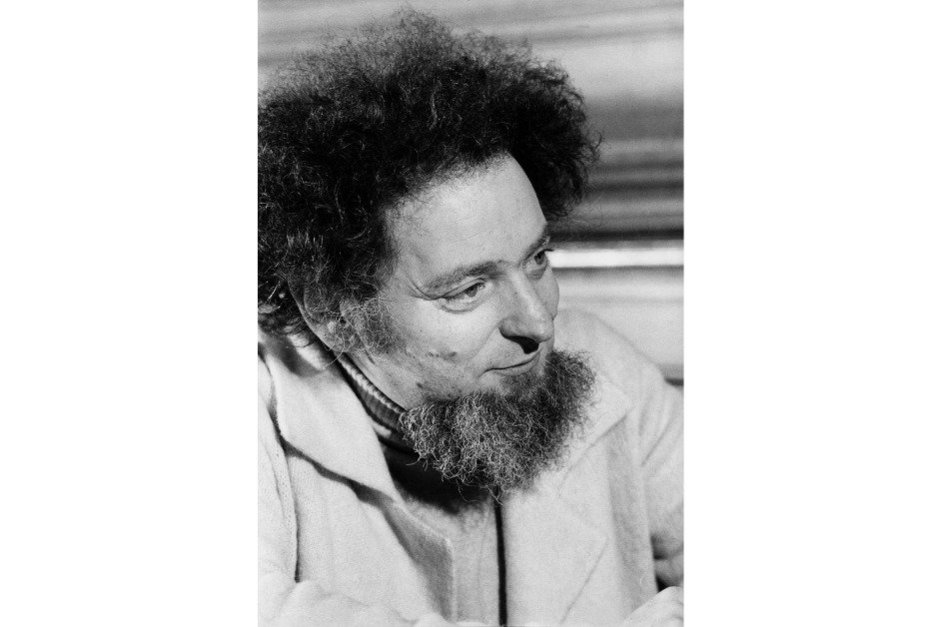
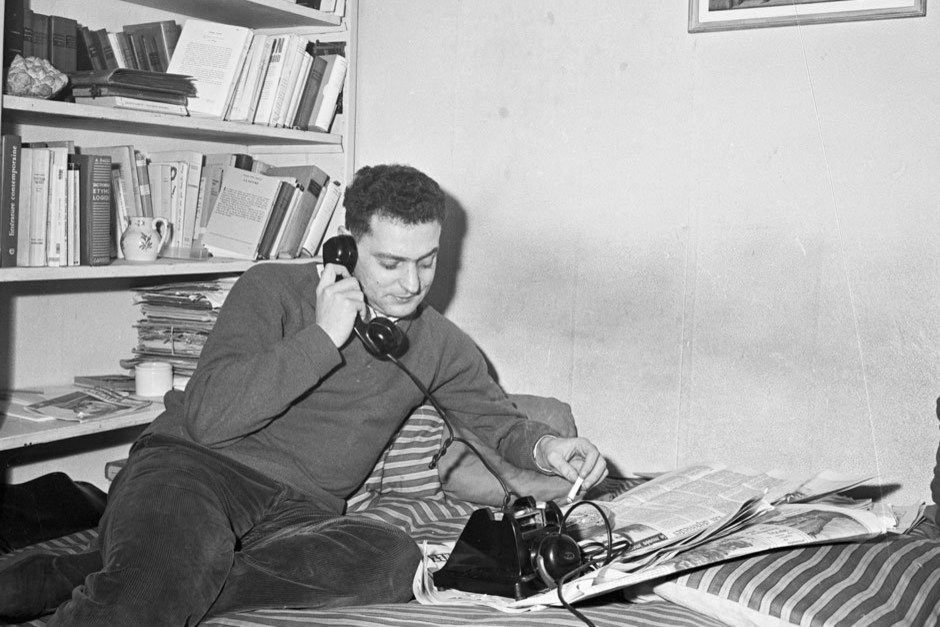
Yesterday, March 7, marked the 90th anniversary of the birth of Georges Perec — one of the most inventive and paradoxical authors of European literature in the second half of the 20th century. Perec managed to combine strict mathematical rules of writing, literary play, and a deeply personal theme of memory and loss. His major novel, “Life: A User's Manual," is structured like a massive textual puzzle. Literary columnist for Realnoe Vremya, Yekaterina Petrova, explains how Perec turned the novel into a complex combinatorial system of 99 chapters and nearly fifteen hundred characters, and how the writer's formal experiments conceal a personal story of loss.
“I write because they left an indelible mark on me”
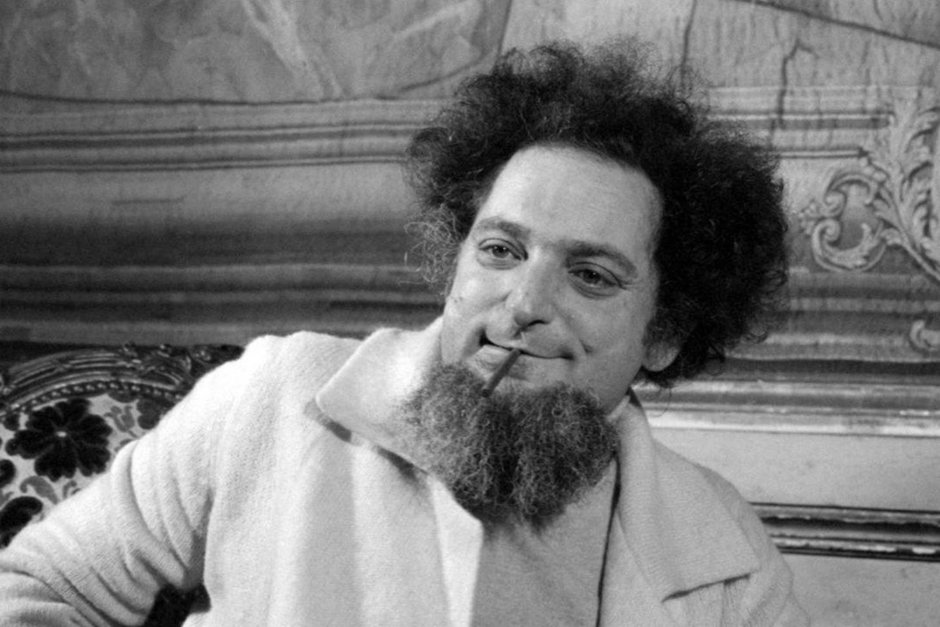
Georges Perec was born on March 7, 1936, in Paris to a family of Jewish immigrants from Poland — Icek-Judko Peretz and Cyrla Szulewicz. The writer's childhood unfolded against the backdrop of war and the deaths of loved ones. His father, who volunteered for the Foreign Legion, was mortally wounded in June 1940, and his mother was arrested in 1943, sent to the Drancy camp, and deported to Auschwitz. Most of his relatives perished during the Holocaust. These events became one of the main internal driving forces behind his future prose. The search for their traces, the effort of memory, and the impossibility of bringing them back became the driving force of Perec's prose.
“I write because they left an indelible mark on me, and the trace of that mark is writing: the memory of them dies in writing; writing is the memory of their death and the assertion of my life," Georges Perec wrote in the book “W, or The Memory of Childhood.”
After the war, Perec was raised by relatives in Paris, studied at the Lycée Claude-Bernard, and then studied history for a time but quickly left university. In the late 1950s, he began collaborating with literary journals, particularly La Nouvelle Revue française, and wrote reviews for publisher Maurice Nadeau. During this same period, he served in the military in a parachute regiment and several times underwent psychoanalysis.
Perec's literary activity gradually evolved from various pursuits: he worked as an archivist in a neurophysiology laboratory at the Saint-Antoine Hospital and wrote in the evenings. “The intention to write my own story took shape at almost the same time as the intention to write at all," Perec later noted in his memoirs.
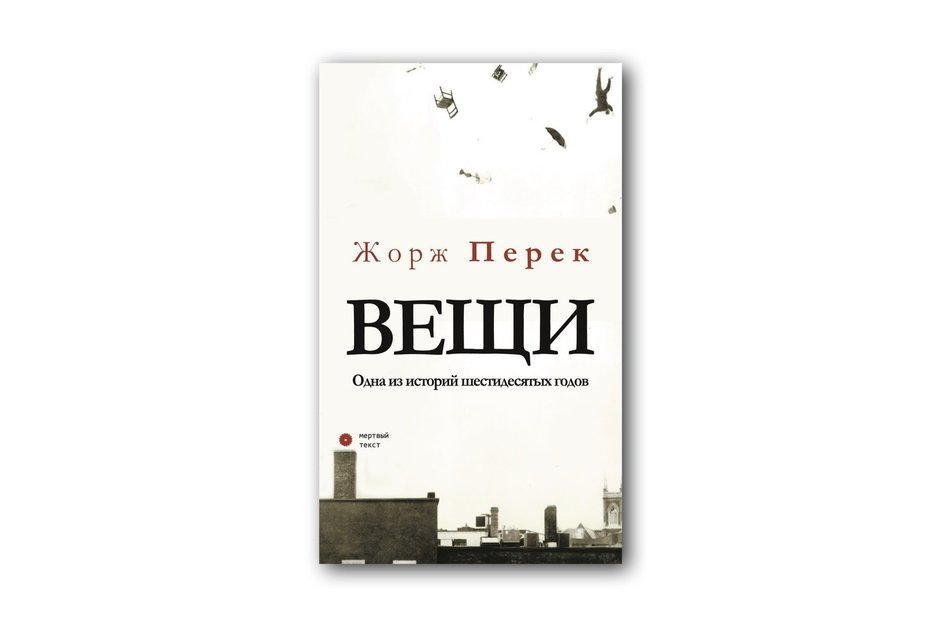
Perec's first published novel was “Things: A Story of the Sixties” (1965). The book tells of a young couple — Jérôme and Sylvie, who earn a living conducting sociological surveys and dream of wealth that would allow them to possess numerous objects: furniture, clothing, jewelry. The novel immediately attracted critical attention and won the Prix Renaudot. The author himself explained his intention thus:
I tried to create a kind of description of what is called consumer society. It was my own experience, to which I merely gave a general character.
Sociologist Jean Duvignaud later wrote that the book's success is explained by the fact that it “crystallizes an experience — the insurmountable difficulty of existence in the sixties.” At the same time, its style is built on short sentences and a conscious rejection of rhetoric and emotion.
Subsequently, Perec's work gained a reputation as one of the most unusual phenomena in French literature of the second half of the 20th century. In 1967, he became a member of the OULIPO group — an association of writers and mathematicians exploring the possibilities of literature based on strict formal constraints. “I consider myself a pure product of OULIPO… my existence as a writer depends ninety-seven percent on the fact that I encountered OULIPO at a decisive moment in my development," Perec said.
His texts revolve around several directions — novelistic narrative, autobiography, sociological observation, and play with form. But in all of them, the initial absence shines through — of a father who died in the war and a mother who disappeared on the way to Auschwitz.
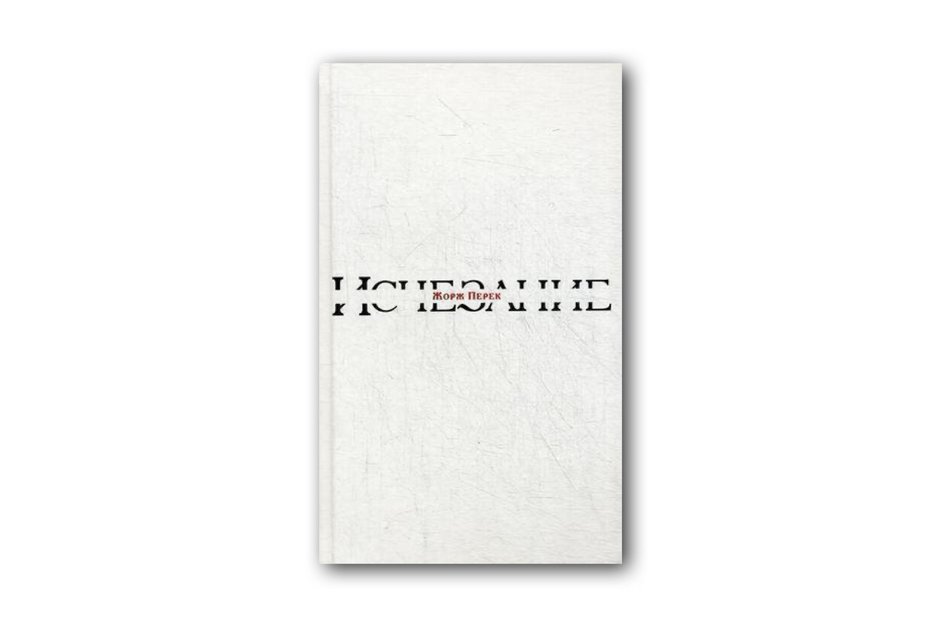
One of Perec's most radical experiments was the novel “A Void” (1969). It is a lipogram — a text written without using the most frequent vowel in the French language, the letter 'e'. For over two hundred pages, the author avoids this letter, and the plot revolves around the disappearance of a character named Anton Vowl. The absence of the letter is not an obstacle but a source of inventiveness. The rule itself becomes a highly productive vein, extremely stimulating innovation. This play with absence gradually forms an allegory of loss and disappearance connected to the fate of European Jews.
A special place in Perec's works is occupied by numbers and hidden structural patterns. Researchers have repeatedly noted recurring numerical motifs, primarily the number 11, which is linked to the date of his mother's deportation — February 11, 1943. In the writer's works, this motif arises again and again, for example in various compositions of texts, in the number of chapters, or structural elements.
Translator Valery Kislov noted that upon careful reading, “we constantly come across these numbers.” He gave an example from “A Void”: in a library, there are 26 volumes, “but one is stolen — 26 letters of the French alphabet, and one is missing," or in a scene where six glasses are ordered but five arrive — “six vowels in French, and one is missing.” According to the translator, such microstructures form a hidden system upon which the entire construction of the text rests.
“A machine for producing novels”
The novel “Life: A User's Manual” was published in 1978 and became Georges Perec's most famous work. Work on the book took nearly a decade: the final manuscript bears the date “Paris, 1969—1978”. The concept gradually took shape. At the end of 1969, while assembling a huge puzzle depicting the port of La Rochelle, Perec conceived the story of a character named Bartlebooth and wrote a brief two-page summary of it.
In 1972, several independent ideas — the description of a Parisian building with its “facade removed," a mathematical scheme for distributing textual elements, and the story of Bartlebooth — were combined into a single project. In November of that year, he presented it at an OULIPO meeting, specifying that “the novel will look like the description of a painting.” Actual work on the text began on April 18, 1975, after two years of preparing a detailed “technical specification," and was completed on April 5, 1978, at 7:25 PM.
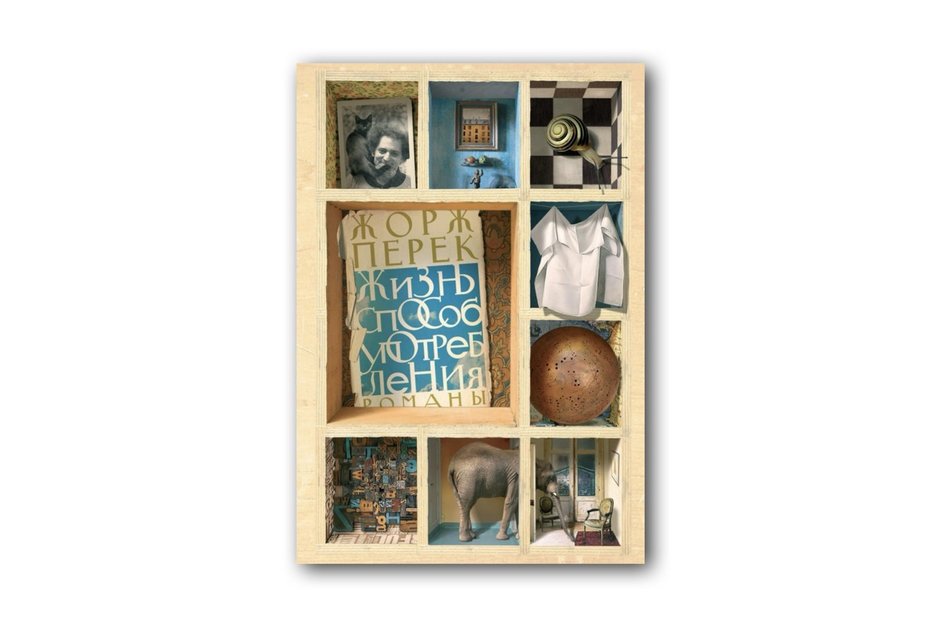
The action of the novel is concentrated in a fictional Parisian apartment building at 11 Rue Simon-Crubellier. The book consists of 99 chapters, over a hundred stories, and describes about fifteen hundred characters. The main idea is to show the building as if its facade were removed, so the reader can see all the rooms and their inhabitants simultaneously. This technique harks back to literary models and visual sources: Perec noted the similarity of his technique to the graphics of Saul Steinberg and said:
What I do in literature is very similar to what Steinberg does in graphics: like him, I like to change scale as the story progresses.
The title page of the book bears the subtitle “novels” in the plural. According to Perec, it is “a novel that tells novels, potential novels, not all of which will necessarily be developed.” Within this multitude of plots, the story of Bartlebooth remains the central thread, but it appears only in fragments, interwoven with dozens of other lines.
The novel's structure is built on a strict combinatorial system. The building is represented as a 10×10 grid — ten floors and ten rooms across, including stairwells. Each cell corresponds to one chapter. The order of chapters is determined by the knight's move in chess: the movement through the rooms follows the path of the piece across the board. “It would have been tedious to describe the house, floor by floor and apartment by apartment. But the sequence of chapters could not be left to chance. I decided to apply the principle of an old chess problem: to move a knight across all the squares of the board, never landing on the same square twice," Perec explained his choice of this scheme.
In addition, Perec used a system of lists and “bi-squares” — a type of Graeco-Latin square — which allowed him to distribute pre-determined elements across the chapters: fabrics, colors, objects, situations, and other details. Perec himself said the goal was to create “a machine for producing novels.” It is precisely this combination of strict rules and multiple plots that forms the composition of the book, which resembles a tapestry of intertwined stories and ideas.
99 chapters and 1,467 characters
The ninety-nine chapters describe the rooms and their inhabitants on the evening of June 23, 1975, shortly before eight o'clock. Within these descriptions emerge the stories of current and former residents, as well as people connected to them. Thus, the reader sees a long succession of characters with their history, past, and legends. The text constantly features interior details, paintings, advertising posters, books, musical scores. From these objects, new narratives are born — ranging from criminal episodes to everyday notes, scientific descriptions, or recipes. Numerous plots connect into a complex network of destinies, reminiscent of a branching tree.
The main plot line is connected to the wealthy Englishman Bartlebooth, one of the building's residents. Between the world wars, he conceived a project meant to occupy his entire life and completely exhaust his fortune. First, for ten years, he daily learns to paint watercolors from the artist Valène, who lives in the same building. Then, for twenty years, he travels the world and approximately every two weeks paints a view of whatever port he is in — about five hundred watercolors in total. Each work is sent to France to the craftsman Gaspard Winckler, who cuts it into a jigsaw puzzle. Years later, Bartlebooth returns and begins assembling them. After assembly, the sheet is glued back together with a special solution, sent to the same port, and immersed in a liquid that dissolves the paint, leaving a blank sheet of paper.
The ultimate goal was the complete disappearance of the traces of a half-century of work: the project was to leave no trace in the world. However, the plan fails: the puzzles become increasingly difficult, Bartlebooth goes blind, and by 1975 he is behind schedule. He dies trying to complete the 439th puzzle. The hole in it is shaped like the letter X, while the piece in his hand is shaped like the letter W.
The novel “Life: A User's Manual” features about fifteen hundred characters, whose brief biographies are given at the end of the book. They can be encountered at different levels of the narrative: among them are real historical figures (e.g., Mozart), fictional characters from world literature (such as Captain Nemo from Jules Verne's novels), as well as characters existing within the book itself or within stories told by its characters. This list also includes people appearing only in texts written by the book's characters, such as figures from a school essay. Perec created an extensive system of figures where real, fictional, and “intra-book” characters coexist in a single index.
Among this long procession, three central figures stand out — Bartlebooth, Winckler, and Valène — around whom the main narrative line is organized. Bartlebooth is the wealthy Englishman who devised an unusual life project. His name combines the names of two literary characters: the scrivener Bartleby from Herman Melville's story and the traveler Barnabooth from Valery Larbaud's book. For Georges Perec, these were “the two most captivating characters," one embodying “absolute poverty and deprivation," the other “wealth and the search for the absolute," and their fusion allowed him to create a hero “who devotes his life to a completely useless task.”
The artist Serge Valène is another important character in the book. He entered the School of Fine Arts in 1919 and settled in the building on Rue Simon-Crubellier, hoping for future fame that never came. He achieved only modest renown. In 1925, Bartlebooth hired him to give daily watercolor lessons for ten years. They barely speak, discussing only the technical details of painting, and Valène long fails to understand what his pupil is truly trying to achieve. Later, the artist conceives his own project: to paint an enormous picture showing the entire building with its facade removed, along with all the stories of its inhabitants. He even plans to depict himself in it, as Renaissance artists did, reserving a small place for himself in the painting — in the upper right-hand corner, where his room is located.
The third central figure is the puzzle-maker Gaspard Winckler. Bartlebooth finds him through an advertisement and entrusts him with turning the watercolors into puzzles. The work must follow a strict ritual: on the first day, Winckler places the painting on an easel and studies it for a long time; on the second, he glues the sheet to a backing and applies a protective varnish; then he studies the image for several days and only afterward traces the lines of future cuts onto thin tracing paper. After cutting, he spends several more days sanding the pieces. He dislikes being watched and gradually turns each puzzle into a complex trap.
He himself views the entire commission as a single project — a giant puzzle consisting of five hundred parts, each part made up of seven hundred and fifty elements, each requiring its own method and strategy. Winckler exists in the novel solely to create ever-new trials for Bartlebooth. A peculiar master-slave dialogue develops between the craftsman and the client, in which it gradually becomes unclear who is controlling whom.
“One text can always conceal another”
The meaning of the work emerges not so much from the individual puzzle pieces themselves, but from the connections, juxtapositions, and joint lines that remain implicit and manifest themselves only in the reader's mind. With such reading, traditional analysis — an attempt to “break down” the work into its components — proves insufficient, because meaning is always richer than the sum of its parts.
Furthermore, the book itself can be compared to a labyrinth and even to a game of tangram: the numerous plot lines form a path without a final point, with countless entrances. The novel represents a complex construction where elements — crosswords, advertisements, mathematical formulas, book fragments — form a kind of nesting doll structure, and the book itself functions as a textual puzzle that the reader must assemble.
Despite its formal complexity, the novel contains many autobiographical elements connected to Georges Perec's life. The text features numerous hints at the writer's personal memories — references to friends, reading, daily events, as well as motifs from his previous works. The preparatory documents for the novel even include a special column: reminders of certain stories told in this book. Researcher Bernard Magné called these hidden traces of biography “anchors” — signs that simultaneously fix and mask the author's personal history within a complex literary construction.
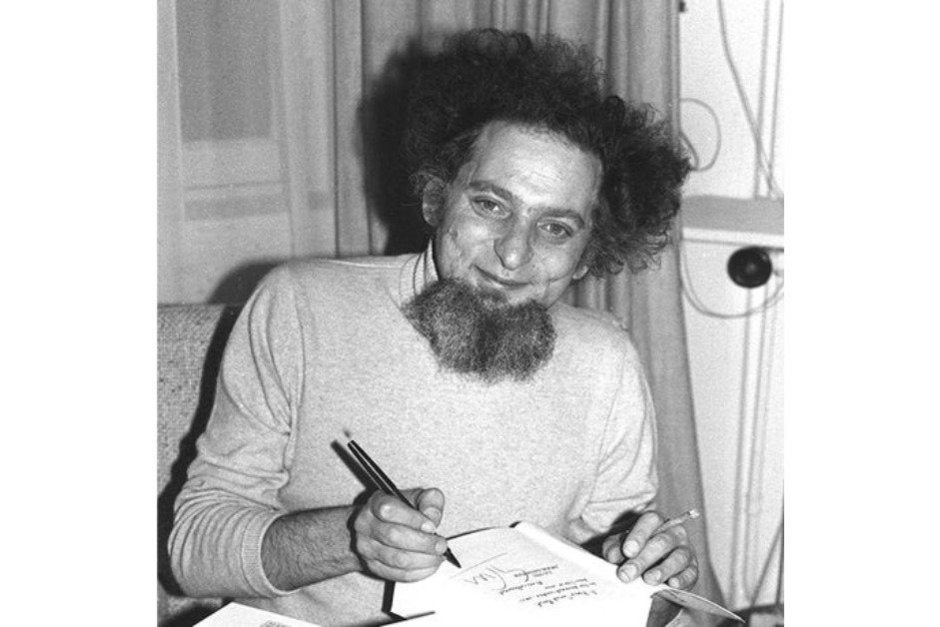
The novel's narrator remains indeterminate. Perec himself initially claimed that the narrative was conducted by the artist Valène: “it's all told by a third character, a narrator, who is supposed to be painting the picture of the building.” However, later he spoke of a “fourth character who never appears: the narrator.” Researcher Bernard Magné showed that in an early version of the manuscript, the narrative was indeed in the first person and belonged to Valène, but starting around the seventeenth chapter, the author replaced it with an anonymous narrator. This indeterminacy is seen as one of Perec's literary devices: by creating different explanatory versions, he deliberately misled the reader and turned the very figure of the narrator into an element of the game.
At the same time, the book is constructed so that the reader becomes an active participant in the narrative. “I am putting a potential book into the reader's hands. I would like that, upon finishing it, the reader would take it up again, play with it, and invent things themselves," Georges Perec said. Therefore, many plot lines remain unfinished, and some riddles — like missing puzzle pieces — persist. As a result, the reader constantly encounters textual traps. One example: in one chapter, a character reads a text attributed to the old author François Béroalde de Verville, but in reality, this fragment turns out to be a quote from the work of another writer, who, in turn, borrowed it from a medical report. Bernard Magné ultimately concluded: “with Perec, one text can always conceal another.”
The novel's events occur within a peculiar temporal and spatial structure. The entire narrative unfolds during an immense stretching of a single minute in the life of the building. Unlike a traditional novel where time moves forward, here the narrative constantly returns to the past: the objects and rooms of the building become traces of former events. Space also plays an important role: the floor plan of the building, placed at the end of the book, functions as a kind of map, helping the reader navigate the text. There is even a theory that the novel tells the story of the disappearance of space in favor of time, as the narrative gradually transforms the geographical structure of the building into a stream of stories.
After publication, the novel elicited varied responses. Carsten Sestoft studied forty-seven reviews published after the book's release: twenty-five were positive, four negative, and eighteen mixed. Positive reviews appeared more often in literary journals and the left-wing press, while more critical ones appeared in conservative and regional publications. Some critics perceived the book as a complex, almost mechanical construction. Others, conversely, spoke of the richness of its plots and a return of interest in narrative.
For example, journalist Catherine David wrote in Le Nouvel Observateur: “Enter this house — and you will travel the world in six hundred and two pages and ninety-nine chapters… When you come out of it, you feel as light as a balloon.” François Nourissier in Le Figaro Magazine, on the contrary, called the novel a “colossal iceberg” that gives the impression of a technical marvel but can leave a feeling of disappointment.
Over time, the novel gained lasting recognition. In 1978, it was awarded the Prix Médicis, and later it was ranked 43rd in the list of the best books of the 20th century according to a poll by the FNAC bookstore chain and Le Monde newspaper. Italian writer Italo Calvino called it “the crossroads of all the quests of 20th-century literature," noting the uniqueness of Perec's figure. Later, Paul Auster wrote in The New York Times Book Review that after the book's translation into English, “it will be impossible to think of contemporary French literature in quite the same way as before.” These assessments cemented “Life: A User's Manual”'s reputation as one of the most complex and discussed novels of the second half of the 20th century.
Publisher: Ivan Limbach Publishing House
Translation from French: Valery Kislov
Number of pages: 624
Year: 2021
*Age rating: 18+*
Yekaterina Petrova is a literary columnist for the online newspaper Realnoe Vremya and hosts the Telegram channel «Булочки с маком».