Rustam Bikmukhametov: “We want to build a new shoe factory in Kazan”
A fifth-generation shoemaker on market problems and plans to revive shoe production in Kazan with an investment of 1 billion rubles
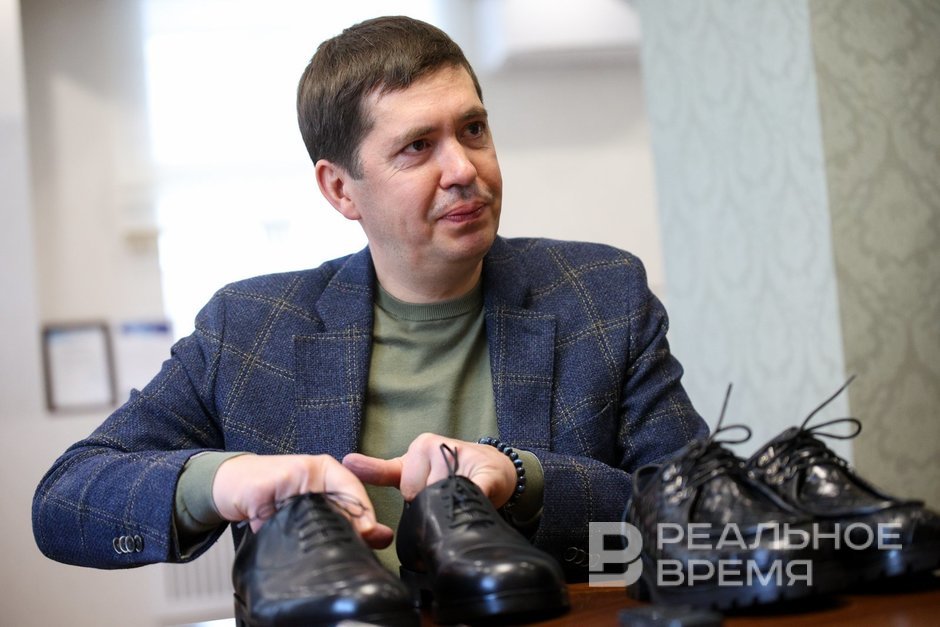
The number of shoe manufacturers and sellers in Russia is declining. According to Rosstat data, about 300 companies ceased operations over the year, including large factories. Among the main reasons are Western sanctions, rising material costs, and the dominance of Chinese goods. Kazan lost its legendary “Spartak” shoe factory much earlier, but now has a chance to revive the enterprise. Rustam Bikmukhametov, owner of the ZRgroup of companies, told Realnoe Vremya about what is happening in the market, whether shoemakers can switch to e-commerce, and his readiness to invest about 1 billion rubles in opening a new shoe production facility in Kazan together with an Italian partner.
“We are on the threshold of new big projects”
— Rustam Rinatovich, your enterprise opened 15 years ago. What have you managed to achieve during this time, and what does your business look like now?
— Since 2011, we have grown from a small workshop into a group of companies and today have become leaders in our industry in many areas. There is no production like ours in Russia; we are the only shoe manufactory in Russia that has implemented digital data processing at the stages of taking customer foot measurements, manufacturing shoe lasts and insoles, constructing and designing shoe models, and exchanging data with partners.
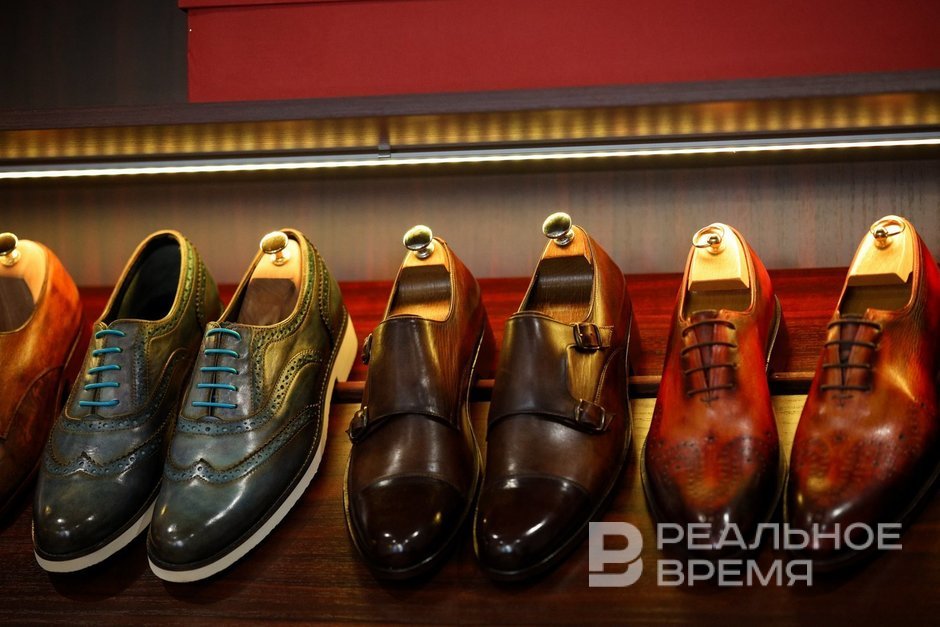
Our production is located in the center of Kazan. In addition, we have organized an outbound service in Moscow. Consultations, measurements, and precise foot scanning take place there. We accommodate about 20 clients at a time. I handle this personally; I can't entrust it to anyone yet because there are many nuances in this matter. After all, if everyone looks at their wardrobe, they will probably find several pairs of shoes they don't wear. It's all about improper fitting. Even if a person thinks at a particular moment that the shoes fit perfectly, I can see that it's not the case. There are points that need adjusting. All this comes with experience. Furthermore, the rank of the clients themselves obliges me to be present personally — they appreciate that the company's top person communicates with them.
— Do you plan to scale your business?
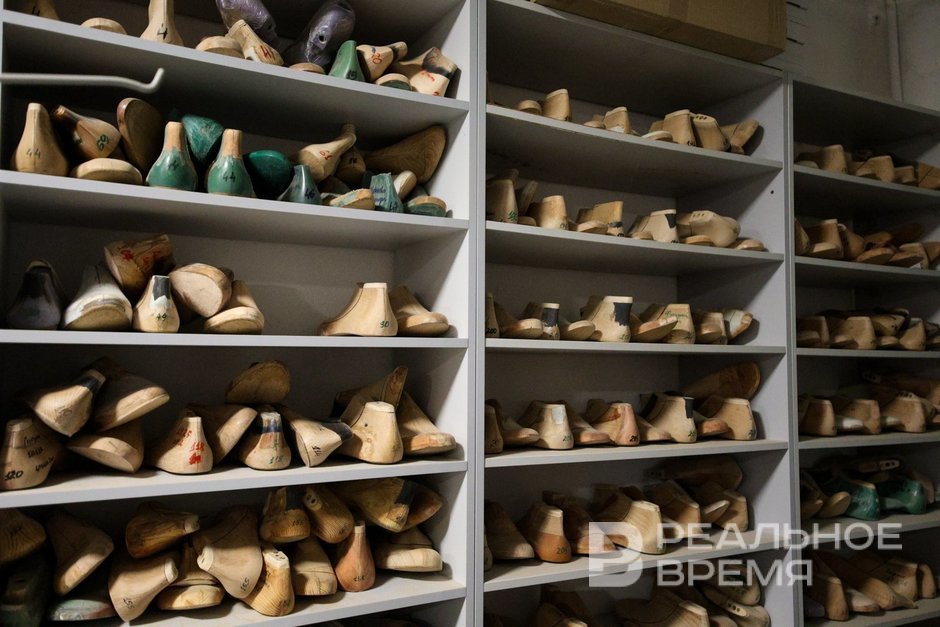
— Yes, definitely. We are currently on the threshold of implementing new large projects. The first one is related to high technology and digital commerce. But it's not just about selling shoes online; we're talking about a completely different approach. Several years ago, we developed a foot scanning and shoe last modeling program, which has no analogue in Russia. The last in our business is the absolute foundation. But at one point, I had the idea that it isn't necessary to mill this digital last. It can simply be stored in a data cloud and then used for selecting mass-produced shoes. Thanks to such a system, we can offer a new level of shoe sales, where a client, after visiting our store once and having their foot scanned, can later order shoes remotely.
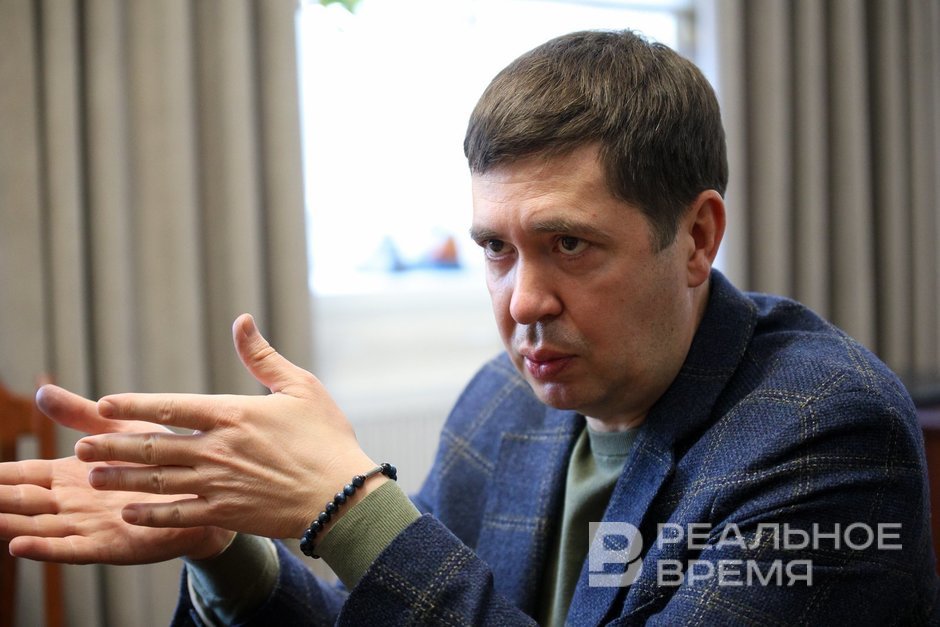
I recently returned from Italy, and many manufacturers there say: “Look, everyone has started wearing sneakers.” They are easy to buy remotely because sneakers have many adjusting mechanisms: laces, soft stretchy upper elements, elastic soles — all this allows for correcting size inaccuracies. This is impossible with classic shoes. Few people risk ordering them online. There are exceptions, but it's usually a bad experience. At the same time, it's clear that e-commerce now prevails; it's a modern trend, so we need to adapt.
The way to implement such a plan for us in the near future is to create a joint shoe line with a very famous Italian designer.
— Are we talking about completely new production, or will the existing capacities suffice?
— We are talking about opening a full-fledged shoe factory in Kazan. We are currently at the stage of signing an agreement. The Italian designer came to Kazan, thanks to the assistance of the Minister of Culture of the Republic of Tatarstan, Irada Ayupova. Here at the production site, he picked up our shoes and was genuinely surprised, saying that even in Italy there are few craftsmen who make shoes of such quality, of such a level. Receiving high praise from a recognized master is quite difficult.
“Either we save the 'tulips' or the 'Kazan stitch'"
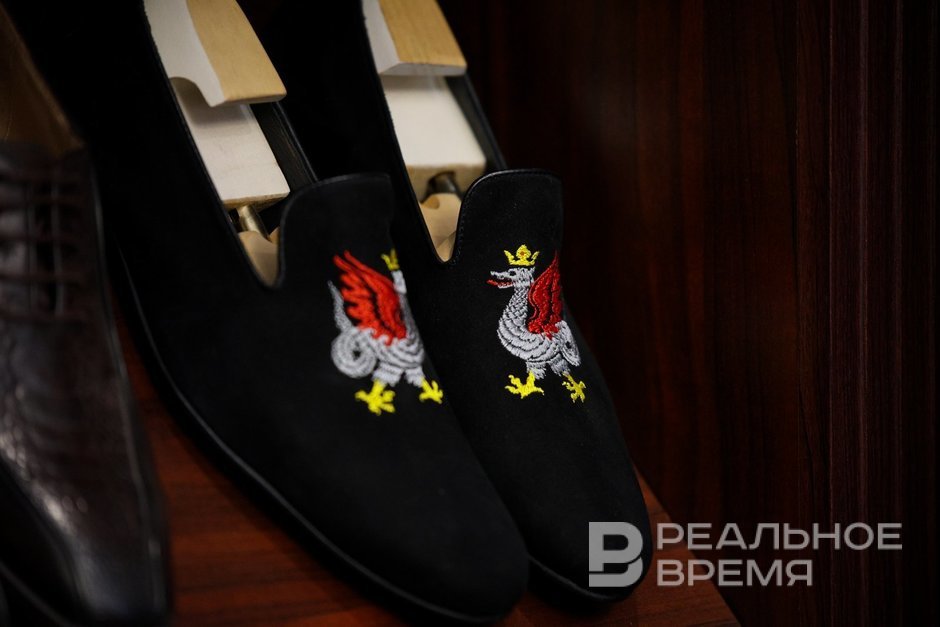
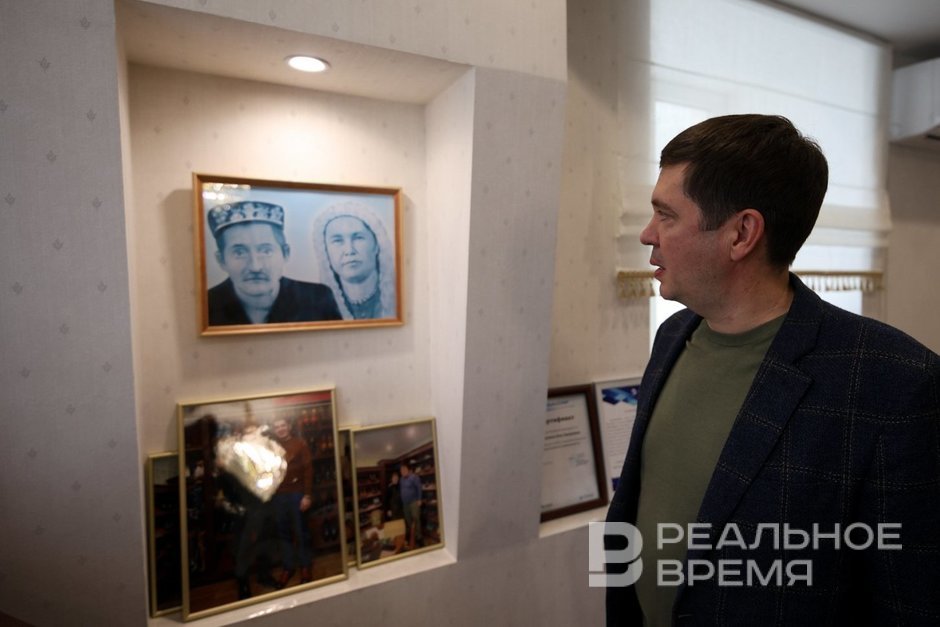
The idea of creating a new factory arose against the backdrop of the task set by the Rais of Tatarstan, Rustam Minnikhanov, to preserve our “Kazan stitch.” We have been working on this for a long time. I consider it my mission because I continue the work of my great-grandfathers. I completely agree with the Minister of Culture when she says that potters, blacksmiths, and other artisans exist in every region, but the “Kazan stitch” — it's only ours; it's a unique cultural code of the Tatars. Precisely through this position, through its preservation and development, we can make a name for ourselves not only within our country but also in the world.
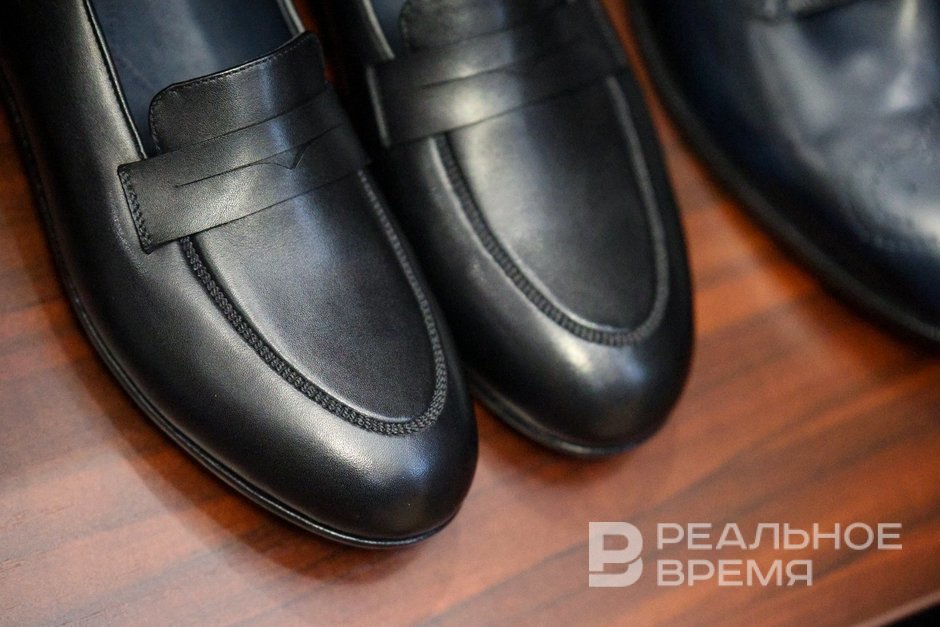
The “Kazan stitch” is a specific way of joining pieces of leather. Currently, it is most often used in shoes with a strong national flavor, worn on special occasions but not on a daily basis. Stylized items are limited in use. We, however, use the “Kazan stitch” both in shoes with traditional patterns and simply in classic loafers. Yes, of course, “tulips” and other national patterns are great, but we need to decide: either we save the “tulips” or the “Kazan stitch.” What was good 100-200 years ago must be preserved but be adequate for the modern world.
— When could the factory become operational, and what investments, by your estimates, will be needed to launch it?
— We think it will take about two years from the start of the project to the actual opening of the factory. The Italian designer will become a co-founder of the company. The investments will be shared. In addition, there are several interested parties ready to invest in this project. According to our calculations, at the initial stage, about 1 billion rubles are needed to launch the factory. We plan to build a separate building specifically for it. The location — the former Bearing Plant in the Admiralteyskaya Sloboda district. The head of the district has already supported our idea.
For now, we don't even fully understand what will come of our idea. We are investing and hoping to get production started. It would seem that the first thing to do is to draw up a clear business plan. But I understand that given market volatility, our constantly changing economy, and the laws being passed, this is impossible. Now we take the risk ourselves, invest ourselves, and simply believe.
— What kind of products will be manufactured at this factory?
— As I already said, it will be shoes using the “Kazan stitch.” The Italian designer, inspired by the Tatar national ornament, has already created several models. It's the same Tatar pattern, but in a different interpretation. It should be emphasized that we are talking about creating a factory where labor will be highly mechanized. This will reduce the cost. Currently, we cannot sell our shoes cheaper. The cost of a pair of shoes starts from 100 thousand rubles. We can produce 25 pairs per month. The new factory will make high-quality shoes much more affordable. I assume that shoes with the “Kazan stitch” could be sold for around 25-30 thousand rubles.
Without switching to mass production, we will not be able to preserve the “Kazan stitch," no matter how much we might want to. This implies completely different volumes, thousands of pairs of various modifications. This means expanding the sales market. And we are not only talking about Russia.
Of course, there are sanctions that could affect the process. But here the position of our Italian partner himself is important. He always speaks very highly of our country. He says that Russia is a big, kind bear. As long as you don't hurt or harm him, he will be kind, fluffy, and affectionate with you. You just need to be friends with this bear, and everything will be fine. All the people we communicated with in Italy share Russia's position and are pro-Russian. It's very nice to realize that. There is very harsh propaganda in the European media, hysteria is growing. But people clearly understand that this is untrue, nonsense, and they don't believe it.
— You always speak very warmly of your craftsmen, treat them with reverence, emphasizing that there are very few of them. What about providing personnel for the new factory?
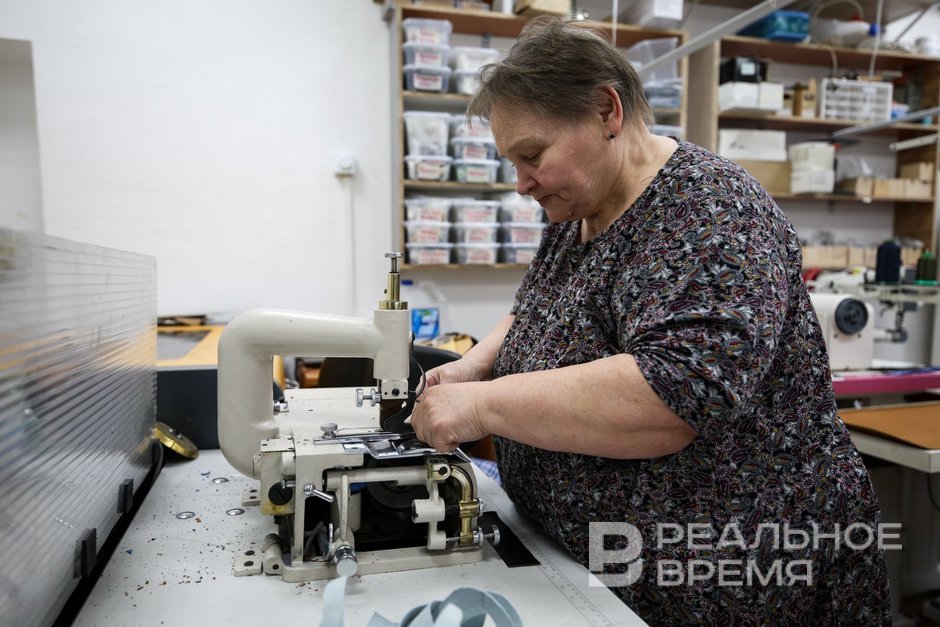
— This is indeed a serious problem. It must be admitted that the shoemaker's profession is dying out, but fortunately not completely lost; there are craftsmen who know how to do it, love and value it. We have a special task in preserving the craft of embroidery using the “Kazan stitch” and training embroiderers. We had long thought about creating our own school, and now we have started taking the first steps in this direction. It was launched two months ago in the Arsky district. The head of the district assisted us and provided premises. Currently, six craftswomen are studying there under the guidance of a local professional shoemaker. We think this is just the beginning.
— The opening of the Center for Folk Crafts in the former TSUM building is scheduled for March 1st. Will you be represented there?
— Yes, our store will occupy about 100 square meters. Our products have passed the Artistic Expert Council (HES). This is a necessary condition to be recognized as an artisan worthy of a place there. But for now, we don't quite understand how everything will be arranged there. There isn't even a contract yet. We don't know the terms on which we are being offered participation. It's all unknown for now.
In addition, we already have orders booked three months in advance. If it becomes five months in advance, clients will have to wait longer, and that's not good. Thoughts about expanding production occasionally arise, but there's a risk that expansion would affect the quality of the products, and that's unacceptable for us. Plus, there are no additional craftsmen — they are worth their weight in gold. We'd rather increase the price of shoes to cut off demand. My task is to take care of the employees and raise their salaries.
“Domestic means only our hands”
— Did you have to look for new suppliers of materials and accessories after the introduction of sanctions?
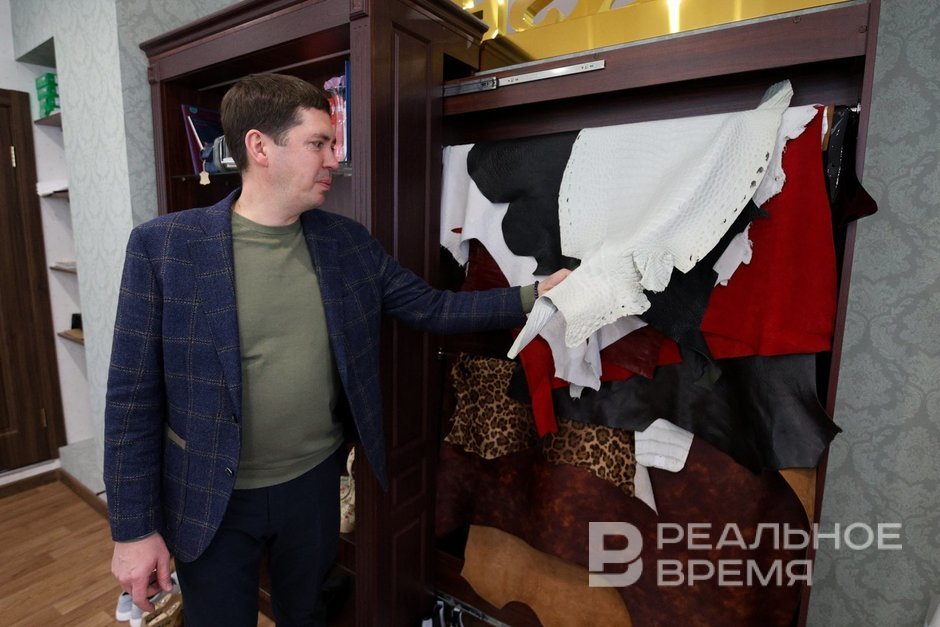
— We decided to leave everything as is — to continue using leather produced in Europe. We didn't find manufacturers in Russia who could produce suitable material for us. Perhaps when our factory appears, there will be supply in our country too. Currently, there is practically not a single Russian luxury shoe manufacturer, and if there's no demand, there's no supply.
What changed with the introduction of sanctions is the price — everything became more expensive. Delivery times also increased. If clients want something special, they have to wait at least a month or two. Previously, everything could be delivered within a week. Logistics have become more complicated. Unfortunately, we still don't purchase anything needed for our production in Russia. Domestic means only our hands. Our suppliers include companies from Japan, Spain, Italy, and France.
However, there is another side — attention has turned to us, we have been noticed. From the perspective of understanding the need for our existence, everything has changed dramatically. Previously, craftsmen, artisans, and producers weren't particularly noticed because everything could easily be bought. Just fly to Italy for the weekend.
— Do you plan to open new stores?
— This will only happen after the launch of our joint brand with the Italian designer and the start of production at our factory. Stores in Russia will primarily appear in Moscow and Kazan, and they will operate in a new format. We wouldn't want the opening of one outlet to cost more than a one-room apartment, i.e., 10 million rubles. This can be achieved due to the small area: from 50 to 80 square meters. You know that square meters in shopping centers are very expensive now, especially when the sales floor is combined with a warehouse. Figuratively speaking, you open and you're already ruined. We, however, plan to launch only fitting room stores. All models will be displayed, but they can only be tried on. The client comes in, we scan their foot. We try on shoes, assign the last to them. We assign one to three lasts to them, and in principle, the person no longer needs to come in the future. Everything will be done remotely. This will be more convenient for the client and cheaper, because the rental cost is always included in the final price. Our goal is to make the price of shoes as close as possible to the manufacturer's price. It's no secret that today the price at which shoes are sold is 5 times the manufacturer's price.
In modern mass shoe production, there is such a problem — all manufacturers work with almost the same last standard. But in reality, there are nine types of widths for each size, for example, nine variations of size 42. Ninety-eight percent of manufacturers work with one width because 45 percent of the population fits that width. Nobody thinks about the remaining 55 percent.
“Competing with China is impossible”
— What is currently happening in the Russian shoe market: are local manufacturers able to compete with the Chinese?
— Competing with China is impossible. With nearly 80 percent automation of labor, China is unattainable in terms of cost for anyone. I was in Italy. Forty percent of their production facilities closed just last year. Moreover, whoever says what, they lost a very large market in Russia.
If we try to do the same as China, we will inevitably face failure. Import substitution in our industry hasn't happened yet, although the state is ready to subsidize such productions. For example, a manufacturer is given 30 million rubles, but with one condition — all equipment must be Russian. I was also offered such state support. But there are only a few large shoe factories in all of Russia. What domestic equipment can we talk about? Even neighboring countries have nothing to offer. There are only two players in this market — Italy and China. That's all.
— What other projects would you like to bring to life?
— There is another ambitious project. It's not about business and money; it's about improving the nation's health. Currently, my team and I are working on a program related to controlling retailers who sell children's shoes. Look at how many orthopedic shoe stores there are now. And such shoes are practically crutches. We shouldn't let it come to that. When a child tries on shoes, they can't say if it's comfortable or not. They can only tell if it fits or not, hurts or not. And when the foot is pinched, compressed by the wrong shoes, it leads to sad consequences. I very rarely see a healthy child's foot nowadays. This is an abnormal situation.
We now want to develop a program based on our foot scanning program. The idea is that all shoe sellers should have to verify the comfort of the last for a Russian child's foot. It would be necessary to check precisely the lasts according to which the manufacturer makes the shoes. This may seem very complicated, but without verification, the problem cannot be solved. Unfortunately, this is not an immediate prospect, but it is very important.