Musa Jalil was still published from 1944 to 1947, despite treason charges
Jalil readings held at KFU's IFMK; Iskander Gilyazov discusses the poet's long road to rehabilitation
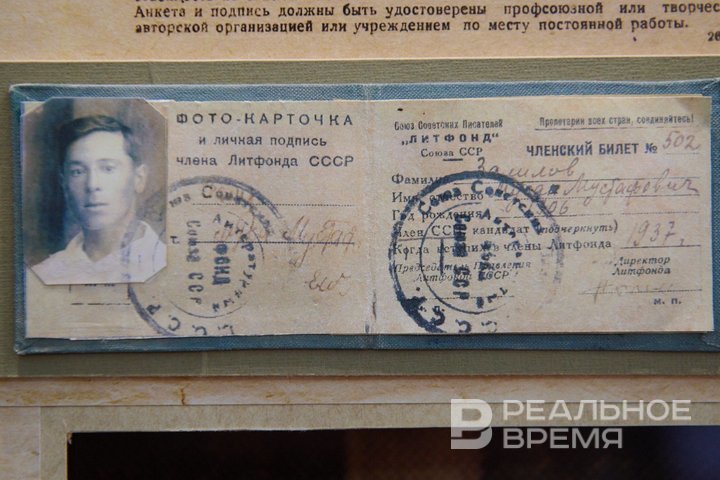
The commemorative events marking the 120th anniversary of Musa Jalil's birth continued after February 15: the “Jalil Readings” took place at the Institute of Philology and Intercultural Communication of Kazan Federal University, at the poet's memorial apartment-museum, and in the “Pri sutstvennye mesta” buildings. One of the topics discussed was the work of the Russian search movement — the “Snow Landing," which still travels to the “Death Valley” where Jalil was captured.
“New materials are emerging; there are still resources and scientists for academic research”
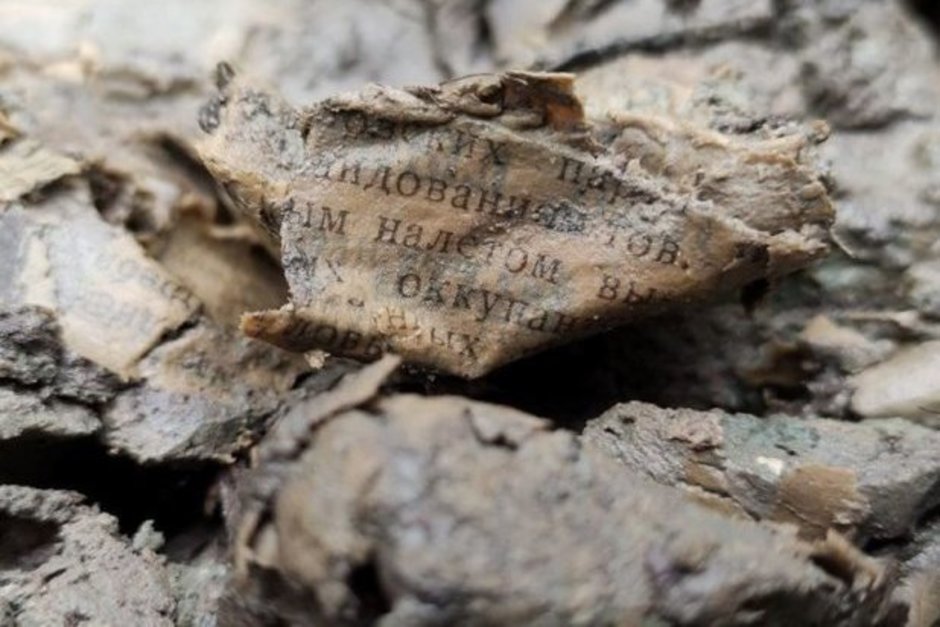
During the plenary session, for the second time in a month, the National Museum of Tatarstan exhibited the original “Moabit Notebooks," manuscripts of poems created by Jalil. Usually, they are shown only once a year, on the poet's birthday. The museum's collection related to his life continues to be researched. A notebook with illustrations, likely by the author, was found. In the Novgorod region, a typeset printing of the newspaper “Courage” was discovered; Musa Jalil was a correspondent for this publication.
Unlike his contemporaries, noted the head of the Union of Writers of Tatarstan, Rkail Zaidulla, during the plenary session, Jalil was not drawn to Futurism or Imagism, drawing inspiration instead from folk art.
— Jalil always followed the mainstream path. The “Moabit Notebooks” propelled him to the forefront of poetry, — stated the head of the Union of Writers of Tatarstan.
At the same time, Zaidulla pointed out, these notebooks contain no apologies to Stalin or the Soviet government, although the poet certainly hoped his poems would reach his homeland.
Speaking of this, Professor of the Department of Tatar Literature at KFU, Nurfiya Yusupova, also noted that in the early 1930s, Jalil developed his own style, which incorporated folk traditions, particularly the image of the Tatar batyr warrior, which no longer fit within the framework of socialist realism. On the other hand, such diverse images as the red flag and the planet Venus coexisted in his work. And in 1941, he created the libretto for Nazib Zhiganov's opera “Altynchech," based on Tatar fairy tales.
The head of the IYALI (Institute of Language, Literature, and Art), Ilgiz Khalikov, recalled that extensive research on Jalil began in 1957 with the monograph by Gazi Kashshaf.
— I cannot say that work has slowed down in recent years, — Khalikov remarked. — New materials are emerging; there are still resources and scientists for academic research.
How Jalil was rehabilitated
A key presentation at the plenary session was given by Academician Iskander Gilyazov on the poet's rehabilitation from 1946 to 1956, which culminated in Jalil being posthumously awarded the title of Hero of the Soviet Union and the Lenin Prize (incidentally, a unique case in history).
It is interesting, Gilyazov noted, that even after Jalil's capture in June 1942, his poems continued to appear, and his name was mentioned in articles of the Tatar literary journal “Soviet Literature.” For example, a collection in Russian titled “Letter from the Trench” was published in 1944. In 1945, six of his poems were included in a Moscow-published anthology of Tatar poets. In 1947, his work was published in a children's book.
— A paradoxical situation: Jalil was a prisoner; from 1946, he was officially considered a traitor because the Ministry of State Security opened a search file, yet his name had not completely disappeared, — Gilyazov noted.
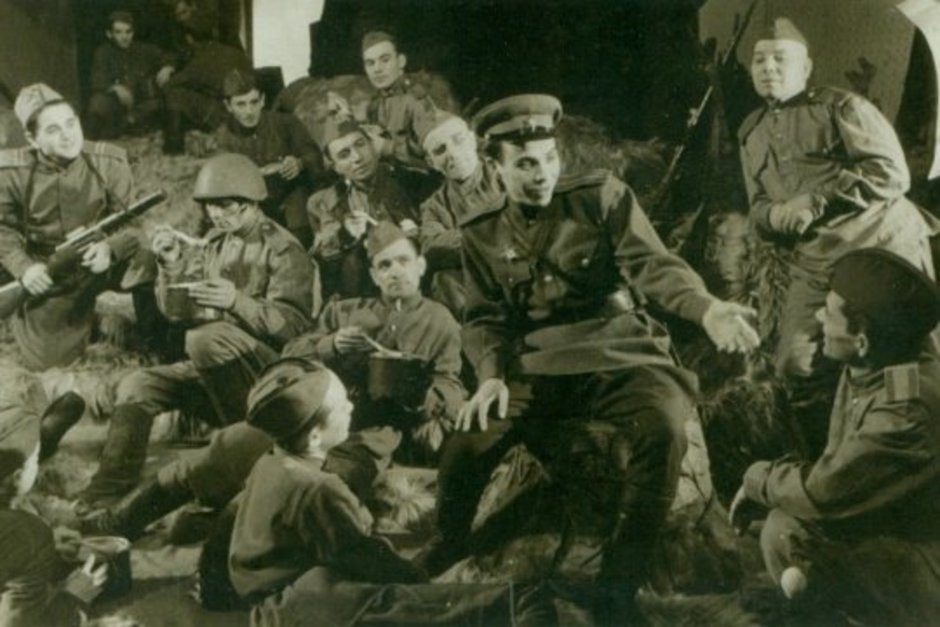
After that, however, silence ensued. Meanwhile, in 1946–1947, the “Moabit Notebooks” were returned to the homeland, handed over by Nigmat Teregulov and Andre Timmermans. But even after this, the rehabilitation process was lengthy. At the same time, in 1947, Nazib Zhiganov's opera “The Poet” premiered, dedicated to Jalil, although this was not publicly stated; the protagonist was named Niyaz Uralov.
— The opera vividly and emotionally revealed the image of Jalil as a patriot and a fighter who died for his homeland, — Gilyazov pointed out, adding that on December 17, 1947, it was decided to nominate it for the Stalin Prize. But after 16 performances, “The Poet” was removed from the repertoire; critical articles appeared, claiming it showed a non-typical, uncharacteristic case of a Soviet officer's capture, depicting the soldiers in the opera as a disarmed crowd.
— When I recently spoke on this topic at another event, I was subjected to severe criticism by journalist Ilfat Fattakhov. I accept that criticism, — Gilyazov noted, adding that in the late 1940s, Kavi Najmi and Gazi Kashshaf were involved in the effort to rehabilitate Jalil. Probably with their help, his poems reached Konstantin Simonov.
After Stalin's death, the rehabilitation process accelerated. Gilyazov indicated that from 1946 to 1952, the First Secretary of the Tatar Regional Committee of the CPSU, Zinnat Muratov, repeatedly made inquiries about Jalil's fate, resulting in a detailed report from the state security services on August 2, 1952. This is likely the official start date of the rehabilitation process.
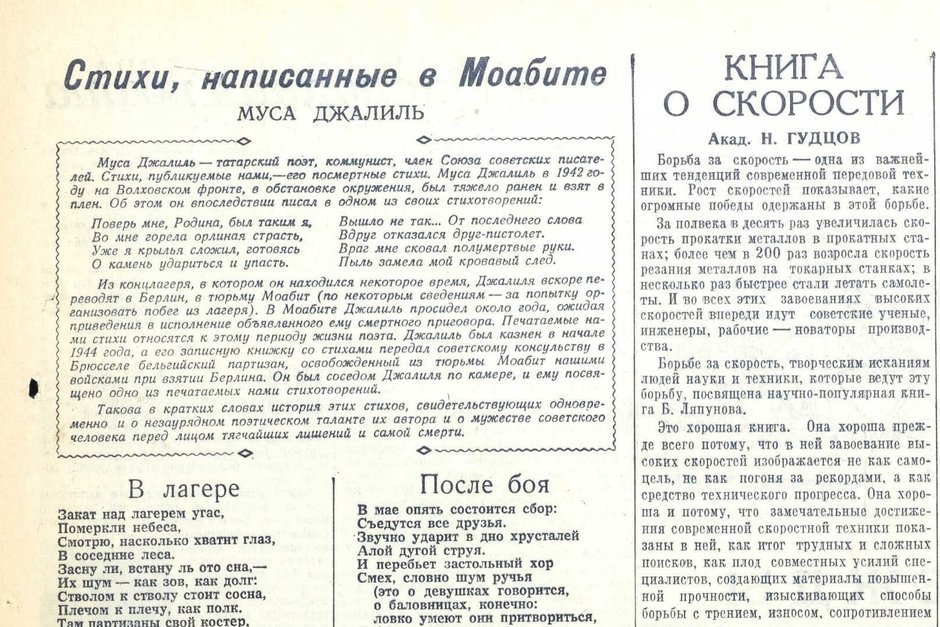
Later, in 1953, writer and veteran, editor-in-chief of “Literary Gazette” Konstantin Simonov read the poems from the “Moabit Notebooks.” On April 23, the newspaper published six translated poems along with an article by Simonov. A public discussion began, and in 1956, “Literary Gazette” even published an interview with Timmermans. As a result, Jalil's case was reviewed.
Interestingly, the official rehabilitation occurred on April 25, but the poet had already been posthumously nominated for the title of Hero of the Soviet Union on February 2.
Associate Professor at KFU and literary scholar Mileusha Khabutdinova reminded that Jalil bequeathed all his creative work to Kazan University scientist Gazi Kashshaf. She criticized attempts to “desacralize” the poet and asked Gilyazov whether the Republic of Tatarstan should once again include scientists and experts from IYALI on public cultural councils to ensure that new films and theatrical productions undergo expert review.
— When it comes to figures from our past, I have always believed and continue to believe that we must, especially when discussing poets or writers, very clearly and accurately understand the historical context. We must not detach ourselves from the historical conditions in which the person, their personality, and their work matured, — Gilyazov responded. — When we talk about Musa Jalil, we must consider that historical background, rather than projecting some of our contemporary views onto the past. We should neither idealize the past nor demonize it. We must approach the past strictly scientifically and perceive our historical figures through the prism of their own time.
Jalil — senior political instructor of the second shock army
— As a senior political instructor and correspondent for the newspapers of the Second Shock Army, he participated in the Lyuban Offensive Operation, whose goal was to break the siege of Leningrad. They did not succeed; they failed to hold the narrow corridor later named “Death Valley," strewn with the remains of fallen comrades, — reminded Andrei Nekrasov, Chairman of the Council of the “Snow Landing” Association of Search Teams. In 1981, a team of searchers from the university's philology faculty came to the village of Myasnoy Bor, to the “Death Valley.”
— According to official data, there are nearly 150,000 missing persons there, — Nekrasov noted. — The tragedy is compounded by the fact that they were all labeled traitors. The soldiers of the Second Shock Army remain unburied to this day.
Over the years, the technology for searching and perpetuating memory has advanced. Myasnoy Bor became a place where searchers vowed to keep returning until everyone is buried.
— After each expedition, we would go straight from the train to the monument. A minute of silence, a short report... This continued for a long time, until the late 1990s.
— We have many young people. For them, Jalil is not just our fellow countryman, not just a poet, not just a Hero of the Soviet Union, — Nekrasov stated. — He is a man who, together with the Second Shock Army, under the most difficult, inhuman conditions, fulfilled his duty, fought, and tried to save besieged Leningrad. And this sacrifice was not in vain; without the Second Shock Army, the city would not have been held.