Uri Orlev: “The writer's job is to tell interesting stories that will captivate the reader”
On the 95th anniversary of the birth of Israeli children's writer Uri Orlev: war through a child's lens, the holocaust, and stories that help one
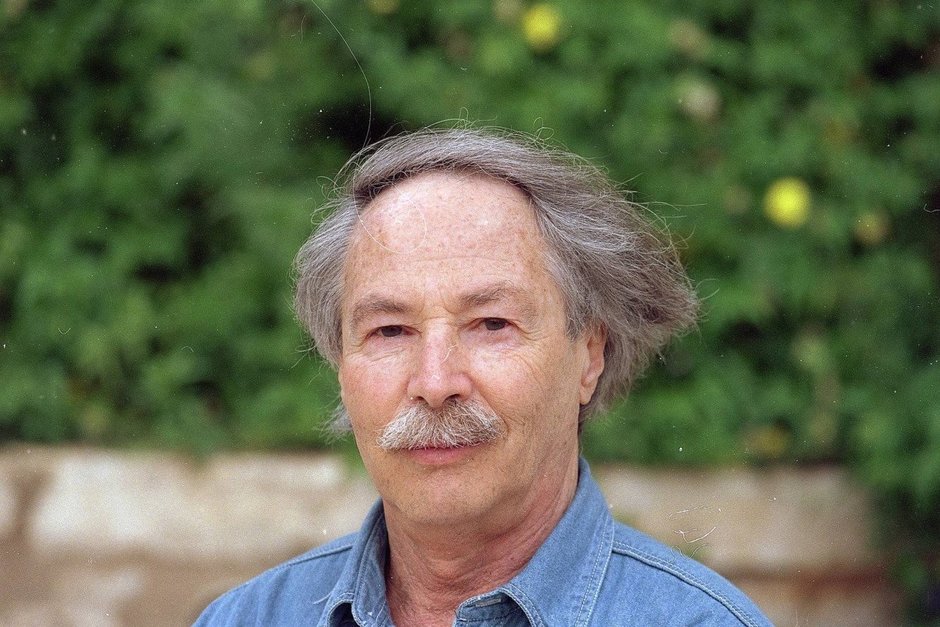
Today, February 24, marks the 95th anniversary of the birth of Israeli writer Uri Orlev — laureate of the Hans Christian Andersen Award, the highest international recognition in the field of children's literature. Having survived the Warsaw Ghetto and the Bergen-Belsen camp, Orlev managed to transform his childhood experiences of war into books that are read worldwide and included in school curricula. Details are in this report by Yekaterina Petrova, literary columnist for Realnoe Vremya.
“Those who aren't fighting continue to live the most ordinary life during wartime”
Uri Orlev (born Jerzy Henryk Orłowski) was born on February 24, 1931, in Warsaw to Maximilian Orłowski, a physician, and Zofia, a chemist. He grew up with his younger brother Kazimierz. Uri Orlev recalled that at the age of four and a half, he did not know he was Jewish, and only after a question from neighborhood children did he ask his mother: “Are we Jews?” She replied that one is born Jewish and can change faith if desired.
Uri learned to read early — by himself, from store signs, endlessly asking adults: “What's this? What's this? What's this?” Among his favorite works were books about Tarzan, Karl May, Jules Verne, Victor Hugo, Henryk Sienkiewicz, and Janusz Korczak. He mainly preferred adventure literature, detective stories, and books about war. Uri also read the novel “Uncle Tom's Cabin," through which he learned about slavery, as well as “Robinson Crusoe” and “Gulliver's Travels," which “survived” much in his memory.
In 1939, the war began; his father was mobilized into the Polish army and taken prisoner by the Soviets. In November 1940, the family was relocated to the Warsaw Ghetto. Orlev recounted that the first months in the ghetto, while they still had a separate apartment and food, “were even good”; he spent time with his mother and played with his brother. Uri clarified: “the first two years in the ghetto… for me and my brother were the best years of our childhood," because their mother spent more time with them. He explained: “those who aren't fighting continue to live the most ordinary life during wartime” — adults joke, children play. In the ghetto, he continued reading to “occupy himself somehow. So as not to think about everything that was happening around.”
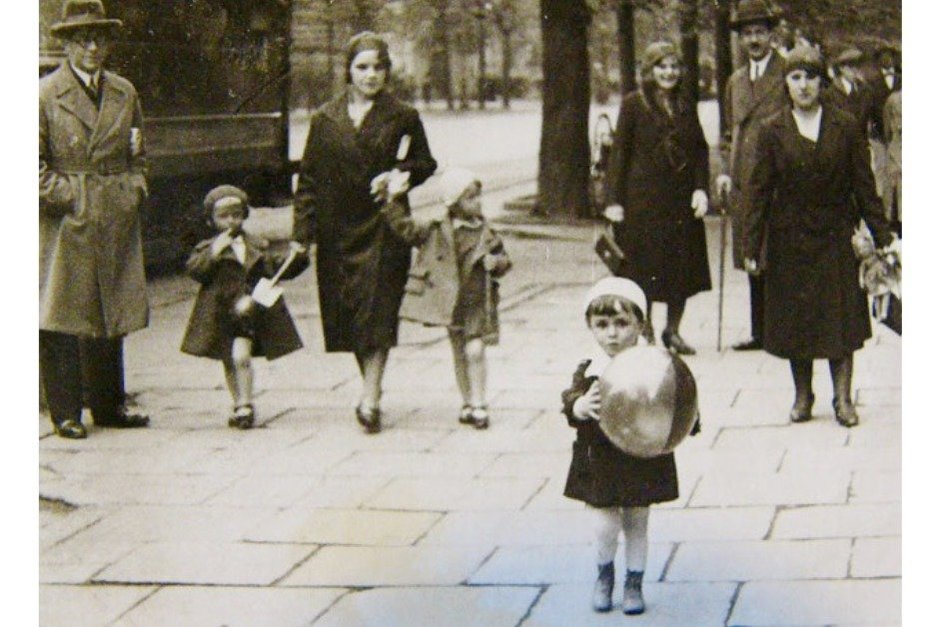
Uri Orlev spoke about specific episodes of life in the ghetto. He recalled the Umschlagplatz, the deportation point to the camps: the first time he went there with his mother, expecting to see dirt and blood, but “there was green grass… People sat on the grass… a large red sun had almost set.” He also recounted seeing burning buildings and a woman jumping from a window, and how his mother pulled him away so he wouldn't look. Another day, he found himself in an apartment where the bodies of a family who had decided to die together lay on a long table.
When a schoolgirl from Portugal asked if he cried in the ghetto, Orlev initially answered no, but then recalled one instance — on his birthday, when he asked his mother for the complete works of Adam Mickiewicz. The book cost 15 zlotys; his mother said it was expensive, and he cried, after which she bought it anyway. “That was the only time… I cried in the ghetto," the writer said.
In 1943, his mother, who worked in a ghetto factory and became seriously ill, was shot by the Nazis. Orlev did not hide this information when young readers asked about her and always answered directly: “She was partially paralyzed, couldn't make it to the train, and was shot.”
During the Warsaw Ghetto Uprising, the brothers were smuggled out and hidden for a time, then they were caught and deported to the Bergen-Belsen camp, where they remained until liberation in 1945. In the camp, Uri constantly wrote poetry and read verse. These texts were later published by the Yad Vashem memorial center in 2005. Orlev recalled that in the ghetto and later, without their mother, he and his brother continued to play, sometimes risking their lives “just for the sake of winning the game.”
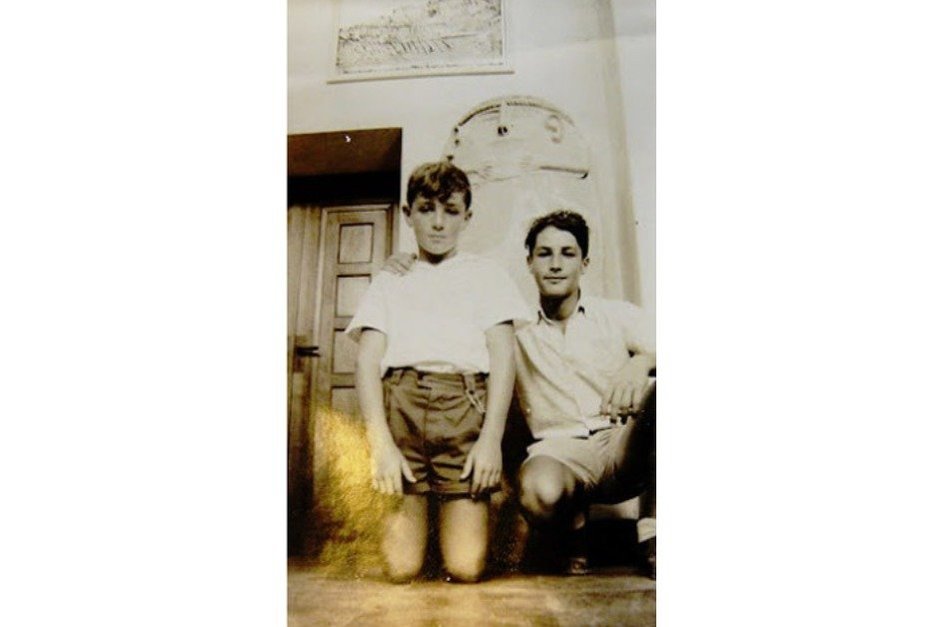
After liberation by the British army, the brothers were first sent to Paris through a children's aid organization, and then in the autumn of 1945 arrived in Mandatory Palestine. They sailed on the ship “Mataroa” to Haifa. Upon arrival, the children had to name the youth movement they belonged to. Orlev said he knew nothing about Palestine except that “they would give food and new clothes there," and he chose the “Gordonia” movement, hearing the familiar name “Gordon.”
The brothers were sent to Kibbutz Ginegar in the Jezreel Valley, where he lived for about 20 years. There he was given a new name — from Yurek he became Uri. He learned Hebrew, finished school, served as an infantryman in the Israel Defense Forces, then worked in cow sheds and as a reservist participated in Israel's military campaigns. In 1962, Uri Orlev moved to Jerusalem, where he settled for the rest of his life.
The line beyond which “the ice might break”
Uri Orlev's writing career began in 1956 with the publication of the novel “The Lead Soldiers.” The ideas for his first stories arose in Kibbutz Ginegar: on weekends, Uri would go to Haifa to watch movies and on the bus would retell stories to an older comrade, Shlomo, who insisted he write them down. Uri did so. With the kibbutz's permission, Orlev spent a year with a family of friends near Haifa, working on the manuscript. The text of “The Lead Soldiers” was translated into literary Hebrew with the help of a secretary he had met in the army. For publication, Uri changed his surname from Orłowski to Orlev, “to sound more Israeli.”
In 1976, Uri Orlev began writing professionally for children and adolescents, creating scripts for radio and television, and translating foreign literature into Hebrew. In total, he published more than thirty books, translated into dozens of languages.
Orlev said that in Israel he transitioned from poetry to prose and, when starting to write, “knows only the beginning of the story and its end," with the middle taking shape during the writing process. “Sometimes it's very important for me to pay attention to some small details," Orlev said in one interview. He also claimed that any artist “turns to their childhood," because that is where “the first and most intense memories” reside, and that he can speak about the Holocaust “only as I remember it as a child," not as an adult. This, he said, is “probably a kind of protection against traumatization.”
In the book “The Sand Game” (1996), he wrote about the ghetto and war through a child's eyes, which, as he explained, allowed him to cautiously recount his experiences without crossing the line beyond which “the ice might break.”
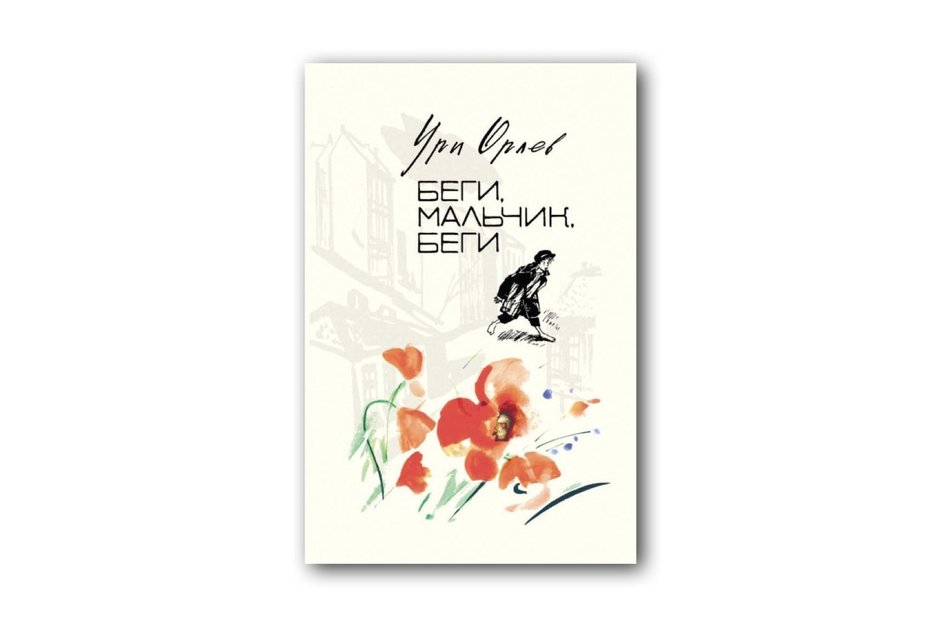
Among his most famous books are “The Lead Soldiers," “The Island on Bird Street” (1981), and “Run, Boy, Run” (2001). The novel “Run, Boy, Run” is based on the true story of Yoram Friedman: eight-year-old David escapes from the Warsaw Ghetto in 1942, takes the name Jurek Staniak, and hides until the end of the war, moving from one family to another. Orlev recounted meeting Yoram in a café and recording his story for about nine months. When details were lacking, he “built roads between the traffic lights," drawing on his own experience of similar situations. The book received the “Golden Lufti” prize and was nominated for the German Children's Literature Award.
“The writer's job is to tell interesting stories that will captivate the reader," Uri Orlev described his task. He insisted that a book should not be written “in order to preach.” If the author “slides into didacticism — you can consider the book lost.” According to the writer, reading is “a more thoughtful occupation… an interaction between you and what stimulates your imagination," and a book should be “like a dream” in which the reader feels joy, fear, or relief. He also emphasized that he always “wanted to tell stories” and started doing so as early as the sandbox, retelling and inventing plots for other children.
Robinson Crusoe in the Warsaw ghetto
The novel “The Island on Bird Street” was published in 1981. It is a semi-autobiographical book for children about an eleven-year-old boy, Alex, who is left alone in the ghetto in Nazi-occupied Poland and learns to survive. The action takes place in 1943–1944. The hero hides in a ruined building on Bird Street and calls his refuge an “island.” The narrative focuses on the daily problems, feelings, and thoughts of a child. At the same time, the text includes the confinement of Jews in the ghetto, isolation, deportations to death camps, as well as corruption, betrayal, and the Resistance.
According to the plot, when Alex's father is sent to a labor camp, the boy first hides in a cellar, then on the upper floor of an abandoned, bombed-out building. He procures food at night, uses secret passages to evade German soldiers, looters, and other fugitives. He has a white mouse named Snow, the novel “Robinson Crusoe” and other books, as well as a ventilation grate through which he observes the city. The book contains scenes of violence, including the killing of a German soldier who was about to shoot a wounded Resistance member. Yet the narrative is constructed without a moralizing gesture and shows what a child is capable of in extreme circumstances.
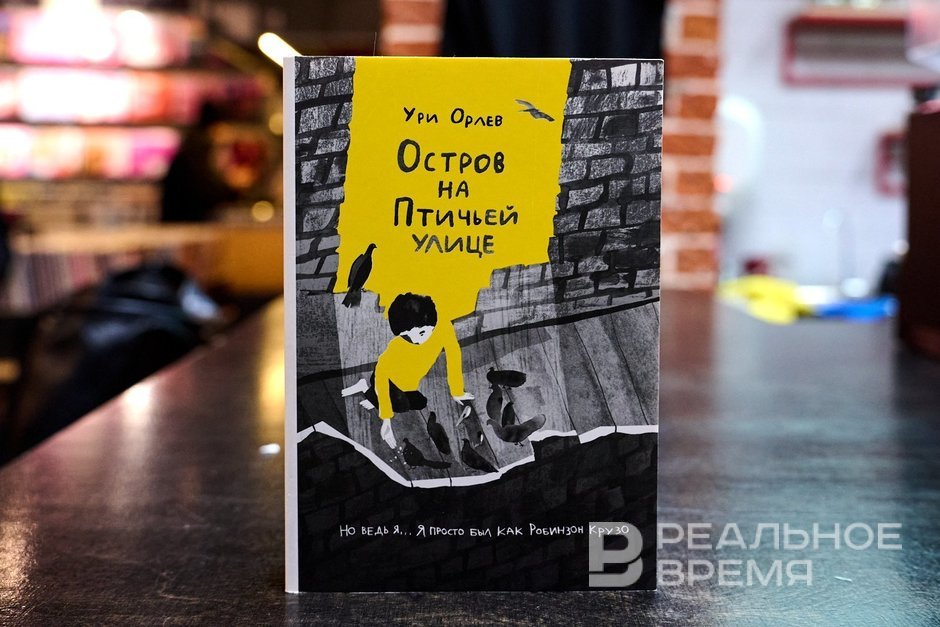
Orlev said that “in the book 'The Island on Bird Street,' it was important for me that the story definitely include ropes with which the hero could lower himself and climb back up to his hiding place.” He called this book one of his favorites and noted that “for many years he has been receiving letters — and recently emails — from children all over the world with a wide variety of questions.”
In the preface to the English edition, the author pointed out that although the setting is the Warsaw Ghetto of 1943–1944, a similar story could have happened almost anywhere. This book was included in Holocaust study programs for children and adolescents.
In 1997, the novel “The Island on Bird Street” was filmed. The movie was directed by Danish director Søren Kragh-Jacobsen, with filming taking place in Poland and Germany. The film is structured so that the viewer sees everything through Alex's eyes. The ruined buildings look like a creepy combination of a playground and a haunted house. The premiere took place at the competition of the 47th Berlin International Film Festival. The film received the Danish “Robert” Award for Best Production Design and other international honors.
“One of the greatest children's book authors”
Among Uri Orlev's awards are the Israeli Prime Minister's Prize for Hebrew-language works (1972) and the Bialik Prize for Literature (2006). In 1996, he received the Hans Christian Andersen Award “for his lasting contribution to children's literature.” This award, presented by the International Board on Books for Young People, is considered the highest recognition available to a writer or illustrator of children's books. The jury noted that Orlev's experience as “a Jewish boy in war-torn Poland” formed the backdrop of his work. Wherever the action takes place — in the Warsaw Ghetto or in Israel — he “never loses the perspective of the child he was," writes “on a high literary level, with honesty and humor," “never lapsing into sentimentality," and able “to say much with few words," showing “how children can survive without becoming embittered in harsh and terrible times.”
In the United States, four of his books — “The Island on Bird Street," “The Man from the Other Side” (1988), “The Lady with the Hat” (1990), and “Run, Boy, Run” — received the American Library Association's Mildred L. Batchelder Award for the most outstanding children's book originally published in a foreign language outside the U.S. and subsequently translated into English and published in the United States.
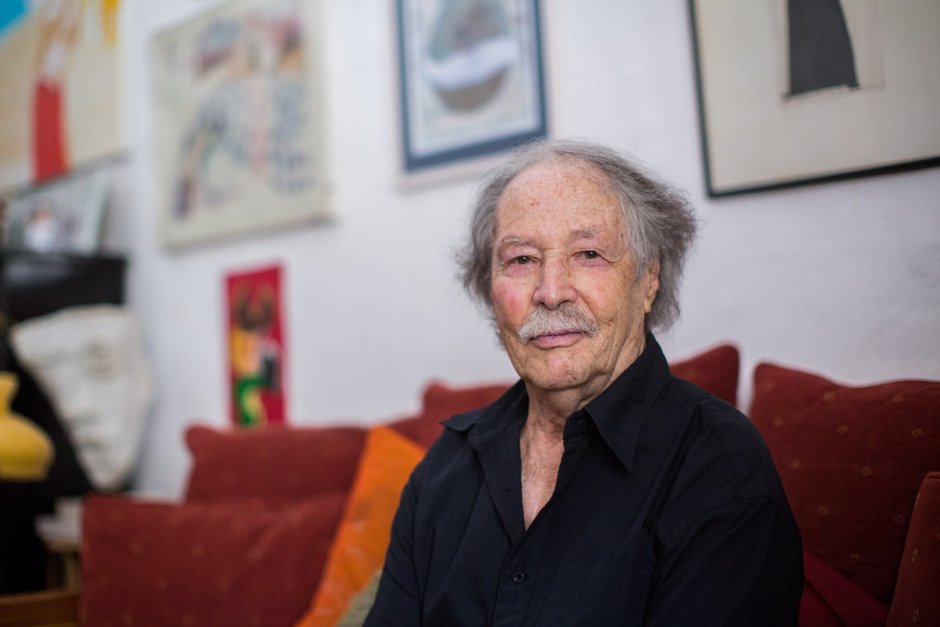
In Germany, Orlev repeatedly participated in literary festivals: in 2001, he was a guest at the first International Literature Festival Berlin; in July 2012, at the White Ravens festival in Munich; in September of the same year, he attended the 12th International Literature Festival Berlin, where he also served on the jury for the “Unusual Book” prize of the children's and youth program.
“If even once a child comes across an interesting book that truly captivates them, then after a while they will want to try reading again — they will assume that there is more than one interesting book in the world. So, what is needed? What is needed is to write interesting books," Uri Orlev said about children's reading.
Orlev lived in the Yemin Moshe neighborhood of Jerusalem. He was married twice, had two sons, a daughter, and four grandchildren; one of his sons is writer Itamar Orlev, who debuted with the novel “The Bandit” in 2015.
Orlev died on July 25, 2022, at the age of 91. Then-Prime Minister of Israel Yair Lapid called him “one of the greatest children's book authors” and stated: “our children grew up on him. His memories of the Holocaust and the founding of the state taught them our history," and his legacy “will remain with us forever.” Culture Minister Chili Tropper noted that Orlev's books “managed to depict his youth in the Holocaust and his immigration to the country and make hardship accessible to children and adolescents through his unique writing style.”
Yekaterina Petrova is a literary columnist for the online newspaper Realnoe Vremya and hosts the Telegram channel “Buns with Poppy.”