The book market in 2025: rising prices, marketplace expansion, and weak appeal to job seekers
The book market showed growth, but due to increased book prices.
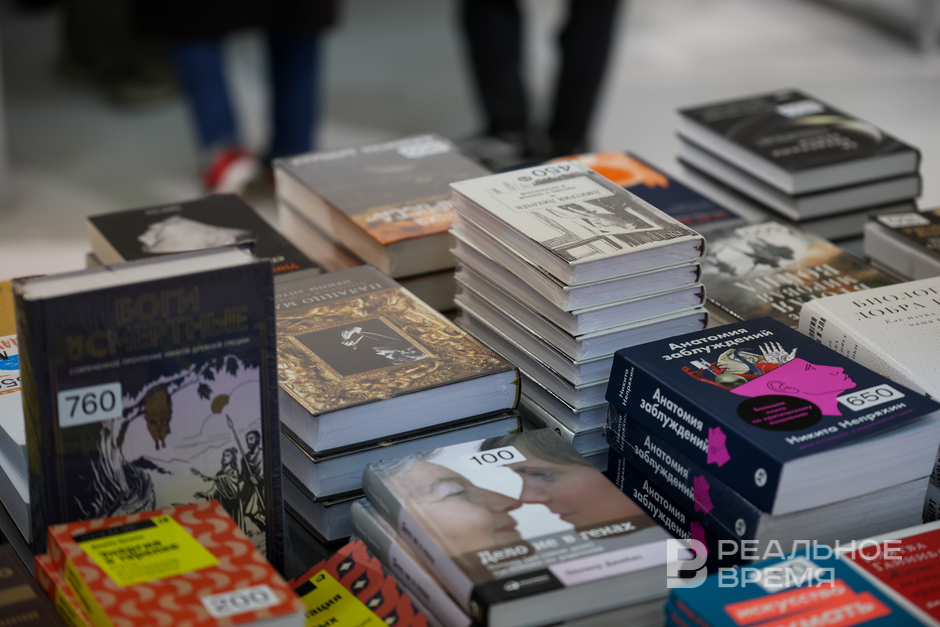
Last week, the Eksmo-AST publishing group announced the results of 2025 for the Russian book market. The industry maintained sales volume in units, but grew in monetary terms due to higher book prices, not print runs. The digital segment grew by 45% over the year and nearly doubled compared to 2023, marketplaces accounted for 54% of the physical book market, and 61% of potential job seekers still do not consider the book industry as a place of work. Details are in this report by Yekaterina Petrova, literary columnist for Realnoe Vremya.
Digital books prevent the industry from stagnating
According to the results of 2025, the Russian book market maintained its physical sales volume but grew in monetary terms. Evgeny Kapyev, General Director of the Eksmo Publishing House, reported that 231 million book copies were sold in 2025 — 1% less than in 2024 (233 million), and the same as in 2023. The most successful year in the last five remained 2021 with 234 million copies sold — 1.3% more than in 2025.
At the same time, the capacity of the physical book market reached 111 billion rubles, compared to 98 billion rubles the previous year. Growth amounted to 13%. Kapyev emphasized that the market grew in monetary terms not due to print runs, but because of increased book prices. Thus, monetary dynamics diverged from sales dynamics in units.
Price increases are also recorded by retail analysts. According to data from the Chek Index analytical center of the Platform OFD company, from January to November 2025, books and bookshop products rose in price by an average of 9%, the number of purchases decreased by 4%, and the average receipt was 837 rubles. Additionally, over two years, printing prices increased by up to 30%, which affected production costs.

Boris Kuznetsov, Director of the ROSMEN Publishing House and member of the board of the Russian Book Union, clarified the cost dynamics to the Izvestia newspaper: “During 2024, printing for the book industry became more expensive by 25–30%. And in 2025, it only increased by 10–12%. But the price increase in 2024 led to the current rise in prices.” He also added: “Logistics and distribution — they became the main drivers of cost growth in the book market. The biggest leap occurred in the fourth quarter. Distribution costs increased significantly, especially on marketplaces, jumping by 15–18%.”
Against this backdrop, the digital segment continued to grow. According to Kapyev's data, 222 million digital book copies were sold in 2025, compared to 153 million in 2024 and 112 million in 2023. Growth compared to 2024 was 45%, and compared to 2023 — almost 98%. “Book consumption in units has grown due to digital content," he noted.
Sergey Anuryev, General Director of the LitRes company group, reported that the capacity of the digital book market by the end of 2025 reached 23.64 billion rubles, which is 25% more than in 2024 (18.84 billion). Of this amount, 8.85 billion rubles came from audiobooks (a 34.5% increase from 6.58 billion the previous year), and 14.79 billion rubles from e-books (a 20.6% increase from 12.26 billion in 2024). The subscription segment grew by 51% year-on-year — to 11.897 billion rubles, occupying 50% of the digital book market for the year and over 52% in Q4. Anuryev noted that if current rates are maintained, the capacity of the subscription model will exceed 15 billion rubles in 2026.
In the structure of the physical book market, applied literature remained the largest segment: 38.3 billion rubles in 2025 compared to 34.7 billion in 2024, a growth of 10.4%. The segment's share was 34.6%. Fiction showed the highest positive dynamics — plus 19%: sales increased from 30.4 billion to 36.2 billion rubles, the share reaching 32.7%. Comic book sales decreased by 2.4% — from 4.1 billion to 4 billion rubles; their share was 3.6%.

Evgeny Kapyev also noted a change in demand structure: while in 2024 esoteric literature occupied 3% of the physical book market and was in ninth place in the top-10 niche segments, in 2025 it left the top ten, while interest in the Bible grew.
1 billion rubles for stores and 3 billion rubles for infrastructure
In 2025, marketplaces became the main sales channel for physical books in Russia. According to Evgeny Kapyev, their share was 54% of the market, with sales volume reaching 59.77 billion rubles. Compared to 2024 (48 billion rubles), growth was 24.5%; compared to 2023 (37.58 billion rubles) — 59%. Thus, over two years, sales volume through marketplaces increased by 22.19 billion rubles.
Against this backdrop, online stores showed a decline. In 2025, they sold books worth 6.8 billion rubles, compared to 8.88 billion in 2024 and 13.58 billion in 2023. The decline compared to 2024 was 23.4%, and compared to 2023 — almost 50%. The channel's share in 2025 decreased by 22.9% and amounted to 6.2% of all sales.
Bookstores maintained a share of 16.4%. In monetary terms, sales reached 18.1 billion rubles — 4.2% more than in 2024 (17.38 billion rubles), but 0.8% lower than the 2023 level (18.24 billion rubles). Among alternative channels, libraries and FMCG showed the highest dynamics: libraries increased purchases by 22.3% — from 1.5 billion rubles in 2024 to 1.88 billion in 2025, although this is 27% less than the peak year of 2023 (2.58 billion rubles). FMCG grew by 14.5% compared to the previous year.
The structure of offline retail also changed within the largest chain. Alexander Brychkin, General Director of the united retail chain “Chitai-Gorod — Bukvoed," reported that the chain's total revenue in 2025 amounted to 26.9 billion rubles — 4% lower than in 2024. At the same time, book sales grew by 3% and reached 16.3 billion rubles. He also forecasts that in 2026, book sales growth will be 5.4%.

The chain's traffic in 2025 amounted to 84.2 million people, which is 9% less than the previous year. The average receipt increased by 11% and reached 791 rubles. As of December 31, 2025, the chain operated 657 stores: during the year, 66 outlets were closed and 20 new ones were opened, meaning a 7% reduction in the network compared to 2024.
In 2025, the chain began implementing a new concept for “Chitai-Gorod” stores. By the end of the year, 27 outlets operated in the updated format. Compared to the old model, traffic in them increased by 174%, revenue per square meter — by 98%, total revenue — by 166%, and book sales — by 184%. In 2025, 1 billion rubles was allocated for the transformation. In 2026, another 30–40 stores are planned for renewal, and in April — the opening of the first “Bukvoed” in the new concept in St. Petersburg.
The press service of “Bukvoed” told Realnoe Vremya that the store renovation will follow the same principle as “Chitai-Gorod”: “The company expects that the new space will attract active young people interested in fashion and art. The first stores will open in St. Petersburg, then this format will be extended to other cities to open in local creative clusters and trendy spaces.”
Simultaneously, publishers invested in production infrastructure. According to Kapyev, 3 billion rubles were invested in modernizing printing production in 2024–2025. The press service of the Eksmo-AST publishing group clarified: “The main part of the funds — 2 billion rubles — was allocated to the complete re-equipment of the Mozhaisk Printing Plant: a major overhaul of the outdated Soviet base was carried out and modern equipment was purchased, including a new hardcover line. Another 1 billion rubles was invested in the technical renewal of the Pareto-Print printing house. And modernization is still ongoing. These are long-term investments with difficult-to-predict payback.”
“Modernity and ambition” of the book business under question
When summing up the results of 2025, representatives of the Eksmo-AST publishing group characterized the book industry as a labor market with limited visibility for external audiences. According to their data, 61% of potential job seekers know nothing about the book industry and do not consider it for employment.
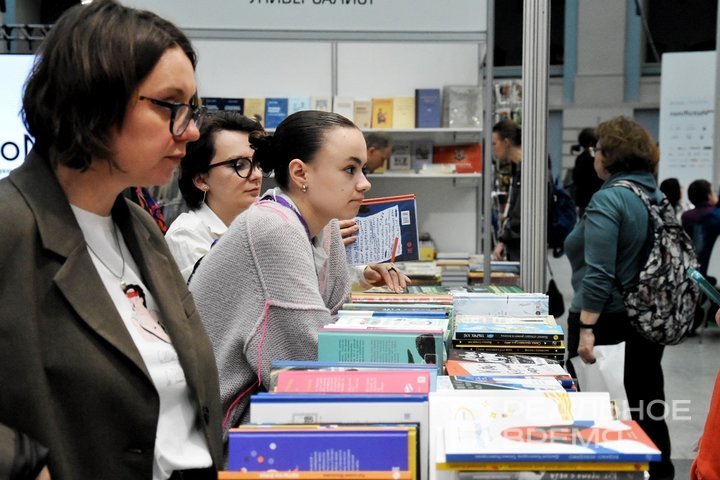
The group's press service clarified that the study was conducted among editors working in the media sphere, as well as among specialists from IT and marketing. According to its results, a significant portion of respondents do not perceive the publishing sector as a possible place of work. “The main reason is the external audience's lack of understanding of the scale of tasks, level of expertise, and career opportunities that exist in the modern book business," the company told Realnoe Vremya. They emphasized that the problem is especially relevant for Generation Z, which today forms a significant part of the personnel reserve.
The publishing group stated: “It is necessary to convey to the outside an understanding that a modern publishing house is a technology company where specialists of various profiles can realize their competencies in large-scale and interesting projects.” According to the company's assessment, the industry competes for qualified personnel with large ecosystems, media, and film production, and the outcome of this competition depends on how convincingly the “modernity and ambition” of the book business is demonstrated.
Anastasia Ryzhkova, literary columnist for the Snob project, links the situation to insufficient professional communication within the industry itself. “There is a feeling that we, as conditional representatives of the industry, invest little in professional PR. If you take a high school student, he probably knows writers and knows publishers, and that's it. But any industry still consists of a large number of different specialists whose heroic work needs to be highlighted, and they most often remain behind the scenes," she noted.
According to Ryzhkova, basic conditions are important for retaining and attracting personnel: “You need to offer good conditions, give prospects to those who need them, support those who value stability and security. These are trivial things, but in the pursuit of KPIs they are often forgotten, and this is the foundation on which the entire building rests.”

Writer Bulat Khanov explains the low interest in the industry by a combination of reputational and economic factors. He clarifies that he does not rely on sociological data but speaks from personal observations: “Even many humanities scholars engaged in intellectual work view literature not as a living organism, but as a museum that is no longer being added to.” According to him, he has heard the question “why write new books when everything has already been written," and such perceptions influence the view of the industry as static.
The second reason, in his estimation, is related to the market economy: “Most people, even those far from the book industry, have a priori knowledge that the book business carries many risks that are not financially justified. Advertising, let's be honest, is more tempting; there's room for designers and editors to spread their wings. The market that is growing is attractive. The delivery market, for example. When the book market starts to grow, then the percentage of job seekers will increase.”
Yekaterina Petrova is a literary columnist for the online newspaper Realnoe Vremya and hosts the Telegram channel “Buns with Poppy.”