Tatarstan to count craftsmen and add them to a register
Ahead of the opening of TsUM with 246 masters, the authorities have moved to meet craftsmen halfway
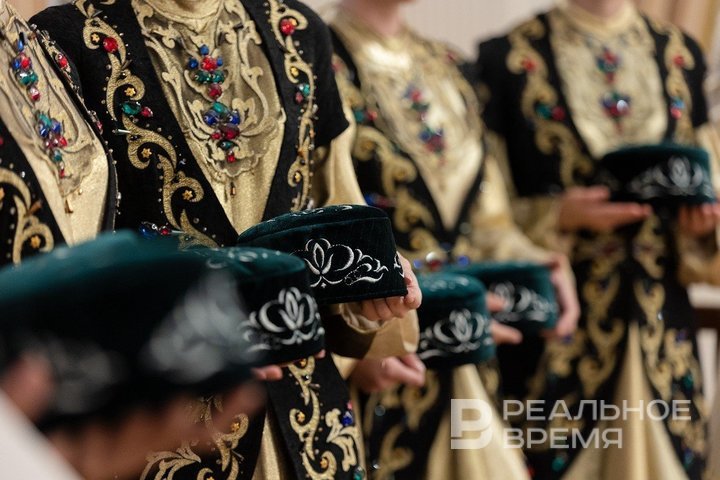
At the final board meeting of the Ministry of Culture of Tatarstan, some details were revealed about the activities of the Centre of Unique Craftsmen, which will appear on the site of Kazan’s TsUM department store: 246 people will work there in 67 workshops. It is due to open as early as 1 March. Meanwhile, the republic’s Cabinet of Ministers has approved the procedure for forming a register of craftsmen and a list of products not subject to mandatory labelling. The draft resolutions have passed an anti-corruption review. This is expected to ease the workload primarily for clothing and footwear manufacturers. More details can be found in Realnoe Vremya.
What will be inside TsUM?
The opening of the Centre of Folk Crafts in the former TsUM building is scheduled for 1 March. Within the craftsmen’s community, conditions are being discussed anonymously: not everyone is ready to work daily from 10am to 9pm and to hold mandatory masterclasses. There are, however, those who are already planning to open a workshop and a shop.
Announcing the event, the Rais of Tatarstan, Rustam Minnikhanov, has already promised that residents of the centre will receive state support measures and benefits.
“The main task is to attract craftsmen there, not traders," the head of the republic explained to journalists at a New Year meeting. “Moreover, craftsmen who will produce their goods there and sell them on site, as well as teach our children.”
Recently, sketches of the renovated building were presented by the chief architect and deputy general director of Tatinvestgrazhdanproekt, Elena Valeeva. Readers were particularly impressed by a kinetic installation with brass elements reminiscent of chulpy pendants.

Details of TsUM’s content were outlined at the final board meeting of the Ministry of Culture of Tatarstan by the curator of the project to create the Centre of Unique Craftsmanship, Ranko Tepavčević. TsUM will employ 246 masters, with 67 workshops across 17 areas: blacksmiths, glassblowers, potters, makers of musical instruments, wood and leather craftsmen, producers of national clothing, and jewellers. Visitors will also be able to attend culinary masterclasses. The daily capacity of such classes will be 800 people. TsUM will also attract visitors with national cuisine.
At the same time, it is planned that TsUM, as a creative cluster, will also host the Centre for the Development of Creative Industries of the Republic of Tatarstan. Alongside the old department store premises (around 31,000 square metres), an office space of 20,000 square metres with 850 workplaces and six conference halls is due to be commissioned in May this year.
According to Tepavčević, TsUM will also include an area for educational programmes run jointly with universities and colleges, as well as the Osta Centre career guidance hub, featuring immersive multimedia solutions.
Clearly, the authorities have high expectations for creative industries. While in 2024 their contribution to Russia’s GDP amounted to 7.5 trillion roubles (4.1%), the target for 2030 is 6%.
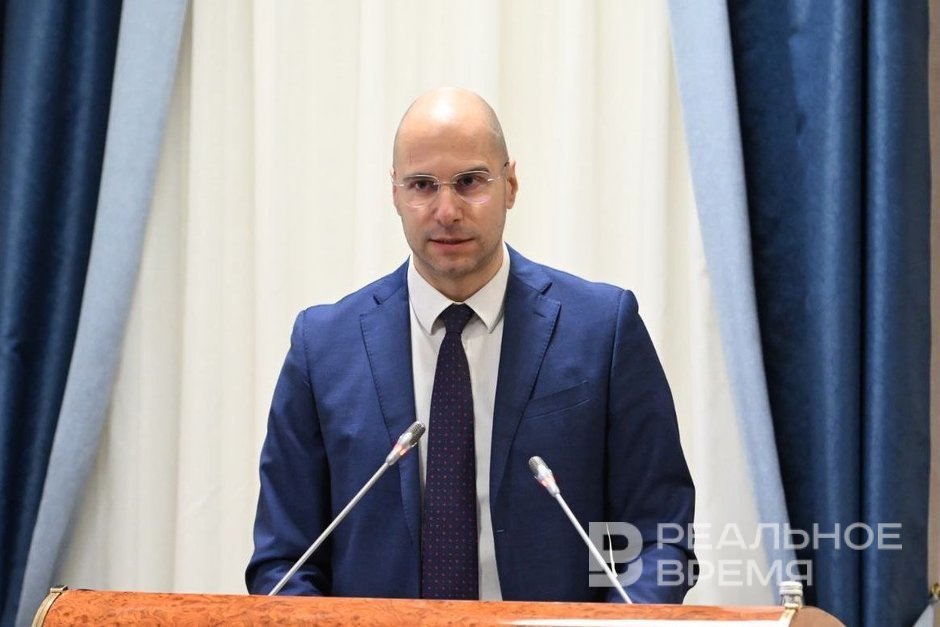
Why label what is individual?
Meanwhile, on 24 December last year, the State Council of Tatarstan adopted at first reading and in full a draft law on the legal status of entrepreneur-craftsmen.
“The proposed changes will make it possible to create a legal framework to support the craft sector of small and medium-sized enterprises, as well as to preserve the cultural identity of the peoples of Tatarstan," the republic’s Minister of Economy, Midkhat Shagiahmetov, stressed at the time.
A preliminary outcome of the initiative was the emergence of two resolutions by the Cabinet of Ministers of Tatarstan. One approves how the list of entities will be formed, while the other defines a list of types of craft activity not subject to mandatory labelling.
“One of the problems for craftsmen is the mandatory labelling of products with identification tools. Yet they produce individual items, clothing made of leather and fur," Shagiahmetov explained in December.
According to Russian government decree No. 792, labelling is not required for craftsmen’s products, but the specific types of work needed to be defined at regional level.
How to get into the register
So, in order to be included in the register, an applicant must be a small or medium-sized enterprise, with the number of employees not exceeding five. Self-employed individuals may also be included. Documents are accepted by the Entrepreneurship Support Fund of the Republic of Tatarstan. However, there is no information about these developments on its website.
In addition to an application (indicating OKVED2 codes and an official website) and consent to the processing of personal data, information on insurance contributions for the year is required, and for the self-employed — a screenshot from the My Tax app. A response should be received no later than the 15th day of the month following the submission of the application.
The list of types of craft activity in Tatarstan includes 38 items: beekeeping, floriculture, bakery and confectionery products, footwear, wooden containers, carpets, leather clothing, knitwear, cork, straw, weaving, soap, ceramics, knives, musical instruments, toys. There is also an item titled “Production of other outerwear”. The list concludes with “Production of folk arts and crafts items”.

Blouses and hats — without labelling
The list of products made by craft entities that are not subject to mandatory labelling with identification tools contains 33 items, detailing various types of clothing: from blouses and coats to sportswear and swimwear, as well as hats and footwear.
As the Minister of Culture of Tatarstan, Irada Ayupova, noted, all of this represents a form of support for entrepreneurs. The resolution of the labelling issue has long been anticipated, says Dmitry Polosin, director of the Chak-Chak Museum:
“It shortens the time needed to launch a new product, and it affects prices. Ultimately, it is the buyer, the consumer, who pays for everything. At the same time, labelling did not guarantee that people would not encounter counterfeits.”
“I think this is great and will make life easier for many craftsmen, since labelling is costly," notes Rania Rakhimova (the Rakhim brand).

The labelling system — a unique digital code confirming that a buyer is purchasing a legally produced quality product — began to be introduced in Russia in 2016. Incidentally, it allows one to find out who produced or imported a product.
Undoubtedly, for a craftsman who produces a limited, literally one-off quantity of goods rather than engaging in mass production, labelling was like a bone in the throat — after all, you cannot enter every item with numerous parameters into the system. Now, however, access to marketplaces and support measures is opening up.