Elena Stryukova: Interest in redevelopment grows over new construction
RGUD plenipotentiary in Tatarstan — on the year’s results in the commercial real estate market, new trends and shifting developer priorities
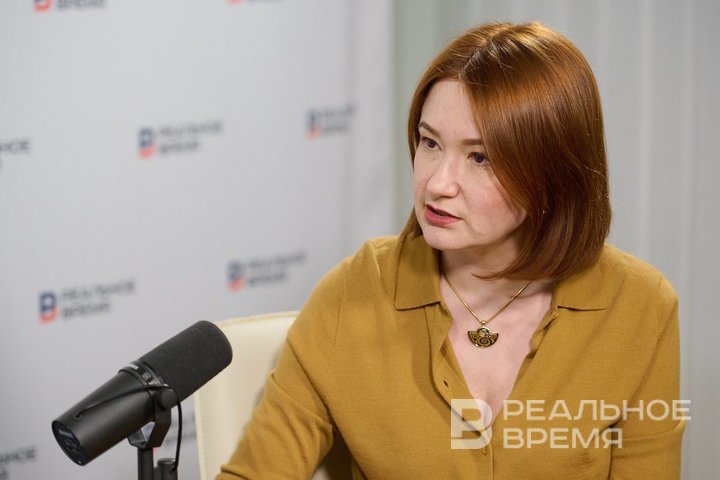
The commercial real estate market continues to operate amid uncertainty: market participants are adjusting strategies, changing priorities and focusing on maximising the efficiency of managing existing projects and resources, said Elena Stryukova, plenipotentiary representative of the Russian Guild of Managers and Developers (RGUD) in Tatarstan and managing partner of Perfect RED. In an author’s column for Realnoe Vremya, the expert sums up the results of 2025 for the sector, gives a forecast for the current year and explains how changed economic conditions have forced companies to revise plans and approaches to asset management.
Commercial real estate: key trends
Let us sum up the results of 2025, which proved challenging for all market participants. Changed economic conditions forced companies to reconsider plans and approaches to asset management. In addition to analysing past events, we present forecasts for 2026.
- The continuation of the cycle of key rate cuts (the fifth in a row) to 16% is becoming an important trend, contributing to a recovery in investment activity and easing financing conditions for businesses and developers.
- Tax initiatives, including an increase in VAT to 22% and adjustments to property tax calculation, are seen by the market as potential factors affecting business profitability and the parameters of investment models in commercial real estate.
- The abolition of preferential insurance contribution rates for part of SMEs and a transition to the general 30% level from 2026, combined with an increase in the minimum wage, form a trend towards rising operating costs, primarily in trade, construction and the real estate segment.
- Restrictions and instability in mobile internet and digital services are creating a new technological reality, forcing businesses to rethink operational and marketing strategies. This affects participants in the real estate, retail, e-commerce, logistics and hospitality markets, influencing advertising campaigns, customer communications, logistics chains and development plans.
- In Tatarstan, a stable trend of systemic labour shortages is emerging, which cannot be offset solely by labour migration, increasing the focus on wage growth, automation and robotisation as long-term solutions.
- Active implementation of artificial intelligence tools is becoming a sustained trend in development and property management. Amid labour shortages and ongoing sanctions restrictions, AI is increasingly used in project documentation, visualisations and concepts, as well as in “smart” construction sites, buildings and management systems, reducing the share of manual labour.
- The commercial real estate market continues to operate in conditions of uncertainty. Participants are adjusting strategies, changing priorities and focusing on the most efficient management of current projects and resources. Plans for active launches are being postponed to later periods, while geopolitical and macroeconomic factors remain key in decision-making.
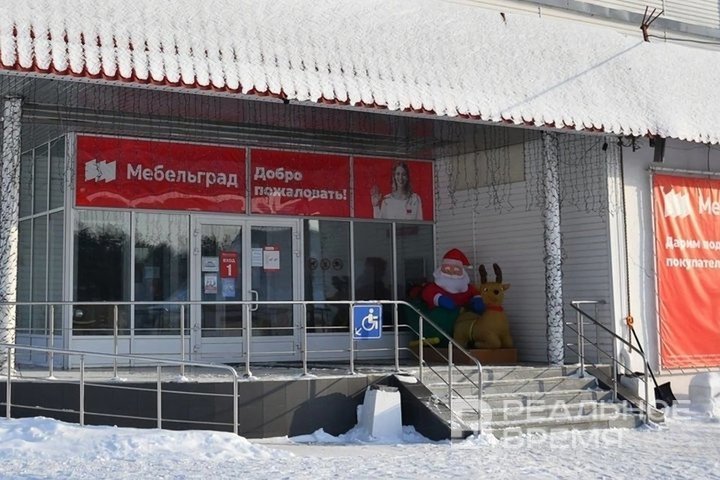
- In Kazan’s commercial real estate market, low activity in the sale of large assets persists, although a trend towards a gradual increase in the number of transactions may emerge in the coming years. Examples include the sale of a stake in the Yagodnaya Sloboda shopping centre and the completed deal involving Mebelgrad.
- In the collective investment market, there is a trend towards expanding the range of assets in closed-end mutual investment funds (ZPIFs): alongside traditional office, retail and warehouse properties, new formats are emerging. At the same time, the state is tightening regulation and restrictions on ZPIFs, including in the tax sphere, reflecting a desire to control tax revenues and increasing transparency requirements for fund structures.
- From a geographical perspective of residential developers’ projects, a counter trend is observed: while federal developers continue to expand their presence in Tatarstan, regional companies from the republic are entering markets in other Russian regions. Examples include Unistroy implementing projects in Yekaterinburg, Perm, Tolyatti, St Petersburg, Makhachkala and Ufa; Novastroy developing projects in St Petersburg; and SMU-88 in the Far East.
- Kazan city centre remains the main location for offices, but new projects will mostly appear in the Novo-Savinovsky district. At present, they are at the design stage: the Yar Park multifunctional complex with a congress centre on the site of the former Riviera, a moon-disc-shaped building on Alexey Kozin Street, and a multifunctional complex at the intersection of Chistopolskaya and Bichurina streets.
- In Kazan’s warehouse real estate market, new facilities designed during a period of higher business activity are now entering the market amid reduced demand and rising costs. As a result, warehouses are mainly offered on a speculative basis, while build-to-suit/build-to-rent (BTS/BTR) projects remain relatively rare. There are cases of subleasing new warehouses built under BTR schemes.
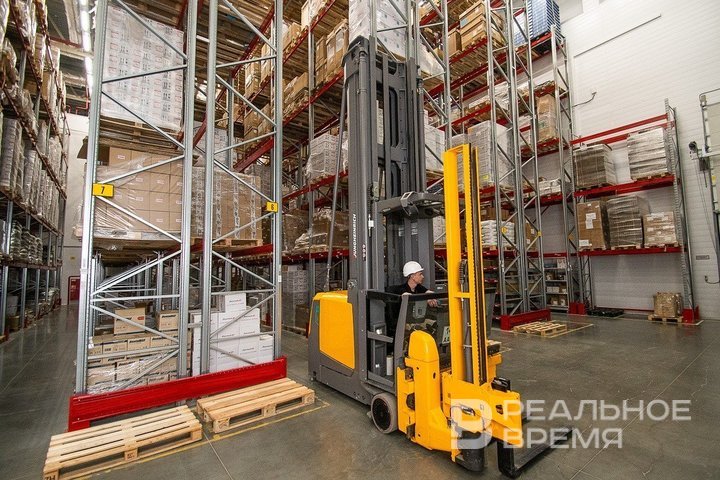
- The warehouse market shows a trend towards digitalisation and robotisation. Amid labour shortages and rising payroll costs, companies are increasingly implementing AI and business process automation, as well as robotisation of warehouse operations. This reduces dependence on line staff and cuts headcount, but simultaneously increases demand for electricity and technical maintenance.
- Light industrial facilities are not yet present in Kazan, but prospects for their introduction remain.
- In the collective investment market, serviced aparthotels remain popular as investment assets. In 2026, new management companies from Moscow and St Petersburg are expected to enter the Kazan market, potentially diversifying offerings and increasing competition.
- In the shopping centre market, a trend is emerging towards the development of urban resorts: facilities with thermal baths, water parks and spas are being transformed into standalone complexes or shopping centre tenants, an example being Kazan’s Karusel mall, converted into the Beach thermal complex.
- The trend of building small neighbourhood shopping centres as part of residential complexes continues.
- In the grocery retail market, federal chains continue to strengthen their positions in the discount segment. For example, around 80 Chizhik stores have opened in Tatarstan over the past three years. The Nakhodka chain continued its active expansion: 69 stores opened in 2024 and 110 in 2025.
- Interest in redevelopment and renovation instead of new construction is growing in the commercial real estate market. In Kazan, an example is the Adonis creative cluster based on a former garment factory.
- The e-commerce segment in Russia is facing tighter regulation and checks for counterfeit goods, which may slow its development in the coming years.
Retail real estate: market indicators
The vacancy rate in high-quality retail properties remained at 6–7% throughout 2025. In December, this indicator stood at 4%, down by 2 percentage points compared with the previous quarter. Vacancies decreased following the opening of a DDX fitness club in space previously occupied by OBI at Mega (the club took just under 3,000 sq m). Zarina and Sela stores also expanded.
Under instructions from the head of Tatarstan, Rustam Minnikhanov, reconstruction work is under way at the Kazan Central Department Store building. The project предусматривает construction of a new building with commercial premises totalling around 14,000 sq m. Completion is scheduled for March 2026.
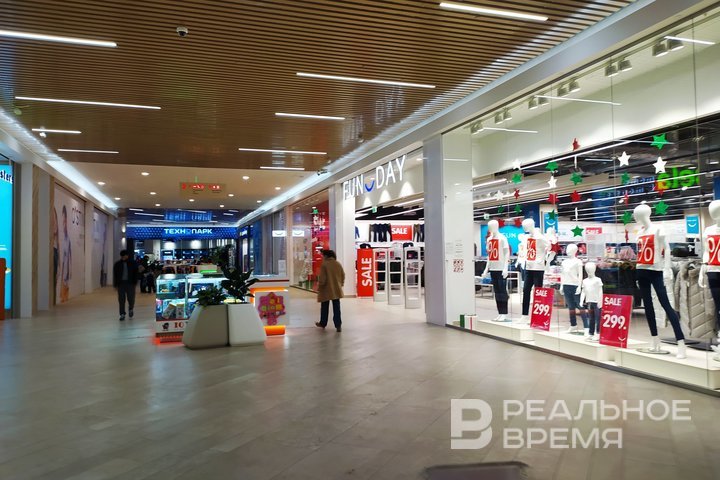
The pace of new store openings increased by 25% over the year. In total, 99 stores opened in 2025 (compared with 74 in 2024). Growth was driven by tenant rotation in existing space and the filling of the ART Community Centre, which opened at the end of 2024.
Attendance at shopping malls and tenants’ retail turnover
In 2025, shopping centre footfall showed a moderate decline compared with 2024. This dynamic is primarily due to slower growth in retail turnover and reduced consumer purchasing power. Additional impact comes from the redistribution of part of consumer demand to online sales channels and marketplaces.
In the retail property segment in 2025, compared with 2024, a decline in operational efficiency indicators was noted. Most product categories showed a reduction in retail turnover, reflecting an overall weakening of consumer activity. To assess the positions of different tenant categories, we compared average specific turnover in roubles per sq m of leased space over 12 months of 2025 with the same period in 2024.
Warehouse real estate: market indicators
The state of Kazan’s warehouse real estate market in 2025 can be described as “cooling”. Demand for warehouse space declined over the year. At the same time, a significant volume of space — 107,000 sq m, or about 19% of total supply — entered the speculative market (NK Park, a warehouse in the Oktyabrskoye rural settlement of Zelenodolsk municipal district, DoorHan, MBM). As a result, and due to the release of space in quality warehouse complexes following tenant relocations or downsizing decisions, the vacancy rate increased by 22.4 percentage points compared with 2024, reaching 23%. Over the next two years, around 300,000 sq m of quality space is planned for commissioning.
This situation is largely linked to the active commissioning of new facilities designed during a period of higher business activity, when demand was significantly stronger and project economics more favourable. These properties are now entering the market under different conditions — reduced demand and rising costs — leading to a temporary oversupply.
Despite the increase in vacant space, rental rates are not falling.
Changes in the warehouse market will depend on Central Bank policy and the continuation of key rate cuts.
Trends and news
- The bulk of transactions will involve speculative space already on the market or becoming available in the near future.
- The market has shifted from a “shortage” model to one of negotiating balance, with landlords increasingly willing to accommodate reliable tenants to maintain occupancy.
- In 2025, the average size of warehouse lease deals decreased.
- Users are seeking to utilise leased space more efficiently, contributing to the emergence of sublease offerings.
- Following record growth in warehouse rents and sale prices, growth is slowing and a stabilisation phase is beginning.
- Vacancy growth in 2026 will primarily be linked to the launch of new facilities: additional supply will enter the market faster than demand recovers. Around 200,000 sq m of warehouse space is planned for commissioning in 2026, including NK Park (phase two), DoorHan and the Druzhba industrial park.
- Demand for warehouse space from e-commerce and grocery retail remains, but does not reach previously observed volumes. Companies in these segments are more focused on optimising existing logistics infrastructure than on large-scale expansion, which may affect overall absorption dynamics in 2026.
- At the end of 2025, it became known that one marketplace operator intends to lease a 120,000 sq m quality warehouse in Kazan, with a BTR construction option under consideration.
- Demand may shift towards warehouse blocks of up to 5,000–10,000 sq m. Under current market conditions, dividing large facilities among several tenants may again become economically viable.
Office real estate: market indicators
At the end of 2025, total quality office supply in Kazan comprised 63 properties with a combined area exceeding 620,000 sq m.
For the office real estate market as a whole, 2025 was a year of adaptation to new economic conditions and rising costs. All market participants are working to improve asset management efficiency. In particular, in 2025, the companies Tekhnologii Doveriya and B1 Group optimised their office space, relocating to smaller formats.
Class A office rents rose by 16% since the start of the year (to 2,882 roubles per sq m), largely driven by indexation and inflationary pressure.
In terms of vacancy rates — a key indicator of supply and demand balance — the market also saw noticeable changes: while at the end of 2024 vacant space accounted for 3.3%, by December it had reached 6.8%. The increase reflects a trend towards space optimisation, with tenants reducing floor area or relocating to more affordable locations.