The Tinchurin Theater staged “My Little Poplar with a Red Scarf” by Chingiz Aitmatov
Aydar Zabbarov's production features radio-controlled cars, a driver's wedding, and a folk leitmotif
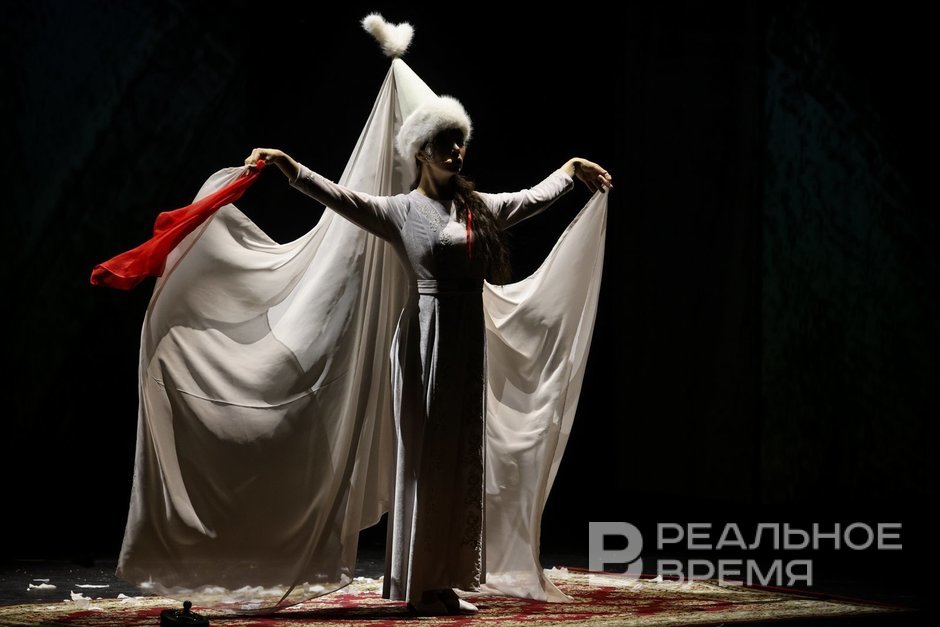
Aydar Zabbarov, in the position of the chief director of the Tinchurin Theater in Kazan, has released his second production — an adaptation of Chingiz Aitmatov's melodramatic production novella “My Little Poplar with a Red Scarf” (“Al yaulykly yazmyshyym”, 12+). In 1967, a performance based on the young writer's work won six Tukay Awards for the Kamalov Theater. What did Zabbarov present at the Tinchurin Theater?
How Aitmatov's works have been adapted for film and theater
If you look at Aydar Zabbarov's works in Tatarstan, you will notice that he most often takes biographical and nostalgic material. The director has staged plays in the republic about the life of poet Hasan Tufan in exile, based on the prose of Gayaz Iskhaki, Amirkhan Eniki, and Mikhail Sholokhov. He created a two-part verbatim about dying villages, described the life of Gabdulla Tukay, Alfiya Avzalova, and oceanographer Stanislav Kurilov. When he took on ready-made plays, they described the Soviet past: “Five Evenings” by Volodin, “Almachuar” by Galimjan Ibrahimov, “The Museum” by Vodolazkin, and “Galiya” by Tagir Tagirov.
There are rare exceptions to these rules: Zabbarov, for example, staged Koki Mitani's timeless Japanese philosophical comedy “The Academy of Laughter," but spoke about the censorship of the past in it. He also talked about the problems of the first year of marriage in Ilgiz Zainiev's “Calico Wedding.”
At the Tinchurin Theater, his second production as chief director is again about the Soviet legacy. The first, “Following the Dream," told a story against the backdrop of the Thaw period.
The new production “My Little Poplar with a Red Scarf” is based on a novella by 32-year-old Chingiz Aitmatov, first published in 1961 in the magazine “Druzhba Narodov.” The same year, the film “The Pass” was released, with the author participating in the script, and the ending of the film is happy, which cannot be said about the novella.
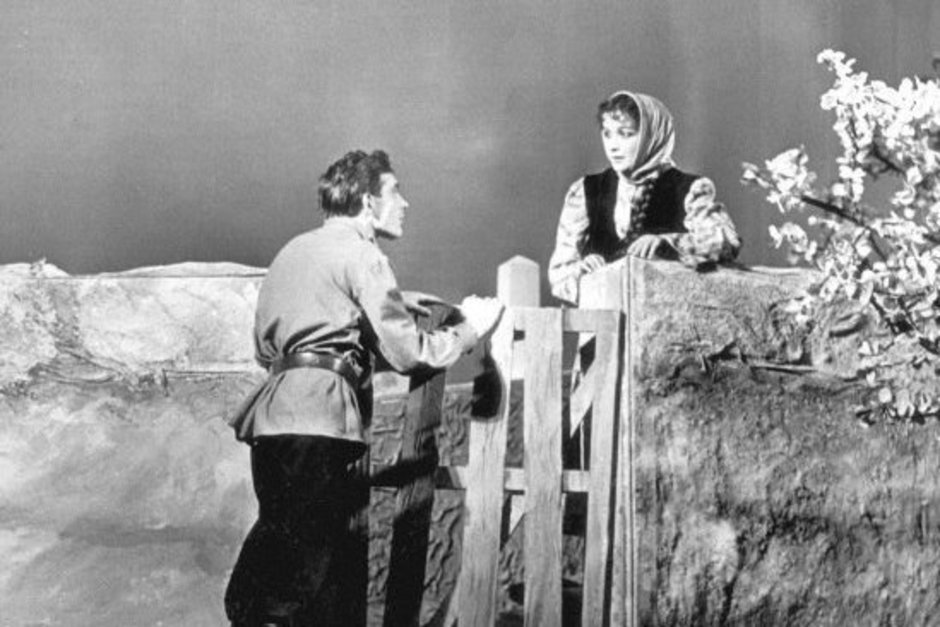
This text has been staged not only on stage, including ballet, operetta, and musical drama, but has also been adapted into films several times. The most famous version is Atıf Yılmaz's 1977 film, one of the popular examples of Turkish cinema. By the way, the main character's truck is in a car museum in Antalya, and admission is free. In 2011, a 37-episode TV series was made from the novella, and in 2018, Uzbekistan and Kyrgyzstan adapted it.
In 1966, the Kamalov Theater staged it with Uzbek director Tashkhodja Khodzhaev, and in 1967, he, artist Ernst Helms, and the leading actors Naily Garayeva, Rinat Tazetdinov, Shaukat Biktimirov, and Shakhsaneym Asfandiyarova received the Tukay Award. By the way, Garayeva was 26 years old and became the second woman in history, after actress Asiya Khairullina, to win the award.
In 2016, Ildar Khairullin staged the novella in Atnya, and the production toured to Finland. In 2017, it was shown on the stage of the Kamalov Theater, where the Tinchurin Theater has now moved.
In general, Aitmatov is loved in the Tatar theater: they have staged “The Plague," “The Buran Station," and “Ekiyat” has taken on “The Mother's Field.”
A tale of Snow White and Ilyas
To be fair, in Zabbarov's version, “My Little Poplar with a Red Scarf," titled “My Fate in a Red Scarf," it seems to take place in a timeless era. The main characters seem to receive условные 300 rubles or more, but there are no parties or slogans here, just Kyrgyzstan, the Tien Shan, and the road to China.
In Aitmatov's text, there are three main characters, not counting the narrator-journalist, who first listens to the story of driver Ilyas and then learns the rest from road worker Baytimer.
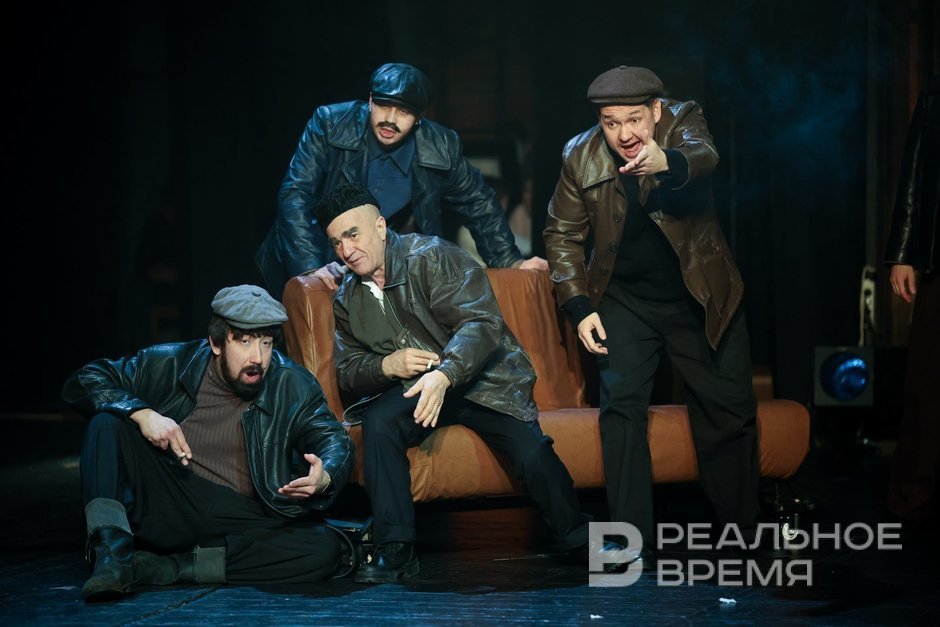
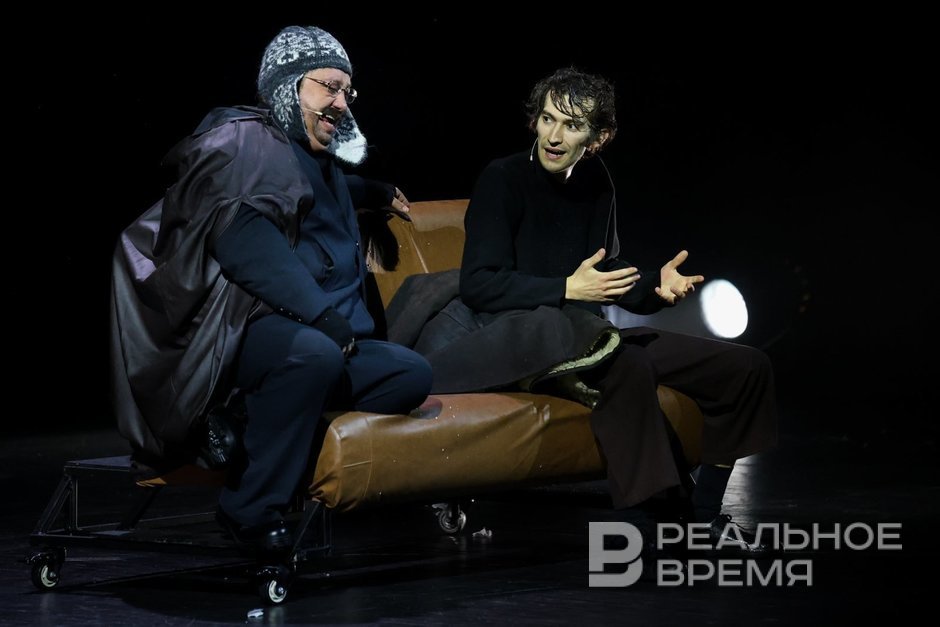
Zabbarov's production begins with their meeting: Ilyas pulls Baytimer's stalled car. There is a blizzard on the screens (the basis of the stage design), noise, and shouts. The main prop of the production appears: a sofa symbolizing the truck's interior. As one of the drivers jokes, they are no different from a dog: they eat from a bowl, live and work in a box, and even have an owner.

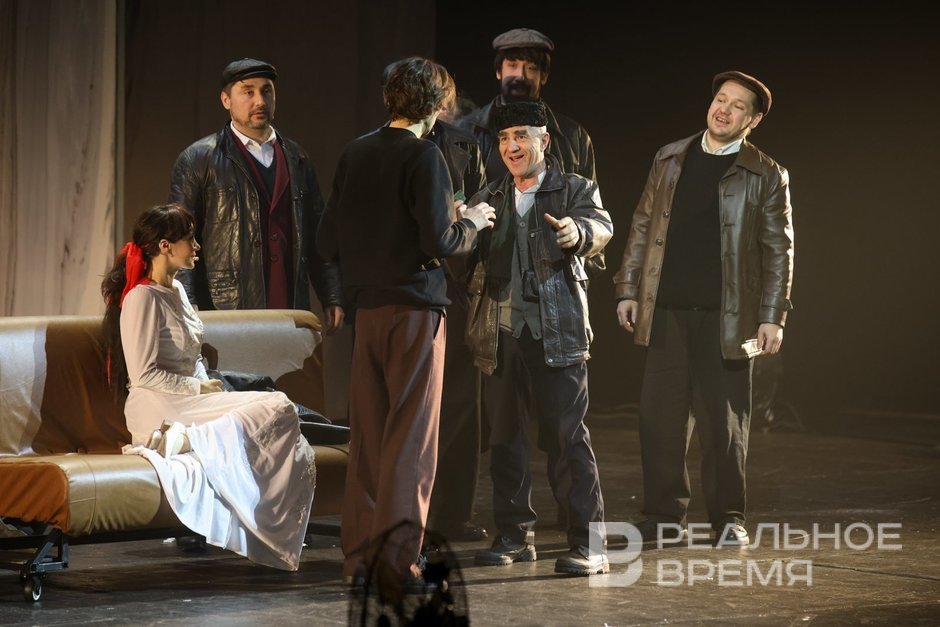
The driver's team — Aydar Fatrakhmanov, Ilfak Khafizov, Bulat Zinnatullin, Ramil Minkhanov, Salavat Khabibullin, Ilmas Nasretdinov — is the main success of the production: all of them are in leather jackets, all of different heights, they smoke, grunt, tell jokes, deal with tires, but if needed, they help a comrade. They drive trucks, which are depicted as radio-controlled cars.
Among the drivers, Ilyas has a loyal friend Alibek and a greedy Dzhantay, who doesn't really decide anything in the production but adds brightness to it.
The most striking character in the production is Baytimer, played by Rustem Gayzullin. But let's start with Ilyas.
The hero played by Zulfat Zakirov is the youngest in the group and clearly the most handsome. That's why dispatcher Khadicha (a striking role for Dilara Fattakhova in a wig) “courts” him. Ilyas is an orphan and not very experienced yet, so he is given short trips, for example, to the nearest collective farm.
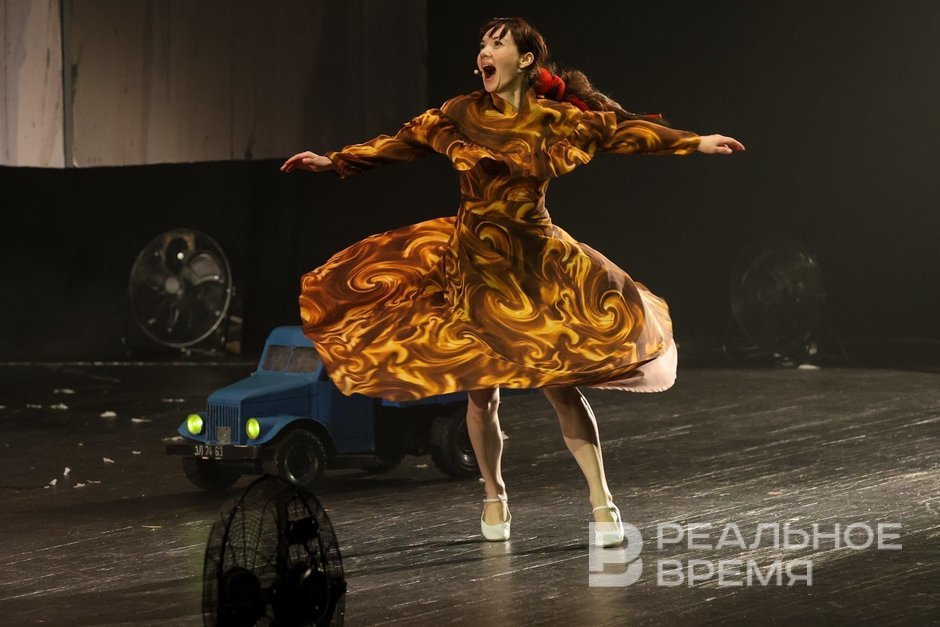
On the way, he meets Asel — in a work халат and, interestingly, also in a leather jacket. Asel is cheerful, flirtatious, a bit shy, and they are planning to marry her off. Judging by the costumes of her mother and matchmaker, the action does take place in Kyrgyzstan, and the girl has never seen her potential groom's face. Her mother has an important role in the production — to create a rare comedic episode and to chase Ilyas out of the yard every time (Sakina Minkhanova delivers her lines as if she were making them up on the spot).
Ilyas flirts with the girl, takes her to the truck depot, where a wedding is held in the presence of colleagues — with ring-nuts and standing on a tire-cushion with jackets. The cute tale of “Snow White and the Seven Drivers” is a highlight of the production.
But then Ilyas learns that the truck depot is trying to solve problems with increased loads. Remembering how he pulled Baytimer's car, he proposes to drive through the pass with loaders. And immediately, without permission, he takes a truck out of the garage and tries to accomplish this feat. Nothing works, and Ilyas starts drinking, cheating on his wife, and lying — at some point, he wakes up in a room with an empty cradle. Asel has taken their son and disappeared.
Ilyas grows old, leaves, but then returns to случайно meet Asel in new circumstances. When she sees the father of her son again, a surprised gasp runs through the audience (because for those in the audience who haven't read Aitmatov's work, this is a real surprise).
Why Baytimer is great
The melodramatic plot concludes with a lengthy and powerful monologue by Baytimer, who not only gave shelter to the fugitive but also became her support. And this monologue, the hero addresses not to the readers but to Ilyas and Asel!
Rustem Gayzullin delivers the text, only partially based on the original (the adaptation was written by Aydar Zabbarov, translated by Rezeda Gubaeva). For example, his character talks about an episode where Samat's mother sees a boy with a tape measure and says, “Look, Baytimer, your son is just like you.” Although Gayzullin's character doesn't undergo a transformation before our eyes, we see his story, understand his motives, and can connect with him — and you don't want to skip this part.
In Aitmatov's work, Asel is essentially deprived of a voice, but in Zabbarov's version, she is given a short monologue about the meaning of love. The rest of Guzel Galiullina's portrayal is resolved through sensual visual metaphors. She spins beautifully in a Kyrgyz costume. She stands as if in the wind by the cradle while a drunken disco rages around... And she kisses the main character through a red scarf.
But whose voice is missing from the production is Ilyas's. The hero лихо drives around on the sofa, dances, drinks, is tempted, quarrels with colleagues, promises peace and happiness to his wife. But he doesn't have a conversation with the audience; he says little about what's inside him.
That's why the change in the loving husband, who suddenly decides to conquer the mountain pass with a trailer and then goes into a downward spiral, happens very abruptly. Meanwhile, the production runs for two hours and 40 minutes. Telegram channels have already played with the joke about Zabbarov's promise to fit into one hour and forty minutes. Some scenes are intentionally drawn out, with intros and unnecessary speeches. The dynamics of the production are enhanced by compositions by St. Petersburg producer Zuma Dionys.
So, in terms of the plot, the director doesn't deviate from the author's intent. But from the outside, it seems that Zakirov's hero just stumbled, slipped off the smooth path of a happy family life, went astray, and then his wife made the right choice by staying with a man who truly values her. Plus, Ilyas didn't really try to win her back.