“Let it be the ideal option”: experts have forecast an 8% increase in food prices in 2026
The cost will be mainly affected by an increase in VAT and the key rate
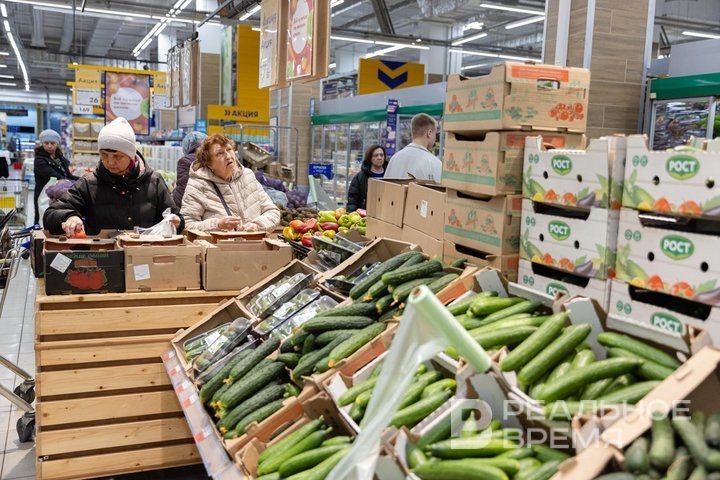
In Russia, food prices in 2026 may rise only to the level of consumer inflation, namely by 8%, economists said. The Realnoe Vremya publication looks at what factors influence the pricing of food products, what will cause prices to rise and fall, and why food prices have been rising rapidly in previous years.
The cost of food products depends on many factors
Leonid Kholod, former Deputy Minister of Agriculture of the Russian Federation and Doctor of Economic Sciences, explained to the publication that the cost of food products depends on many factors: inflation, population income, effective demand, the volume of food production and their supply on the market, as well as the general situation on the world market. In particular, he said that an increase in VAT and a high key rate of the Central Bank will affect the rise in prices. However, there are also factors that will restrain the expected rise in food prices. Among them, according to Kholod, are low exchange rates and an oversupply of grain.

— Recently, the consumption of meat, poultry and pork has decreased. Accordingly, the volumes that cannot be consumed domestically need to be exported, and the export price at this exchange rate is not very profitable. Therefore, the exchange rate will affect the decrease in prices. At the same time, we should not forget about inflation. If we consider the best option, food prices should rise moderately, even if not at the general inflation rate, but at the consumer inflation rate. We are planning inflation for next year at 6%, but consumer inflation is always slightly higher — about 8%. Let this be the ideal option with an increase in food prices, but provided that nothing changes, — the economist reflects.
In previous years, food prices rose due to wage increases
Andrey Bunich, an economist and head of the Union of Entrepreneurs and Tenants of Russia, emphasised that the increase in VAT will affect the rise in food prices at the beginning of 2026. However, a strong increase in prices due to this factor should not be expected, since the value-added tax is being raised from 20% to 22%.
— There is no reason to expect a rise in food prices on some basic grounds, because there is no consumer demand, and an increase in food prices in the absence of demand is, one might say, impossible. Otherwise, people will simply switch to cheaper products, — he told Realnoe Vremya.
According to Bunich, the increase in price tags for food products in the previous three years was mainly driven by wage increases. At the moment, there is no significant increase in household income, which means there can be no special increase in prices.
— In addition, the state is interested in maintaining stable food prices, so the authorities will monitor the pricing of food products additionally. As a result, I don’t see any serious increase next year. I think it’s unlikely, — Bunich added.
Meat will not rise in price due to limited demand, and cereals — due to a good harvest
As for the rise in prices for individual goods, meat should not rise too much in price due to limited demand. As Kholod noted, limited demand with today’s monetary policy leads to supply exceeding demand. Vegetables in Russia, such as potatoes, beets, carrots and cabbage, will also not rise in price: all these are greenhouse products and the harvests have been good. Fruits, despite a significant share of imports, will not rise much in price due to the low exchange rate.
— If we talk about the future harvest of fruits and vegetables, we need to wait for spring. Let’s see what happens in the spring; in the past two years, it has brought surprises in the form of completely abnormal frosts at completely the wrong time. This is somehow scary, because it is unnatural and abnormal. When frosts begin in May, it is worth understanding that low temperatures kill the bloom. It is clear that if this happens again in 2026, the fruits will be objectively expensive. But the rise in prices will be restrained to some extent by imports, — the expert admitted.
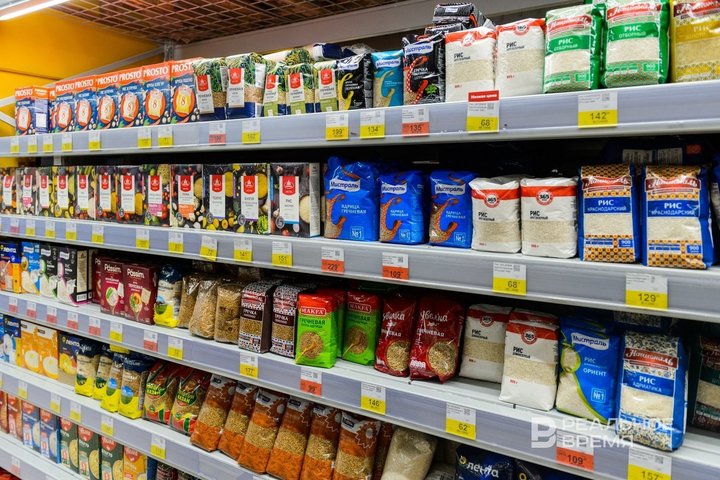
There is no need to expect a rise in the price of cereals either, as the harvest was good. In addition, it is worth considering that Russian buyers will most likely continue to demonstrate saving consumption tactics and will switch their attention to cheaper products. This factor suggests that food will rise in price more slowly.
— I think that fish will rise in price by the amount of consumer inflation in 2026. A sharp rise in the price of this product should not be expected either, because the price of fish has already increased significantly, — Kholod admitted.