Bee navigation, a universal vaccine, the smells of different diseases
Interesting science news of the week
Honeybees create a 3D map of the terrain in their minds and can very accurately remember the route from the hive to a food source using landmarks — each bee uses an individual navigation method. Rock dust is proposed to be added to fertile soils so that it binds carbon dioxide from the air — it could remove an amount of greenhouse gases from the atmosphere comparable to the annual emissions of a country like Germany. People who can experience lucid dreaming can be stimulated to solve complex creative problems in their sleep. American scientists are developing a universal intranasal vaccine against various respiratory infections. Saratov Medical University has studied what different diseases smell like.
Each bee has an excellent memory and individual navigation
Biologists from the University of Freiburg tracked the path of honeybees from the hive to a desired food source — and discovered that not only do the insects use a complex navigation system, but they also develop their own routes, deciding how to bypass obstacles. It turned out that the bee seemingly constructs a 3D map of the area, remembers it perfectly, and then navigates using prominent objects on this “map," combining their location with the incident sunlight.
Until now, it was difficult to reproduce a complete map of a bee's flight — an ordinary camera cannot track the insect's path for long, and while radars don't lose sight of it, they only record two-dimensional coordinates. But the meticulous German biologists wanted to know how precisely a bee repeats a once-traveled route and whether it can make independent decisions.
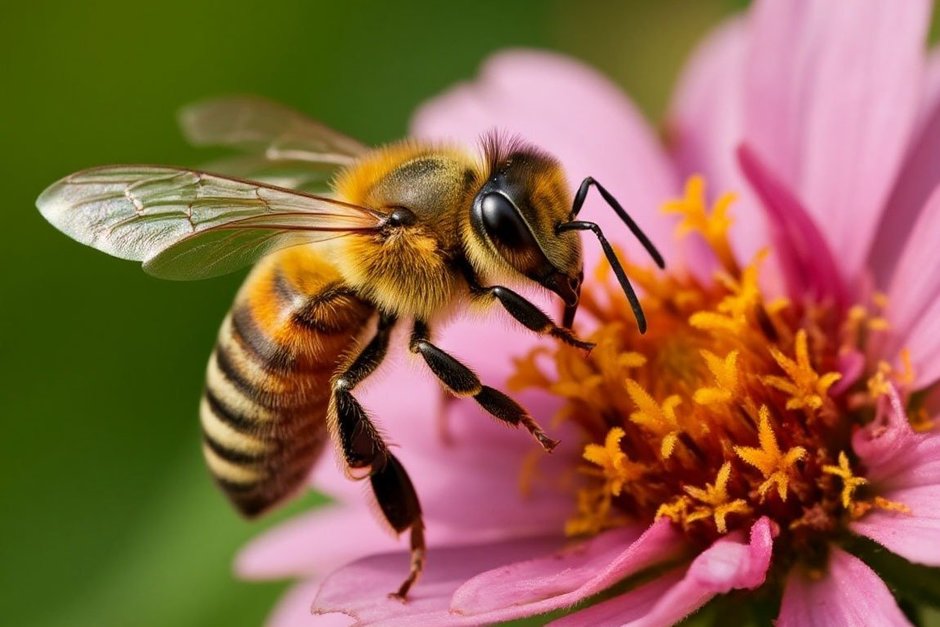
So, 26 bees participated in the experiment. A small reflective marker was attached to each bee's back, and a drone with infrared cameras was sent to follow it. The cameras recorded the reflected light, and an electronic “brain” guided the drone after the bee. A feeder with sugar was placed 122 meters from the hive — this was the route the test subjects had to take. During the experiment, 255 three-dimensional flight trajectories of the bees were collected. They studied every meter of the flight, calculating how much the insect deviated from the exact path. And when a bee missed the feeder, the biologists meticulously recorded how it corrected its mistake.
It turned out that, firstly, each bee has an individual route. Moreover, different bees overcame obstacles according to their own understanding: some always flew around trees on the right, others on the left; some flew over a hedge from above, others made their way through gaps in it. Secondly, maximum navigation accuracy — with a deviation of at most half a meter — was achieved near large landmark objects (e.g., trees). A monotonous landscape (a field) increased the “scatter” to several meters, but overall, the bees maintained the correct direction. Thirdly, the angular spread in flight was 3.3 degrees. This means the insect remembers the route perfectly.
In short, the secret of bees lies not only in their well-coordinated social organization or even in the famous “dance” with which they explain to their comrades where to fly for tasty treats. The personal cognitive abilities of their own brains also turn out to be unique. A human, who might get lost in their hometown for the tenth time and struggle to find their way, can only envy their smaller six-legged brothers.
Can rock dust help overcome global warming?
Enhanced rock weathering is a technology ecologists have devised to combat global warming. The essence is to grind silicate rocks into dust and add this dust to agricultural soil. According to this idea, the dust will react with carbon dioxide in the air, resulting in the formation of various compounds of calcium, magnesium, and iron. This would kill two birds with one stone: firstly, it would bind CO2 from the air, reducing the amount of greenhouse gases; secondly, it would enrich the soil with minerals and make it more fertile.

American scientists from Cornell University published an article describing five different scenarios for implementing this method. The implementation of a particular scenario depends on how ready a country is to apply the enhanced rock weathering method. According to the scientists, to “bury global warming under rock dust” and bring real benefit, the technology needs to be deployed in the Global South. The warm and humid climate in Asia, Africa, and South America would accelerate the reactions.
According to calculations, depending on the intensity of application, this method could bind up to 0.76 gigatons of CO2 per year by 2050. For comparison: Germany emits 0.67 gigatons of carbon dioxide into the air annually, while Russia emits 2.1 gigatons. This means rock dust could bring real benefit — if, of course, the Americans' calculations are correct.
The technology is still being developed, but Microsoft, for example, is already investing millions of dollars in this method of binding carbon dioxide from the atmosphere.
People can be taught to solve problems in their sleep
Psychologists from Northwestern University in Illinois (USA) conducted an intriguing study attempting to find out whether dreams truly contribute to creative insights — like Mendeleev with his periodic table or Paul McCartney with “Yesterday.” The scientists were particularly interested in lucid dreams — a state where a person, while dreaming, is perfectly aware that they are asleep. With a certain amount of skill, one can even influence what happens in such dreams.
The scientists took 20 volunteers with experience in lucid dreaming and conducted an experiment on them. Before sleep, each was given a puzzle and simultaneously played a sound signal to associate this sound with the task in their brain. Then the volunteers fell asleep — they needed to induce a lucid dream about this puzzle and, upon hearing the familiar sound, try to solve it.

During sleep, the sound signals were played in the room, and the participants began “working in their sleep.” And after the experiment ended, the next day, they solved this puzzle much more successfully while awake! The scientists suggest that the subjective experience of grappling with a problem during sleep helps solve it while awake. The brain automatically discards incorrect solution paths tried out in sleep when awake and “crystallizes” the correct answer. The psychologists concluded that the creative function is directly linked to dreaming.
The only thing left is to learn to see lucid dreams — and then quickly head to bed.
Universal vaccine against respiratory infections protects mice from coronavirus
Scientists at Stanford University have devised an intranasal vaccine for protection against pathogens. Tests on mice proved that these nose drops can maintain a defense against the coronavirus and Staphylococcus aureus for three months.
Vaccines developed against specific microorganisms can lose effectiveness — for example, due to target mutations. Medics have long wanted to develop a universal vaccine that would protect against a wide range of airborne infections. For instance, some live attenuated vaccines also protect against unrelated infections. This is because immune cells get “trained” to work harder and become capable of killing pathogens more effectively.
The scientists from Stanford University School of Medicine used this mechanism. They created an intranasal vaccine designed to train cells of the innate immune system. Administering the drug activated T-cells, which reduced the intensity of inflammation and the activity of the infection, regardless of the pathogen. In effect, a universal vaccine was created. Mice were given four doses of the vaccine and then tested for their protection against various respiratory pathogens.
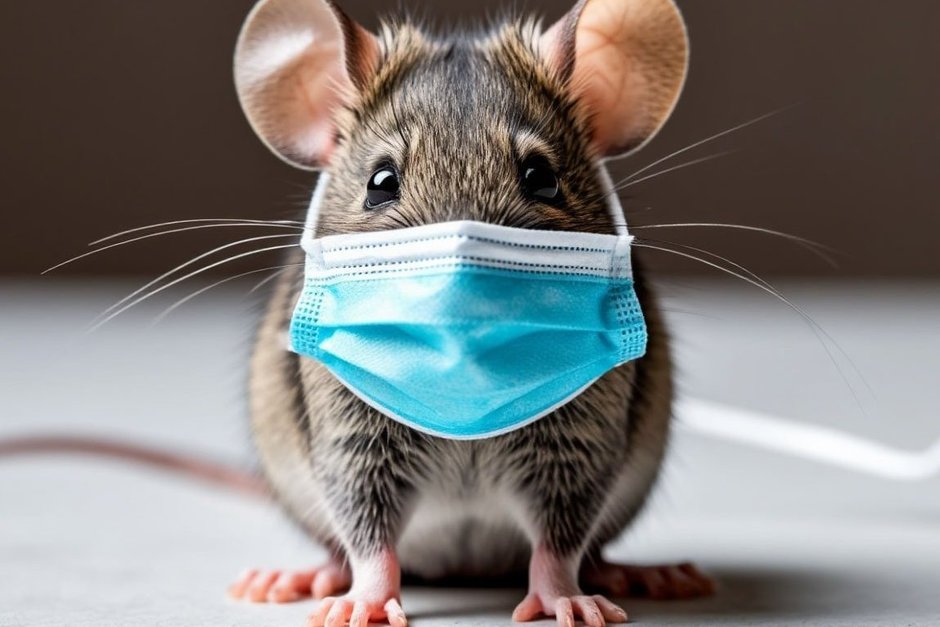
It turned out that after infection with SARS-CoV-2, vaccinated mice had a lower viral load compared to unvaccinated ones. The effect lasted for three months. A similar result was observed after infection with Staphylococcus aureus.
Further work will include preclinical studies to assess its safety and determine if clinical trials in humans can begin.
What different diseases smell like
At Saratov State Medical University named after V.I. Razumovsky, biochemists attempted to study the chemical composition of volatile organic compounds produced in the body during various diseases. In essence, they aim to determine what different diseases smell like.
According to the Saratov medics, infectious diseases smell the strongest (and most unpleasant). Pseudomonas aeruginosa gives off a smell of decomposition; diphtheria causes a sweetish-putrid breath odor; and tuberculosis, when it has spread to the lymph nodes, has the “aroma” of stale beer.
Oncological diseases increase sweating, and the person emits the scent of slightly rotten meat protein. Lung cancer leads to an accumulation of mucus in the respiratory tract, which smells of hydrogen sulfide (rotten eggs).
Characteristic smells, it turns out, are also associated with neurological and even psychiatric diseases. For instance, the skin of a Parkinson's disease patient smells sharply of musk, while Alzheimer's disease smells like rye bread. Patients with schizophrenia produce volatile organic compounds with a sharp, sour smell.

What to do with all this valuable information, the researchers from Saratov Medical University haven't figured out yet. But they express hope that if, for some reason, laboratory and clinical tests don't help with a diagnosis, doctors knowledgeable about smells could use this information.