Brain cryopreservation, ancient Indian tourists, toxic relatives
Interesting science news of the week

Cryopreservation is getting closer: scientists have managed to freeze a mouse's brain so that neurons retained activity after thawing. Travelers were driven to write “Kilroy was here” on the walls of landmarks as far back as 2,000 years ago. A specific bacterium in the gut accelerates brain aging with age. And every toxic relative in one's social circle makes our body approximately nine months older. Meanwhile, NASA promises to finally launch the first crewed mission to the Moon in half a century on April 1st. And this is no joke. More details in this week's review of scientific news.
Scientists restore activity in a frozen mouse brain for the first time
Remember those movies where a person enters a deep sleep, their body is frozen, and after decades or even hundreds of years, they are thawed and awakened? Scientists have long pondered cryopreservation technologies that could preserve not only a person's life but also their physical and mental abilities. Moreover, it has already been shown that neural tissue can survive freezing at the cellular level and even function to some extent. This has been confirmed by cryogenic experiments with human and animal brain tissues. But fully restoring neural activity, cellular metabolism, and brain plasticity had not been achieved until now. Ice crystals, formed from biological fluids, puncture delicate nanostructures, tearing tissues from within and disrupting key cellular processes.
German researchers have published a paper describing a new method for cryopreserving mouse brain tissue that manages to preserve some functions. This method is “ice-free," called vitrification. The tissue is cooled so rapidly that molecules are trapped in a glassy state, and ice crystals simply do not have time to form — meaning, at the very least, mechanical rupture of nanostructures does not occur.
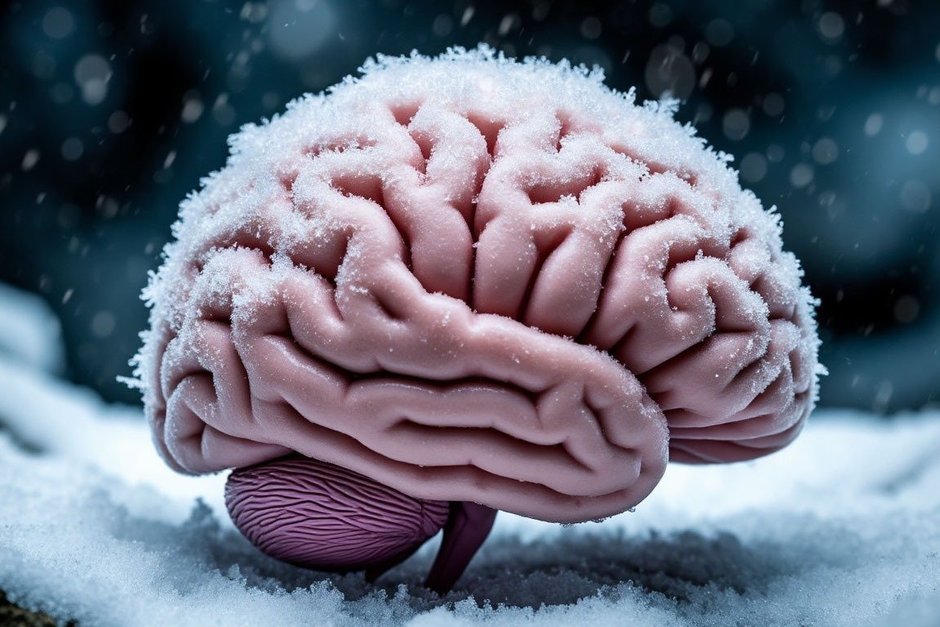
But a second question faced the scientists: would the function of the nervous tissue be restored after the complete cessation of molecular mobility in the glassy state?
It turned out that partial restoration is possible. First, the method was tested on 350-micrometer thick slices of mouse brain. They were treated with a cryopreservation solution and cooled with liquid nitrogen at -196°C. They were stored in the glassy state for up to a week at -150°C. After thawing, cellular and synaptic membranes were found intact, neuronal responses to electrical stimuli remained close to normal, and neural pathways were functional. Following this encouraging experiment, a whole mouse brain was “vitrified.” It was kept at -140°C for eight days, and after thawing, slices were prepared and examined — neural pathways were found to be preserved. However, whether the mouse could remember its past after cryopreservation could not be tested for obvious reasons.
The team of German physiologists is now working with human brain tissues and studying how to use vitrification for cryopreserving not just slices but whole organs (e.g., hearts for future transplantation). If the method proves successful and scientists can overcome current limitations, it might one day be possible to protect the brain during severe illnesses or after injuries, create “organ banks," or even develop techniques for cryopreserving entire mammalian bodies! However, scientists admit that long-term storage of even large organs (let alone bodies) is currently far beyond the capabilities of Earthly science.
“Kilroy was here” from 2,000 years ago by Indian tourists
Inscriptions in ancient Indian languages have been found on the walls of tombs in Egypt's Valley of the Kings. They were left by travelers who visited Egypt at the beginning of the first millennium AD. The Valley of the Kings was used to bury pharaohs and Egyptian nobility from the 16th to the 11th century BC. By the start of the common era, it had fallen into disrepair; the tombs were looted, and the archaeological sites became a curiosity visited by travelers from across the known world. For example, merchants who came to the Roman province of Egypt on business.
Just like modern uncultured tourists, ancient travelers sought to leave their mark on millennia-old monuments. Archaeologists have long studied the inscriptions left centuries ago on the tomb walls in the Valley of the Kings. Some of these inscriptions were scratched not in Latin or Greek — they remained untranslated for a long time. Now, scientists have finally discovered that 30 graffiti were made in three different languages spoken in ancient India.

Half of them were left in the ancient Tamil language. One such “tourist” was a man named Chikai Korran. He “tagged” five tombs with his autograph in eight places: “Chikai Korran came here and saw.” Interestingly, this clever Indian wrote at a height of 5-6 meters above the entrance. How he managed this remains a mystery. Another visitor, Indranandin, an envoy of King Kshaharata, wrote in Sanskrit.
What can be concluded from this? Firstly, human nature does not change over centuries and millennia. “Kilroy was here” is an immortal pattern for any traveler throughout the ages. And secondly (and this is genuinely important), it proves that Indian merchants and diplomats actively visited the ancient world and maintained trade and political relations with it.
Memory failing? Need to treat the gut?
British scientists from Norwich have identified a link between the composition of gut microbiota in mice and their cognitive functions. With age, a specific type of bacteria multiplies in the gut, and their activity plays a role in slowing cognitive processes: the metabolites they release slow down signal transmission between neurons. If the same mechanism is found to work in humans, treatments targeting the gut could be developed to help reverse age-related decline in memory, learning ability, and more.
To study how gut microorganisms influence aging, researchers housed young two-month-old mice together with one-and-a-half-year-old individuals. This is akin to an 18-year-old human living alongside a 50-year-old. After a month, the young mice began to perform in mazes and other memory tests similarly to the old mice. Simply put, their memory had aged dramatically.
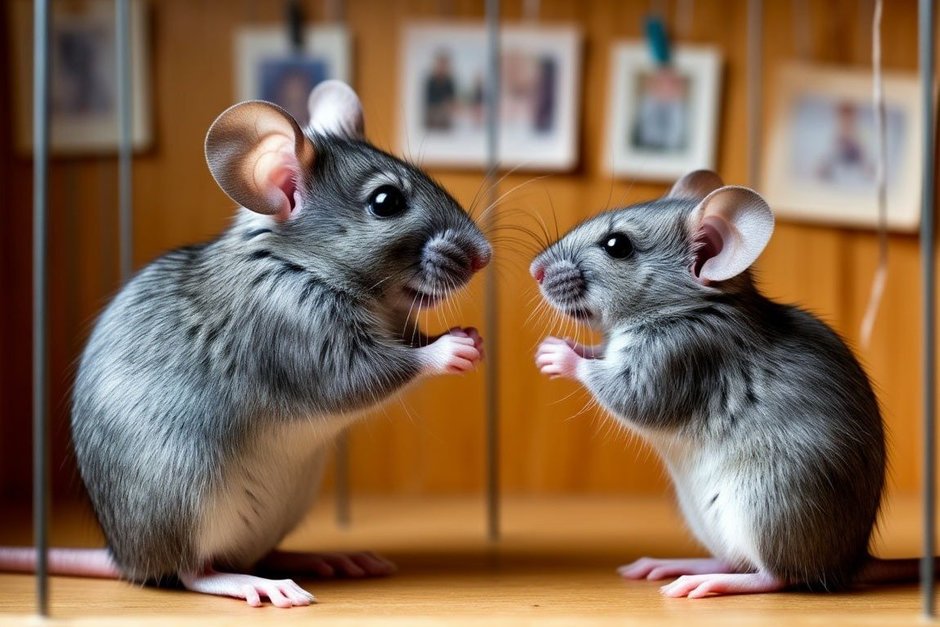
Scientists directly link this to the fact that the microbiome of the young animals became similar to that of the old mice. Living together and consuming each other's feces, mice easily transfer their gut bacteria. The researchers hypothesized that one or more bacterial species found in the guts of old mice could cause cognitive decline in the young.
Therefore, the British team conducted a new experiment: they took another group of young mice and deliberately colonized their guts with bacteria from old individuals — specifically, they were interested in a species called Parabacteroides goldsteinii. As a result, the rodents' ability to remember previously seen objects deteriorated. Concurrently, they gave old mice an antibiotic that kills this bacterium. And their memory... improved to a level comparable to that of a healthy young individual!
The researchers began studying this harmful bacterium. It turned out that it secretes substances that suppress signal transmission via the vagus nerve — a crucial pathway connecting the brain to organs such as the gut. Thus, the gut microbe blocks neural connections, and this is directly linked to brain aging. The study proves that the gut microbiome influences cognitive processes — meaning, perhaps in the future, brain aging could be slowed by modifying the composition of the microbiota.
NASA says it could launch “Artemis ii” to the moon on April 1st
Meanwhile, the American space agency announces that the first crewed mission to the Moon in 50 years is back on schedule: the launch of “Artemis II” could occur as early as one of the upcoming launch windows — April 1st. The rocket has just been repaired in the Vehicle Assembly Building at the Kennedy Space Center, and preparations are now underway to tow it to the launch complex. This is expected to happen on March 19th, after which launch preparations will begin.
Recall that the mission was supposed to head to the Moon in early March, but launch rehearsals revealed fueling problems, and later a helium supply issue arose in the rocket's upper stage. Therefore, on February 25th, the rocket, which had traveled to the launch site, was sent back to the Vehicle Assembly Building. Now everything is fixed. The next fueling of the rocket will not be a rehearsal but the real thing — on launch day. If it doesn't happen on April 1st, other launch windows exist from April 2nd to 6th, April 30th, and in May.

“Artemis II” will be the first crewed mission of this program. There will be no Moon landing: the crew will fly around the satellite and return to Earth.
A toxic friend can help you age faster
Scientists have turned their attention to an important question: how does our immediate social circle affect our health and, specifically, our biological age? Especially toxic close relatives and friends. It turns out that the more toxic the environment, the greater our biological (not chronological) age. “Harmful relatives” are now not just a figure of speech, but a medical fact!
Study participants were asked to describe their social environment — to assess the quality of relationships with those they regularly interact with. The main question in the survey was about how often a particular person annoyed, caused difficulties, or created problems. If the frequency was high, that contact was classified as a negative tie (or, in everyday language, a toxic relationship). Simultaneously, all respondents provided saliva samples to determine a specific marker indicating the rate of aging and the difference between the biological age of their body and their chronological age.
The results are as follows: one-third of respondents identified that they have at least one toxic relative or acquaintance. Moreover, each additional “toxic” person in one's circle accelerates the biological aging of the body by about one and a half percent. That means the biological age of such a person is approximately nine months older than that of their peers not exposed to a toxic environment. Additionally, if you regularly interact with toxic people, you have a higher risk of depression, anxiety, poor health, increased inflammatory markers, and even obesity!
But are all the “toxic” people around you equally harmful? It turns out, no. The researchers divided all “bad” ties into three groups: spouses, other relatives, and friends/acquaintances. It was found that relatives accelerate aging the most: parents, children, brothers, sisters. Scientists suggest this is related to the impossibility of severing such contacts, making the conflict chronic.

In short, to be healthy and stay younger longer, you need not just to communicate more with people. You also need those people not to cause you chronic stress.