Talented Miss Highsmith
Patricia Highsmith is 105 years old. We tell the story of how a reserved and sharp writer changed the language of crime prose.

Today, January 19, marks 105 years since the birth of Patricia Highsmith — a writer who changed the perception of the boundaries of the detective genre and made evil not an exception, but the norm of the artistic world. She was called the «poet of anxiety», admired for the cold precision of her prose, and at the same time was avoided in everyday life. Highsmith was sharp, reserved, often cruel in her statements, and fundamentally inconvenient for those around her. She wrote about people without conscience, without promising the reader either consolation or justice, and lived as if to confirm her own texts — in solitude, in conflict with society, and in constant internal tension. The literary reviewer of «Real Time», Ekaterina Petrova, tells about the «little hell» of Highsmith's childhood, how Tom Ripley — one of the most charming monsters of the 20th century — appeared, and why the writer's personal contradictions became the key to her literary strength.
«Little hell» and «double madness»
Patricia Highsmith was a controversial and difficult figure for both those around her and herself. She was born in 1921 in Fort Worth, Texas, and from an early age found herself in a situation of broken ties. Her parents divorced a few days before her birth; her father did not want a child, and her mother later told her daughter that she had tried to induce a miscarriage by drinking turpentine. Highsmith later retold this episode without emotion, noting only a domestic detail: her mother said that this was why she liked the smell of turpentine. Highsmith called her childhood, spent first with her grandmother and then with her mother and stepfather in New York, a «little hell». Her relationship with her mother followed a pattern of constant attraction and repulsion. Later, biographers described them as folie à deux, or «double madness».
Highsmith started reading early and was interested in pathology from childhood. At the age of eight or nine, she became fascinated by Karl Menninger's book «The Human Mind» — with clinical stories about pyromania, murders, and mental disorders — the influence of which she realized only many years later. In her diaries, she recorded thoughts about violence, including memories of fantasizing about killing her stepfather as a child, linking it to feelings of guilt and self-punishment, including due to an eating disorder in her teenage years.
In adulthood, Highsmith earned a reputation as a sharp, unfriendly, and socially inconvenient person. Publisher Otto Penzler called her «mean, cruel, unloving, and unloved», but at the same time emphasized that her books were «brilliant». Biographers and acquaintances noted her eccentric and often offensive behavior: she brought snails to dinner parties, could intentionally shock guests, and regularly made racist and anti-Semitic remarks. In the 1960s and 1980s, Highsmith openly expressed anti-Semitic views, calling herself a «hater of Jews», using expressions like «Holocaust Incorporated» (implying a well-planned media project), and wrote anonymous letters to the press with anti-Israeli statements.
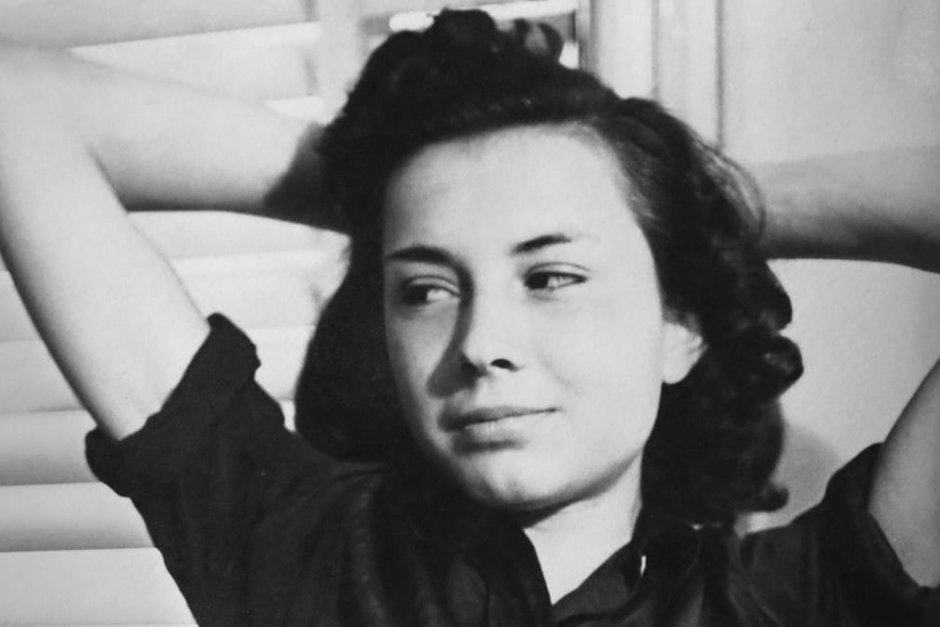
At the same time, many remembered another side of her character. Friends spoke of her dry sense of humor, ability to be an interesting conversationalist, and even charming in a close circle. Highsmith consistently emphasized that she preferred solitude. She said she chose to live alone because her imagination «worked better when she didn’t have to talk to people». She often preferred animals to people — cats and snails, which she bred and even transported with her.
Highsmith's writing career developed gradually. After graduating from Barnard College in 1942, she unsuccessfully tried to get a job at major magazines. Then Highsmith earned a living for several years by writing scripts for comics, calling this work craftsman-like and boring. At the same time, young Highsmith admitted that this was her only stable employment. At the same time, she wrote short stories and novels, many of which did not find a publisher for a long time.
The turning point came with the novel «Strangers on a Train» (1950). After six rejections, the book was completely rewritten at the Yaddo residence — under conditions of strict silence, which Highsmith considered ideal for work. The novel was accepted on the first try, and Alfred Hitchcock's film adaptation in 1951 cemented her international fame.
In total, Highsmith wrote 22 novels and many short stories. In the US, her books were often classified as detective or thriller, while in Europe, the writer was perceived as a psychological and literary prose writer. The greatest fame came from the series of five novels about Tom Ripley. Highsmith consistently wrote about people who were a little touched and said that she had seen such people around her since her youth.

Her prose was distinguished by a restrained, almost transparent style, in which the everyday and the sinister were described on the same level. Graham Greene called her the «poet of anxiety» and noted her ability to evoke not so much a tense expectation of the denouement as a persistent feeling of unease. Highsmith herself said that she did not follow the rules of suspense building and simply placed «ordinary people in tough situations» from which they sought a way out, often through violence.
The commercial success of her books in the US remained moderate, while in continental Europe they sold much better and were more often adapted into films.
«The victory of evil over good»
Patricia Highsmith began writing «The Talented Mr. Ripley» in 1954 and completed it in six months. She worked on the book in Lenox, Santa Fe, and Mexico. In her diary entry on October 1, 1954, the writer explained the concept of the novel: «I show the unconditional victory of evil over good and rejoice in it. I will make my readers rejoice in it too».
The book was published in December 1955 and immediately received favorable reviews in The New York Times Book Review and The New Yorker, where critics noted a «convincing portrait of a psychopath». In 1956, the novel was nominated for the Edgar Allan Poe Award, and in 1957, it won the Grand Prix of French Crime Literature as the best foreign detective novel. Highsmith's biographer Richard Bradford wrote that this novel «laid the foundation for her long-term reputation as a writer».
The plot of «The Talented Mr. Ripley» takes place in the mid-1950s. Tom Ripley is a young American making a living with petty scams in New York. On behalf of financier Herbert Greenleaf, he is sent to Italy to bring his son Dickie home. Instead, Ripley gradually assumes someone else's life. He kills Dickie Greenleaf and then Freddy Miles, forges documents, letters, and a will, and eventually inherits his victim's fortune. The novel ends with the crime going unpunished, and the hero becoming rich, although subject to constant paranoia.

The character of Tom Ripley is one of Highsmith's most recognizable images. The writer described him as «a suave, charming, amoral, and manipulative serial killer with a taste for art». Ripley lives a refined and seemingly calm life in France, tending a garden, painting, and studying languages, financing this existence with stolen inheritance and income from an art gallery. Highsmith depicted him as a man without conscience, who, however, builds his own system of justifications and calls murder a «necessity» in a situation of threat of exposure. At the same time, he has high social adaptability: Ripley is polite, friendly, and cultured, which makes him especially dangerous.
«The Talented Mr. Ripley» became the first book in a series of five novels, unofficially named the «Ripleys»: «The Underground Man» (1970), «Ripley’s Game» (1974), «The Boy Who Followed Mr. Ripley» (1980), and «Mr. Ripley Under Water» (1991). According to Bradford, by the end of the 1980s, Ripley had become for Highsmith a figure comparable in significance to Holmes for Conan Doyle or Hamlet for Shakespeare. In these books, Ripley gradually moves away from the image of an impulsive killer and turns into a satisfied psychopath for whom violence is a tool to protect his already achieved well-being. In all five novels, Ripley remains unpunished and kills ten people, causing the death of five more.
The critical response to the series was consistently high. Film critic Roger Ebert called Ripley a «charming and educated monster», and Book Magazine included him in the list of the best literary characters of the 20th century. Highsmith herself approved of some film adaptations, calling René Clément's film «Plein Soleil» (1960) with Alain Delon «very beautiful for the eye and interesting for the intellect», and considered Jonathan Kent «the ideal Ripley».

According to Canadian writer and journalist Sarah Weinman, «The Talented Mr. Ripley» became a «landmark text woven into the fabric of modern crime literature», to which Highsmith returned four more times, each time developing the same figure — a person who knows how to reinvent himself and each time gets away with it.
Highsmith in the bunker
In the last fifteen years of her life, Patricia Highsmith almost completely withdrew to Switzerland. In 1981, she finally moved to her Swiss home and began work on the novel «People Who Knock on the Door» (1983). This book is devoted to the influence of Christian fundamentalism in the US. She collected material for this book and for her next book, «Found in the Street» (1986), during a research trip to America in early 1981. Biographer Joan Schenkar noted that by this point, Highsmith had lived in Europe for so long that she began to make factual mistakes in her descriptions of American reality. Highsmith herself called the book «People Who Knock on the Door» flat but noted that it became popular in France, West Germany, and East Germany.
In May 1980, Highsmith underwent surgery on the arteries of her right leg, and in April 1986, she had a successful operation to remove a cancerous tumor from her lung. Shortly after, she commissioned the construction of a new house in Tegna, in the Italian-speaking canton of Ticino in Switzerland. The house was built in the brutalist style, and Highsmith's friends called it a «bunker». It was here that she completed her last two novels — «Mr. Ripley Under Water» (1991) and «Little g: A Summer Idyl» (1995). In 1990, Highsmith was appointed an officer of the French Order of Arts and Letters.
New York Times journalist Mavis Gyner recorded Patricia Highsmith's daily life in Tegna. He also described the house on a dead-end street on a hillside as a «bunker made of cement blocks» with several tall square windows and emphasized that Highsmith «loved silence». She opened the door herself, looked «smaller and more vulnerable than in photographs», and lived among stacks of papers and books.

In the house designed by architect Tobias Ammann «based on several of her ideas», she no longer adhered to a strict writing routine and had just finished another novel about Ripley. Speaking about the character, she explained that she didn’t want to get rid of him. According to her, over the years, he had become «ninety percent human and understandable», although he still had to protect the crime committed in the second book of the series.
Gyner described Highsmith's study as extremely simple: the window looked out onto a wooded valley, there were binoculars nearby, and she sat at the Olympia typewriter facing a blank wall. In the same interview, the seventy-year-old writer admitted that she «hadn’t written a book in a long time», explaining the pause by the exhausting construction of the house and the need for solitude to work.
Highsmith's health gradually deteriorated. In January 1992, her left femoral artery was expanded, and in September 1993, a benign intestinal tumor was removed. Later that year, she was diagnosed with aplastic anemia and a relapse of lung cancer. From 1993, she required the help of a caregiver.
This period is described in detail in the memoirs of Elena Gosalvez Blanco, who moved into Highsmith's house in Tegna in the fall of 1994 (when she was twenty years old) to care for the writer. According to Gosalvez Blanco's recollections, Patricia was seventy-four years old and knew she was dying. Gosalvez Blanco noted the domestic isolation and strict routine of Highsmith's last months. She almost didn’t eat, drank liters of beer, listened to BBC in the mornings, typed on the same typewriter on which she had once written «Strangers on a Train», and carefully saved electricity, preferring to use a flashlight.
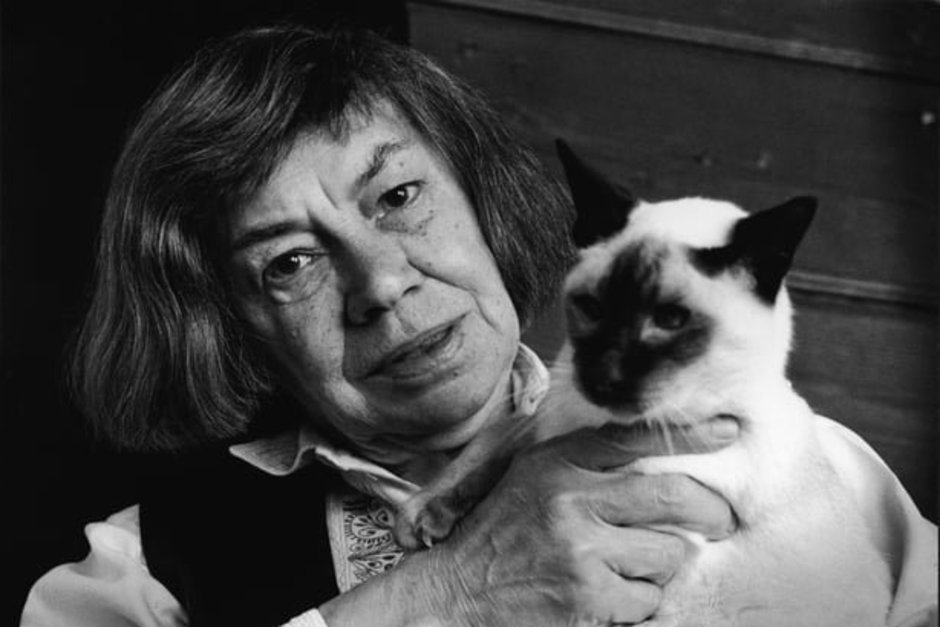
Elena Gosalvez Blanco took Highsmith to the Locarno hospital for lengthy procedures without knowing the exact diagnosis. Information about the lung cancer, she said, was not made public until after the writer's death. At the same time, Highsmith made the last edits to the novel «Little g: A Summer Idyl», forcing her assistant to send the same pages to the publisher by fax several times a day.
In December 1994, Gosalvez Blanco left to take exams. Soon after, Highsmith's condition deteriorated sharply, and she was hospitalized in Locarno, from where, according to the memoirist, she never returned home. Patricia Highsmith died on February 4, 1995, at the Carita Hospital in Locarno from a combination of aplastic anemia and lung cancer. She was cremated in Bellinzona. The memorial service was held in the Tegna church, and the ashes were placed in a columbarium.
After her death, it turned out that Highsmith bequeathed property worth about three million dollars and future royalties to the Yaddo colony, where she had worked on «Strangers on a Train» in 1948. The literary archive — about 8,000 pages of handwritten diaries and notebooks — was transferred to the Swiss Literary Archive in Bern. Her Swiss publisher, Diogenes Verlag, became the literary executor. The novel «Little g: A Summer Idyl» was rejected by American publisher Knopf several months before the writer's death. It was published in the UK in March 1995 and sold 50,000 copies in France within six weeks after the author's death.
After the writer's death, it was the novels of the 1950s and 1960s — «Strangers on a Train», «The Price of Salt» (1952), and «The Talented Mr. Ripley» — that were recognized as key to her legacy. Critics noted that Highsmith significantly blurred the line between genre prose and «great literature», without softening either the moral ambiguity or the psychological harshness of her world.
Age restriction: 18+
Ekaterina Petrova is a literary reviewer for the online newspaper «Real Time» and the host of the Telegram channel «Macaroons».