The most prominent ex-Russian at the European Figure Skating Championship will be Anastasia Gubanova
More than two dozen former Russian figure skaters who have changed their citizenship are expected to perform at the competition.
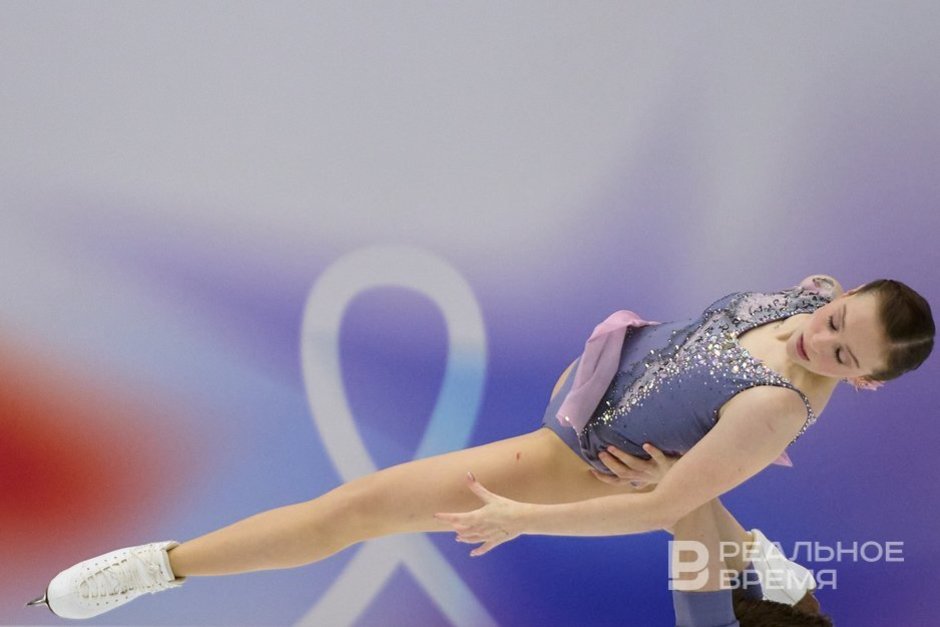
January 14, the European Figure Skating Championship will start in the English city of Sheffield. The participants will compete for medals in four disciplines: women's and men's single skating, pair skating and ice dancing. The competitions at the Utility Arena stadium will be one of the first events preceding the Winter Olympics in Italy. Although our athletes have not been officially allowed to participate in the European Championship, there will be many figure skaters of Russian origin there. Details are in the «Realnoe Vremya» article.
Kimmi Rappond as the ideal figure skater of the present and the future
The European Championship in Sheffield is one of the last international figure skating events that will be held without the participation of Russians. In the future, Russians Adeliia Petrosian and Petr Gumennik will perform at the Olympics in Italy, after which we can expect the gradual return of other Russian athletes to the international arena.
But these events for Russian figure skaters will be held under new rules. The changes are primarily related to the increased age requirement for single skaters. Perhaps, by raising the age of adult competition participants to 17 years, the international federation was guided by one of the leaders of European figure skating — Swiss skater Kimmi Rappond, one of the favourites of the upcoming European Championship. This girl combines figure skating with a career in the modelling business.
But the emphasis on multi-rotation jumps dictates its own unwritten rules, and the current figure skating stars are not that tall, their height is about 160 cm. Among the contenders for European Championship awards are Anastasia Gubanova from Georgia, current European champion Nina Petrykina from Estonia and two Belgians, Nina Pindzarrone and Luna Hendrix. But the воспитанница of Kazan figure skating, Inga Gurgenidze (Nikitina), will not be able to compete for the Georgian team at the European Championship, as she will turn 17 only in 2027.
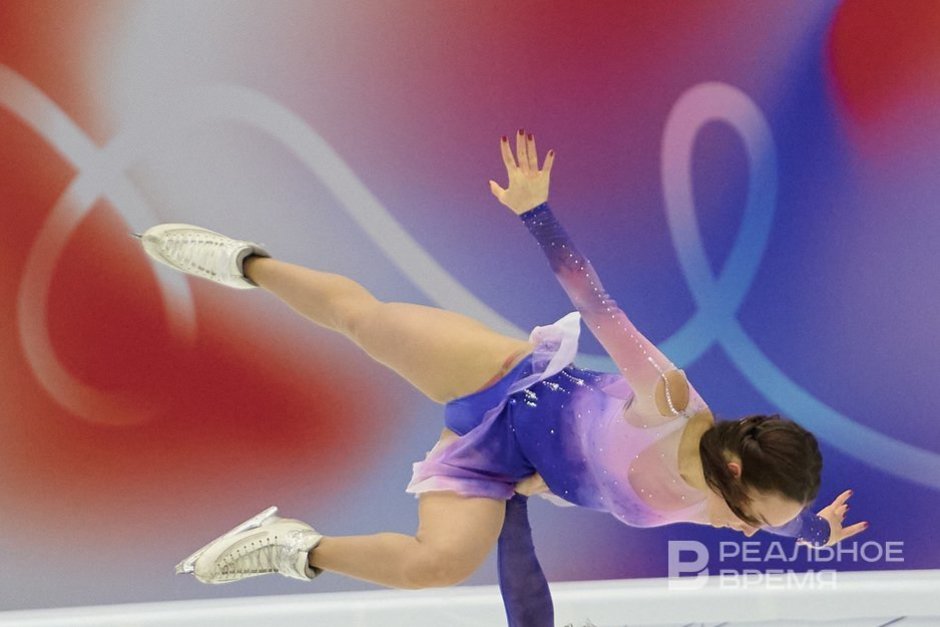
Are Russians ready to return to the international arena?
The European elite of figure skating has long been overshadowed by American and Asian athletes. The current world champion Alice Liu, the newly crowned US champion Amber Glenn, who won for the first time only at the age of 26, the entire Japanese national team and the leaders of the Korean team do not allow European skaters to get close to them. After the suspension of Russian athletes, only Belgian Luna Hendrix, the bronze medallist of the 2022 World Championships, climbed the podium at the World Championship among Europeans.
Experts believe that Russian sports could «stagnate» without high-level international competition. On the one hand, we have the positive experience of diver Nikita Shleikher, who came second at the World Championships, and gymnast Daniel Marinov, who finished third at the World Championships as well.
But, for example, in rhythmic gymnastics, there are concerns that our best athletes are no longer guaranteed gold, as it was before. For example, Russian Adeliia Petrosian previously beat Gubanova and Hendrix by only three and five points, respectively, in Beijing at the pre-Olympic qualification event — these are negligible values compared to the gap that separated Russian figure skaters from everyone else starting with the generation of Evgenia Medvedeva. But then the superiority was achieved thanks to a brilliant generation of girls, who often had to miss international events due to the age limit, as happened with Alina Zagitova and Alena Kostornaia (Kunitsa), Anna Shcherbakova and Alexandra Trusova (Ignatova).

Watching experienced skaters
The history of world figure skating remembers how 16-year-old Marina Pestova and 15-year-old Marina Cherkasova competed for the victory at the 1980 Olympics, as well as German Christina Riegel, who was only 14. And their rival was 30-year-old Irina Rodnina. A more relevant example is Gabrielle Daleman, who returned to figure skating after two years and became the silver medallist of the Canadian Championship at the age of 28. Her ровесница Julia Saouter, a German skating for the Romanian team, is also among the priority participants of the events. Since she has finally received a Romanian passport, it will allow her to compete at the Olympics as well. She had a chance to compete in Sochi in 2014, but she didn’t have the document then, while Daleman made her debut and won gold in the team event at Pyeongchang in 2018. Daleman missed Beijing 2022, managing to win the Miss Ontario beauty contest during the break, and then returned to professional sports.
It is difficult for the average fan to keep track of Russian skaters who have been competing for no more than one Olympic cycle. The international federation has achieved that skaters with experience, even if not victorious, compete. For example, Maria Seniuk, who is only 20 years old, will now compete for Israel, and Vazgen Azroyan, who previously worked in Kazan, talked about the prospects of this athlete six years ago. Curiously, the increase in the age of participants now indirectly affects Israel, which has been joined by figure skater Sofia Shifrin from Russia. Now she looks stronger on the ice than Seniuk.
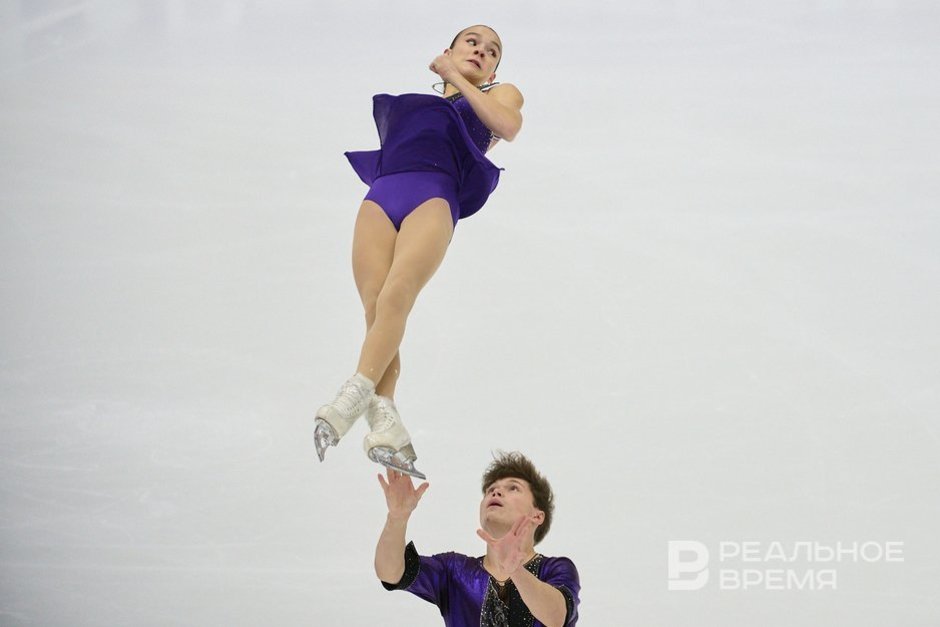
How the European Championship lost its favourites
In men's competitions, the path to the podium for the participants will be facilitated by the withdrawal of Frenchman Adam Siao Him Fa, the two-time European champion and World Championship medallist, and his replacement, François Pito, was not competitive either in the past at the junior level or now in the Olympic qualification. Their talented but extremely unstable compatriot Kevin Aymoz, the Italian trio: Daniel Grassl, Nikolay Memola and Matteo Rizzo, as well as Georgian Nika Egadze and the current European champion Lukas Brieggi from Switzerland are the main contenders for a medal.
The Georgians will compete at the European Championship with a strong team, secretly hoping for this event as preparation for the Olympic team event. It seems that the suspension of Russia from team events at the Olympics, as well as the decline in figure skating in China and Canada, will guarantee Georgia a place among the top five finalists in the team event at the Olympics in Italy. And this is a step forward compared to Beijing, where they finished sixth. It is clear that the US and Japan will compete for gold and silver, but Georgia has a chance for an Olympic bronze in competition with Italy.
No matter how strange it may seem, Georgia has historically earned a medal, having had in its ranks at different periods Elene Gedeванишвили (bronze medallist of the 2010 European Championship) and ex-Russians: Anastasia Gubanova (gold medallist of the 2023 European Championship), Moris Kvitelavshili (bronze medallist of the 2020 European Championship), pair skaters Maria Kazakova and Georgy Revia (silver medallists of the junior World Championship). Egadze and Gubanova, pair skaters Luca Berulava, whose first partner was Kazan figure skater Alina Butaeva, and Anastasia Metelkina (two-time European Championship medallists), ice dancers Dina Davis and Gleb Smolkin have formed a team ready to storm the Olympic podium.
The European Championship in Sheffield, England, will be held from January 14 to 18. Although there will be no Russian athletes at the event, even in neutral status, many figure skaters of Russian origin who have changed their citizenship will compete:
- women's single skating — Anastasia Gubanova (Georgia), Stefania Yakovleva (Cyprus), Ekaterina Kurakova (Poland), Antonina Dubinina (Serbia);
- men's single skating — Vladimir Litvintsev (Azerbaijan), Alexander Vlasenko (Hungary), Heinrich Gartung (Germany), Vladimir Samoylov (Poland), Georgy Reshtenko (Czech Republic);
- pair skating — Karina Akopova and Nikita Rakhmanin (Armenia), Maria Pavlova and Alexey Svyatchenko (Hungary), Nikita Volodin (Germany), Anastasia Metelkina (Georgia), Darya Danilova (Netherlands), Yulia Shchetinina (Poland), Pavel Kovalev (France);
- ice dancing — Diana Davis and Gleb Smolkin (Georgia), Maria Kazakova and Vladislav Kasinsky (Georgia), Maria Ignatieva (Hungary), Angelina Kudryavtseva and Ilya Karankevich (Cyprus), Evgenia Lopareva (France).