Roman Ignatyev: before writing a readable text, «you first need to write a lot of bad ones»
Writer Roman Ignatyev — about his book «Ichor», the Civil War and the monsters it spawned.
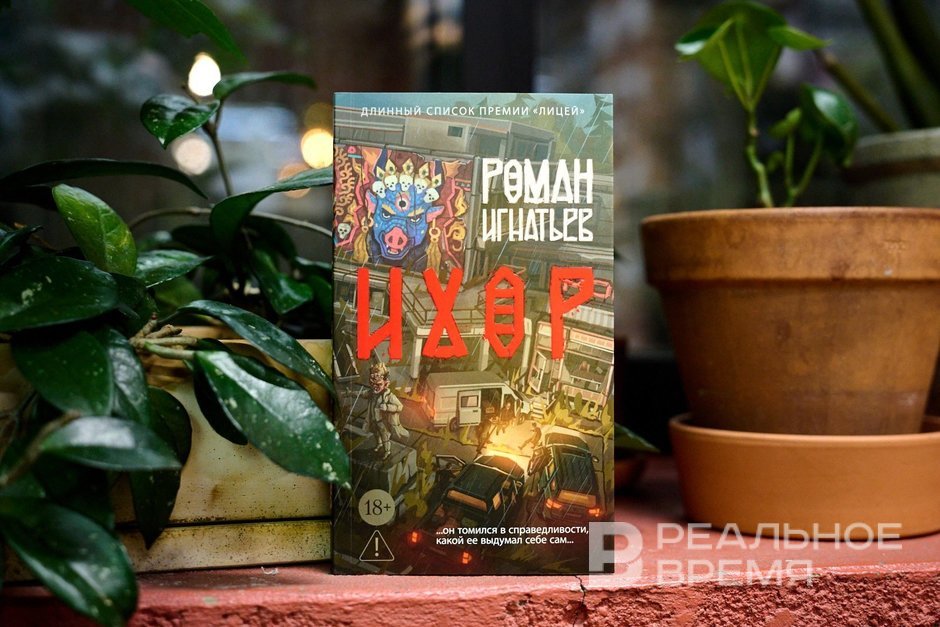
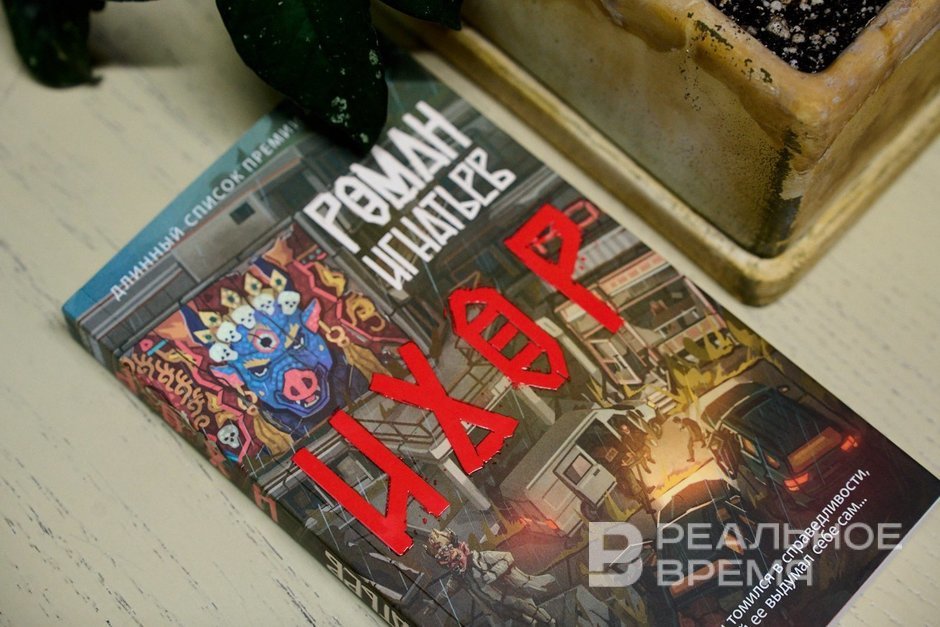
The presentation of Roman Ignatyev's book «Ichor» took place in Moscow at the non/fiction27 International Fair. This is a mystical story set in two time periods — the present day and the Civil War after the revolution. In the post-COVID 2020s, Foma Bessonov returns to his hometown to deal with the belongings of his deceased grandfather, who spent his last years in a nursing home. But something strange begins to happen there, the roots of which stem from the events of the early 20th century. Literary reviewer of «Real Time» Ekaterina Petrova tells how this book came about and how Mongolian mythology, the Civil War and sectarian rituals are mixed in it.
The first experience «with a serious publisher»
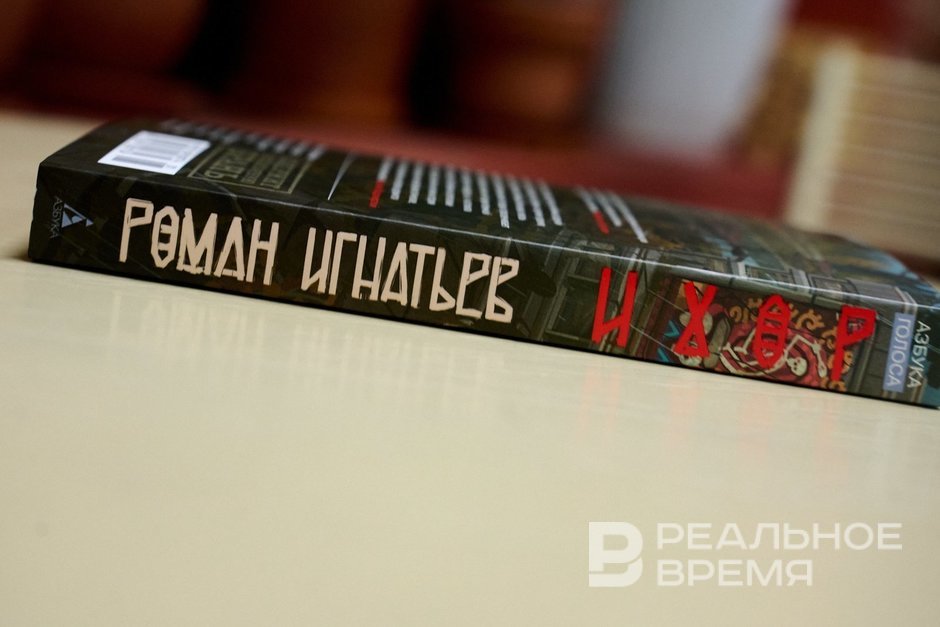
Roman Ignatyev's book «Ichor» was published this fall in the «Azbuka Golosa» series. This is a relatively new project of the «Azbuka» publishing house; the series is a little over a year old. According to editor Maria Nesterenko, the idea arose from the publishing house's long-standing intention to launch a line dedicated to modern Russian-language prose. Nesterenko clarified that there are two main directions within the series. The first is young and «conditionally young» authors: those who have recently come to literature, regardless of whether it is a debut or not. The second direction is already established authors. In addition, the series has a memorial line related to the republication of texts close in time to the modern era.
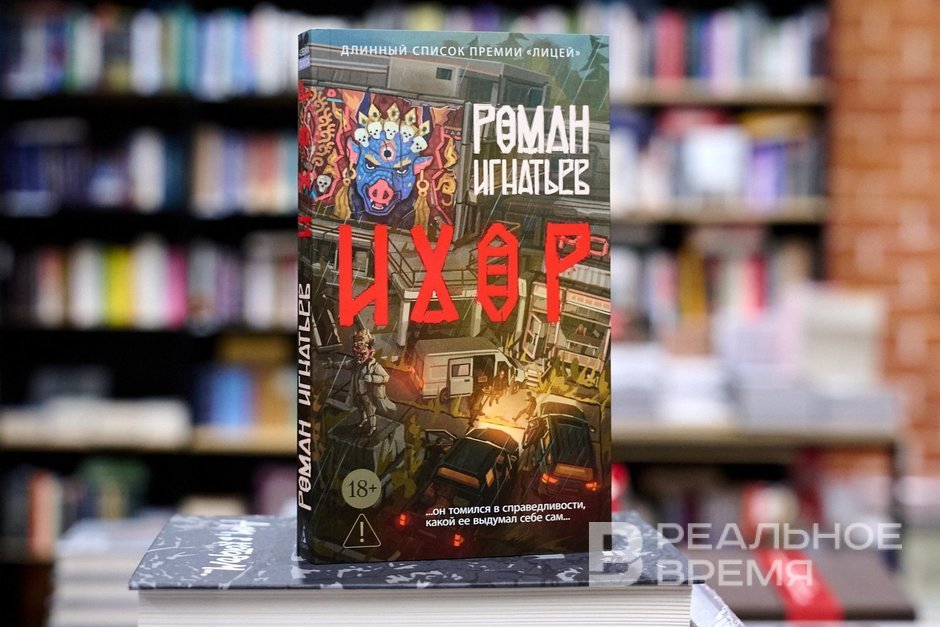
Maria saw the manuscript of «Ichor» in the longlist of the «Licey» prize. She emphasized that good texts often do not even make it to the shortlists «due to various circumstances», and added that «Ichor» is precisely such a case. She started reading the novel right after that and quite quickly made a decision to work with the book: the need to discuss the text with colleagues in the editorial office took, according to her, several hours, and on the same day she wrote to the author.
Maria Nesterenko noted a quality rare for young authors — work with characters. She said that Roman Ignatyev builds clear speech characteristics of the characters. This, according to her, makes the characters vivid. She separately mentioned the plot, calling it simply «very interesting». Nesterenko also noted the genre intonation of the text. She said that she is fond of books that can be classified as mystical realism, and emphasized that in «Ichor» the author managed to maintain the «golden mean» in this field without going to extremes.
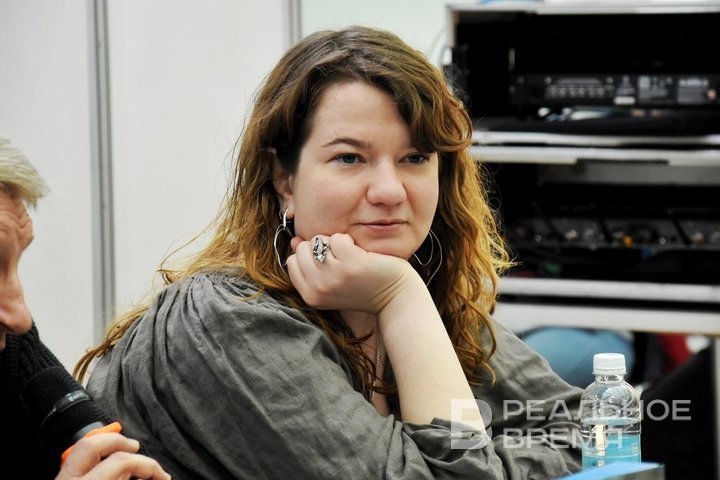
The publishing house позиционирует Ignatyev's book as a debut novel, but before the release of the book, the author was published on self-publishing platforms. Roman Ignatyev clarified that «Ichor» is a debut novel precisely in the sense of being published by a large publishing house. He said that publications on self-publishing platforms were part of the work done, but he considers the first experience of publishing with a «serious publishing house» to be a separate stage. He started writing, according to him, at an early age — around the age of seventeen. He described this period as a time of many unsuccessful, затянутых texts and novels that seemed worthy of publication to him at that time. The realization of their weakness, according to him, came later — after the age of thirty, along with reading and viewing experience and an understanding of «what I really want». He emphasized the importance of finding one's own voice and intonation, and added that, in his feelings, he is moving in the right direction, although he does not consider this search to be complete. According to his formula, before writing a readable text, «you first need to write a lot of bad ones».
Writer's searches in turbulent times
Ignatyev linked the idea of the novel «Ichor» with an interest in the revolutionary period and the beginning of the Civil War. He noted that there are many books about this period, but, in his opinion, there is a lack of genre and «hooligan» texts that would work not only with facts, but also with vivid images and events embedded in the historical fabric. The starting point was the image of Baron Roman von Ungern-Sternberg — a figure that the writer called odious and well-known in literature, including in the works of Viktor Pelevin and Leonid Yuzefovich.
Baron Roman von Ungern-Sternberg was a Russian military leader during the Civil War, a lieutenant general of the White Army and one of the most radical monarchists of his time. Coming from a Baltic German noble family, he went from a Cossack officer and a hero of World War I, awarded the Order of St. George, to the creator of the Asian Cavalry Division, which operated in Transbaikalia and Mongolia. Ungern was the author of a project to restore the empire of Genghis Khan from the Pacific Ocean to the Caspian Sea and considered Mongolia a foothold for the fight against revolutions in Eurasia. In 1921, his troops expelled the Chinese garrison from Urga, which played a key role in preserving the independence of Mongolia. For this, he received the title of darhan-khoshoy-chin-van from the Bogd Khan. Ungern combined extreme monarchism, a mystical worldview and cruel methods of waging war. This made him a figure that was both influential, contradictory and mythologized. In the same 1921, he was arrested, subjected to a show Soviet execution and shot in Novonikolaevsk.
The image of this man haunted Roman Ignatyev for a long time: for about six months, the writer tried to understand how to connect a historical character with the present time. He was interested in the very principle of breaking epochs and characters and the question of what such a person would be like today. He called turbulent times a fertile ground for writer's searches.
Ignatyev explained the appearance of mysticism in the novel by the logic of the historical period itself. He described the time of the Civil War as an «interregnum», in which, according to him, things arise that cannot be explained by either physical or human laws. He recalled that, according to research, it was an extremely cruel and traumatic time, and it is in this context that space for the mystical and «unearthly» arises, when the most incredible events are possible.
Working on the novel required a serious appeal to historical sources. Ignatyev said that he read a lot of memoirs and studies devoted to the revolution and the Civil War, and emphasized that it was important for him not only to extract facts, but also to understand the everyday reality of the era: how people lived, what they ate, what they wore. He said that without working with sources, this text would not have been possible. In order not to «get bogged down» in information, Ignatyev consciously limited himself to a chosen period of time and tried not to go off track.
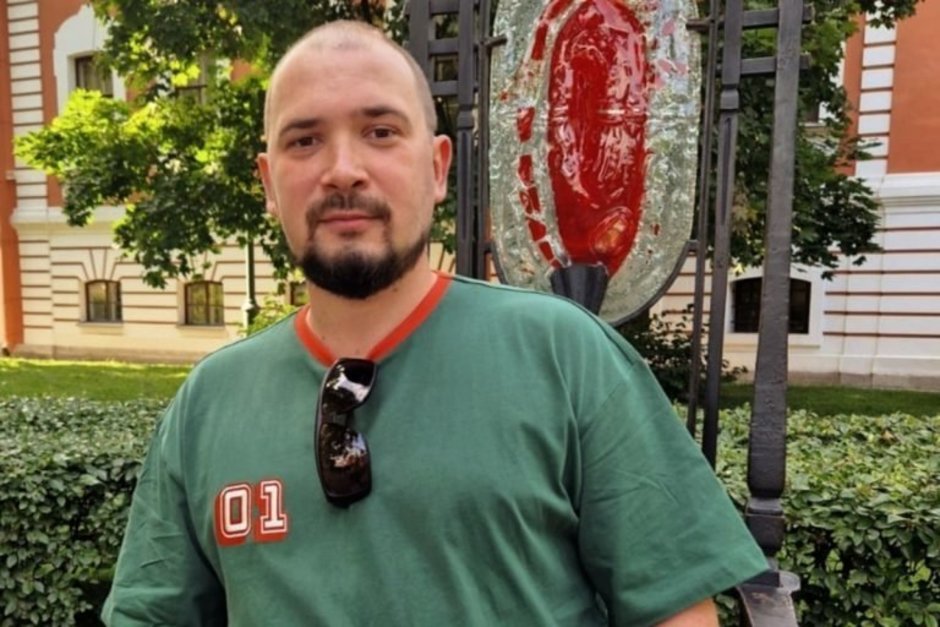
An additional limitation was the deadline: the novel was written for participation in the «Licey» prize, and a year was allotted for its completion. As the writer said, tight deadlines did not allow endless delving into materials and helped maintain the rhythm of writing. The novel noted that returning to the text after a long time can lead to it becoming «different». The text itself was written in about six to seven months, and together with the preparatory work, the whole process took about a year.
The blood of the gods and long-living monsters
The action of the novel «Ichor» takes place in the fictional city of Kostubai. Ignatyev emphasized that he did not have a specific prototype for creating this place. It is a collective image, geographically associated not with Central Russia, but with Trans-Urals, Buryatia and territories close to Mongolia. It is this territory, according to the author, that provided room for work with mysticism and local mythology. Ignatyev added that he considers this region extremely interesting for further study and does not rule out that he will return to it in future texts.
By the way, Roman Ignatyev linked his interest in the mythology of Turkic-speaking peoples with a trip to Kazan, where, as he put it, «there are сплошные Shurale» and «flying Zilants». The writer called this interest superficial, arising «incidentally», but then it coincided with work on the topic of the Civil War and the choice of the territory of action. The writer noted that while studying the Trans-Urals, he saw many mythical and mystical images, and then «one thing led to another», after which the mythological layer became part of the novel.
A fairly large space in the text is occupied by descriptions of various sectarian rituals and practices. While reading «Ichor», I had a persistent association with the film «The Wicker Man» and the image of the main character played by Nicolas Cage. Maria Nesterenko added that already at the final stage of preparing the book for publication, the film «Obitel» was released, where the action also takes place in a nursing home with strange rituals. Ignatyev clarified that he learned about the film «Obitel» after completing work on the text. He emphasized that he had not seen it before and was surprised by the number of coincidences when he watched it later. As the writer said, sectarian rituals in the book are a plot necessity. He needed a character who could connect different eras.
The writer also mentioned an interest in Indian mythology, in particular the image of the Wendigo — a creature that feeds on people's fears. At the same time, Ignatyev emphasized that he did not look for a direct analogue in local mythology: it was more important to create the figure of a «long-living person, a monster» that would become the core connecting the time of the Civil War and modernity.
Maria Nesterenko in this context drew attention to the very name of the novel. She recalled that ichor is the blood of the gods, and blood in a mythological and cultural sense is identical to life. As a parallel, she mentioned the ideas of Alexander Bogdanov about blood transfusion, which arose during the revolutionary years, and his belief in the rejuvenating potential of the blood of young donors. This motif, according to her, unexpectedly rhymes with the historical context of the novel.
«Don't forget that you are human»
The action of the novel takes place in two time layers — the Russian Civil War of the early 20th century and the present day. While reading «Ichor», at times you stop distinguishing between where the Civil War is described and where the present is: the atmosphere seems too similar. There is a feeling of a common background in which «man is a wolf to man». Ignatyev agreed with this formulation and said that in conditions when «nothing supports» and everything is falling apart, this is natural. He emphasized that when reading books about any war — regardless of the era — the same thing is found. War, according to him, «never changes».
Roman Ignatyev referred to the texts of Ernst Jünger and to modern testimonies of wars of the late 20th and early 21st centuries. The writer called war an eternal state, within which monsters appear. As an example, he cited the Mongolian context, where, according to him, the danger was not from wolves, but from dogs, since the dead were not buried, and human remains remained in the open. He noted that people got used to this; a person can adapt and get used to any conditions.
At the same time, Roman noted that it is fundamentally important for him not to leave the text in a state of complete hopelessness. He said that any work of art should be aimed at humanism, even if the light is present indirectly. According to him, he did not set out to create a text after which the reader would feel only darkness, and emphasized that there are moments in the novel that you can «cling to».
Concluding the conversation, Ignatyev said that he wrote the book «Ichor» with the internal feeling of the need «not to forget that you are human», even in the most difficult conditions. It was not about global utopias, but about the ability to live not only for oneself, not to be an egoist and an individualist. He emphasized that there are many characters in the novel for whom this choice becomes fundamental. In addition, it was important for the writer to capture the state of timelessness — both the early 20th century and the early 21st century — and to connect these two historical layers in one text.
Ekaterina Petrova is a literary reviewer for the online newspaper «Real Time» and the host of the telegram channel «Buns with poppy seeds».