«Kant» by Jon Fosse: it’s okay not to understand
At the International non/fiction Book Fair, they discussed how the prose of Nobel Prize winner Jon Fosse is structured.
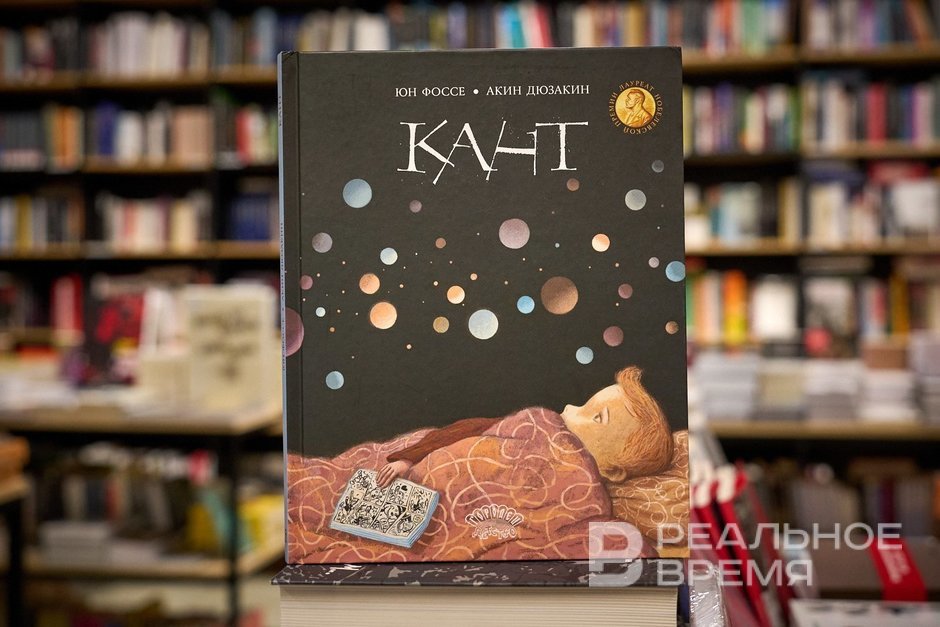
Jon Fosse is a Nobel Prize winner, a playwright and the author of slow, intense prose about the impossibility of speaking. Unexpectedly, he also turned out to be a children’s writer. At the International non/fiction27 Book Fair for intellectual literature, they discussed Fosse’s children’s book «Kant», as well as the author himself: through children’s prose, the philosophy of misunderstanding, complex Norwegian language and theatre, where his texts continue to resonate.
The edge of the universe and the limits of understanding
In 2023, Norwegian writer Jon Fosse received the Nobel Prize in Literature. On the world stage, he is known mostly as an «adult» writer and playwright. After the Nobel Prize, Fosse was spoken of as the creator of «his own space of meanings», but few remembered that he also has children’s texts. Elena Dorofeeva, editor of the «NordBuk» series of the «Gorodets» publishing house, explained that the release of the book «Kant» was largely accidental. As a curator of the Scandinavian series, she works with both adult and children’s literature, but, in her words, she «had no idea» about «children’s» Fosse.
It later turned out that he had written five children’s books long before the Nobel Prize, and none of them had previously been translated into Russian. «When I found out about this, I really wanted at least one of these books to be published in Russian,» Dorofeeva articulated the motivation behind the publishing decision.
Translator from Norwegian Elena Rachinskaya noted that Fosse’s recognisable style in adult prose is repeated in books for children. She emphasised that Fosse’s slow prose, his drama with pauses and repetitions «fits very well with children’s literature». Rachinskaya linked this to the very nature of children’s speech: children ask questions, clarify, rephrase, not always immediately understanding what exactly they want to ask an adult. According to her, it is these endless variations of formulations and questions that organically coincide with the way Fosse’s texts are structured.
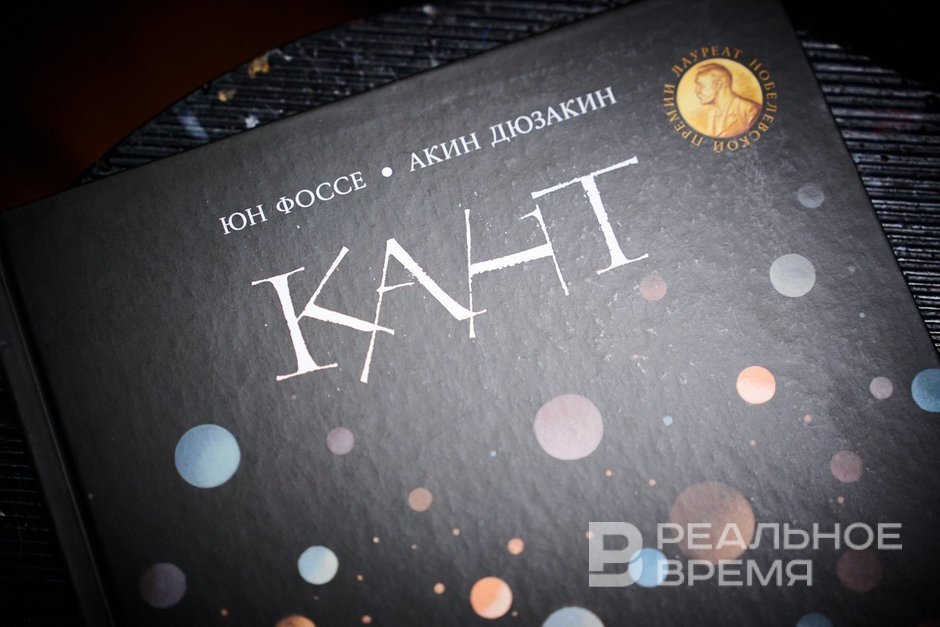
Rachinskaya separately spoke about repetitions — a key feature of Jon Fosse’s writing. These, the translator clarified, «are not exactly repetitions, they are rather variations on a theme, like musical variations». This structure, according to her observation, particularly accurately conveys the state of children’s emotional indecision, when a child is afraid to ask a question and approaches it again and again from different angles. Fosse, Rachinskaya added, works with a «cross-section of ordinary everyday life», very simple and sometimes painful, and due to the shift in perspective, he reveals depth. In a children’s book, this technique is preserved: minimalism, variability and the gradual unfolding of meaning remain the same as in the author’s «adult» texts.
The title of Jon Fosse’s book «Kant» sets several levels of meaning, and, as the participants of the public talk emphasised, this polysemy is already заложена in the original. Literary critic Natalya Lomykina drew attention to the fact that for a Russian reader, the word «Kant» simultaneously refers to both the philosopher and the meaning of «edge», «canton of a blanket», whereas in Norwegian and other Germanic languages, this play is built into the language itself.
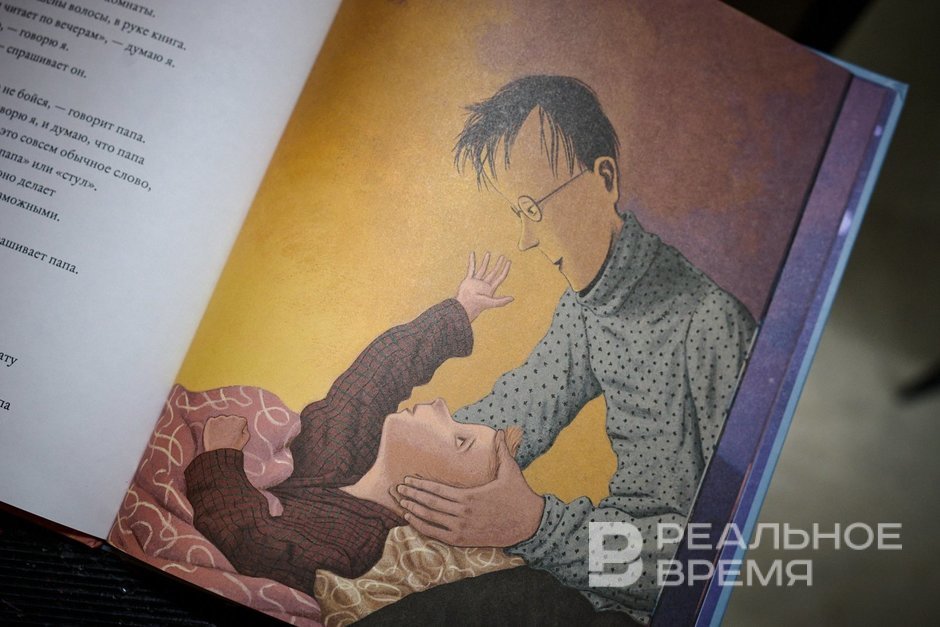
Elena Rachinskaya clarified: «The polysemy of the title is заложена in the original, this is one of the key things that Fosse plays with». In Norwegian, «kant» is primarily an edge, a boundary. Therefore, philosopher Kant and «canton» as an edge appear naturally in the book, without additional semantic effort. This is where the plot logic of the text comes from: the main character, eight-year-old Christopher, reflects on the universe before going to bed and tries to understand whether it has an edge. This question, according to Lomykina, is universal: the fear of infinity and the attempt to comprehend it turn out to be common to both children’s and adults’ experiences. Christopher is worried and directly tells his father about it, trying to get an answer that will reassure him.
Kant’s philosophy in the book is present not as a separate topic, but as a background. Natalya Lomykina emphasised that it is «not the first or the main one», but still noticeable. Elena Rachinskaya developed this idea: the figure of the philosopher here is important precisely as a reminder that even «such a smart person as Kant did not understand much». This, according to her, relieves tension for both the child and the adult: misunderstanding turns out to be a normal state, not a mistake.
Elena Dorofeeva drew attention to the very structure of the conversation in the book. At the centre is a dialogue between a father and a son, built on trust. The father does not give ready-made answers and directly says that there are no answers to some questions, and this is acceptable. In her formulation, the book asserts a simple idea: it is important to ask questions, even if they are frightening and even if it is impossible to answer them right away.
«Fosse suggestiveness»
For translator Elena Rachinskaya, Fosse is an author who works with what cannot be expressed directly. «This is what he was given the Nobel Prize for — the inexpressible in words,» she said and clarified that at the centre of his texts are always people who «cannot find a way to each other». According to the translator, Fosse constantly examines human loneliness, the fear of contact, the impossibility or unwillingness to find the right words, and returns to these situations again and again, trying to «voice» them.
Rachinskaya separately highlighted another key topic for Fosse — the ability to listen. She recalled that the author himself speaks of theatre as the «art of listening»: first, the director and actors listen to the text, then to each other, and only then the audience should hear what is said from the stage. This principle, according to her, is directly transferred to reading and conversation, including with a child: it is important not only to speak, but also to «listen to what you hear».
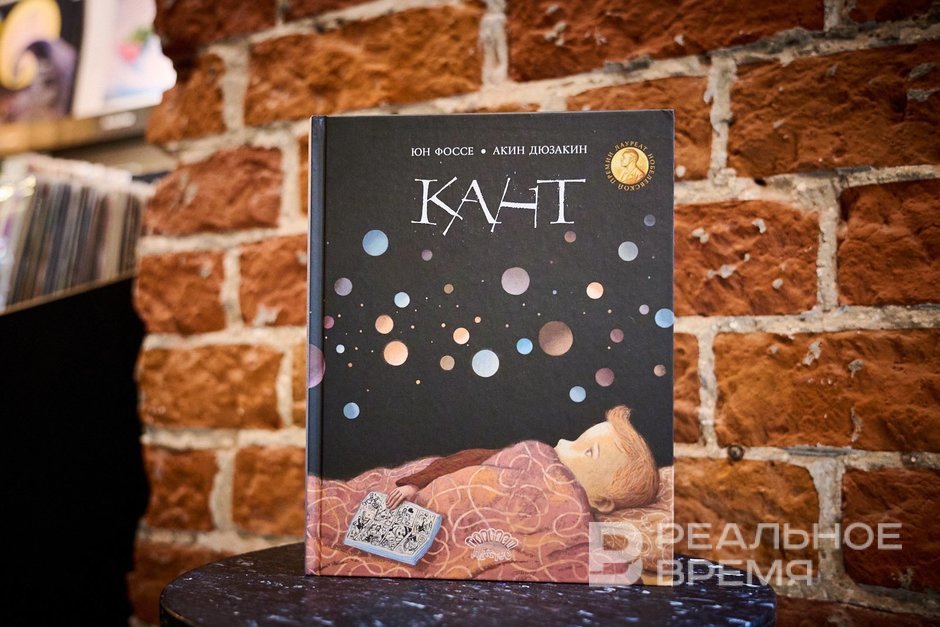
When it comes to foreign literature, the accuracy of translation and the transmission of meanings заложенные by the author are always very important. Rachinskaya noted that from this point of view, there are no simple languages. She recalled that in Norway there are two literary languages — Bokmål and Nynorsk, and Fosse writes in Nynorsk. «It is a language constructed from dialects,» the translator explained and recalled Ivar Aasen, who collected the speech of different regions of the country and created a new literary standard. Nynorsk, according to Rachinskaya, is «very poetic», rich in sounds and variability, and it is this variability that is important for Fosse’s writing. The author himself, as Rachinskaya retold, says that this language is artificial and therefore creates the effect of «estrangement».
Natalya Lomykina noted that in the case of children’s prose, the responsibility for translation is higher: every word must be in its place. Rachinskaya agreed with this and emphasised that it takes longer to work on a short children’s book than on a voluminous text. It is important to preserve the rhythm, sound and «Fosse suggestiveness», as well as the purity of meaning. «There is a lot of work in a short children’s book,» said Elena Rachinskaya.
Elena Dorofeeva confirmed this from the publishing side: despite the small volume, the book requires time from both the translator and the editor. There is no usual plot and events here, but there is material for reflection and experience, and that is why working with such a text cannot be fast. Rachinskaya added that time is especially important in translation: the opportunity to put the text aside, return to the original, and review what has been done before starting the editorial work. According to her, the slowness of Fosse’s prose coincides with the slowness of the translation process itself: «such important things always require time».
«Not the easiest playwright to stage»
Speaking of Fosse as a playwright, the participants of the public talk noted first of all his stage universality. Fosse’s plays have been translated into more than fifty languages and are performed in theatres around the world. Elena Rachinskaya linked this universality to the space of freedom that Fosse leaves for the theatre. «Probably in that люфт, in that space for action that he gives to both directors and actors,» she said. At the same time, Fosse, according to directors, is «not the easiest playwright to stage» and «not the most stage-worthy», precisely because there is too much freedom and it is not always clear what to do with it. Rachinskaya retold a conversation with Murat Abulkatinov, who staged «Telemachus» at the «Sreda-21» theatre: the path to the performance turned out to be long, with sketches, attempts and festival showings, until the exact key to the play was found.

Rachinskaya separately mentioned the theatrical experience of Yuri Butusov, who, in her words, knew how to work with Fosse through visual and audio means, enhancing the repetitiveness, variability and spiral structure of the text. This principle, the translator emphasised, allows the stage to «duplicate» the structure of Fosse’s speech itself.
It is important that not only Fosse’s drama, but also his prose lives in the theatre today. Rachinskaya gave specific examples: the «Trilogy» collection is being staged at the MTЮЗ theatre (at the «Games in the Outbuilding» venue). The play «Without Sleep», based on the одноимённой short story from the collection, was staged by Sergey Tonyshev. Rachinskaya clarified that Tonyshev works as a director and choreographer, and therefore the performance is built through plasticity, where «every movement means a lot». The intimate space of a 19th-century mansion, in her words, perfectly matched the world of the «Trilogy», whose action takes place in Bjergvin — medieval Bergen, and the story of two lovers.
The appearance of the children’s book «Kant» in Russian is also connected with the theatre. Rachinskaya said that she got acquainted with this text in 2019, when Norway was the guest of honour at the Frankfurt Book Fair. In the parallel theatre programme, she saw a children’s performance based on the book «Kant», and it was from this that the further reading and comprehension of the text began, which was published in Russian this year.
Ekaterina Petrova is a literary reviewer for the internet newspaper «Real Time» and the host of the «Macaroon Buns» Telegram channel.