Alexander Ivanov: «When I show my medals, new acquaintances are shocked»
Exclusive interview with the vice-captain of BC «Wings of the Bars»
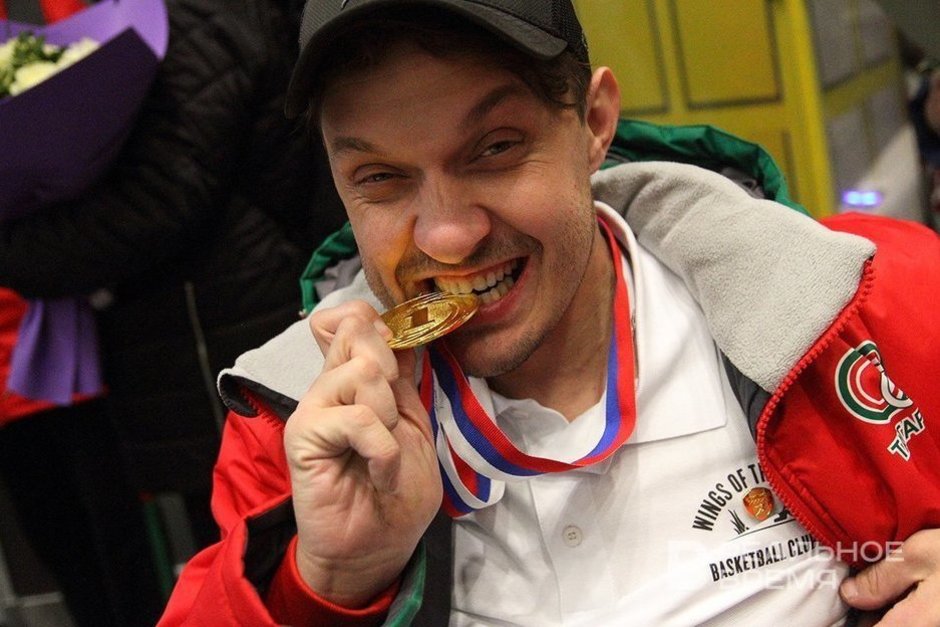
The double champions of the country in wheelchair basketball, the Kazan team «Wings of the Bars», have come out of a short vacation and resumed training. Taking advantage of the fact that the training is taking place in Kazan, the editors of «Real Time» spoke with the vice-captain of the country's strongest team, Alexander Ivanov.
«All failed at once: arms, legs, and my voice gave out, so I couldn’t even call for help»
— Alexander, tell us about your injury and how you got to know the «Wings of the Bars» team.
— I was born on February 15, 1988, in Kazan. It was also in Kazan that I got injured when, at the age of 23, in 2011, on the Kazanka, near the Borisoglebsky settlement, I broke my cervical vertebra by diving unsuccessfully. It was a compression fracture of the last cervical vertebra, the seventh, and a fragment went inside, damaging the spinal cord. Everything happened in an instant: I ran into the water to dive right away, and apparently pushed off with my legs hard, because I hit the bottom with my head. I tried to surface because everything failed at once — my arms, legs, and my voice gave out, so I couldn’t even call for help. Fortunately, my nephew, who is five years younger than me, was nearby. He was 18 at that time and, in fact, saved me. The ambulance arrived in half an hour, and an hour later I was on the operating table.
As a result, I often visited rehabilitation centres and saw people who had suffered through no fault of their own, due to accidents or something similar. But in my case, there is no one to blame. Since it is a certain burden on the soul when you find yourself in such a situation through someone else’s fault.
— What were you doing at that time, and how did you learn about wheelchair basketball?
— I graduated from the Kazan Aviation Technical School, which is located next to the Rubin base. However, I didn’t work in this profession and, at the time of the injury, was pursuing higher education, studying to be a psychologist at the Kazan Social and Legal Institute. In fact, before the injury, I didn’t have a profession to fall back on. I spent about four years going to rehabilitation centres, and in one of them, in 2015, I learned about the existence of wheelchair basketball from the head of the department, Lilia Yafazovna (I unfortunately can’t remember her surname).
I went to the team’s base, which was already located in Tulpar at that time, got inspired by the idea of playing sports and started solving the problems of getting to training. I had a driver’s licence but no car at that time, so I quickly bought a car to travel from the Aviastroitelny district, where I live, to the Privolzhsky district, in other words, from one end of Kazan to the other. The car, of course, has manual controls, although my instincts were still acting at that time, and I kept wanting to press the gas or brake pedal with my foot. My arms had already recovered and got stronger because I was constantly working on their recovery, not just mechanically doing what they told me to do.
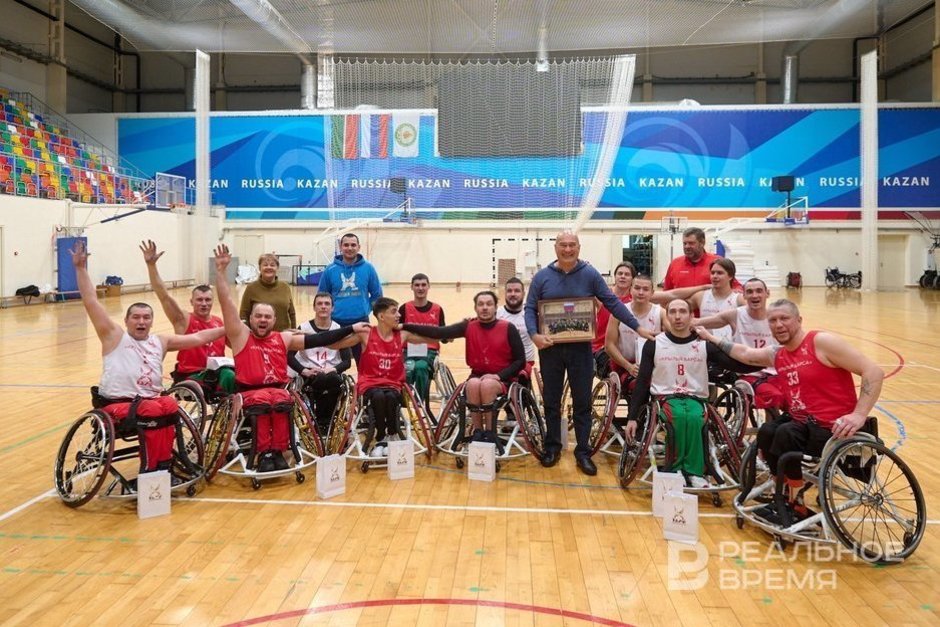
Having already become a wheelchair athlete, I enrolled my son in ice hockey, and he’s still playing it.
— Did you do sports as a child?
— I played football at the Motor sports club, which in Soviet times was called the Uritsky Sports Club, but my training fell during the period of the country’s collapse, the nineties, and we had no prospects in sports. None of the group ended up becoming a professional athlete. By the way, after I became a wheelchair athlete myself, I sent my son to play hockey, and he still plays, as a goalkeeper. He started at the Forward school, where the mother of Ak Bars hockey player Albert Yarullin worked and helped him get started in hockey. We started there, then my son moved to Kazan Dynamo, and now he’s with Izhstal in Izhevsk.
As for me, at the initial stage of training, the main thing for me was to get out of the house and start communicating with new people, since I am a sociable person by nature.
When I switched from a regular wheelchair to a sports one, I was delighted because it is much faster and more manoeuvrable than a regular one. This was an incentive to master the sport and join the team.
— You joined the «Wings of the Bars» exactly ten years ago. What was the team like then?
— At that time, it was coached by Vasily Kochetkov, who was not yet allowed to play himself. Of my current partners, Dinar Kamaliev and Igor Samartsev were already on the team from the very first days of its creation.
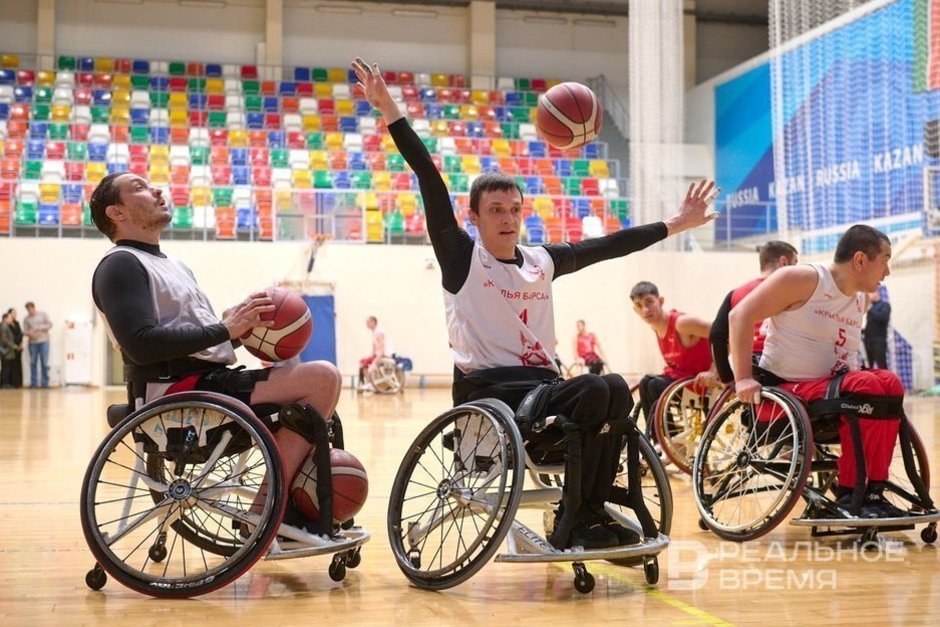
I often communicate with players from Ulyanovsk because I have many relatives there.
— The basketball on wheelchairs still has your captain Andrey Chugunov and Ruslan Kozhevnikov, who now play for other teams — Khanty-Mansiysk and Ulyanovsk.
— By the way, I often communicate with the players from Ulyanovsk because I have many relatives there. If not to say that everyone lives in the region neighbouring Tatarstan. I have informal contact with the players of that team, in addition to sports.
By that time, we were already settling into second place in the country, behind only the St. Petersburg «BasKI» and ahead of the old-timers from Moscow and Tyumen. The second St. Petersburg team, «Nevsky Alliance», which was mostly made up of legionnaires, did not have the right to compete in the national championship, and we only met them at various friendly tournaments. Then Vasily went to the German championship after half of the season, and there was a short period when Anatoly Vinyarsky was listed as the team coach. When the coaching duo of Sergey Anatolyevich and Natalya Vladimirovna arrived, he temporarily moved to the position of the team mechanic before leaving altogether. And Yury Otrishchenko, invited from Volgodonsk, temporarily replaced Kochetkov, who had left us, in the role of the fourth number.
— In general, do you have a practice of inviting players?
— No, apart from Viktor Kainov, who moved from wheelchair basketball in Chelny, and Vladimir Kuchin, there is no one else to mention. Our young players, Arthur Galstyan and Vsevolod Salin, moved to Kazan on their own to play wheelchair basketball here. The same goes for local talent: Arthur Bagamanov, Valery Simonov, and Elvir Fayzullin, whom I introduced to our sport after getting to know him at the rehabilitation centre. By the way, Kainov’s move led to him eventually becoming the team captain, replacing me in that role, since I, having got used to it, «captained» from 2020 after Andrey Chugunov left us. After Vasily Kochetkov returned to the team, there was a re-election of the captain, and Vasily was chosen, and I became the vice-captain.
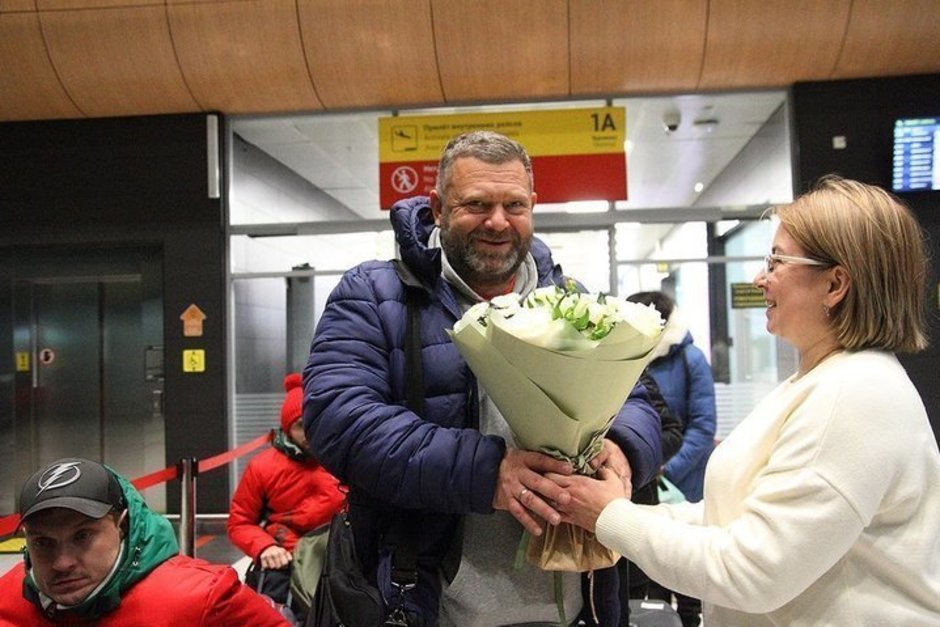
When people meet me, they initially think that I’m constantly cooped up at home, sitting indoors.
— Kazan not only invited players but also lost some. In addition to Kozhevnikov and Chugunov, three «Wings of the Bars» players — Marсель Rakhmatullin, Airat Khidiyatullin, and Bulat Galiyev — played for «Triumph» from Lyubertsy.
— At that time, they were loaned out to get more playing practice. This is, by the way, a good practice since everyone wants not only to train but also to play. If there is no such opportunity, a loan provides it.
— During the season, it’s hard to catch «Wings of the Bars» players at home — there are tournaments and training camps. This can be understood since it is part of the work schedule of a professional club, which Kazan must be counted among. The movement of basketball players from club to club, and even to other countries, is comparable to regular basketball — you just have to keep up.
— Yes, by the way, when Kochetkov had already settled in Germany, he was asked about a potential candidate for the team for the «kopeyka» position, and he acted as a sort of selector, recommending Andrey Bondarenko. Another thing is that Andrey didn’t quite succeed there and returned to Russia, to Tyumen, where he was one of the leaders. By the way, you reminded me, and I haven’t seen him in the current season with «Shans» since he played for Tyumen’s second team, called «Sibiryaki».
Regarding mobility, when you start telling new acquaintances about our life, they initially express the idea that I’m constantly sitting at home, confined to four walls. In response, I say that in the last 10 years that I’ve been on the team, I’ve managed to travel half the world, and that’s before we were excluded from international competitions. And those who were called up to the national team — I wasn’t among them — travelled even more. In recent years alone, we’ve been to Turkey, Armenia, Serbia, and Bosnia and Herzegovina. People are surprised when they hear this, and when I show my medals, they are completely shocked.
I’m an outgoing person; it’s hard to call me shy or reflective. I remember that when I first joined the team, we had concerns about playing against the «BasKI», who were universally recognised as leaders. I said: what’s so special about them? They’re just people like us. Now the 3x3 national championship is starting, where medals were previously awarded at an unofficial level, but now it will be the Russian championship, included in the unified calendar plan. We have two teams with all the tall players acting as centres — Kochetkov, Salin, Bagamanov. In fact, if you create a third team from the players left out of the game, it will be short. Nevertheless, I would still like to play 3x3 and compete in this version of wheelchair basketball. On the other hand, we don’t have any scary opponents now. And our coaching tandem has gradually removed the psychological barrier before matches with St. Petersburg. Now these are just like any other games for us.
In Germany, they play not just for themselves and socialization in society, but also for their fans
By the way, in Germany, where Kochetkov and Bondarenko played, there is a very serious interest in our sport. Not just friends and acquaintances in the stands, but ordinary fans who buy tickets for the matches and then cheer with all the trappings: drums, whistles. And the players there play not just for themselves, to socialise in society, but also for part of that society in the form of their fans. After the game, the basketball players and fans gather in a cafe, eat, chat, and discuss the match — a real industry characteristic of professional sports.
— You yourself are among the UNICS fans and attend the team’s games.
— In fact, all the players on our team have the opportunity to watch UNICS games at their home arena, but it’s not always possible for the whole team to get together to cheer for them. There is also a «reverse reaction» from there; the longtime UNICS player Dmitry Kulagin always comes up to our bench of fans to thank them for their support. Moreover, he told me that he occasionally watches «Wings of the Bars» games, although I thought it was a purely local thing. And that only those who are involved in wheelchair basketball, plus family and friends, watch our games.
I also belong to the «Ak Bars» support group. Our low-mobility support group has its own quota for attending games, and I note that you can almost freely sign up for regular season matches, but in the playoffs, it’s a problem. If you don’t sign up in time, all the spots are taken. We have guys who are real fans and worry that «their spots» in the playoffs might be taken by those who are commonly called «glory hunters», whose interest in hockey «wakes up» only during the playoffs, but that’s how it goes.