Nikita Simonyan: an era that does not go away
For the 100th anniversary of the legend of Soviet football — about victories, coaching challenges and the people who made history
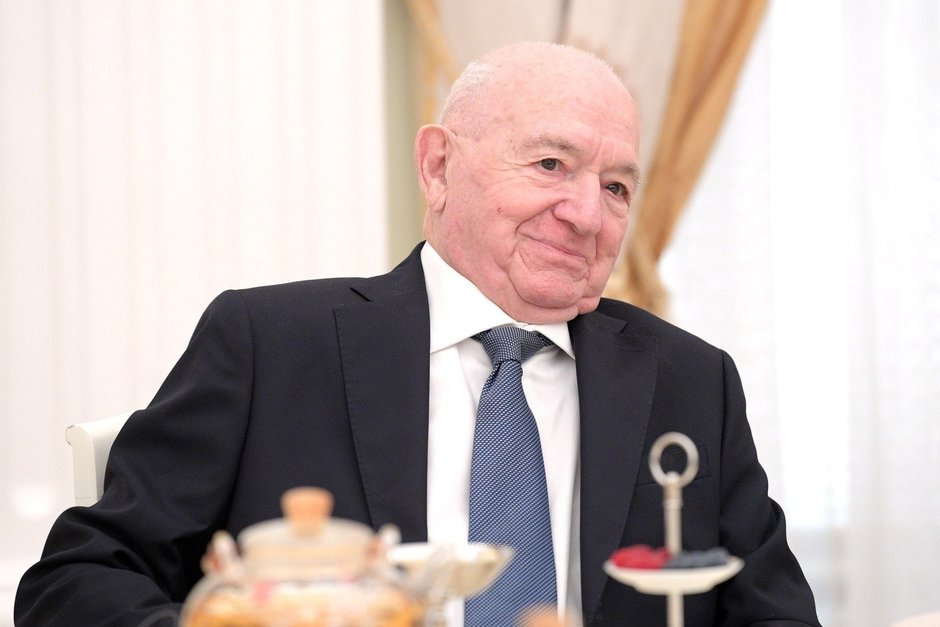
This week Nikita Simonyan would have turned 100 — an Olympic champion, a coach whose name is firmly connected with “Ararat," “Spartak” and the USSR national team. He caught and lived through a whole football era: from post-war stadiums to the complex administrative realities of the late Soviet Union. In the material of “Real Time” — not simply a chronicle of achievements, but a look at the time through the fates of people: Simonyan himself, his predecessor Nikolai Glebov, commentators and fans, for whom football was more than a game.
The “golden double” was accomplished by Simonyan, but prepared by Glebov
The life path of Nikita Pavlovich, which encompassed many events of the 20th century, is worthy of a screen adaptation. Moreover, Simonyan became a protagonist both in documentary and in fiction cinema. In the documentary genre the film was called “His Majesty Football”; in cinema one can watch the picture “The Golden Double," dedicated to the double victory of “Ararat," which Simonyan coached in the country's championship and the USSR Cup of 1973.
This film was commented on for “Real Time” by Yakov Nefedyev, a doctor of technical sciences, full member of the Academy of Quality Problems. In the Soviet years Yakov Nikolayevich was an employee of one of the key defense enterprises, a specialist in automatic control systems for rockets, and the author of a number of inventions in this sphere. Yakov Nikolayevich's memories are curious in that he was a witness of those events and, besides, had heard about them from his uncle Nikolai Glebov, whom Simonyan replaced in the place of head coach of “Ararat.”
— The film is simple. The main thing is reflected in it. The intrigue with the change of coach and the interest of the great ones: who beats whom? In everything, even in football. It is known how the VVS team (Vasily Stalin) and “Dynamo” (Beria) competed. For the sake of spectacle it would be good to have more football — one can watch it endlessly, he shared his opinion. — Kyiv “Dynamo” is a symbol. I remember in Kyiv at the market the old women were discussing the match of the previous day with passion. I said something approving — and received a free jar of varenets. But the fans at that time did not yet fight; the episode is invented, as is the fishing.
However, the fact that the Glebov — Simonyan relationship in the picture was revealed authentically caused pleasant surprise in the publication's interlocutor: “Someone even recalled how Glebov wore a cap, roughly like Yashin. Yushkevich is good in the role of Glebov, the texture suits, but Glebov and a fishing rod are incompatible things, the temperament does not correspond to such an occupation. By the way, Beroyev is also similar to Simonyan in relative youth. The report with the voice of Sinyavsky evokes the feeling of that era of real football.”
Who was Simonyan's predecessor
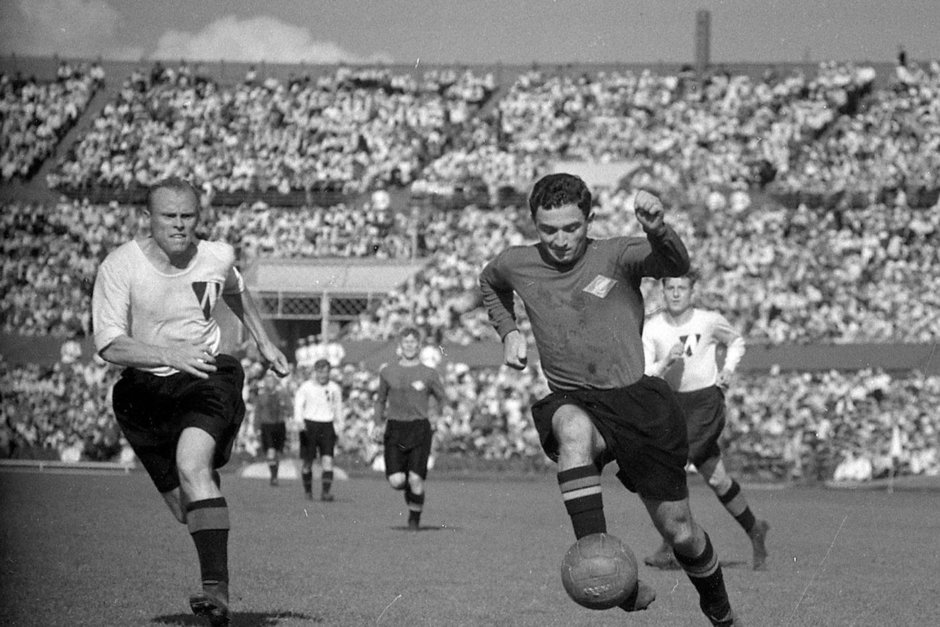
Simonyan's predecessor in the post of coach of “Ararat," Nikolai Glebov, played football before the start of the Great Patriotic War, and then went to the front. Having returned, he coached footballers for 25 years, working in Simferopol, Chisinau, and Frunze. He opened Slava Metreveli for big football and was the coach under whom “Kairat” debuted in the top league, and “Ararat” was raised to the podium of honor.
Yakov Nefedyev recalled that his maternal grandfather, Yakov Glebov, died in the Civil War in Ukraine in 1919, and continued: “I started raking up history in connection with the myth of Simonyan's greatness. Naturally, I started with 'Ararat,' since I remember in detail how Nikolai Yakovlevich made a champion out of nothing. His sports life is far from ours, I do not know the details. The exception is the 1970s, when by a confluence of family circumstances I became close with the family of my beloved sister Tanechka and often visited them. This is the period of 'Ararat,' when Glebov was 'the best Russian son of the Armenian people,' as they said then. Actually, about football I can say little. Simply in this period I often visited the house on Petrovka, 17. When Nikolai Yakovlevich was in Moscow, Armenians constantly crowded in the house. I remember that cognac was poured from a large metal teapot.”
According to the publication's interlocutor, the “best friend of the Armenian people” was plied with drink thoroughly: “Apparently, even then the Armenians were quietly preparing their own for the fitting of the laurel wreath, which, in fact, happened soon. By inertia, set by Glebov, 'Ararat' took the double, the laurels went to Simonyan. And on this the history of the team ended. And Nikita Pavlovich simply made a career as a football official. At Glebov's funeral I reminded Nikita of this period.”
The post-war period
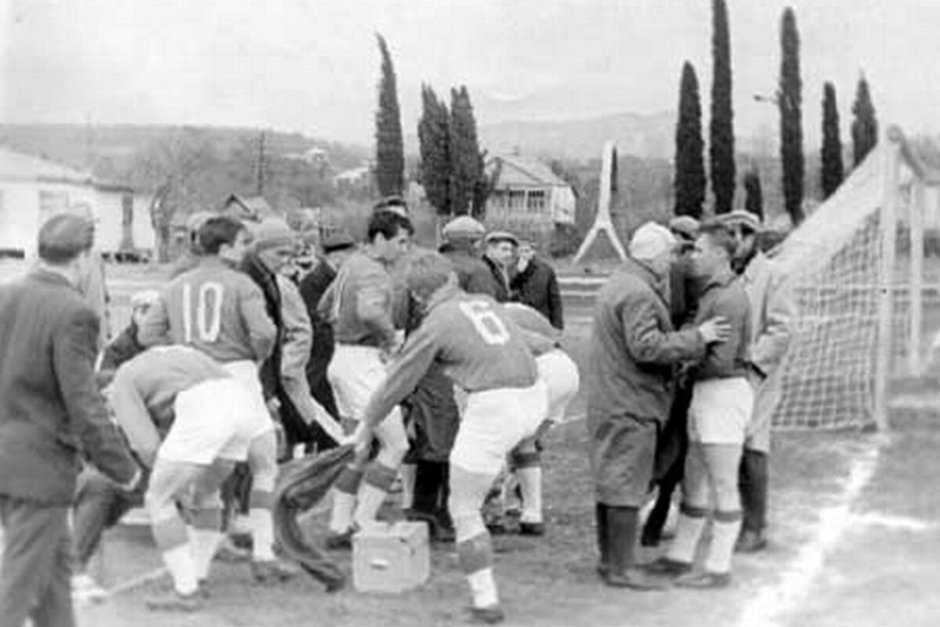
In 1949 Nefedyev's family received an apartment on Khoroshevskoye Shosse — not far from the “Dynamo” stadium. It was then that he was first taken to a football match. It was autumn, it was raining, “Torpedo” and Moscow's “Dynamo” were meeting on the field. “I remember, no sooner had my father and I returned home and not had time to dry off, than Glebov burst into the apartment with a cup in his hand, and almost the whole team after him. To this day I remember the towering figure of the goalkeeper, I think his surname was Leksovsky or something similar. I do not know what was poured into the huge cup, but everyone drank from it in turn. The first to be honored was the goalkeeper," the interlocutor told.
According to him, Glebov, like many footballers, played Russian hockey in winter — there he met his future wife, who played in the women's team: “Nikolai Yakovlevich's wife Anna Semyonovna fit poorly into the situation and was the cause of constant conflicts. I will say directly, she was not liked. She, a large woman, with a heavy gait, a dominant by nature, was forced to put up with the imperious character of grandmother Evdokia Ivanovna. Nikolai Yakovlevich liked to drink, therefore he was always 'on the hook.' Anna Semyonovna traveled everywhere with him and controlled him.” Glebov's spouse was an employee of the ministry, but her position was not particularly significant, and she was not the breadwinner in the family either, the narrator noted.
— I loved my uncle very much, his stories about the Finnish war and about everything in general. I remember at the dacha, he was already over 40, we ran races, I lost, recalls Nefedyev. — He never had drinking bouts, and he did not get drunk to the point of losing his senses. Feasts in general at that time were frequent; guests came without calling. Glebov was always cheerful and in the center of attention.
“After the first glass a monologue on the theme 'I and Soviet football' began”
Then Yakov Nefedyev involuntarily recalled “Kairat” — it was precisely Nikolai Yakovlevich Glebov who brought the team into the top league. Nefedyev's father returned from the Crimea — he was sent there right after the liberation of the peninsula in 1944. In Moscow the family then had no housing of their own, so they settled with the grandmother in a communal apartment on Petrovka. She had two adjoining rooms. In the far one was the family of Nikolai Yakovlevich, and in the front one — the grandmother, the mother (she was the sister of Nikolai Yakovlevich) and the publication's interlocutor himself.
According to his recollections, behind the screen almost every night someone spent the night: the grandmother invariably picked up on the street a person who had nowhere to go. In those years Nikolai Yakovlevich held the post of chairman of the “Torpedo” society and was listed as an employee of the Likhachev Automobile Plant (at that time it still bore the name of Stalin). Because of this he constantly had to fuss about the employment of yet another of the “grandmother's dependents.” In short, the rooms resembled a dormitory with all its problems.
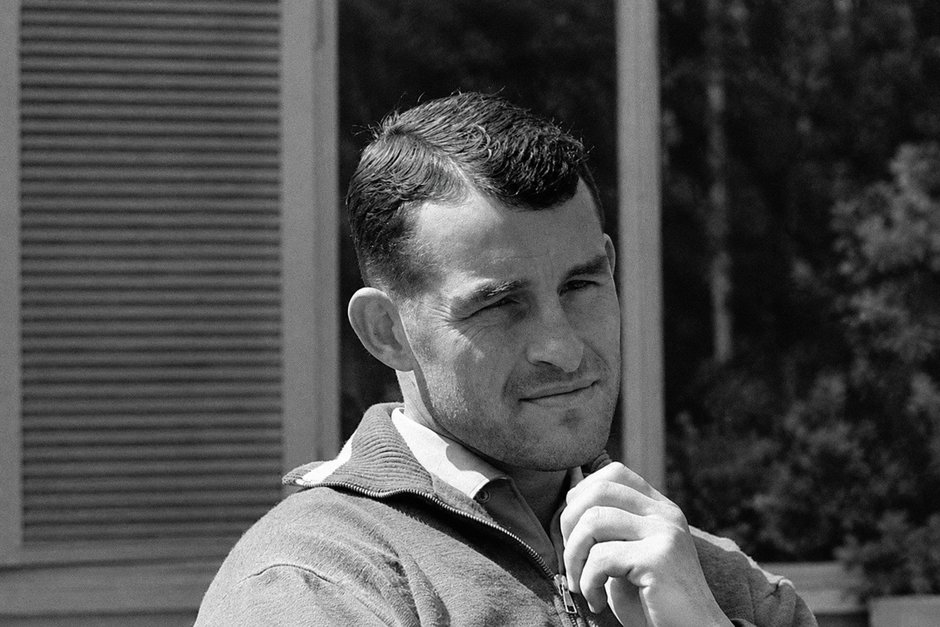
— Nevertheless we are all sociable people and, despite the crampedness, in the evenings we gathered large feasts (then people still went to visit without an invitation). If Nikolai Yakovlevich was at the table, then after the first glass his monologue on the theme “I and Soviet football” began. Sometimes the theme changed to “Soviet football and I.” No one could get a word in all evening; he was, as they would now say, a football fanatic. True, until my father appeared, then the attention instantly switched. Charisma! When my father participated in the feast, his authority overshadowed all the others, noted Yakov Nefedyev.
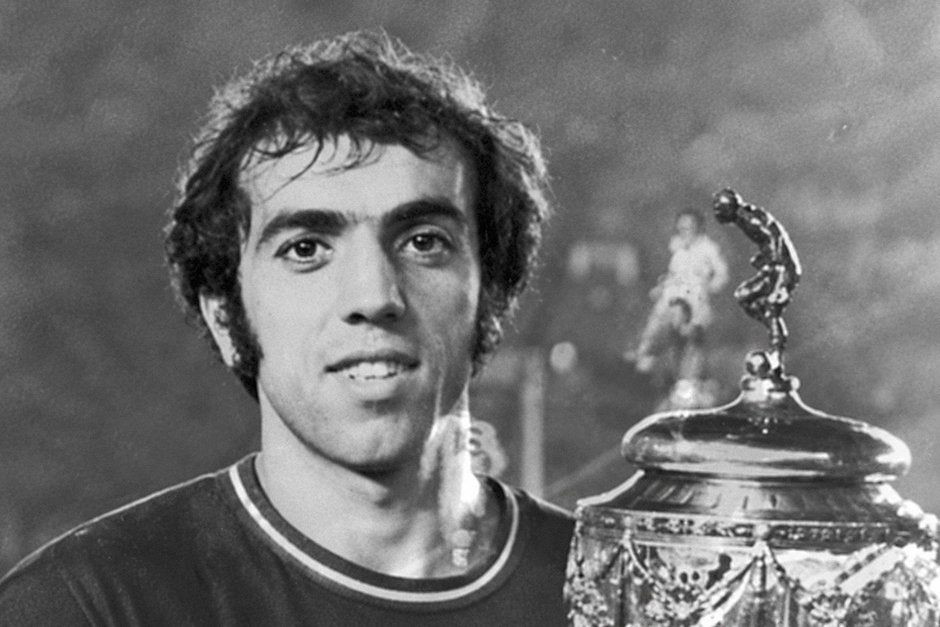
Stalin's son unsuccessfully invited Simonyan to his team
“If a woman sees artists every day, sees academicians, sees cosmonauts, sees Ishtoyan… She can touch him like this. Who are you to her?!” This monologue from the comedy film “Mimino” is also indirectly dedicated to Simonyan, since it is connected with the period when Nikita Pavlovich headed “Ararat," and that very Ishtoyan was among his charges.
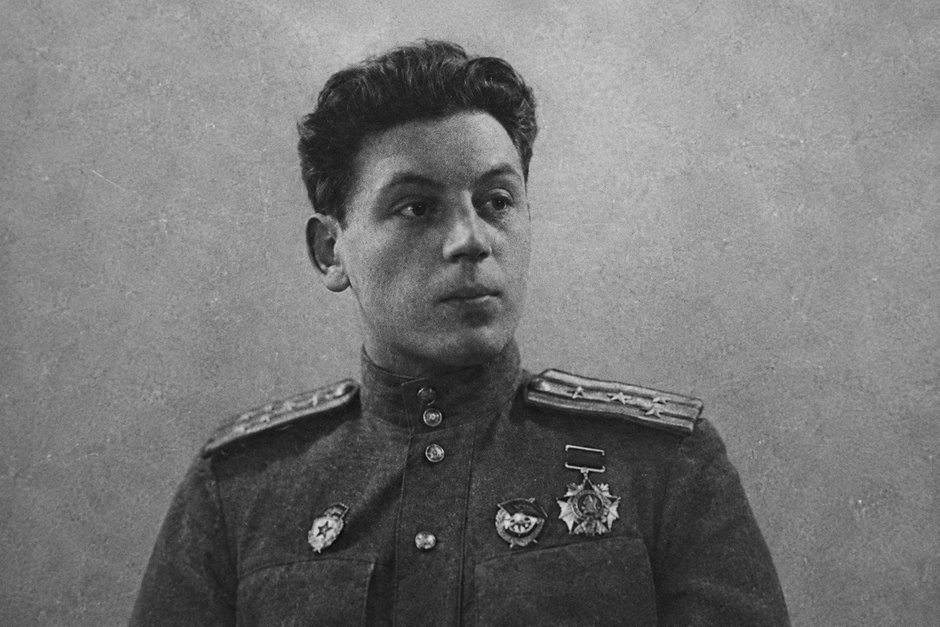
Although there was a period when Simonyan himself could have become a charge of Vasily Stalin, since Vasily Iosifovich persistently invited him to his VVS team. Persistently, but not tyrannically, as they then tried to describe that time in black colors. For example, referring to the fact that at the criminal trial the head of the VVS sports club, Colonel Sokolov, asserted in his testimony that the defendant Vasily Stalin ordered Simonyan to be shot from around a corner for refusing to move to the VVS team. “This did not happen, this could not have happened!” Vasily Stalin repeated to Sergei Salnikov, another Olympic champion who was his friend, although he too did not become a VVS footballer. And with Simonyan, whom the general secretary's son had invited to his team, they met already after Vasily Stalin himself had served his term in the early 1960s, but had not yet been exiled to Kazan. As Simonyan recalled, they were coming out after dinner at “Aragvi” with that same Salnikov, ran into Vasily Iosifovich, and embraced.
It is curious that after the death of the disgraced Stalin in Kazan, Simonyan himself became a victim of events of insurmountable force. And how else can one call the regrettable episode with the death of the corresponding member of the Academy of Sciences Dmitry Ryabchikov, who was hit by the car of the “Spartak” footballer Yuri Sevidov. After the accident led to the death of the academician, the deputy of Sergei Korolev, Sevidov went to prison, one might say, as a replacement for Streltsov, who had been released early two years earlier. The head coach of “Spartak," Nikita Simonyan, and the coach for educational work, Nikolai Starostin, were dismissed from their posts, since the principle of collective responsibility not only allowed standing up for a guilty person, but also punishing those who were next to him, in the absence of mitigating circumstances.
Makharadze wanted to present “Ararat” as Armenian, but it was not Armenian
It was precisely in this period that Simonyan was “riding high," coaching “Ararat," despite personal grief, since in the summer of 1973 his son died. In the leadership of the Communist Party of Armenia there was initially a desire to bet on local cadres. In the sporting plan the Armenians had already won an important image victory in 1957, when in the USSR championship among class B teams (the current first league) a situation developed where the first place was claimed by the ODO from Sverdlovsk (team head — Leonid Rodos, who had earlier served as adjutant to Georgy Zhukov) and the Yerevan “Spartak.” Everything was decided by the game in Yerevan, where the score was 2:2, which suited the Sverdlovsk team, when the hosts scored a goal from an offside position. The referee cancelled the goal, after which a scandal began that spilled over onto the streets of the Armenian capital.
The head of the Armenian church, Vazgen I (in the world Levon-Karapet Baljian), was present at the game. It is curious that only on September 30 of that year he was elected Supreme Patriarch and Catholicos of All Armenians. On October 2 his enthronement took place, and the game that turned into a scandal was held on October 12. Based on its results, Vazgen I and other VIP persons of Soviet Armenia of those years wrote a letter to the CPSU Central Committee demanding a replay; other religious figures joined in, and, despite the fact that the Minister of Defense Georgy Zhukov, in whose department the Sverdlovsk ODO was, was categorically against it, the match was replayed on November 22 in Odessa. The Armenian priests pushed through both the Minister of Defense and the CPSU Central Committee, nevertheless the Sverdlovsk team won — 2:0. But the very episode, when on the political arena the Central Committee of Armenia together with the Catholicos outplayed the Minister of Defense Zhukov and his adjutant, says a lot.
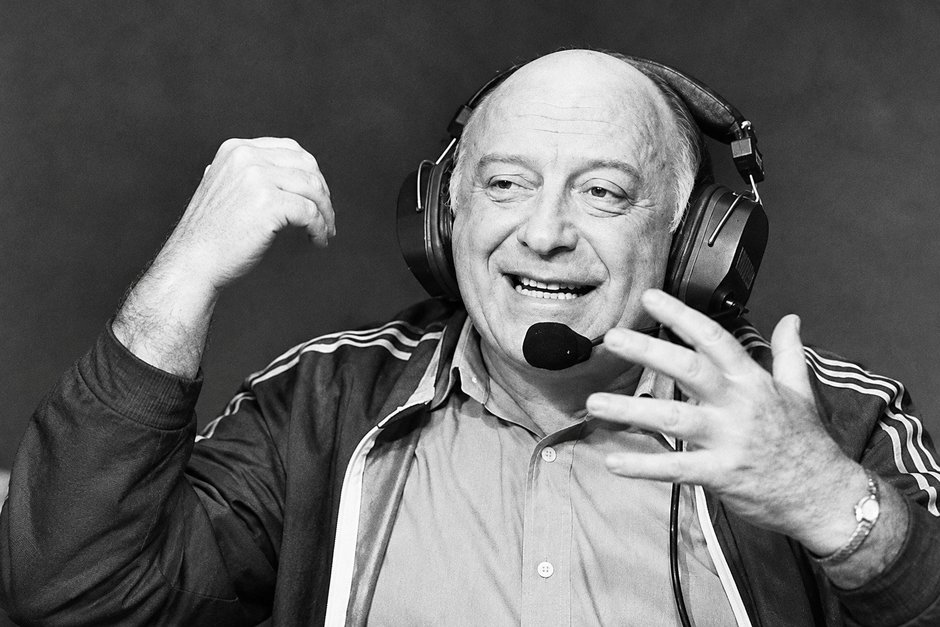
The Georgian commentator Kote Makharadze recalled that he was broadcasting from West Germany a match of the local “Kaiserslautern” with “Ararat," during the break of which he was informed from the studio in Moscow that in the first half of the game he often said “Armenian footballers," but one should call them “ours” or “Soviet.”
The second variant was more just, since the coach Glebov was Russian, the footballer Sergei Bondarenko — a native of the Ukrainian Sumy, and the numerous Armenian footballers were gathered from all corners of the world. The brothers Levon and Oganes Zanazanyan — natives of Greek Athens, Ishtoyan — from Lebanese Beirut, Aram Kazanchyan — from Cypriot Nicosia, Nazar Petrosyants — from Mar (Turkmenia), Nikolai Kazaryan — from Tbilisi, Alexander Kovalenko — from Polevskoy (Sverdlovsk Oblast). Avanesov (Avanesyan), Andriasov (Andriasyan), Arutyunov (Arutyunyan), Markarov (Markaryan), Pogosov (Pogosyan), Safarov (Safaryan), the former coach Artem Falyants — all were born in the Azerbaijan SSR; Mkrtich Pogosovich himself was from Armavir.
USSR national team
Nikita Simonyan became head coach of the USSR national team in 1977, replacing Valery Lobanovsky in the post, who, in turn, had replaced Konstantin Beskov before the Montreal Olympics. But the period of Simonyan's work with the national team is remembered for the fact that we did not qualify for the 1978 World Cup, lagging behind Hungary, and in the following qualifying tournament the Soviet footballers altogether failed. Based on the results of the qualification for Euro-1980 the national team took last place, after Greece, Hungary, and Finland, whose footballer — the Finnish Tatar Atik Ismail — “buried” Simonyan's career in the national team as head coach. The away draw with Finland (1:1) was achieved thanks to a goal by Ismail. After this match Konstantin Beskov came to the national team, who played out the qualification, failing it definitively. 0:1 away with Greece and 2:2 at home with Finland, although we led 2:0 along the way.
For the following 45 years (from 1979 to 2025) Simonyan was in administrative work in football, losing friends. From the victorious 1956 Olympics he returned in one cabin with Salnikov, who was the first to leave life, in 1984. Having finished a veterans' match of “Spartak," the 58-year-old Salnikov, taking off his boots, asked Vyacheslav Ambartsumyan: “Slavik, did you see what a pass I gave?!” — and died of a heart attack. This happened on May 9, 1984.
In 1999 the 69-year-old Igor Netto would pass away, in 2018 — Alexey Paramonov, who was 94. All three inhabitants of the cabin in which the Soviet champions returned from Olympic Melbourne in 1956. Ten years before his death the 84-year-old Paramonov addressed the President of Russia Dmitry Medvedev, noting that Isayev, one of the heroes of the Olympics, involved in the winning goal in the final, was the only one who had not received awards. Simonyan himself took the documents to Luzhkov for signature. As a result Isayev was awarded the Order “For Merit” of the IV degree. These were the last representatives of that pleiad which worried about their comrades sometimes more than about themselves and the sum in words.