Wildberries to continue working with agents? What PUD owners agreed on with RWB
RWB announced the launch of partner warehouses based on pickup points (PUDs), but you need at least 200 sq. m

The unprecedented wave of drone attacks on Wildberries' distribution warehouses has not only led to sellers' losses but also nearly paralyzed the operations of pickup points. Over the past two weeks, sales have noticeably declined, and incomes may not be enough to cover rent, PUD owners complained. In response, the RWB team (the combined company of Wildberries and advertising operator Russ) announced an anti-crisis program: points with suitable space will be able to receive additional remuneration for processing, storing, and shipping goods, said Ksenia Nekrasova, head of strategic development projects. At the same time, the company canceled fines for suspending PUD operations during working hours, and closure applications are discussed individually — the marketplace aims to preserve the network.
Russian Ministry of Economic Development to PUD owners: “Give it time to make decisions”
Wildberries' management, after two weeks of relentless attacks on its logistics infrastructure, met with Russian entrepreneurs who earn their living by issuing online orders to customers. There are currently over 100,000 pickup points across the country, and the vast majority of network owners have felt a sharp drop in orders. “I often hear a lot of negativity and concerns that PUDs have supposedly been 'left to fend for themselves.' This is not the case," opened the video conference Olga Kozyrkina, head of the PUD Network Development Association, who acted as organizer and moderator of the online meeting. “We are in constant contact with the government; dialogue is active. Nobody has abandoned anyone," she assured.
By the way, the head of the PUD Network Development Association herself runs several PUDs in a Russian metropolis and knows the “business kitchen” from the inside. Perhaps that is why she did not shy away from sharp questions, addressing them “directly” to the marketplace's strategic top management, whose distribution network has suffered losses. The essence of the questions boiled down to what the team plans to do in the near future and when to expect a resumption of the flow of orders to PUDs.
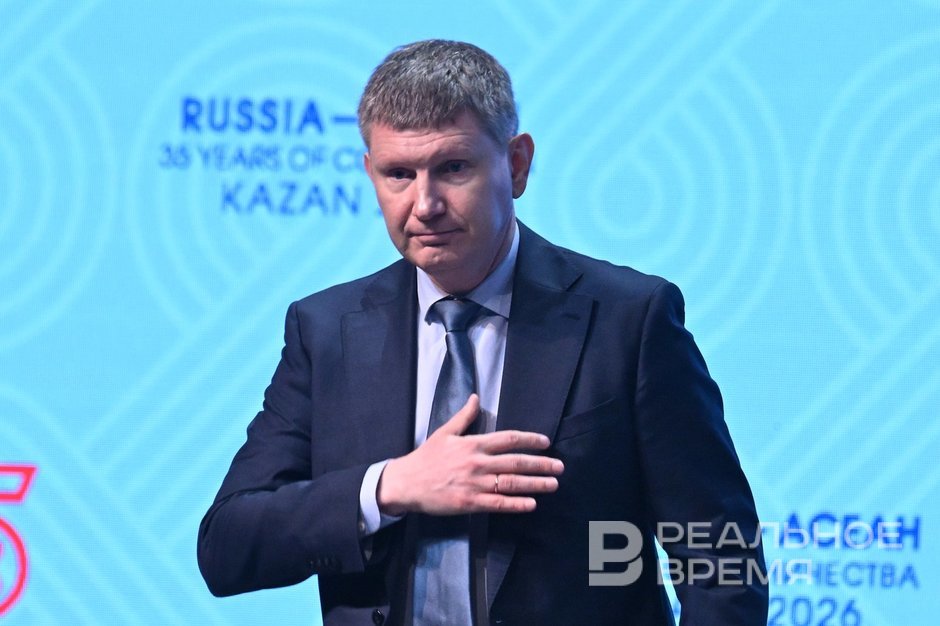
But most hopes were pinned on the participation of Olga Terno, adviser to the Deputy Minister of Economic Development of the Russian Federation. Entrepreneurs wanted to know if they could count on any support measures in connection with the worsening economic situation of PUDs. Just the day before, the head of the Russian Ministry of Economic Development, Maxim Reshetnikov, announced the development of support measures for sellers whose goods were destroyed due to drone strikes on warehouses.
However, the position regarding PUDs turned out to be different. Olga Terno, adviser to the Deputy Minister of Economic Development, asked them to wait.
— Making any decisions at the state level is not a matter of one day. The situation is difficult, it is sudden, and naturally, no one was prepared for it. It takes time to develop competent measures. Therefore, give both the state and the company some time to readjust and understand how to act and how to work with you, — she explained.
Indeed, there was no mention of the possibility of providing any tax deferrals. PUD owners were offered to negotiate rent deferrals with property owners themselves until the situation improves. Later, entrepreneurs were promised help in obtaining a certificate of force majeure, which would allow them to defer tax payments in some regions.
“Will Wildberries definitely not close the network?”
Entrepreneurs were interested in whether the network would remain in its current form. It seemed that the PUD owners gathered for the online conference precisely for this fateful answer. 34% of respondents preparing for the meeting asked this question. “Is it true that Wildberries will continue to work with agents and won't close the network and transfer everyone to its own pickup points?” asked the head of the PUD Network Development Association. “A strange question for us, of course, but 34% are asking exactly that," she added.
— We are not going to close anything. The partner network will also develop. Everyone is working, — Ksenia Nekrasova answered succinctly.
The second most frequently mentioned question was about the conditions for closing pickup points without penalties from the marketplace. It was felt that entrepreneurs were frightened by the drop in sales and were ready to change the economic model of doing business. “Entrepreneurs have gone through many difficulties in their lives. Now is a time that requires the ability to revise the economic model and recalculate. What should agents do who realize they cannot maintain a pickup point and want to close it?” the meeting moderator clarified. “This is especially true for those who are on our support program (i.e., received a subsidy from RWB to open).”
— There are indeed slightly more applications for closing PUDs coming in now. We are working with these partners individually, contacting each one, communicating, and finding support measures to preserve the PUD," she said. “In general, the closure procedure remains the same; nothing new is provided.
“Flooding with money—that is not the goal”
But if an entrepreneur decides to simply reduce working hours due to the drone threat, no penalties are imposed.
— Fines are disabled for the entire Russian Federation. In areas where terrorist attacks occur, we still monitor closed PUDs during working hours and review cameras. If a fact of document falsification is detected at a PUD where everything is fine and it should be working, we will come to it, — she promised. Currently, RWB auditors are personally visiting PUDs in various regions, sending notifications of upcoming visits two to three hours in advance. They check the footage of the PUD and working conditions.

The RWB team is working on various support scenarios for PUDs. According to Ksenia Nekrasova, the possibility of extending the grace period and the guaranteed income program for new pickup points is being discussed, but it all depends on the overall global financial support program. The company does not divide partners into new and existing ones but selects individual calculation models for each region and partner. All these issues are being actively worked out. Ultimately, marketplace representatives stated that “flooding everyone with money—that is not the goal”; it is important to restart the logistics infrastructure.
PUD owners asked to stop the network expansion so that newcomers would not “overwhelm” existing points. Anna Averina, director of the client service and experience department, spoke out against it.
— We plan to open as we have opened. There is no massive flow of applications, naturally, now. But we take the consideration of applications more seriously and open PUDs in places where we really need them now.
A PUD will become a partner hub if it has 200 sq. m
Why expand PUDs? The RWB team is launching a new partnership program based on the PUD model, but only for owners of warehouse space. These could be PUDs themselves if they allocate part of the space for storing sellers' goods.
— In the near future, we will launch partner hubs based on PUDs. Sellers will come here and hand over their goods, and PUDs will pick up and transport orders for them. And this will definitely be additional income. We will announce it soon, and you will be able to submit applications, — she said, adding that the change in the logistics system will allow PUD owners to receive additional income. And in general, the situation should normalize.
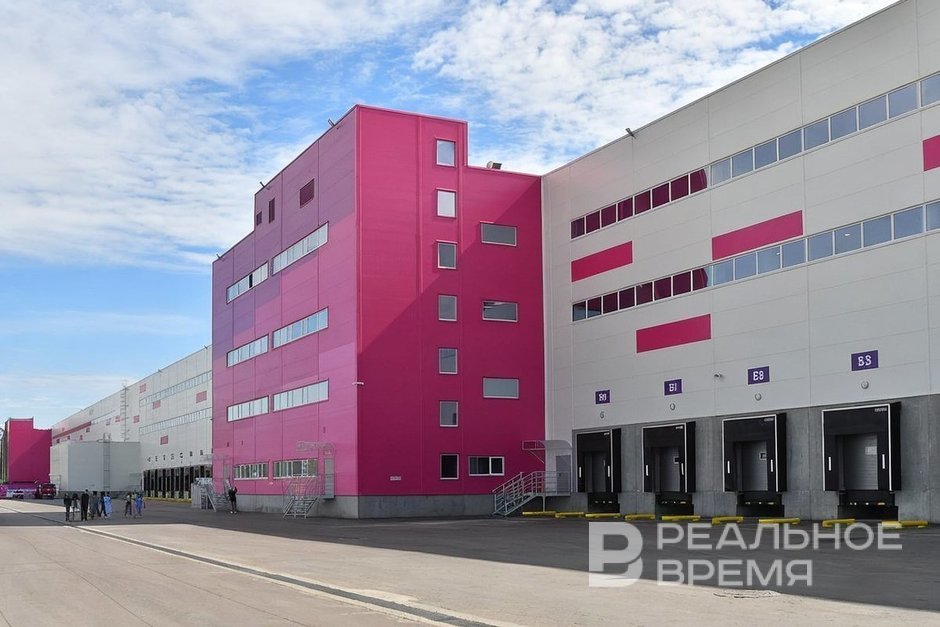
Later, information appeared on the website about the requirements for partner hubs: a room area of at least 200 sq. m, a storage area, convenient access for freight transport, a video surveillance system, and a data collection terminal.
The operating model is simple: sellers bring goods to the warehouse, and partners take on labeling, storage, order picking, and, optionally, their delivery to sorting centers. This innovation will speed up logistics for customers and provide additional income to PUD owners and entrepreneurs.
Employees of the Wildberries warehouse in the Zelenodolsk complex near Kazan told Realnoe Vremya about the suspension of the site's operations. “The warehouse is no longer accepting goods," they said. The information was also confirmed by sellers and carriers. The publication sent a request to the company; a comment will be published upon receipt.