Dmitry Samarenkin: “I gathered the staff and set the task: to win the Russian Cup”
Ex-president of FC Rubin — about childhood dreams of football, big-time sports, and the victories of the Kazan club
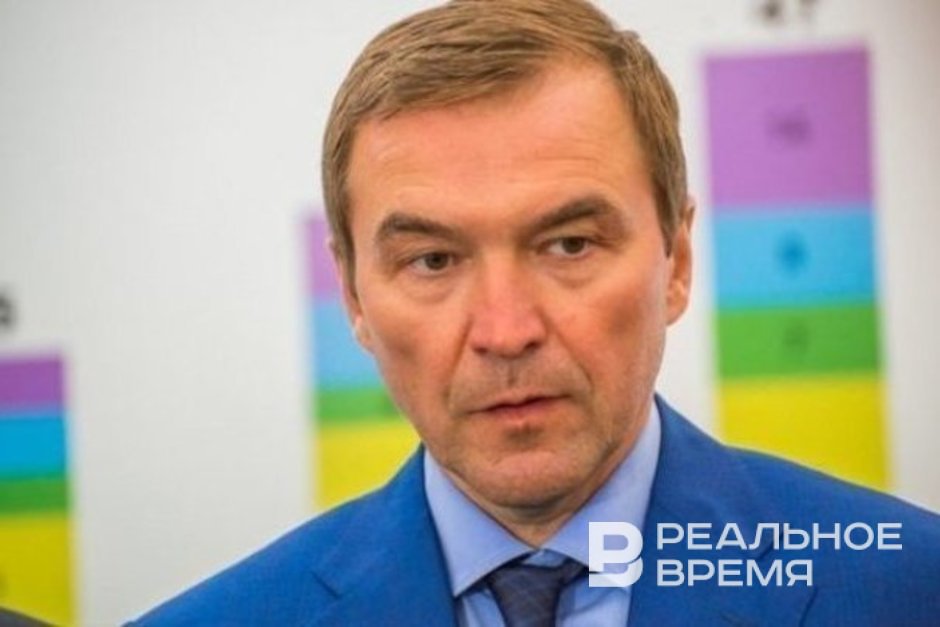
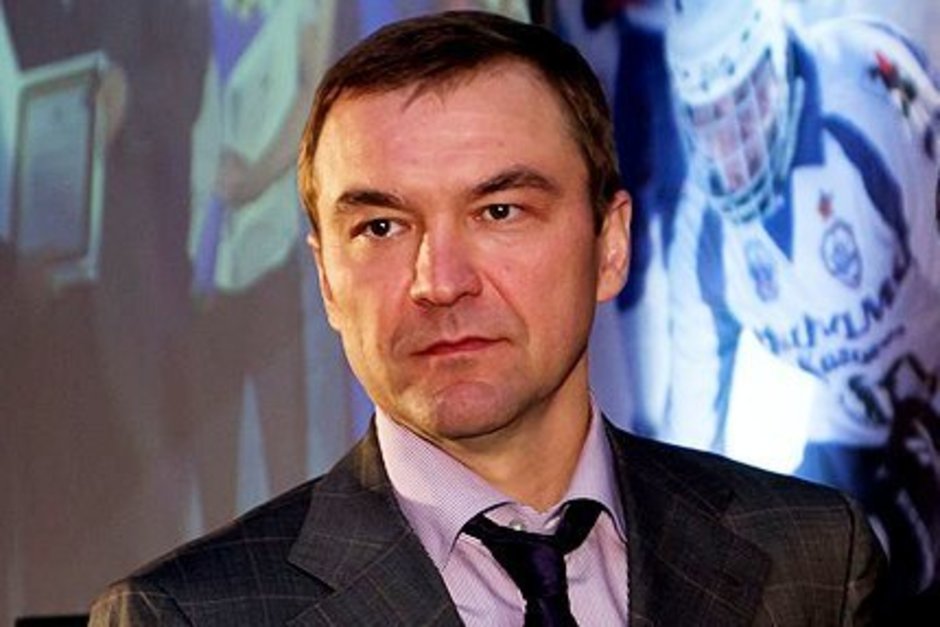
State Council Deputy of the Republic of Tatarstan of the sixth convocation, entrepreneur Dmitry Samarenkin, was previously the president of FC Rubin and HC Dynamo-Kazan. His public work was so highly regarded that even after a brief departure, he returned to his favorite clubs. He is currently a member of the board of FC Rubin and president of the Bandy Federation of Tatarstan. But in childhood, his heart belonged to football, as he studied at the school of Chelny's “Turbina.” Samarenkin spoke about this and more in a book dedicated to Rubin's best period from 2001 to 2013, created with the support of TAIF. Realnoe Vremya publishes an exclusive interview from this edition, recorded in the summer of 2025.
“An auto giant appeared in our family's history, but not KAMAZ — AvtoVAZ”
— Dmitry Anatolyevich, your childhood was spent in Naberezhnye Chelny. Did your parents meet while building KAMAZ?
— No, my parents are from Tatarstan. My father is from the Aksubayevsky district, and my mother is from Nurlat. She worked as a midwife in a medical unit when my father met her. They got married, and I was born. Then an auto giant appeared in our family's history, but not KAMAZ — AvtoVAZ, because after I was born, my father went to work in Tolyatti, and only later did they move to Naberezhnye Chelny. I grew up there, fell in love with football, and played it as a child at the Turbina school until health problems were discovered during a medical examination at around 13 or 14.
— For young fans in Soviet Tatarstan, the favorite teams were representatives of the top league, since our Rubin and Turbina played in the second league. I, for example, rooted for Zenit; my crafty mother even sewed me a T-shirt with the name Kazachenok on the back. Who did you root for?
— We also had favorite teams from the top league: Dynamo Kyiv and Tbilisi, Spartak, CSKA, especially since great players like Oleg Blokhin played there, and there were coaching rivalries, such as between Lobanovsky and Beskov. But my favorite footballer as a child was Fyodor Cherenkov. The way he played, how he interacted with Gavrilov, Gess, Shavlo... I really liked the game Spartak showed. I especially remember matches against Aston Villa and Arsenal, which they beat in the UEFA Cup — that was impressive at the time.
“The USSR top league championship was strong, with unique teams”
— Spartak of that time, starting with Khusainov and Osyanin, always had Tatars on the roster. Beskov himself insisted that the team must have a Tatar and a redhead. And the concentration of Tatars was especially high when Dasaev and Khidiyatullin, Ataullin and Kayumov defended Spartak's colors!
— Well, when our teams played in European competitions, we rooted for everyone without exception. Because the top league championship itself was strong, with unique teams like Ararat and Neftchi, Pakhtakor, and from Russia — Krylya Sovetov, then Rotor. When a football match was broadcast, we were glued to the screen, no matter who was playing.
Yes, and I have good relations with Khidiyatullin and Dasaev; one of my close friends is friends with them. As for me, I have good relations with our graduate Ruslan Nigmatullin, who played for Chelny, Spartak, and Lokomotiv. I can even recall when he was at the peak of his popularity and was moving to Italian Salernitana, I tried to persuade him on the plane that he was a star here, but there he could find himself in an unfamiliar environment. I couldn't convince him, although in a similar situation with Danis Zaripov, our arguments, including mine, prevailed when Danis was eager to leave for the NHL. As a result, he is now the country's only five-time Gagarin Cup winner, a man with a very distinguished sports and now political biography.
— Dmitry Anatolyevich, how did your appointment as club president come about?
— Unexpectedly. I received a call from Minister of Sports Rafis Timerhanovich Burganov and was told there was such an offer from the republic's leadership. They had seen our success in bandy, when in a short period we became one of the best clubs in the world, winning all the trophies that exist. It was unexpected, but we made the decision, entered football, and, in my opinion, spent those ten months worthily while I was club president. It should be noted that when I arrived, the championship had already started, about two months had passed; I don't remember where we were in the standings. Literally on the second day of work, I gathered the club staff and set the task: to win the Russian Cup. I said we should focus on this trophy, which had not yet been in Rubin's history. At that point, we had already passed the Round of 16. I repeated the words about winning the Cup to the guys practically before every game, because when you set a goal, you achieve it.
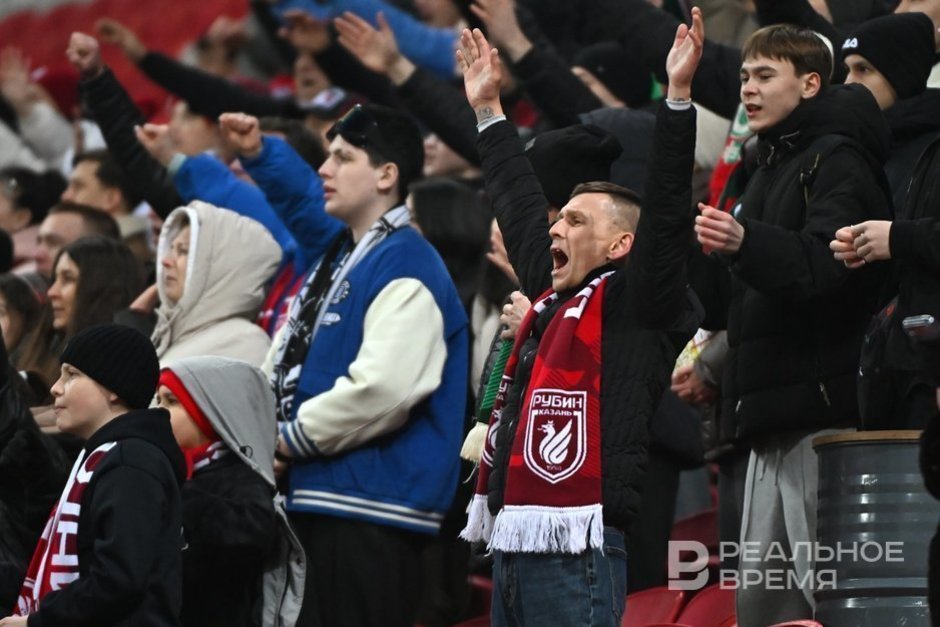
At that time, the team was very cohesive and focused. All club employees, including the base staff, had to embrace this idea, and on our way to winning the Russian Cup, we did not concede a single goal in regular time. Only on penalties.
“On the advice of Rustam Nurgalievich, it was decided to play the Cup quarterfinal at Akhmat Arena”
— Yes, 0:0 with Ural, 2:0 with Amkar, 4:0 with Lokomotiv, 2:0 with Rostov, and this was the first home match, finally 1:0 in the final against Dynamo. And the home match against Lokomotiv was played in Grozny.
— At that time, the pitch of the Central Stadium in Kazan did not satisfy the RFU, and when the quarterfinal came, we were choosing options for a long time, and on the advice of Rustam Nurgalievich, among others, it was decided to play at Akhmat Arena. We went to Grozny a week before the match, prepared, met with fans, and by the time Lokomotiv took the field, they didn't understand why so many people had come to support Kazan.
All resources were deployed, so practically the entire stadium chanted: “Kazan, Kazan!” And therefore we felt like we were in a home match. We repeated this scenario in the final in Yekaterinburg, when Roman Eremenko scored the winning goal. That was the toughest match of all. Dynamo, if you remember, had strengthened — for example, Andriy Voronin, who came from the Bundesliga, played for them, and the whole team was of a high level. Therefore, Roman Eremenko's goal really, really helped us, delighting almost all spectators, since a home atmosphere for Rubin was also created in Yekaterinburg.
— It occurred to me that your experience in bandy helped you, and through colleagues from that sport, you reached out to fans from Pervouralsk, where the team Ural Trubnik is based.
— You assumed correctly, plus we gathered a large delegation representing the Tatar diaspora from the Urals, plus many fans came from Kazan and Tatarstan, and all together they created very powerful support for Rubin. As for Dynamo, which has its own fan base and brought several thousand fans to Yekaterinburg, they were surprised when they saw it all. Because the stadium was about eighty percent strongly supporting Kazan, and that is very important for a team.
— It's no secret that when you took over Rubin, the approach to working with fans changed, including the creation of fan clubs in other cities.
— I have always believed that the most important thing is the fan; we play for them, so as a member of the current club board, I am responsible for this area: working with fans. Accordingly, you can see that today the average attendance at Rubin matches has increased by about fifty percent compared to previous seasons, averaging nine thousand spectators per game. Last season it was about six and a half thousand, and the year before — about five thousand. Unfortunately, it is difficult to attract fans to the stands now, especially in Kazan, where there are many teams, plus today's youth are attached to gadgets. But, I repeat, during my presidency we worked very hard on this issue, covering neighboring cities and districts of Kazan, such as Zelenodolsk, Laishevo, Rybnaya Sloboda, Vysokaya Gora. In this regard, we focused on young people and schoolchildren, creating in them a lasting desire to support the team. And from neighboring regions, we attracted representatives of diasporas, for example from Ulyanovsk, where there is a large Tatar diaspora. We organized buses that transported fans to the stadium and back.
As for Kazan itself, we attracted members of local diasporas, for example the Turkish community; by the way, we are gradually resuming contacts today and hope to increase match attendance again.
In addition, Rubin was among the elite European teams, beating Barcelona and others, and was well-known. Therefore, fans wanted to see this big, serious team.
“We acquired the Eremenko brothers, for the first time, outside Finland, uniting them in one team”
— Returning to the sporting side, when you took over Rubin, they were playing in the Europa League. Then in the group stage, our opponents were PAOK, Shamrock Rovers, and Tottenham Hotspur.
— Our first game was against Shamrock Rovers in Dublin; I remember asking Karadeniz to come see me for a chat before the trip. Before the game, there was some kind of trouble, something with a plane delay, I think, I don't remember, but the result of the match itself remains in my memory — 3:0. By the way, Karadeniz performed brilliantly in that match and scored a goal. Then we drew with PAOK, then lost to Tottenham, when Roman Pavlyuchenko scored from a free kick, but interestingly, we had a symmetrical response, when the score was also 1:0, and our only goal came from a free kick taken by Bibras Natcho.
I want to say that even before that, I had traveled to Rubin's European matches; I won't say that anything particularly impressed me during my time as club president. But I noted to myself that we were treated differently. For example, Alexander Petrovich Gusev established friendly relations with Barcelona president Joan Laporta, because the Spaniards themselves are open and received us with open arms. As for my period, our most memorable confrontation was with Tottenham, and they are English, rather reserved, and you can understand how they treat us from the current political situation.
— Who remains in your memory from the personnel of that period?
— We acquired the Eremenko brothers, for the first time, outside Finland, uniting them in one team. Their arrival, especially Roman's, a man who played for strong European teams, brought enormous benefit, especially if you remember that shot in the Russian Cup final that brought us that trophy.
In addition to them, I remember Cristian Ansaldi; he was the life of the party, so cheerful and lively. Salvatore Bocchetti; it's no coincidence that he later coached a Serie A team, and at that time his Spartak took him. Unfortunately, we couldn't fully turn the situation around with Carlos Eduardo, whose injury consequences prevented him from fully developing. I recall Nelson Valdez; I think he also remembers Kazan, where he first encountered frost of minus 20–25 degrees. Nevertheless, he adapted quickly and performed very brightly.
— If an international school had existed then, like the current one, perhaps Valdez wouldn't have left Kazan so quickly.
— Yes, at that time there were no international schools in Kazan, and foreign players with families faced problems with raising children because they were not adapted initially and did not know Russian. Therefore, now that we have such a school, it is much easier for current foreign players. Karadeniz's son, for example, studied at this school. In general, Kazan today, developing by leaps and bounds, has certainly come a long way — even compared to that period of 2011–2012, when I was president of Rubin.
“Following the Gilmullin Cup, I remembered both Matvey Safonov and Magomed-Shapi”
— By the way, after that period, you had to deal with Barcelona's system, holding the Lenar Gilmullin Memorial International Tournament in Kazan.
— Yes, in 2013, we invited the Spaniards, paying for their travel and stay in Kazan. This sharply raised the status of the tournament itself, following which I remembered both Matvey Safonov and Magomed-Shapi Suleymanov, who were then playing for Krasnodar, which battled Barcelona in the final match.
— It should also be mentioned that you paid for an operation for one of your son Konstantin Samarenkin's teammates.
— Yes, yes, how do you know about that? Then my son came to me and said that his teammate had fallen seriously ill with cancer. At that time, he was in the Republican Clinical Hospital, and it was clear that his condition was worsening. In the end, it was decided to pay for his treatment at a clinic in Düsseldorf. I was no longer president of Rubin at the time, but the club's management also took an active part in saving the young man, and together we pulled him through.
— Commenting on your appointment as director of FC Rubin, I joked that it was Kazan's response to the RFU changing the championship regulations to an autumn-spring system, so games had to be played in winter. In response, Rubin appointed Samarenkin as club president, who was used to playing and winning in bandy with Dynamo-Kazan. Now, years later, how do you view these changes in the regulations?
— From my point of view, we should play as we did in Soviet times. There is no need to adjust our schedule. Look at the Scandinavians; they continue to play as they see fit, and their team (meaning Bodo/Glimt, a Europa League semifinalist this season — editor's note) finally reached a European semifinal. In the summer, June and July, when the grass is green and the weather is perfect for football, we can't play, so matches are held in late November and early December, when no one needs them, and only three thousand people come to the games, instead of the twenty thousand who would come in summer. Then the statistics of performances in European competitions in recent years have proven that we look much worse in them. Initially, we were told that we would standardize with European championships and transfer windows, and this would help in European competitions. But in reality, this transition hasn't particularly spurred anyone to win European trophies; rather the opposite.
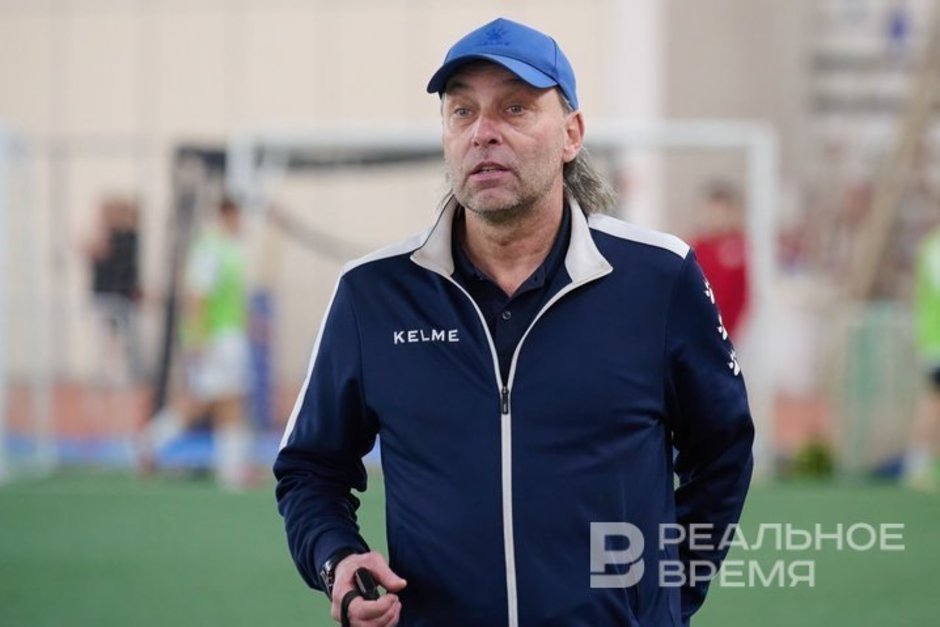
“My conviction is that the right vector for club development is to nurture your own players”
— Another problem is nurturing your own players. We recalled our fan youth, and I would like to note that back then it was completely normal to see 19–20-year-olds like Litovchenko and Protasov become leaders of their team and join the national squad. Today, we see a similar story when we look at Kylian Mbappé or the Barcelona youth.
— Why isn't the same thing happening in Russia?
— Regarding our Rubin, we need to give young players the opportunity to progress after graduating from the club's Academy. That is why we have recreated Rubin-2 as a bridge between the academy and the first team. I don't want to single out anyone specifically, but I already see three or four guys in its lineup who could secure a place in the main team within the next year or two. And my conviction is that this is the right vector for club development. We already talked about Krasnodar; now notice that FC Rostov is following the same development path. They are practically playing with young players, choosing this course of growing players with subsequent sales. At the same time, they finished in the standings next to us, having chosen a youth development vector, so we should be focused on that today.
— More specifically?
— Therefore, we appointed Niyaz Akbarov as the head of Rubin's Academy, a fanatic of his craft in youth development, who has experience working in many clubs across the country, where he has proven himself excellently. Moreover, he is our own Kazan graduate and a great professional. And he works closely with Gökdeniz Karadeniz, who heads Rubin-2, where his authority is enormous; the boys listen to him with their mouths open, seeing him as a legend of our club. And I see how they are putting his ideas into practice. I really liked the game against Amkar (the first round of the 2025–2026 Russian Championship — editor's note), which is aiming for promotion to the FNL and, in the future, a return to the Premier League. Already now, it's a team consisting entirely of players with FNL experience. And we gave them a battle, even though we had real youth at our disposal, partly because Rubin-2's regulations require eight youth players to be on the field.
This is the future. Because when you nurture your own, it will give clubs the opportunity to earn from sales, plus fans will come to see their own graduates. Especially since today we are without European competitions, and all places, except for prize positions and relegation, are not significantly different from each other.