Lev Naumov: “We cry because of light spots on celluloid”
Writer Lev Naumov predicts that under the influence of cinema, Homo sapiens will become (or has already become) Homo cinematographicus
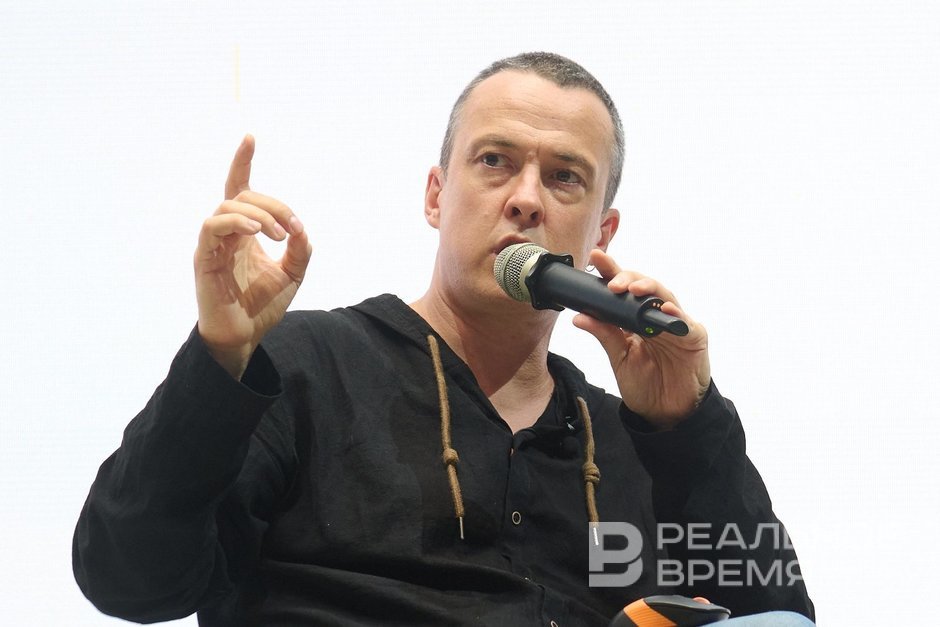
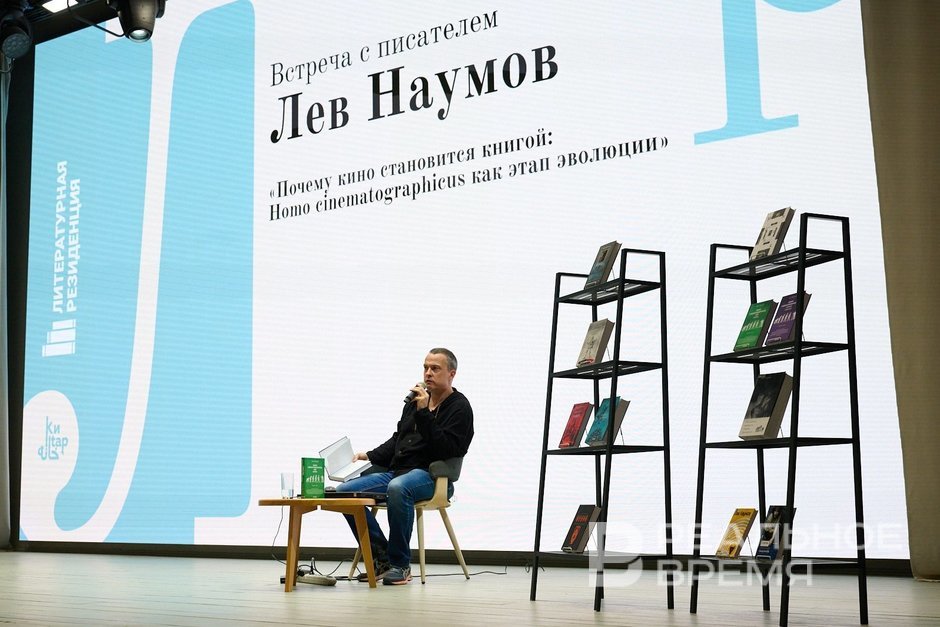
This summer, the National Library of the Republic of Tatarstan launched the “Literary Residencies” project, within which Russian writers give lectures. And not always on literary topics. For example, writer and film scholar Lev Naumov told the people of Kazan how man transforms from rational to cinematic. The literary critic of Realnoe Vremya, Ekaterina Petrova, collected the most striking quotes from his talk, which explain the influence of cinema on human beings.
On Homo cinematographicus:
— There are many reasons to speak of Homo cinematographicus as a special species, and it's not just that we watch a lot of films and series. The point is that we perceive life as a film. Of course, it all started with literature. Many years ago, right here in Kazan, we spoke about Marcel Proust, and he relied on the teachings of Henri Bergson. This fundamental French philosopher introduces the concept of cinematic reality, connected not so much with technology as with the structure of perception, with its division into segments and, so to speak, corpuscles. We never perceive the world as a whole, but always as a certain subset of what is happening beyond our perception. We filter and continuously, if you will, edit: we cut out the superfluous, connect torn moments, find associations.
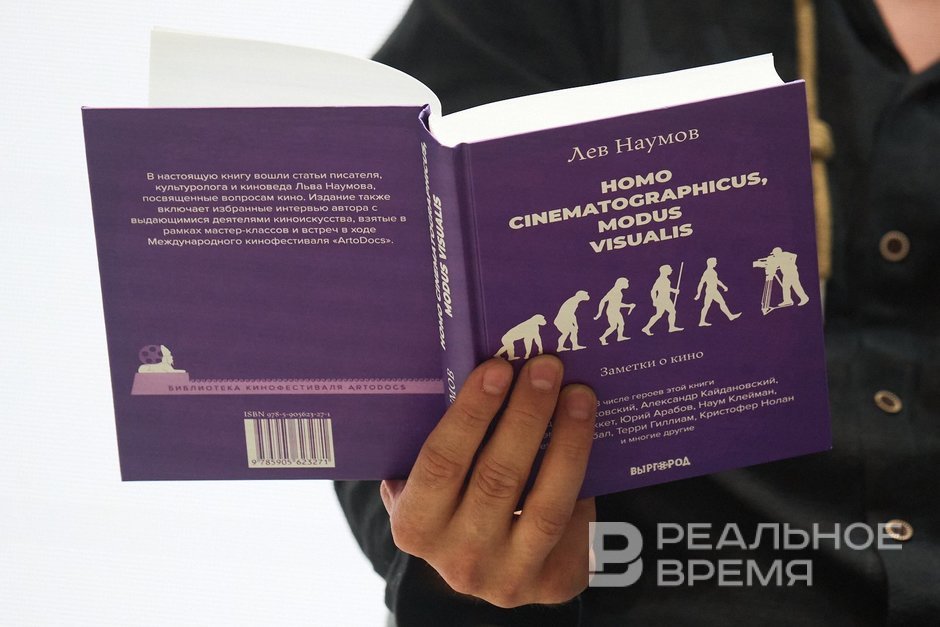
We complete and isolate individual planes of attention. Right now I perceive you as a kind of medium shot, without distinguishing faces in close-up, but when I speak to a specific person, I communicate precisely in close-up, and that is imprinted in memory. We notice movement in the distance — it falls into a long shot. We remember childhood — these are flashbacks. We imagine the consequences of a conversation or meeting — a kind of flashforward. All of this is a familiar toolkit of cinema. And here is the key conclusion: the brain does not work like a mirror. Many people say the brain is a mirror. No, the brain works like an editing room. That is precisely why cinema turned out not to be an accidental technical invention, but an almost ideal machine that simulates the work of consciousness.
On the power of cinema:
— First, cinema imitated consciousness, but now consciousness has begun to imitate cinema. We have learned to see our own lives through ready-made cinematic forms. I think everyone has experienced scenes of meeting a loved one and involuntarily drawing associations with beloved films. Cinema has created a stereotype of how it should happen. This tool of creating a false obligation is an incredible power of cinematography.
Scenes of parting are reproduced in many films and, not so much impose, but give us an idea of how it should happen. Travel is often perceived as a series of frames: you don't remember the entire road on vacation, but you remember individual scenes — they may be associated with dramatic tension, the special significance of events, conversations, impressions. Even tragedy, a person sometimes experiences not only as pain, but also as an image of oneself experiencing pain. This is a natural psychological defense mechanism: as if somewhere a camera is already set up and recording the expression on your face, moreover, it suggests the correct expression, because in a similar existential situation, this or that film hero you've seen has certainly found themselves.
On memory:
— Cinema has radically changed the very structure of our memory. We less and less perceive and remember bodily sensations as something continuous, but we remember in frames: a door, a face, light on a hand, light streaming through a window, something lying on a table. I am describing this now — and surely someone's mind conjures images either from Tarkovsky or from Bergman's 'Wild Strawberries.' These directors visualized memory not as specific recollections, but demonstrated the physiology of memory's work as such. Moreover, sometimes we remember not even the event itself, but its later visual version — as if a photograph, a video, a repeatedly repeated story or image.
On cinema that changes reality:
— Cinematic images begin to compete with direct experience and often surpass it, overcome it. I can give many examples. One of them is connected with Sergei Mikhailovich Eisenstein. He was repeatedly asked why, in the film 'Ivan the Terrible,' Malyuta Skuratov is exactly like that, since we know that in reality he was completely different. Eisenstein banged the table and said: 'Well, now there will be two Malyuta Skuratovs — one like in your history textbooks, and one like mine.' But the thing is that we remember Malyuta Skuratov more from Eisenstein's films than from textbooks. Our ideas about how the Great October Revolution took place come primarily from the film 'October.' We have no idea what Alexander Nevsky looked like, but on the Order of Alexander Nevsky we see the face of actor Cherkasov, who played him in Eisenstein's film. This is what cinema does to reality.
On smartphones:
— Previously, there was a huge, one might say institutional, distance between a person and a camera. The camera was a special device, filming was a separate action, a film was a work. Now the camera has literally become an extension of the body, an integral attribute. A person can not just look at the world, but immediately turn their gaze into a recording, the recording into an image, the image into a publication. And publication confirms reality, certifies that an event took place. Hence the strange modern paradox: an event that was not filmed is sometimes experienced as not quite having happened.
Sometimes you tell a loved one about something, promise to show photos, look for them and don't find them. You remember that they existed, you remember the essence of the event, but there are no visual confirmations. And memory begins to work with this image differently: it almost unnaturally doubts, classifies it differently. If we see a photograph, it works as an additional verification marker. A person can now instantly turn a gaze into a memory forever — that's an amazing story.
On dreams and identity:
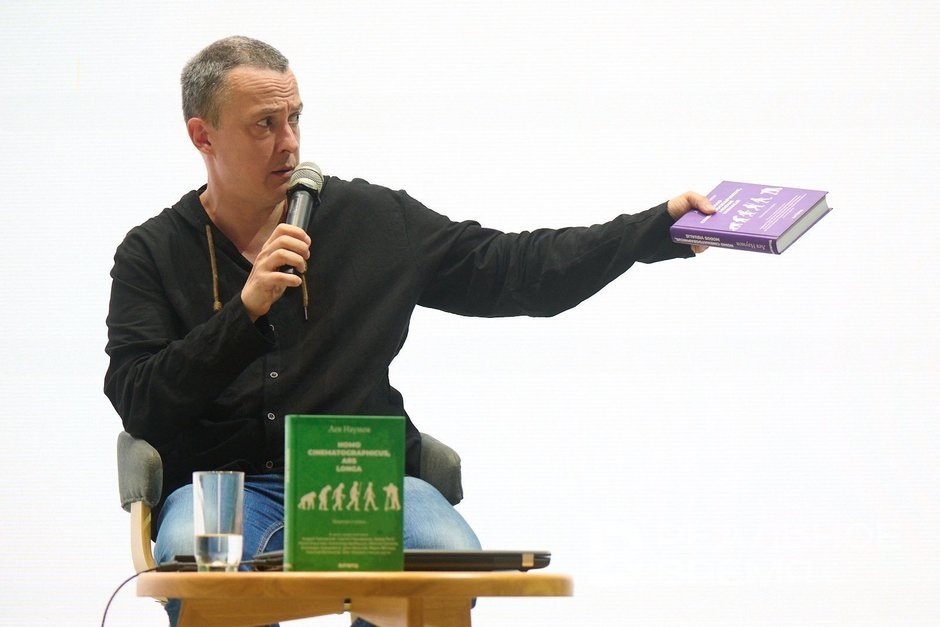
— In my novel 'The Dream Swimmer' (this is a novel about why art requires sacrifice), dreams play a significant role — there are about seventy dreams on its pages. It would be quite natural to look at dreams as a kind of films. Moreover, directors have resorted to dreams as a way of plot construction, to complete events that did not actually happen.
But here's what's important. We can talk about the genre affiliation of dreams, but now it seems that we are also building our own biographies according to the laws of genre. One considers himself a hero of a drama, another — of a romantic comedy, a third — of a thriller about a conspiracy, a political drama, or a film about an unrecognized genius. In this sense, a person today is not just rational — he is plot-driven, visual, and montage-oriented. It would seem that he has significantly more specific features related to cinema than features related to consciousness as such.
On neural network language models:
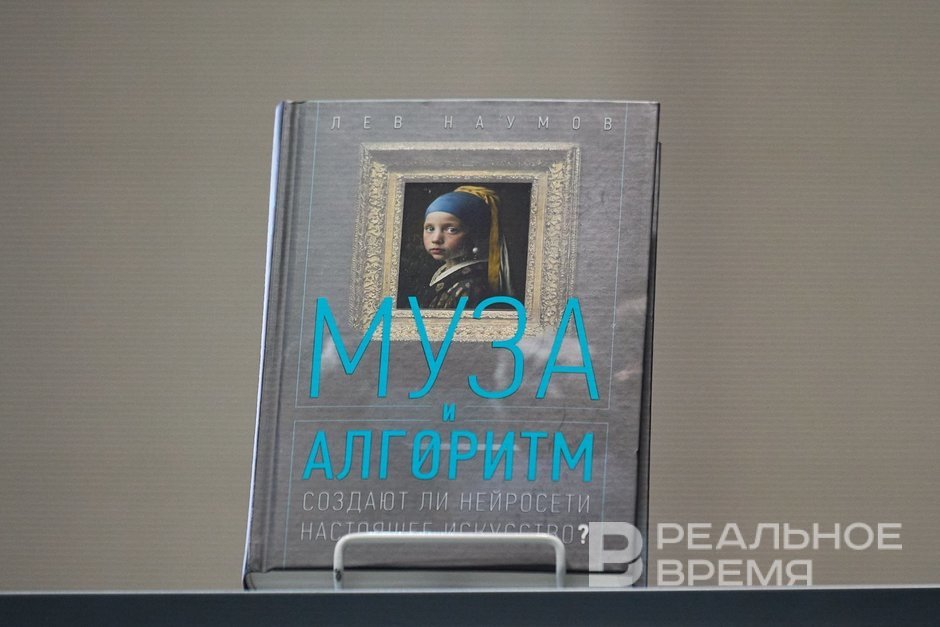
— Why do we begin to almost befriend a high-quality neural network assistant? Because when it communicates with us in our native language and about us, expressing an unexpected thought, we begin to perceive it as our own or friendly. At the level of correspondence, the difference between a conversation with a friend and with an advanced neural network is very small, and you can complete the boundary in your consciousness, or you can not complete it.
On the reality of fiction:
— A person at the end of the century before last could hear on the phone that someone had died and start crying. Electricity was able to evoke emotions. At the dawn of cinema, something similar happened: we cry because of light spots on celluloid. But on the phone, we are told something that relates to our lives, while on celluloid we see people who do not exist in nature — fictional stories. Nevertheless, the body does not draw a final boundary between the authentic and the depicted. For the body, a well-told event partially does happen. That is why I always explain to students how important it is to tell a story well: when you tell it well, you can present any nonsense in such a way that you will be believed. The task of a creative person is to evoke feelings, and trust here is one of the key tools.
Ekaterina Petrova — literary critic for the online newspaper Realnoe Vremya, host of the Telegram channel «Булочки с маком».