Rifkat Minnikhanov: “No matter how they say there are no irreplaceable people, he is irreplaceable”
A seminar in memory of archaeologist Fayaz Khuzin was held in Tatarstan
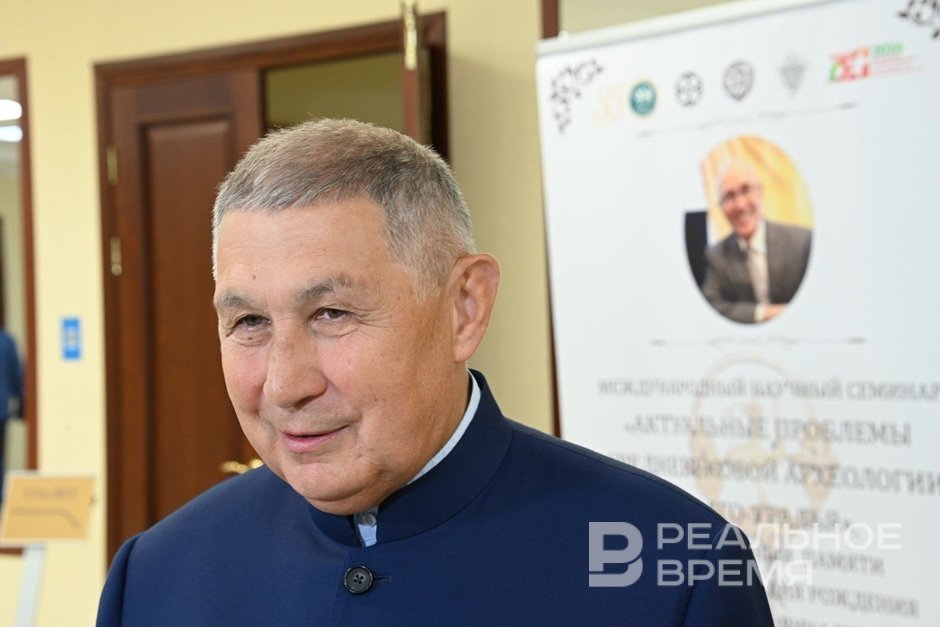
On the birthday of Doctor of Historical Sciences, one of the authors of the concept of Kazan's 1000th anniversary, Fayaz Khuzin, an international scientific seminar “Current Problems of Medieval Archaeology of the Volga-Ural Region” began in the capital of Tatarstan, dedicated to his memory. The speakers did not hide that it is still difficult for them to cope with the sudden loss of the outstanding archaeologist in mid-June. On August 1, he would have turned 75.
Reports with tears in their eyes
Fayaz Khuzin began his career at the Institute of Language, Literature and History (ILLH), and more recently worked simultaneously at the Institute of History, the Institute of Archaeology, and headed the Department of History of Tatarstan at the Tatar State University of Humanities and Education. There is hardly a place where, in his own words, he “didn't dig”: the ancient settlements of Bilyar, Suvar, Dzhuketau, Chally, Kazan. His most famous achievement is his participation in the scientific substantiation of the 1000th anniversary of the capital of Tatarstan and Yelabuga. In the 1990s, schoolchildren studied from his textbooks. He wrote more than 750 articles, published 30 monographs, and supervised six Candidate and one Doctor of Sciences. The scholar actively worked with young people in the 2000s and continued his fruitful work even at an advanced age. Khuzin passed away on June 14 after a long illness.
The seminar in his memory opened in Kazan and continued the next day at the Bilyar ancient settlement and in Bolgar in the format of a field scientific session. Colleagues did not hide that speaking about Khuzin was difficult — tears welled up. And in addition to scientific reports, many shared warm nostalgic stories.
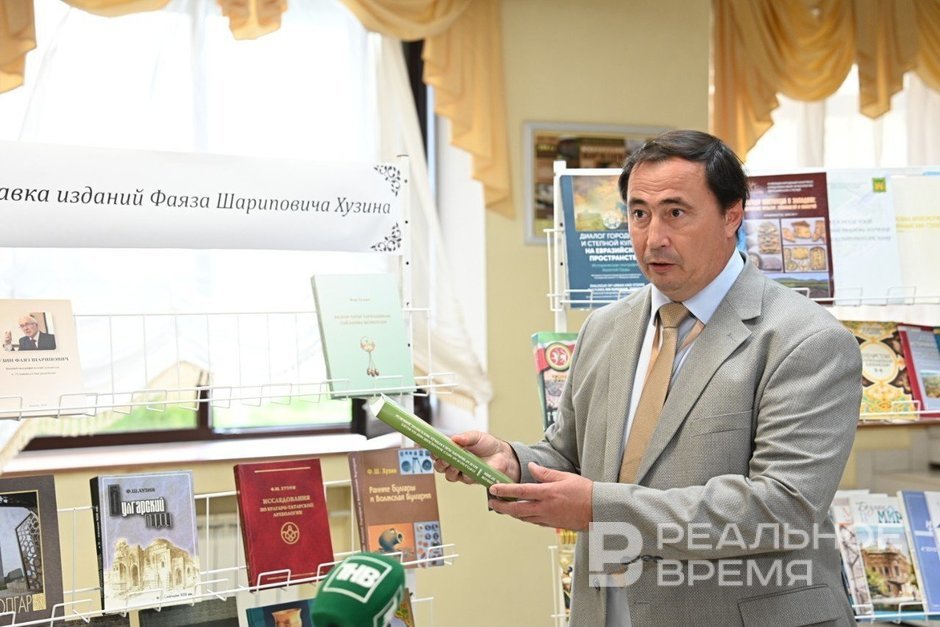
— Traditionally, he immediately organized an inspection of the plowed surface of the site, — Albert Nigamaev recalled how Khuzin worked on excavations. — I remember he lined up the students in a row, personally showing them what to look for. In just a few minutes, the students collected a whole pile of ornamented molded and wheel-made pottery, several arrowheads, knives...
— Fayaz Sharipovich was very interested in our meeting today. He planned to meet with colleagues, discuss very pressing issues, and determine the priorities and programs for our future work. Today, of course, is a sad day... — said Ayrat Sitdikov, director of the Institute of Archaeology.
— We discussed this seminar with him in winter, — said Anna Kochkina, head of the Samara Archaeological Center. — I told him about the topics and said: 'I want to give this report.' We also talked about other publications — that we needed to prepare materials on the Muromsky settlement because a lot needs to be published. We hoped to meet today here, in Kazan... Unfortunately, fate decreed that Fayaz is watching us and is glad that we gathered here, remembering him, and we want our meeting to be very productive.
Kochkina recalled how she first saw Khuzin on excavations in 1973 in Bilyar, where they were brought for fieldwork by his teacher, Alfred Khasanovich Khalikov — even then, the archaeologist was keeping a diary.
— We had a garden there, excuse the expression, a garden! And for several years in a row, they even planted cucumbers. Alfred Khasanovich arrives, picks cucumbers: 'Let's pickle them!' And he starts making lightly salted cucumbers...
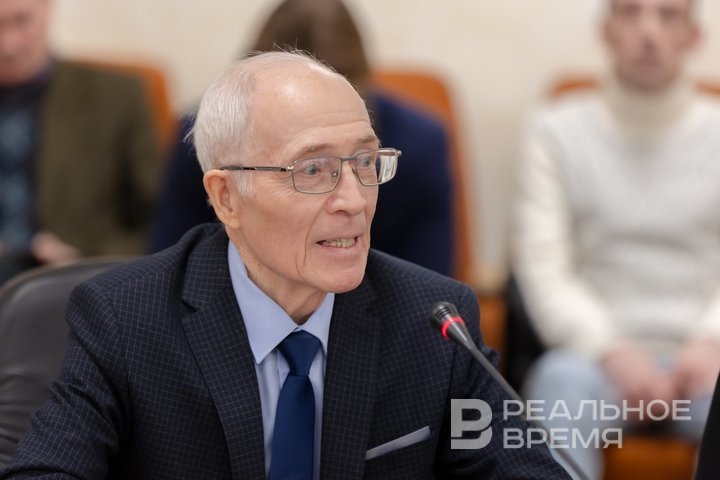
A rare Tatar archaeologist-scholar
Sitdikov announced that three books to which Khuzin contributed were published for the seminar. The first is a bibliographic index of his works. The second is “Selected Works on the History of the Bulgars-Tatars” (“Bolgar-tatar tarihynnan saylanma khezmätlär”). Khuzin was one of the few archaeologists who published works in the Tatar language. Another book, a bilingual one, they prepared with Sitdikov in 2022 — “The City of Bolgar. The Muslim World on the Volga.”
Writer Vakhit Imamov placed Khuzin alongside several prominent Tatar figures, mentioning two other historians — chairman of the “Jyen” Foundation Milkasym Usmanov and founder of the World Congress of Tatars Indus Tagirov. Imamov noted that besides history, Khuzin loved Tatar literature very much.
— I remember him at the anniversaries of Ildar Yuzeyev, Ayaz Gilyazov, Tufan Minnullin, and many others — everywhere he was the soul of the event and an official participant. He read our literary works like someone seeking water in the desert. I particularly cherish that he wrote articles about three of my novels. He always supported young authors and sincerely loved the characters of their works, — Imamov shared.
“He was a great popularizer”
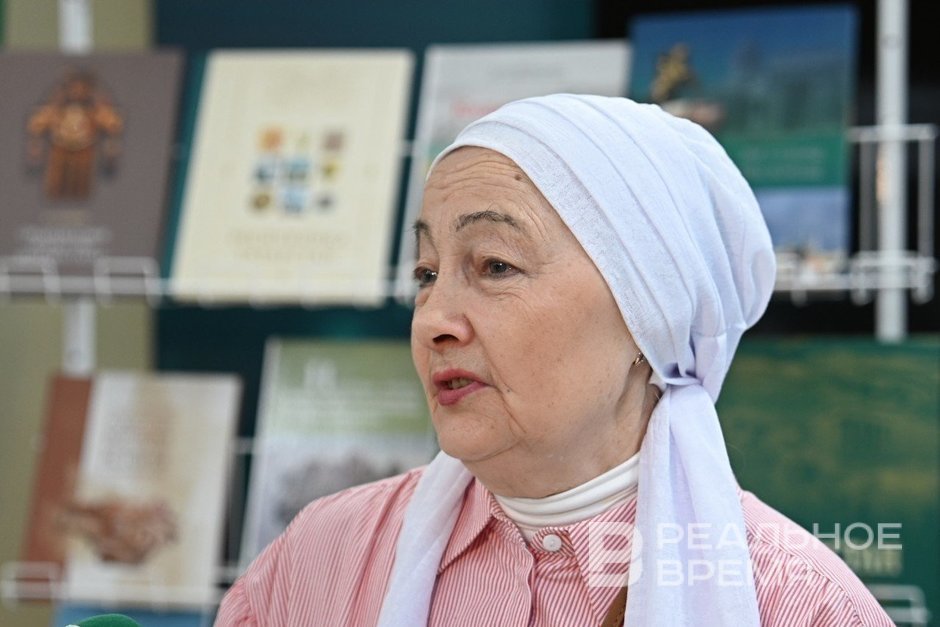
— He was not just an active person; he was a great popularizer who could unite and interest people around him, — added Aigul Gabdrakhmanova, director of the youth center “Salät.” She said that in the last year, she and Khuzin were developing a new project “Tamyrlar” (“Roots”), which was launched this summer — a series of archaeological excavations with the participation of schoolchildren.
— We continued this work together with his students. I clearly remember our first meeting when we discussed the idea, and Fayaz-aby was happy that the work of his life continues in his students, — said Gabdrakhmanova, expressing hope that in the future this project would be named after Khuzin.
— Within the framework of the program 'History and Culture of the Peoples of Steppe Eurasia,' we have, of course, lost such a locomotive that we very much needed today, — did not hide his regret Rifkat Minnikhanov, President of the Tatarstan Academy of Sciences. — No matter how they say there are no irreplaceable people, but, unfortunately, he is irreplaceable. Time goes on, and I hope that both the students and the team that was with him will allow us to implement the results of this program. Both at the Russian level and as part of the anniversary of our academy's founding, there will be a regional council where issues of Steppe Eurasia will be considered at the federal level. And here, of course, the great merit is of our today's honoree.
This refers to the regional program that the International Center for Research on the History and Culture of the Peoples of Steppe Eurasia at the Tatarstan Academy of Sciences will be engaged in until 2034. It includes historical and cultural research, archival and archaeological work, book publishing, forums and conferences, as well as digitization and publication of data on history, culture, written heritage, epigraphy, and much more.
— The long-term plan of work is to study the Eurasian steppe civilization: from the Bronze Age and the Ulus of Jochi to the Tatar khanates, cities on transcontinental routes, archives, toponymy, the language of written heritage, and an international GIS with the participation of specialists from Central Asia and Eastern Europe, — the project's authors emphasize.