Grants for culture: their own “LitRes," an 11-million musical, and a verbatim play about Chelny
What Tatarstan residents are asking the Presidential Fund for Cultural Initiatives for
Tatarstan is actively participating in the grant competition of the Presidential Fund for Cultural Initiatives: out of 8,356 applications, 8,077 were admitted to independent expert review, including 337 projects from the republic. Among them are large-scale festivals, theatrical productions, film projects, and a digital platform for Tatar authors. Realnoe Vremya found out what Tatarstan authors are asking money for and which ideas may be developed as early as next year.
How much does the “Oriental Bazaar in Kazan” cost?
The total financial request of all submitted applications is 37.5 billion rubles, with another 29.1 billion in co-financing. The winning projects must be implemented from January 15, 2027, to June 30, 2028. Of the Tatarstan applications, 337 made it to independent evaluation. Among the applicants — municipal libraries, youth centers, cultural centers, and individual entrepreneurs — there are also familiar names. For example, the Buinsky district mukhtasibat is asking for 786 thousand rubles for three holidays — Eid al-Fitr, Eid al-Adha, and Sabantuy.
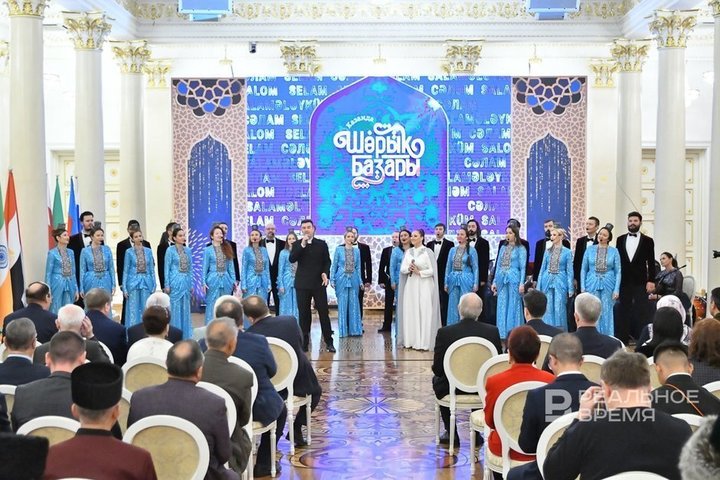
Traditionally, the Rashit Vagapov Foundation requests a large sum for the International Festival of National Cultures “Russia — East," also known as the “Oriental Bazaar in Kazan.” The total budget is 42.3 million rubles (the foundation is ready to invest 23.5 million — here and further, co-financing is indicated in parentheses). The festival plans to invite performers from 20 regions of Russia and more than 40 foreign countries. There will also be an exhibition from the funds of the National Museum of Tatarstan, a scientific-practical conference, and a gastronomic festival.
The Kazan Kremlin Museum-Reserve wants to create a cultural and educational program about the cultural code of Russia in the 1920s: “In the conditions of actual international isolation in the 1920s, when the young Soviet state was deprived of international communication in all areas, primarily in culture (it would seem, time to build a higher fence), Lunacharsky did not call for cultural isolation. He understood that isolation is a dead end. His idea was not to close off, but to take the best from outside and transform it into something of our own.” The budget is 7.66 million (3.47 million) rubles.
News from the cinematic future
The National Museum of the Republic of Tatarstan plans to shoot a documentary about the weddings of six peoples of the Volga region through the memories of elders aged 75 and older, and also to create an exhibition and an interactive immersive museum activity based on this material. The budget is 7.3 million (200 thousand) rubles. Trips to neighboring republics are planned.
The La Primavera Orchestra is planning the 12th season of the Republican Creative Program to Support Young Musicians “Stars from Tomorrow.” Auditions, gala concerts in the districts, the final in Kazan, and orchestra tours will cost 8.6 million (2.66 million) rubles.
In 2024, reconstruction was taking place on the “Baytik” territory, which caused the “Krutushka” festival to be canceled. This year it is returning, and in 2027, the organizers hope to hold it for 15.5 million (8.57 million) rubles.
As for cinema, the specialized Union of Cinematographers of Tatarstan is ready to create the project “Military Glory and Tradition: Farewell to the Army of the Peoples of the Volga Region” for 7 million (3.6 million), combining the farewell-to-the-army rituals of the Volga region peoples with short stories about Heroes of the Soviet Union.
The local history project “Krot Kazansky” also wants to shoot a film. “Journey to Velonia” is a story about the Yudino studio “Ryabinka," a kind of hub of cinematic avant-garde in the 1970s, led by playwright Yuri Kalinin. The project cost is 1.3 million (684.5 thousand).
Finally, the publishing house “Khuzur” will take up video production — 10 videos should form the audience's understanding “that all the difficulties of modern life are surmountable.” The budget is 5.97 million, including 1 million of its own funds.
“Scarlet Sails” and other theatre projects
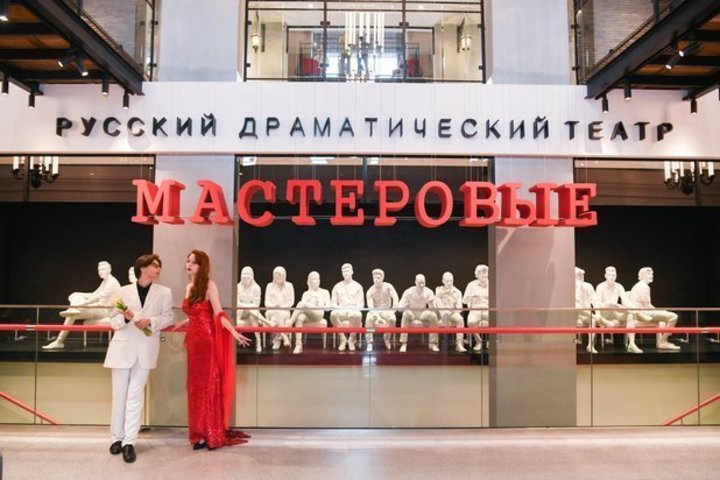
In the PFCI application campaign, the theatre forces of Chelny showed unexpected activity. First, “Masterovye” plans to stage the musical “Scarlet Sails," with 10.7 million (4.4 million) rubles budgeted. This will clearly be one of the most expensive productions in Tatarstan, as the budget for “Tugan Batyr” at the Kamal Theatre has not yet been disclosed.
The Naberezhnye Chelny Philharmonic has conceived a mystery play “Ildar Khanov. Gift of the Universe," dedicated to the artist whose sculptures have become part of the city's landscape. The project cost is 4.1 million (539 thousand).
Also submitted by Anatoly Ukhandeev, owner of the Chelny book club-store “In Other Words," is an application for the verbatim play “City of Hopes," dedicated to the 400th anniversary of the city and the 50th anniversary of KamAZ, based on real people's stories. Its cost is 1.12 million (437 thousand). As Ukhandeev explained, he is helping initiative guys, and the director of the production should be Adel Stepanov, a student at RGISI in Gennady Trostyanetsky's directing course.
Also in Chelny, the “Klyuch” Theatre, one of the founders of which was the chief director of the Alexandrinsky Theatre, Nikita Kobelev, is planning the All-Russian Theatre Festival “Actors” with the participation of at least 8 regions and the preparation of 10 performances. The cost is modest — 1.2 million (550 thousand).
And Nizhnekamsk's Youth Theatre is quite modest in its requests — the budget for its project “Theatre Shift” is 170 thousand (of which 30 thousand are its own) rubles. As with many descriptions, it is not immediately clear what the organizers want, but apparently, it involves activities during a camp session.
Finally, the chief director of the Tinchurin Theatre, Aidar Zabbarov, is submitting an application from his individual entrepreneurship. The budget for the All-Russian Theatre Festival-Laboratory “Shäxes” (“Personality”) is 1.24 million (548 thousand) rubles. Zabbarov, who will open the new season in August with the play “Lu” about the poet Khasan Tufan's wife Luiza Saliaskarova, plans to gather biographical productions in Kazan. He also plans to hold a dramaturgical laboratory to create new plays based on documentary materials.
Will the Tatars have their own “LitRes”?
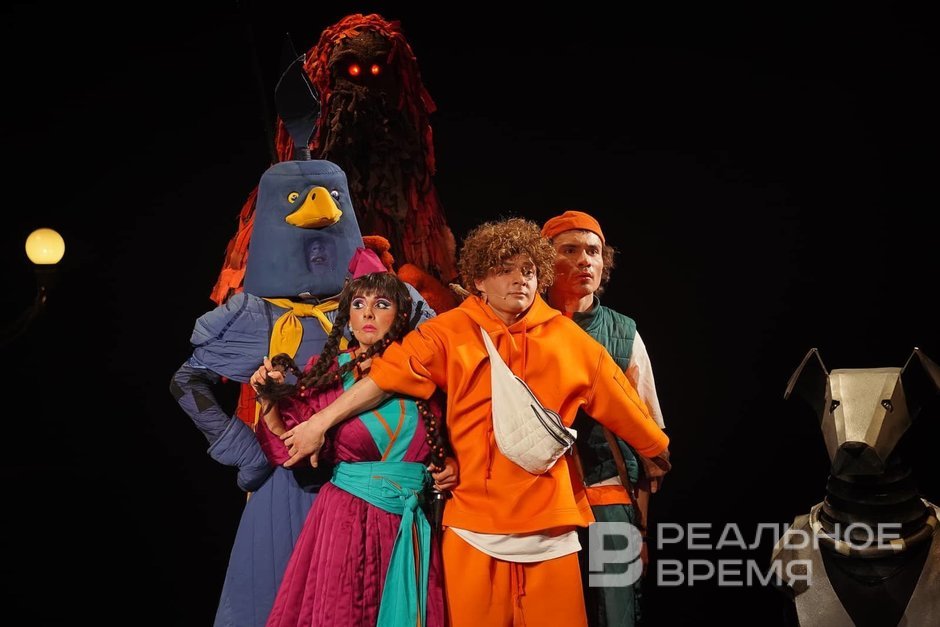
Perhaps in 2027, new comics will appear in Tatarstan. The “Tugan Batyr” project, after books, cartoons, and a play, is moving in this direction. Its budget is 2.95 million (965 thousand). Previously, the ANO “Cinematic Center for the Preservation and Promotion of National Cultures and Traditions 'Heritage'" won 1.56 million for the first part of the comic in the competition for grants from the Rais of Tatarstan for the development of civil society.
No less interesting is whether the “Association of Girl Scouts” will manage to draw an entire graphic novel. They plan to make a book about their native Bugulma — for 1.2 million (248.5 thousand).
And the largest publishing project is from “Tatgiz” — the electronic platform for Tatar literature KITAPLAR.ru — for 11.47 million (5.85 million). As the head of Tatknigoizdat, Rustem Galiullin, explained, they plan to create a system that will allow a huge number of authors to publish, including beginners. Something like “LitRes," but with a focus on Tatar themes.
— We see the scheme as follows: a person reads five pages for free, and then can buy the entire text for a small fee, and the writer will receive remuneration, — says Galiullin. — Of course, we will have an assessment of the material. At the same time, there will also be Russian-language material if the writer writes on Tatar themes. I know that such authors exist outside Tatarstan, for example, in the Chelyabinsk region. The main principle is that the e-book should be inexpensive.