How Kazan is preparing for Tolstoy's anniversary and whether the museum will get a full exhibition
Not a “bad student," but a philosopher: the capital of Tatarstan is rediscovering the writer
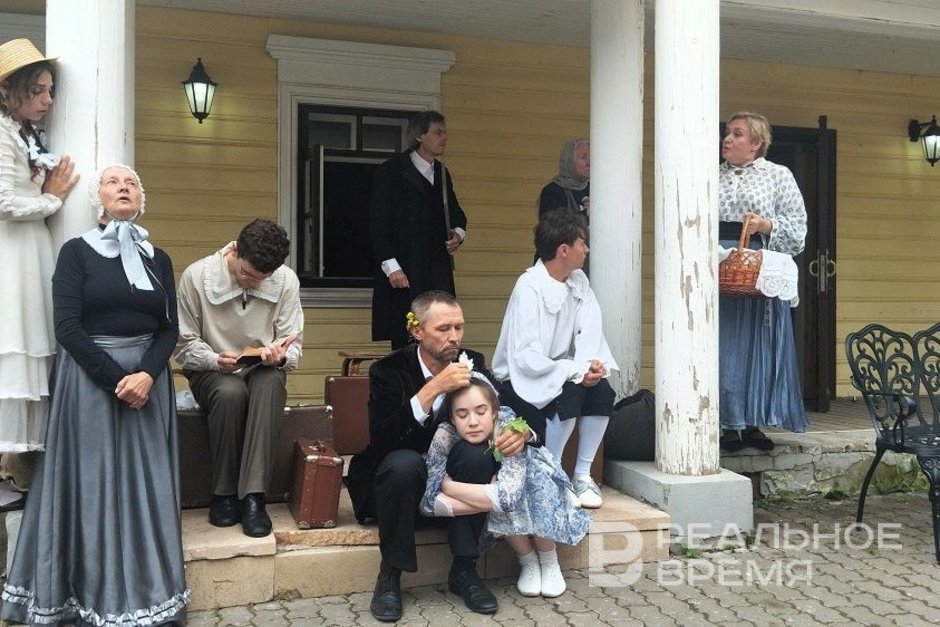
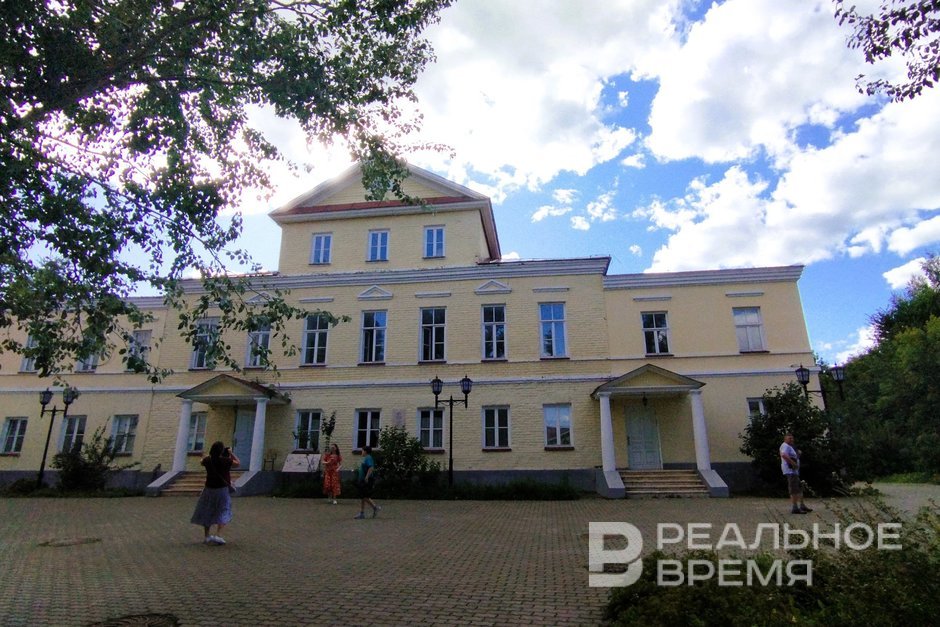
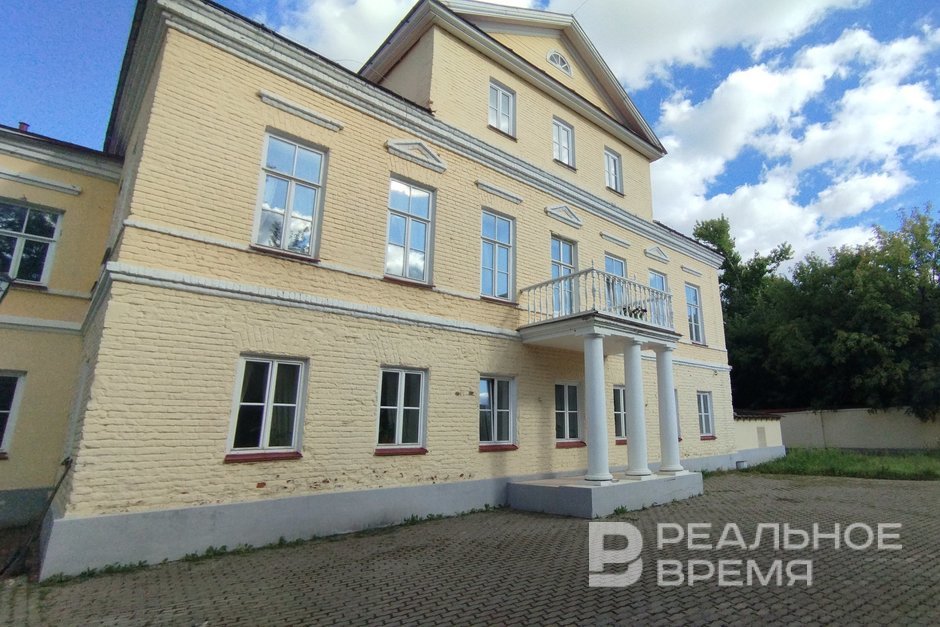
Kazan's Youth Theatre has held a six-day IV theatre laboratory dedicated to the works of Leo Tolstoy. Thus, the theatre will mark the 200th anniversary of the writer, which will be celebrated in 2028. Is the city itself ready for this celebration? Realnoe Vremya visited the Tolstoy Museum, which still looks like a declining estate.
Studied, walked, doubted, drew conclusions
Undoubtedly, Leo Tolstoy is the most famous Russian writer. His family has been connected with the Kazan province since the 17th century; in particular, his grandfather Ilya Andreevich was governor here but only managed to hold the post for five years. Leo Nikolayevich himself lived in our region for five and a half years. The family moved to the city after the death of one of his guardians — Alexandra Osten-Sacken. In Kazan, the sister of his father — Pelageya Ilyinichna Yushkova — lived.
In our city, Tolstoy first studied at the Faculty of Philosophy and then at the Faculty of Law. A large estate was rented for the large family on modern Yapeev Street. Two other addresses where Lev Nikolayevich lived are current Tolstoy Street, 25 (the Kiselevsky house) and Dzerzhinsky Street, 11 (the wing of the Petondi house). The second building now bears the name “Tolstoy Loft.”
There are also several places connected with the most “sensational” facts from the writer's life. In early summer, the art community 33+1 and the media project Krot Kazansky created eight sgraffito on the theme of urban legends and inhabitants. Near the building of the former university clinic on Nuzhina Street, they interpreted the story that Tolstoy was treated for gonorrhea and met a Buddhist lama who had been shot in the face near Kazan. Here Tolstoy began keeping a diary.
Tolstoy's life in the province consisted not only of social events but also of studies, reading books, opera concerts, and performances. Tolstoy himself also took part in productions. According to his recollections of this period, the writer created his works “After the Ball," “A Landowner's Morning," “Childhood," “Boyhood," and “Youth.” After his youthful years, he returned to the city several times.
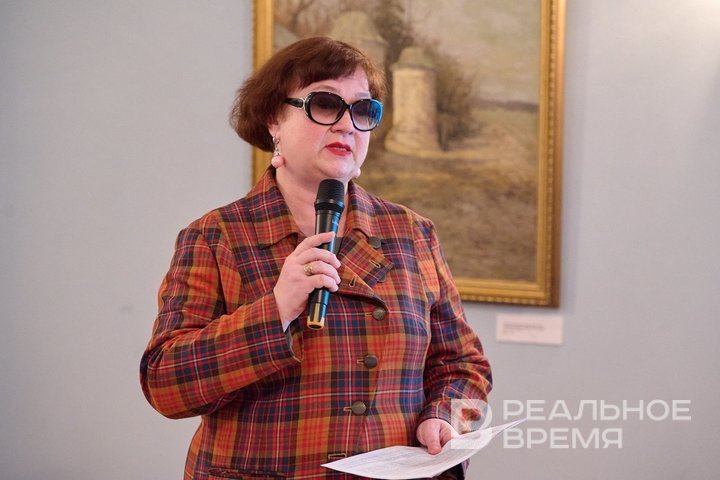
— When we walk with tourists in the courtyard of Kazan University, I always show a photograph of young Tolstoy, — says tour guide Lilia Kalimullina, spreading her hands. — But only a few recognize Lev Nikolayevich in it. And then they discover facts from the writer's biography, that he studied at our university and that many vivid memories are connected with Kazan. Although there are exceptions. Once my guests asked me to arrange a tour specifically for them of Tolstoy's places in Kazan.
— Tourists don't know about Tolstoy, — agrees her colleague Igor Botalov. — When you tell them that Tolstoy lived in Kazan, that his first love was here, they are surprised.
The resolution of the Cabinet of Ministers of the Republic of Tatarstan on the creation of the Tolstoy Museum in Kazan was issued in September 2000. The Gortalov estate at 15 Yapeev Street was chosen for it. Here the future writer lived from 1841 to 1845. 130 million rubles were allocated for reconstruction. The project eventually became a museum and educational center and opened in 2015 — it also housed classes of the neighboring School No. 39. Slightly earlier, in 2014, KFU began holding the International Youth Scientific and Educational Festival named after L. Tolstoy.
What was discussed last year
— I don't want to sound wild, but I myself treat Tolstoy without sufficient reverence, — says writer Denis Osokin. — I have always found and still find reading him unbearably boring, and many of his judgments seem downright dense. Khlebnikov and Rodchenko, connected with Kazan, are much cooler, but even they have no impact on tourists or most Kazan residents, and it would be better to promote them in the image of modern Kazan. But, it seems, Tolstoy was kind, and that's good, and I am all for remembering him. By the way, the only tolerable story by Tolstoy for my heart is the Kazan 'After the Ball,' from which Lev Nikolayevich's long journey in Russian literature and world culture began.
On June 6, 2025, the 200th anniversary of Tolstoy was discussed with the Rais of the republic, Rustam Minnikhanov. Then, a member of the Public Chamber of the Republic of Tatarstan and director of Gymnasium No. 93, Irina Aleksandrovskaya, said that plans for the celebration include launching the historical and cultural project “Leo Tolstoy and Kazan” and publishing the book “Leo Tolstoy. Through the Centuries.” She also proposed naming one of the schools in the Laishevsky district after the writer, because the Tolstoys had an estate there.
The director of the Tolstoy Museum, Liya Bushkanets, then spoke about the idea of creating a route that would unite the neighboring museum, the Kazan Mother of God Monastery, the Museum of the Icon, and the future prison museum.
And the head of the Department of Applied and Experimental Linguistics at the Institute of Philology and Intercultural Communication of KFU, Elena Gorobets, proposed holding an international summit dedicated to Tolstoy's work.
— I believe that of all the great people who lived in Kazan, the most important is certainly Tolstoy, — says Bushkanets, sitting on a bench on the veranda of one of the wings. — And this is a great man not only on the scale of Kazan and Russia but of humanity.
The potential of Tolstoy's stay in Kazan is not fully utilized, but the museum is making efforts. In early August, the Youth Theatre held a theatre laboratory. One of the performances took place here; this wing became a stage where a fragment of the story “Childhood” was shown, directed by the chief director of the Tver Youth Theatre, Yulia Belyaeva. After the performance, it was said that the sketch might grow into a full production and be performed on the museum's premises.
Bushkanets said she had agreed with the conservatory and the special music school on concerts based on what Tolstoy liked to listen to and what he saw in Kazan. Cooperation with the Resurrection New Jerusalem Monastery and the Suvorov Military School, where the Rodionov Institute of Noble Maidens was located, is also being discussed: the Tolstoys knew its head, Zagoskina; Maria Tolstaya, the poet's sister, taught there. Lev Nikolayevich was infatuated with her friend Zinaida Molostvova. And this is also the “maiden's institute” from the story “After the Ball.”
Currently, the museum is hosting an exhibition by the Association of Plein Air Artists of Kazan, who painted pictures inspired by Tolstoy's places in the city.
— As much as possible in Kazan, we are trying to create a Tolstoyan field with our Tolstoy Museum, — says Bushkanets. — It is gaining momentum. Perhaps, I agree, I myself lack space, things are moving slowly, but it is gaining momentum.
For herself, Bushkanets names as one of the problems the fact that “a myth has developed in Kazan, which has a serious influence, about the student Tolstoy who studied poorly.”
— Journalists come to me and say: 'Tell us what a bad student Tolstoy was.' And I say: 'He was an excellent student!' This is precisely the most correct type of student, who thinks independently and learns independently. This concept that he was a bad student, a debaucher, doing something incomprehensible, has a strong influence, — says Bushkanets. — Therefore, it is always pleasant to see when a person comes on a tour and leaves with a different understanding of what role these five and a half years played in Tolstoy's life. That the young man was a profound philosopher, a man with an original mind at 16–18 years old.
“This will be the main event of the anniversary year in the world”
— The authorities of Tatarstan do not fully realize the significance of Tolstoy and the gift that Tolstoy made — these five and a half years — for the reputation of the republic and the city, — says Bushkanets. — It is no coincidence that Vladimir Ilyich Tolstoy always says that if a new museum exhibition opens in Kazan, it will be the main event of the anniversary year in the world. But for this event to truly become an event, we must have a museum worthy of it.
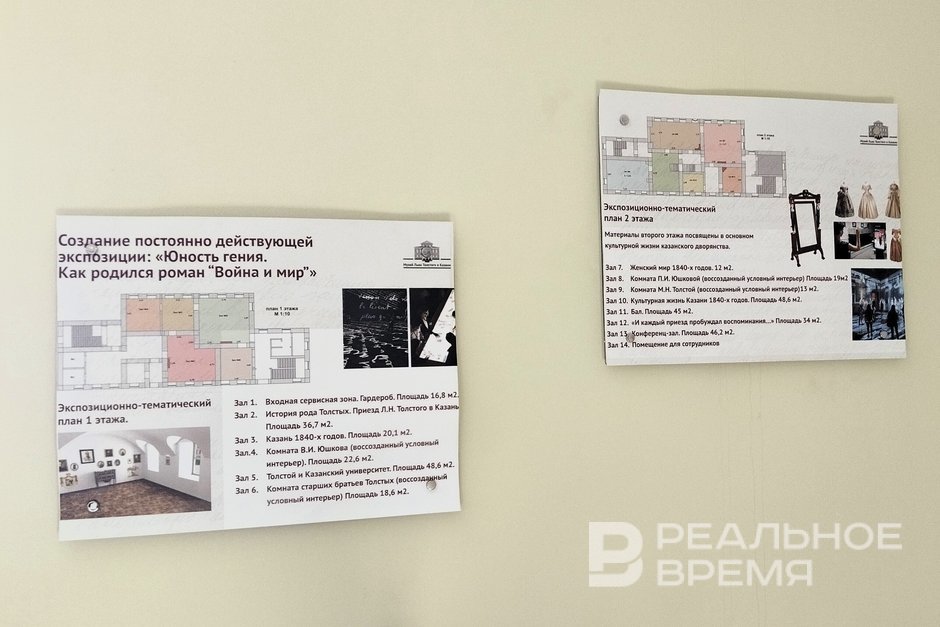
So far, the museum only has a panel exhibition and views from the window. New renovations are needed, but the expert assessment has been delayed. The basement, filled with rubbish, needs updating, as does the roof and the wings; the garden area requires landscaping.
Bushkanets is concerned about the balcony's appearance — in all photos, she says, it is supported by four columns. But after the restoration, there were three.
— We found the descendants of the Gortalovs, Academician Grechin; he has photographs of the garden from the mid-19th century. We designed the project based on them. Our garden extended to the Palace of Agriculture, but at least we could restore this area, — says Bushkanets, fortunately, magazines on landscape design from the mid-19th century have also been preserved.
Currently, the director is working on the exhibition with artist Galina Lysyakova from the Tolstoy Museum-Reserve. The museum should first be a museum, Bushkanets summarizes, and then one can think about events, although now everything is happening in reverse:
— We earn almost a million rubles in a non-existent museum, almost in a non-existent one. When there is space, I would like to have botanical excursions, various events related to the noble life of the 1840s, and all sorts of master classes. And the red wing is planned to be turned into a children's center.