The novel that turned food into a political statement
Book of the week — Japanese writer Asako Yuzuki's novel “Butter”
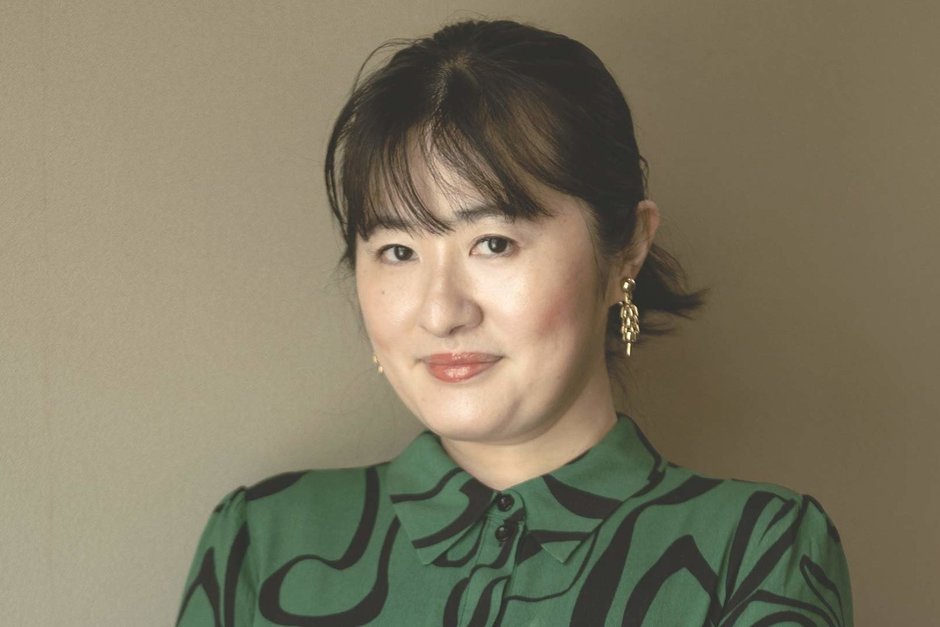
Today, August 2, Japanese writer Asako Yuzuki turns 45. She remained primarily known to the Japanese readership for a long time, although by the time “Butter” was published, she had already written about two dozen novels. Everything changed after the English translation. The novel, first published in Japan in 2017, became an international bestseller, won the Waterstones Book of the Year 2024 award, and sold over 280,000 copies in the UK alone. Today, “Butter” is called the book that brought the writer into the ranks of the most prominent contemporary Japanese authors outside the country. The literary critic of Realnoe Vremya, Ekaterina Petrova, examines why a book inspired by a real criminal case became one of the most talked-about novels in recent years.
Food, power, and the female body: how Asako Yuzuki's novel works
It seems that Yuzuki offers a classic serial killer plot. Rika Machida, a young journalist for a Tokyo weekly, tries to get an exclusive interview with Manako Kajii — a woman accused of murdering several men. The prototype for the heroine was Kanae Kijima, convicted in a high-profile case in the early 2010s known as the “konkatsu killer” case.
Rika is interested not so much in the details of the crime as in society's reaction to a woman who does not fit the conventional notions of what she should be. Yuzuki herself explained that she was captivated by how the Japanese media turned the defendant into an object of public persecution. The investigation gradually gives way to observing how the journalist herself becomes entangled in the story she only intended to describe.
And it all started with a mundane recipe. On a friend's advice, Rika writes a letter to Manako asking her to share the recipe for the famous stew that one of the dead men ate. The prisoner agrees to meet the journalist. However, instead of confessions and sensations, the conversation quickly turns into a discussion of food. Manako hardly answers questions about the investigation but talks in detail about the taste and preparation of dishes. During their first meeting, she declares:
— There are only two things she finds unforgivable. The first is feminism, and the second is margarine.
It quickly becomes clear that the novel's main character is food. Yuzuki uses dishes almost like a classic detective uses clues. Each prepared dish reveals a new facet of a character's personality. Every meal becomes a conversation about power, memory, family, or desire. Manako convinces Rika to give up processed foods, buy real butter, cook from scratch, and eat without guilt.
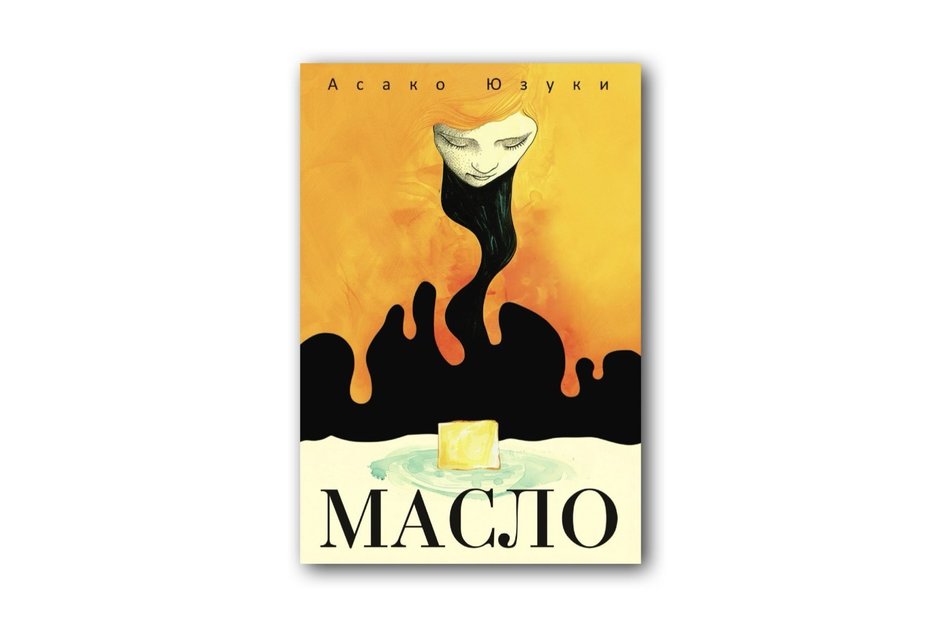
That is why the novel's central symbol is butter. In the book, it signifies the right to enjoy pleasure without regard for others' expectations. Manako contrasts butter with margarine as sharply as she contrasts sincerity with compromise. She makes no secret of her contempt for endless diets and bluntly states that “diets are a meaningless and stupid activity.” This makes her an inconvenient figure not only for the investigation but for society at large. Yuzuki shows that the war against fatty food has ceased to be a health issue and has become a way to control, above all, women. As the writer noted, her novel explores society's obsession with thinness through an equally obsessive focus on food.
Rika initially perceives these tips as part of a professional game. But gradually, she completes more and more new “assignments”: she cooks the recommended dishes, seeks out the right restaurants, tries rice with butter and soy sauce, and begins to spend her evenings at the stove. Cooking replaces therapy for the heroines. Instead of long conversations about trauma, they discuss broth temperature and noodle flavor. Through recipes, Manako reveals much more about herself than through answers to direct questions. And for the first time in years, Rika notices that she used to eat not because she wanted to, but because her work schedule demanded it.
The gastronomic scenes in the novel make a strong impression even on those who have never been interested in cooking. Yuzuki describes sensations. One of the most famous episodes in the novel is dedicated to rice with a piece of butter and soy sauce. This extremely simple dish is shown as a symbol of unexpected pleasure. Elsewhere, Rika notices that taste literally captures a person and carries them away. In Yuzuki's work, food is a full-fledged language of the novel.
But behind the discussions of taste lies a much harsher theme — society's attitude toward the female body. Manako provokes hatred not only because she is suspected of murder. Newspapers, television, and the internet discuss her weight and age with almost as much enthusiasm as the criminal case. Many cannot believe that a “not too young and not pretty” woman could attract the attention of several men. Yuzuki does not justify her heroine, but at the same time shows how public discourse shifts from the alleged crimes to the defendant's appearance. In an interview with The Guardian, the writer said that it was precisely the wave of misogyny and mockery directed at Kanae Kijima's figure that prompted her to work on the novel.
Rika appears as Manako's opposite. She is disciplined, works hard, hardly cooks, and carefully watches herself. However, as soon as she gains a few kilograms, those around her begin to judge her not by her professional qualities. Even her boyfriend notes that a man and a woman “gain weight differently," and extra pounds can cost a woman the respect of others. For the first time, Rika realizes how conditional the demands she has tried to meet all her life really are.
A recipe for freedom: how “Butter” became a global phenomenon
Murder remains at the center of the plot but gradually gives way to a conversation about how modern social institutions work. The heroine lives in a world where work defines personal life, media create convenient images of people, and those around her constantly remind women what they should be. The writer herself said that she wanted to show the structure of society.
— How the Japanese media behave casts a long shadow over what we are like as a society. That is precisely what I wanted to write about: how society perceives women who do not fit the ideas of beauty and ambition.
The novel describes corporate Japan with particular precision. Rika works at a weekly magazine where men hold leadership positions, and women have to constantly prove their professional worth. She dreams of joining the editorial department and becoming the first woman trusted to write the final copy. Work almost completely displaces her personal life. Home is just a place to spend the night, and food is a random necessity.
Yuzuki knows this environment well. She said that her generation faced a very tough labor market, and she herself had to change several professions before she could earn a living through literature. According to the writer, she and many of her colleagues felt that the Japanese labor market “was not waiting” for young women.
The work environment is just one part of a broader system of control. In Tokyo, Yuzuki notes, advertising for weight loss products and plastic surgery coexists with 24-hour convenience stores selling delicious prepared food.
— Women are constantly trying to control their weight, but at the same time, society offers them tempting food around the clock. They experience both temptation and pressure at the same time.
The writer said she considered the problems depicted in the book to be exclusively Japanese and was surprised when readers from other countries began to say they recognized their own experience in Rika and Manako. Yuzuki did not receive feedback from Japanese audiences for a long time, but after the English translation was released, her inbox filled with letters from readers around the world. The story of pressure on women, the cult of productivity, and the desire to meet others' expectations turned out to be universal.

This effect is also largely explained by the novel's literary form. “Butter” constantly changes the rules of the game. Publishers actively promoted the book as a crime novel, and some foreign bookstores placed it on the shelves with detective and thriller fiction. However, Yuzuki deliberately subverts the reader's expectations. The investigation develops slowly. Interviews with Manako do not bring the resolution closer. The mystery of the crime gradually gives way to an exploration of human relationships.
The psychological line works even more effectively. The main conflict unfolds within Rika herself. She changes her habits, reconsiders her own ideas about body, pleasure, work, and the future. The external investigation gradually gives way to an internal one. The book in many ways resembles a coming-of-age novel, even though the heroine is already in her thirties.
It was “Butter” that made Asako Yuzuki a global writer. After the English edition was released, the novel sold over 300,000 copies in the UK alone, and in 2024, it was named Waterstones Book of the Year. That autumn, its yellow cover, according to The Guardian, was seen in almost every carriage of public transport. At the same time, the novel led a wave of interest in contemporary Japanese prose, where Yuzuki's name is increasingly mentioned alongside Sayaka Murata, Mieko Kawakami, and Hiromi Kawakami.
Publisher: RIPOL Classic
Translation from Japanese: Polina Gulenok
Number of pages: 480
Year: 2024
Age rating: 18+
Ekaterina Petrova — literary critic for the online newspaper Realnoe Vremya, host of the Telegram channel «Булочки с маком».