COVID and dormant viruses, Neanderthal genes, Pluto's freezing atmosphere
Interesting science news of the week
Severe coronavirus reactivates dormant viruses in the body, turning them into dangerous enemies. Height and muscle development in some people are influenced by genes inherited from Neanderthals. Pluto's atmosphere has begun to freeze and precipitate onto the dwarf planet's surface. A mutation has been identified that protects people from cardiovascular disease and diabetes while helping build muscle mass. For the first time in AI history, a neural network has generated a viable viral genome. More details about this week's interesting science news are in the review by Realnoe Vremya.
“Trojan Horse”: coronavirus awakens dormant viruses in the body
Severe COVID-19 can awaken a host of dormant viruses that have quietly lived inside us for decades. This is the conclusion reached by the authors of a large-scale study conducted at the University of Texas at Austin (USA). They analyzed data from over a thousand patients hospitalized with the coronavirus in 2020–2021. The result was staggering: nearly half of the study participants experienced reactivation of viruses that had previously been peacefully “sleeping” in their cells.
This is not about exotic infections, but about old acquaintances. The Epstein-Barr virus, which infects over 90% of the world's adult population. Cytomegalovirus. Herpes simplex viruses. And also the enigmatic anelloviruses, which until recently were considered completely harmless “passengers” in our bodies. It turns out they are not so simple.
The researchers noticed an intriguing pattern: the awakening does not happen chaotically, but on a strict schedule. Epstein-Barr virus and anelloviruses strike first — their peak activity occurs in the first days after hospitalization. Cytomegalovirus and herpes, however, manifest themselves about three weeks later, targeting the respiratory system. Patients with “awakened” viruses demonstrated significantly higher levels of inflammation, increased immune cell activity, and serious cellular damage compared to those whose viruses remained dormant.
But the most important discovery is that reactivation occurs even in people with a completely healthy immune system. Previously, it was believed that this was only possible in patients with HIV or those taking immunosuppressive drugs. The new study turns this notion on its head. Scientists believe this is related to the colossal stress COVID-19 inflicts on the immune system. It triggers a chain reaction, and the awakened viruses, in turn, multiply the inflammation initiated by the coronavirus.
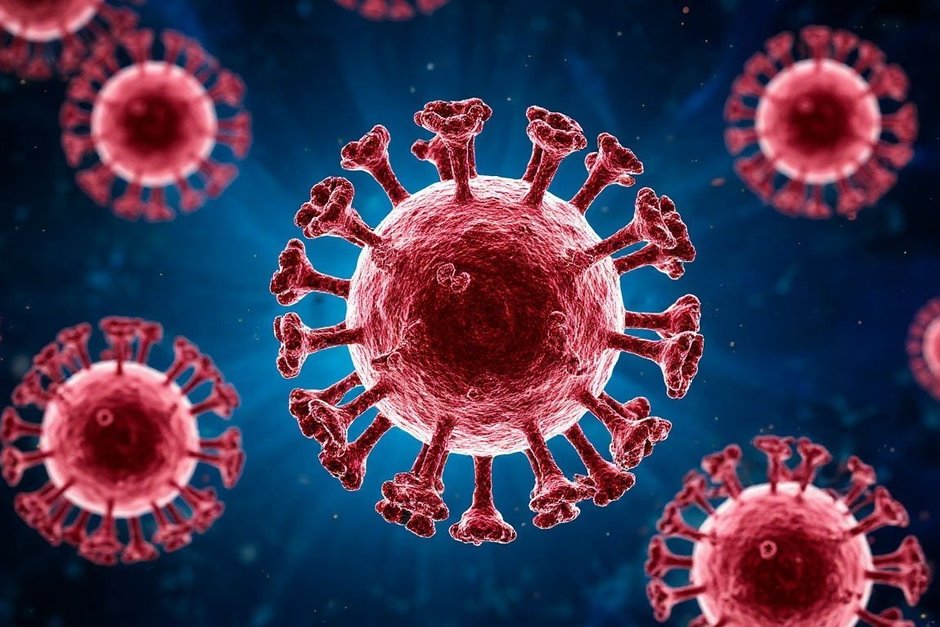
The study also confirms a long-standing theory that latent viruses are by no means passive observers. For example, Epstein-Barr virus has long been suspected of being involved in the development of autoimmune diseases such as multiple sclerosis and systemic lupus erythematosus. Now this list may be expanded to include long COVID.
Neanderthal genetic inheritance makes us taller and stronger
In human prehistory, sapiens interbred extensively with Neanderthals — and the consequences of these unions still manifest in our genes. Neanderthals, who inhabited Europe and Western Asia from about 300,000 to 40,000 years ago, left 1–4% of their DNA in our genome. New research has shown that two genes inherited from our extinct relatives still influence the physique of modern humans, making carriers taller and more muscular.
Judging by the fossil remains of these people, they were more powerful and massive than us: they had broader chests, heavier bones, and developed musculature. They were, in a sense, bodybuilders among other Homo species.
The research team decided to study the growth hormone receptor — a key protein that regulates bone and muscle development — in preserved Neanderthal genome samples. Scientists identified two unique amino acid changes specific to this receptor in ancient humans. These changes, it turned out, entered modern human populations through interbreeding about 47,000 years ago. Today, their prevalence varies widely: 20% of the South Asian population carry this variant, as do 15% of East Asians. Among Europeans, it occurs in only 0.5%, and it is completely absent in sub-Saharan Africans (which is explained by the fact that their ancestors never encountered Neanderthals).

To test whether the ancient changes actually affect receptor function, scientists conducted an experiment on mouse cells. They engineered cells to produce either the Neanderthal version of the receptor or the modern one. The result was impressive: cells with the “Neanderthal” receptor multiplied 39% more actively over five days compared to those carrying the modern variant. But laboratory data is only half the story.
Researchers also analyzed medical and genetic data from over 1.1 million adults from five biobanks. It turned out that carriers of the ancient variant are on average 0.3 centimeters taller. In addition, they have 0.25 kilograms more muscle mass.
Moreover, it turned out that Neanderthal heritage manifests itself not only in physique but also in facial structure. Carriers of the Neanderthal variant tend to have a shorter mandibular ramus, a higher likelihood of malocclusion, and shorter tooth roots compared to those without it.
Pluto's atmosphere is freezing
Pluto has presented astronomers with another surprise. After decades of unexplained density increase, its atmosphere has begun to freeze and precipitate onto the surface. This is the conclusion reached by an international group of researchers who analyzed observation data from 2017 to 2023. Yes, Pluto has an atmosphere; it is thousands of times more rarefied than Earth's and consists mainly of nitrogen. Its pressure is measured in microbars, and its presence and composition are linked to what happens on the surface. When nitrogen ice warms, it evaporates, and when it cools, it precipitates again as frost.
Pluto has an elongated orbit, and its rotation axis is highly tilted. Therefore, seasonal changes in its atmosphere are not at all like those on Earth. Moreover, a year on Pluto lasts 248 Earth years — it is very far from the Sun. When the planet passed its closest point to the Sun (perihelion) in 1989, scientists expected the atmosphere to begin contracting. However, contrary to predictions, it continued to densify for several more decades. From 2015 to 2021, atmospheric pressure on the planet remained almost unchanged, and then began to decline. At an altitude of about 1,275 kilometers, the pressure decreased by 7%. This means that atmospheric particles are precipitating onto the surface.
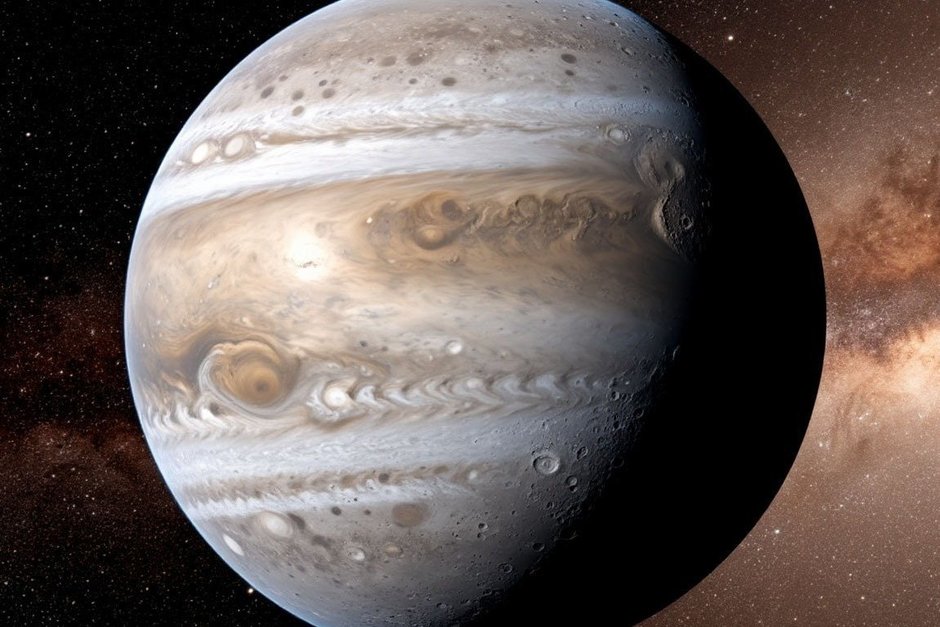
Despite the onset of freezing, Pluto's atmosphere is not about to disappear soon. The reserves of nitrogen ice and the high heat capacity of subsurface layers will maintain the gas envelope for a long time to come.
A rare mutation protects against diabetes and heart disease while increasing muscle mass
Just one gene — and a person becomes leaner, more muscular, and protected from a whole host of deadly diseases. An international group of scientists has discovered rare mutations in the FNIP1 gene that give their carriers an advantage over the rest of humanity. The problem is that there are vanishingly few such lucky individuals — only one in seven thousand people.
A large-scale study published in Nature analyzed the genomes of more than a million people from three continents. It found that carriers of certain variants of the FNIP1 gene had, on average, a 60% lower risk of cardiometabolic diseases (type 2 diabetes, heart disease, stroke, and some forms of liver disease). In addition, they have more muscle mass, lower abdominal fat, and lower blood sugar.
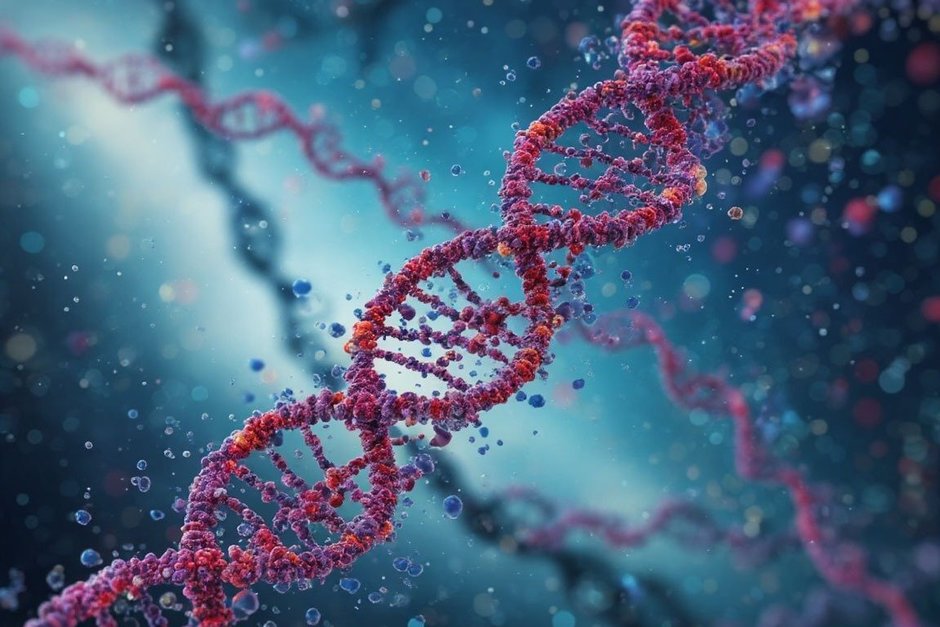
The FNIP1 gene is involved in cellular metabolism and helps cells respond to the presence of nutrients. In carriers of the beneficial mutations, one of the two copies of this gene is effectively turned off. And this turned out to be enough to shift metabolism to a healthier mode.
A logical question arises: if this gene in its normal state increases the risk of disease, why did evolution preserve it in this form? Scientists explain this by historical context. For millennia, people lived in conditions of calorie scarcity. The FNIP1 gene worked as a metabolic brake, helping the body store energy for the future. “Don't burn too much fat; you might be left without reserves," was the signal it sent to the body. But times have changed. We live in a world of calorie excess, and our genomes have hardly changed — so the body continues to vigorously store resources in case of famine.
The beneficial mutations found by the researchers lift this evolutionary brake, forcing the body to burn fat more actively. Notably, carriers of the mutations do not weigh less than others — they probably compensate for the increased energy expenditure by eating more.
Currently, there are no drugs that mimic the effect of the “lucky” mutation. But researchers hope their work will pave the way for the creation of drugs that may one day help those who are less fortunate genetically.
A neural network created an artificial virus capable of killing bacteria
For the first time, a large language model has designed working viral genomes that successfully attack and destroy E. coli. This achievement opens the era of personalized therapy for creating phages capable of fighting infections resistant to antibiotics.
Although DNA editing has long been a routine procedure, designing complete genomes remained a serious challenge. A genome is not a simple sequence of nucleotides, but a highly organized three-dimensional structure where each element affects the function of others. Until now, scientists could only make edits to existing DNA chains using gene editing tools. In recent years, language neural networks have been used to design individual proteins. Now, researchers have set a much more complex task for the algorithm: to write the genetic code of an entire organism.
The experimental subject was bacteriophage X174, which infects E. coli. For the work, scientists used the language models Evo 1 and Evo 2. First, the algorithms were trained on a huge database containing the genomes of two million natural bacteriophages. Then, the neural networks were given strict parameters: the generated virus must be of a given length, retain the basic architecture of X174, and retain the ability to bind to receptors on the surface of E. coli.
From thousands of generated variants, researchers selected 302 of the most promising genomes. These sequences were chemically synthesized and introduced into E. coli cells. The result exceeded expectations: 16 out of 302 artificial viruses turned out to be fully viable. They successfully assembled inside bacteria, multiplied, and destroyed the host cells. Given that even replacing a single gene often makes a virus non-viable, creating 16 working organisms with a completely new genetic code not found in nature became a real sensation for the scientific community.
Detailed analysis showed that the phages created by the neural network differ from their natural prototype by hundreds of mutations. But the most interesting thing is that some of the artificial viruses turned out to be more aggressive than the original X174. They multiplied faster and destroyed bacterial colonies more effectively. In the final part of the experiment, scientists grew three strains of E. coli resistant to the natural virus. The ordinary bacteriophage was powerless against them. However, a “cocktail” of the neural network-generated viruses managed to break through the bacterial defense. The artificial phages exchanged genes and adapted, and after several cycles, they learned to hack the immunity of the resistant strains.
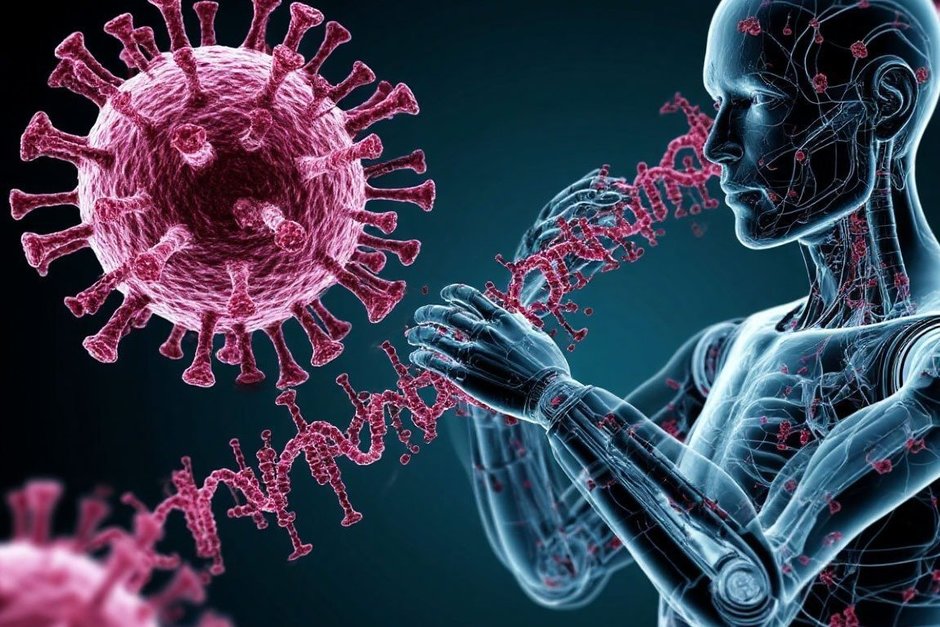
This study proved for the first time that neural networks are capable of assimilating complex evolutionary patterns and generating working genomes. The creation of viruses that surpass natural analogues in fighting bacterial defenses has colossal significance for medicine. In the future, this approach could be used for the rapid creation of phage cocktails tailored to specific patients. This concerns cases where severe infections are no longer treatable with traditional antibiotics. Personalized viruses designed by a neural network could become the last line of defense in the fight against superbugs.