Programmable cancer killer, sleep deficit calculator, burning Europe
Interesting science news of the week
A substance has been found in the brain that indicates the level of sleep deprivation and sleep quality. A “broken” CRISPR enzyme has been reprogrammed into a high-precision scalpel against malignant tumors. Coffee protects the liver from cirrhosis, cancer, and other diseases. An AI tool has learned to shrink or enlarge protein molecules without changing their properties or structure. Europe will become like California in terms of wildfire levels. Science news for the week — in the review by Realnoe Vremya.
Scientists found a “chemical alarm clock” in the brain
We know that sleep is vital, but it has remained a mystery how exactly the brain tracks its duration and quality, and how it decides it's time to wake up. A group of researchers from the University of Washington (USA) appears to have found the missing link. In a paper published on a preprint server, they describe a molecular signal that serves as a kind of “alarm clock” in the brains of mice.
The scientists used a fluorescent sensor to observe in real time the activity of the enzyme protein kinase A (PKA) — a substance also found in humans and previously associated with wakefulness. It turned out that the behavior of this enzyme follows a strict rhythm. When a mouse is awake, the level of chemical “tags” that PKA leaves on cell proteins remains stably high. But as soon as the animal falls asleep, the level of these tags begins to slowly and continuously decrease throughout the sleep period.
The signal responds not only to sleep duration but also to its intermittency. If a mouse's sleep is disrupted by micro-awakenings, the PKA level immediately rises and then drops again. Thus, the enzyme simultaneously sums up the total rest time and the number of disturbances, allowing scientists to more accurately predict the moment of awakening than simply measuring time spent asleep.

In the experiment, the researchers deliberately deprived mice of sleep and then allowed them to rest. In this case, the drop in PKA levels was even deeper than during normal sleep. This led the scientists to think that the signal measures not just time, but how much the accumulated “sleep need” has been replenished. In other words, the enzyme shows exactly how much sleep debt has been “worked off” by the body.
Perhaps we are looking at a potential biomarker for sleep deprivation. After all, no “breathalyzer for sleep” — an objective way to check whether a person (e.g., a truck driver or a surgeon on duty) can remain vigilant — has been invented yet. The scientists are already planning further experiments: they intend to interfere with PKA activity in real time to check whether this enzyme directly controls the feeling of being rested. If the hypothesis is confirmed, humanity will gain not just an explanation of the sleep mechanism, but a key to diagnosing hidden fatigue.
“Raging molecular scissors” turned into a selective cancer killer
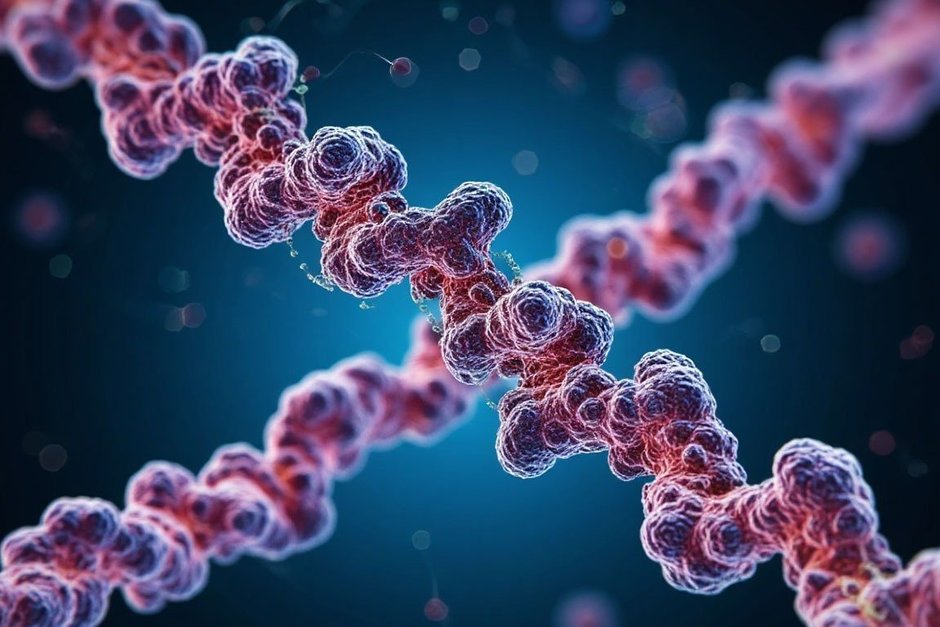
This week, the scientific community is discussing an unusual pair of publications in the journal Nature that could revolutionize cancer treatment. Scientists from the US have performed a virtuoso trick: they took a “broken” CRISPR enzyme that bacteria use to chaotically destroy invaders and reprogrammed it into a high-precision scalpel against malignant tumors.
It all started nearly ten years ago when biochemist Ryan Jackson and his team were studying the Cas12a2 protein. They expected it to behave like standard gene-editing scissors (CRISPR). But experiments failed one after another. Jackson even accused his students of “contaminating the protein.” However, it turned out that the enzyme was seemingly... insane. Instead of precise cutting, upon recognizing a target, it would go into a frenzy and start indiscriminately shredding DNA inside the cell.
Today, two research groups have turned this chaos into an elegant strategy. The essence is brilliantly simple: the enzyme is tuned to search for specific messenger RNA — the kind produced by cancer cells with mutations in the TP53 genes (found in half of all cancers) or KRAS (responsible for many deadly tumors). When Cas12a2 finds such RNA, it activates and destroys the cell's genome. Healthy cells, even with RNA differing by just one letter, remain untouched.
Biochemists from the University of Utah call this “programmable chemotherapy” and a “molecular death switch.” In Petri dishes, the system showed stunning precision, and in live mice, it actually shrank tumors caused by human papillomavirus (HPV) and mutant TP53.
The German biotech company Akribion Therapeutics is already developing a therapy based on this method to treat head and neck cancers. Company co-founder Paul Scholz hopes to have the first clinical trial data by 2030.
However, euphoria is tempered by skeptics. First, the enzyme is quite large, and delivering it inside cells is technically challenging. Second, even under ideal laboratory conditions, it did not kill all cancer cells. This is a sobering thought but may open the way for combination therapy.
Nevertheless, many scientists hope that in the future, the technology could even be adapted to treat autoimmune or neurodegenerative diseases. And chemotherapy, which affects everything living, may soon become a thing of the past, giving way to smart molecular sniper fire.
Five cups of coffee a day protect the liver from cirrhosis and cancer
Good news for coffee lovers: your habit may be more than just a morning ritual; it could be a serious investment in health. Scientists from Cedars-Sinai Medical Center (USA) published the results of a large-scale study: they analyzed data from 354,957 people accumulated in the UK Biobank. At the start of the experiment, none of these people had been diagnosed with liver disease. Then, over an average of 13 years, the scientists meticulously compared the volunteers' dietary habits with their tomography scans and biochemical blood tests.
The difference between those who ignore coffee and its most devoted fans (from five cups a day) was colossal.
- The risk of developing cirrhosis decreased by 32%.
- The risk of liver cancer fell by 47%.
- The likelihood of death from liver disease decreased by 42%.
Even modest consumption — 1–2 cups a day — already showed positive shifts. However, the peak protective effect, according to the data, was at 3–4 cups daily.
Interestingly, the positive trend was observed not only among regular coffee drinkers but also among those who preferred decaffeinated coffee. So it's not about caffeine. Other bioactive substances came to the liver's rescue — primarily antioxidants and polyphenols, which effectively suppress chronic inflammation and slow tissue scarring (fibrosis).

Objective diagnostic methods also confirmed this: regular coffee drinkers had significantly less fat deposits in the liver, lower levels of inflammatory markers, and higher concentrations of proteins responsible for the organ's normal function.
The authors of the study make an important caveat: the research is observational, meaning it is not a direct guide to action. Artificially increasing coffee intake to “boost” the liver is not recommended.
Doctors remind us that the drink is not suitable for everyone. People with uncontrolled hypertension, arrhythmia, chronic insomnia, or anxiety disorders should be cautious. Moreover, more traditional measures have a similar protective effect on the liver: a balanced diet, exercise, weight control, and avoiding alcohol abuse. Nevertheless, the discovery gives scientists a powerful key to understanding how natural compounds can prevent disease.
Protein molecules learned to shrink or enlarge like Alice in Wonderland
Biotechnologists from Duke University (USA) have created an AI tool called RayGun. This “ray gun” can miniaturize or, conversely, enlarge natural protein molecules without disrupting their shape and functionality.
Until now, scientists have developed various AI-based “protein language models” that can create proteins from scratch. One can even create antibodies to diseases with high clinical potential. The new tool, however, can modify existing proteins, using the same steps as Mother Nature: it adds or removes individual amino acids in the protein chain or replaces them with others.
This discovery is a significant step toward editing existing proteins. In many areas, researchers do not need a completely new protein — they want to improve, shrink, or enlarge an already proven, working molecule. The simplest analogy is Alice in Wonderland, who grew and shrank by eating and drinking magical treats.
This could be an attractive prospect for biotechnology applications. For example, a smaller protein could pass through membranes that a large molecule cannot squeeze through.
What is the revolution, exactly? It is that until now, attempts to use AI to modify existing proteins have been unsuccessful: they changed either the structure or the function of the molecule. The Duke University scientists used ESM-2, a large language model for protein design (instead of text, it is trained on millions of amino acid sequences, and once it knows the patterns of these sequences, it begins to generate new ones). They modified its type of operation, making it so that it can now generate the same protein of different sizes without compromising its functionality.
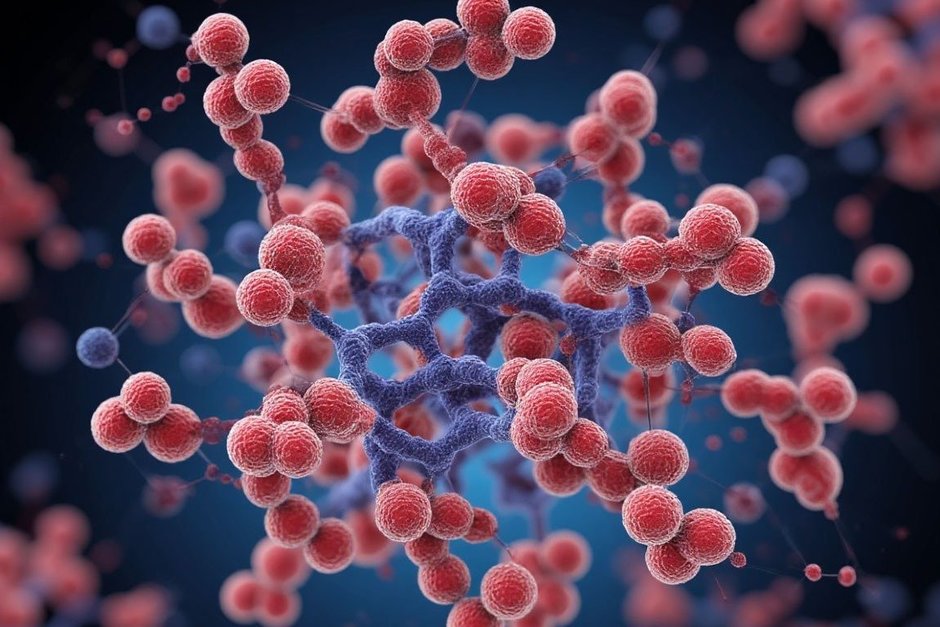
First, RayGun was used to shrink four proteins of different sizes — from small hemoglobin to a very long enzyme. The tool reduced the number of amino acids by 15–20%, while the original structure and function of the proteins did not change. Then, it was made to generate an enlarged version of one of the proteins that triggers cell growth and differentiation. The enlarged protein was able to bind better to its receptor (a common target in cancer therapy).
The tool works excellently, repeatedly surprising its creators. Its results are currently encouraging, but further research is needed: will it work with other types of proteins, and will it be able to edit everything needed properly?
Forest fires in Europe: a scientific perspective and outlook
Powerful fires raging in France and Spain, fueled by unprecedented heat, are breaking records. In this regard, an international group of scientists led by meteorologists from the University of Groningen (Netherlands) analyzed the situation and made forecasts for Europe's future. According to climatologists and meteorologists, Spain and France can expect a fire regime similar to California's in the future, as climate change promotes hot and dry conditions.
Satellite data show that as of July 29, 91,000 hectares have burned in France and over 200,000 in Spain. The fire near Madrid became the largest in the country's history and nearly destroyed a NASA complex used for deep space communications. In France, firefighters battled a fire cloud so intense that it generated its own dangerous winds and even dry lightning.

Scientists believe these disasters indicate a systemic change in the nature of fires in Southern Europe. Decades of relative calm are over; ahead, according to scientists, lies increasing danger. The main factor in fire-prone weather is rising temperatures caused by anthropogenic climate change. Vegetation has dried out and become ideal fuel. The trend, according to scientists, is unstoppable.
The bad news is also that the danger has exceeded the capabilities of European firefighters — they are no longer coping.