An exhibition from the Kazan Art Residence opens at the Gallery of Contemporary Art
Azerbaijani artist Ali Israfilov created all the works in two months. Now a new resident has taken his place
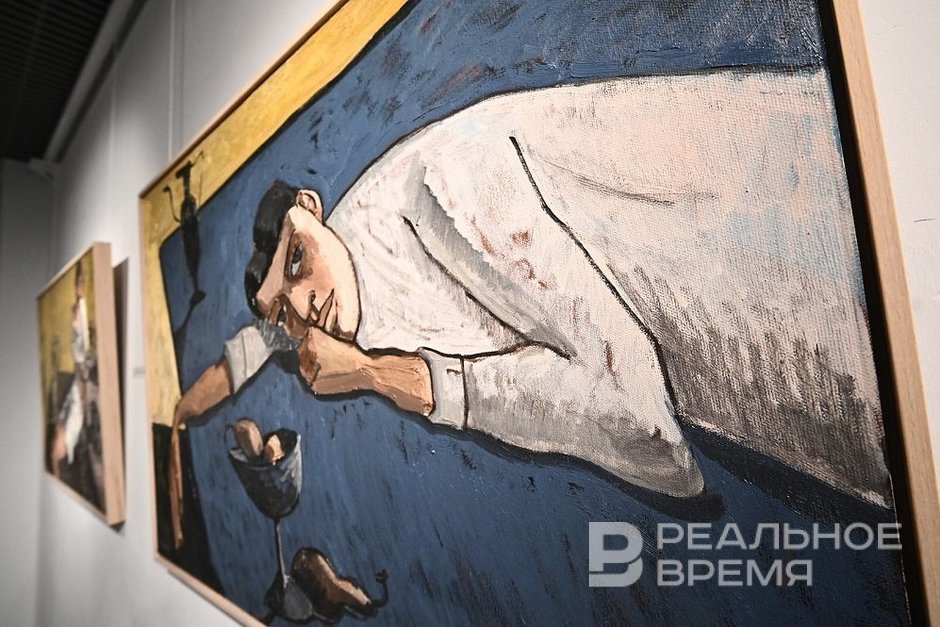
An exhibition titled “Currents and Layers” has opened at the Gallery of Contemporary Art — the result of the art residency of Azerbaijani artist Ali Israfilov, who created 18 new works during his time in Tatarstan in May-June this year. Soon the Kazan Art Residence will welcome a new artist. For the capital of the republic, this experience is novel. For more details, see the material by Realnoe Vremya.
A country at the crossroads of cultures
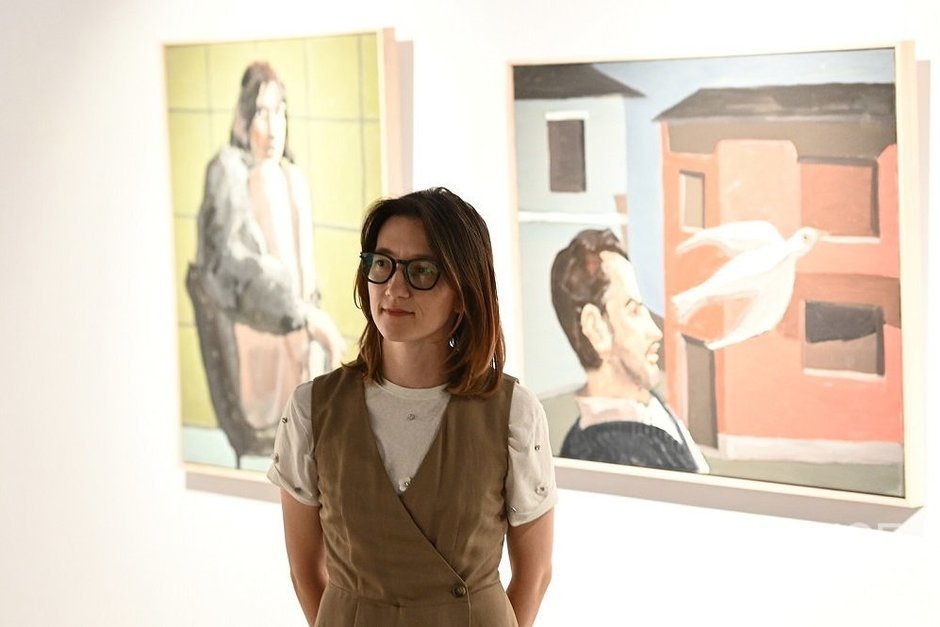
As one of the exhibition's curators, art critic Olga Ulemnova explained, she met Emil Timergaliev and Elmira Nizamieva by chance right here in the gallery. They told her about their project “Kazan Art Residence," organized by the “Avancée” gallery and the Emil Timergaliev Foundation.
— I really liked this artist [Ali Israfilov] for his special energy, interesting dynamics, and a unique understanding of form and color that I haven't seen in our artists, — Ulemnova explained. — He is an artist from Azerbaijan, an amazing country, a country at the crossroads of cultures, a mountainous country where the architectonics of our land manifests especially vividly.
Ulemnova emphasized that the work of the Baku artist reflects a turning point in history, expressed in deliberately deformed forms, sharp rhythms, and the nervous texture of the paintings.
— At the same time, he has a very harmonious perception of life, — the art critic added. — It's no coincidence that his colors are pastel tones, although it is powerful painting. They are all harmonized with each other; they don't hit you with bright color but create within us a feeling of that future world and harmony that will surely come to us.
Through the method of art scouting
— The gallery is the fruit of a long-standing and great love for art — mine and my husband's: we have lived with art for many years. We have many artist friends, many friends in the art world, and this project is a natural continuation that has brought together many different aspects of our experience and our worldview, — noted Elmira Nizamieva.
The arrival of Ali Israfilov is the couple's first experience with an art residency, and for now, the organizers themselves seek out artists:
— We communicate, get acquainted, and through dialogue, through visiting the artist's studio, we find common ground, — explains Nizamieva, calling herself and her husband “art scouts.”
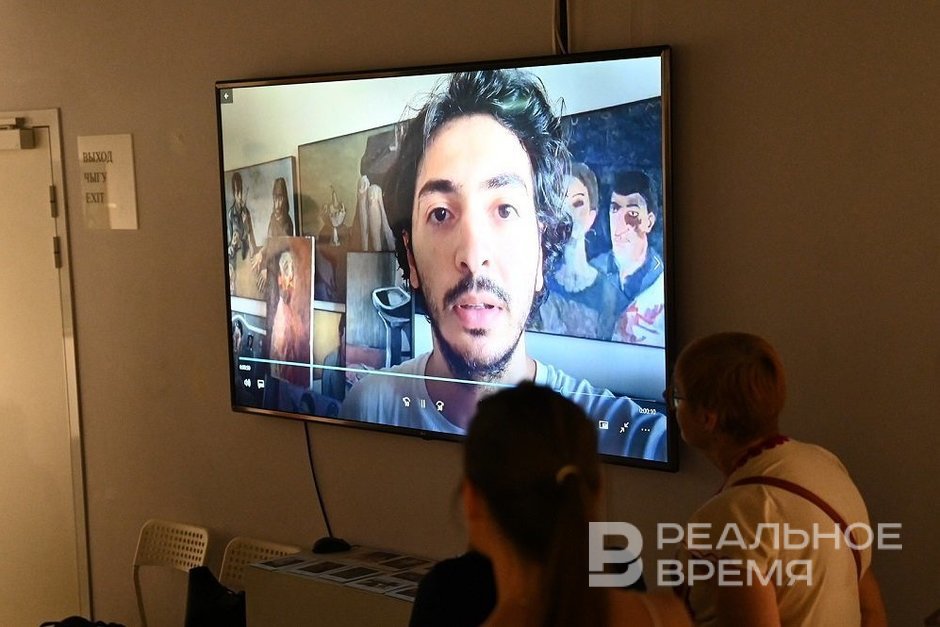
Thus, the first participant in the art residency was Azerbaijani artist Ali Israfilov, who also works under the pseudonym M.O.U.K. This year, he received his bachelor's degree from the Azerbaijan State Academy of Fine Arts (ADRA). At the same time, he already has experience participating in research in Central Europe, Turkey, Kyrgyzstan, the UAE, the Baltics, and Georgia. He has held solo exhibitions at home in Baku and in Vilnius.
In Tatarstan, he lived not only in Kazan but also traveled to Kamskoye Ustye, Laishevo, and the Tukay Museum in Kyrlay. The artist was especially delighted by his first-ever ferry ride. The exhibition's title is explained as follows: “layers” — the tectonics of time, historical strata, cultural codes, and the archaeology of collective memory rooted in space, while “currents” — the living energy of the moment, the dynamics of human emotions, and the vibrating flows of modernity, in tune with the movement of great rivers.
The artist's diary
Since the works were created in a short time, the exhibition description itself turns into an artist's diary: at the beginning, for example, there are works inspired by the banks of the Kama, capturing the first immersion into the features of the local landscape, different from that of Azerbaijan.
— Ali's works are precisely about dialogue between people, about what cannot be said directly, what you want to say but hold back, — notes Nizamieva, giving a brief curatorial tour. — And everyone can rely on their own life path and see a scenario: what preceded this plot and what will follow.
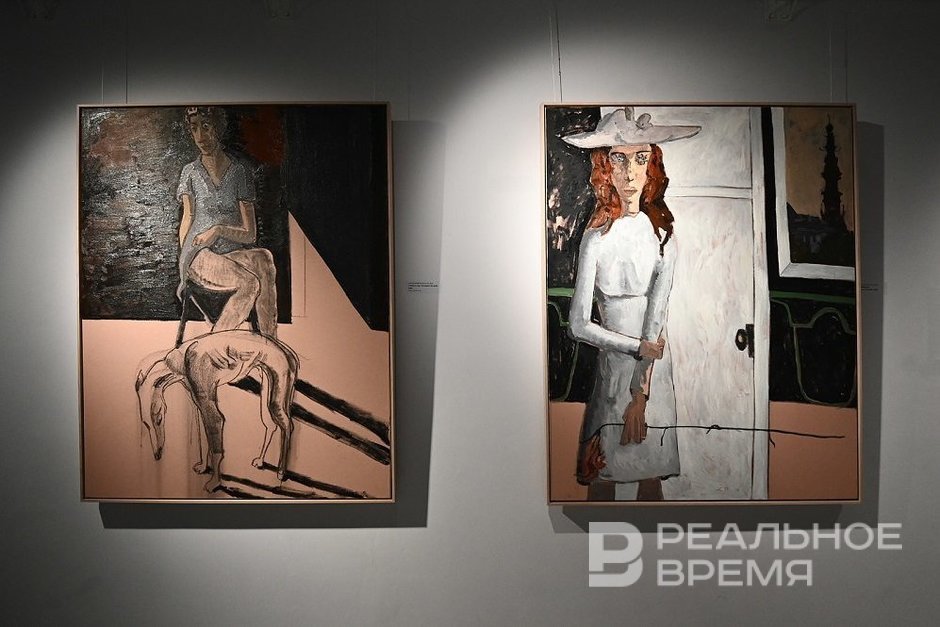
In this regard, the work “The Heaviness of Sleep” stands out. The artist made it entirely in graphics, in charcoal. Then he partially covered it with oil and said: “It is complete," causing slight bewilderment among the Kazan audience. So it remained overall — with an emphasis on the figure of the dog, executed in graphics.
Then you can see how the Azerbaijani author becomes accustomed to Kazan, develops favorite places, and the city's architecture, including its national character, appears in the paintings, while saturated colors give way to calmer, pastel ones. As if the author felt a little, but truly, at home.
Ulemnova noted that for previous generations of artists, art residencies were replaced by creative houses that operated under a unified state system with full support. In Kazan in recent years, it is difficult to recall such a long-term art residency.
And the new project already has a continuation — at the exhibition's opening, a new resident arrived, another Azerbaijani painter — Tural Moyufov. In June this year, he held his first solo exhibition titled HÜDUD (“Border”).