Great American novel or weapon of terror?
Book of the week — Margaret Mitchell's novel “Gone with the Wind”

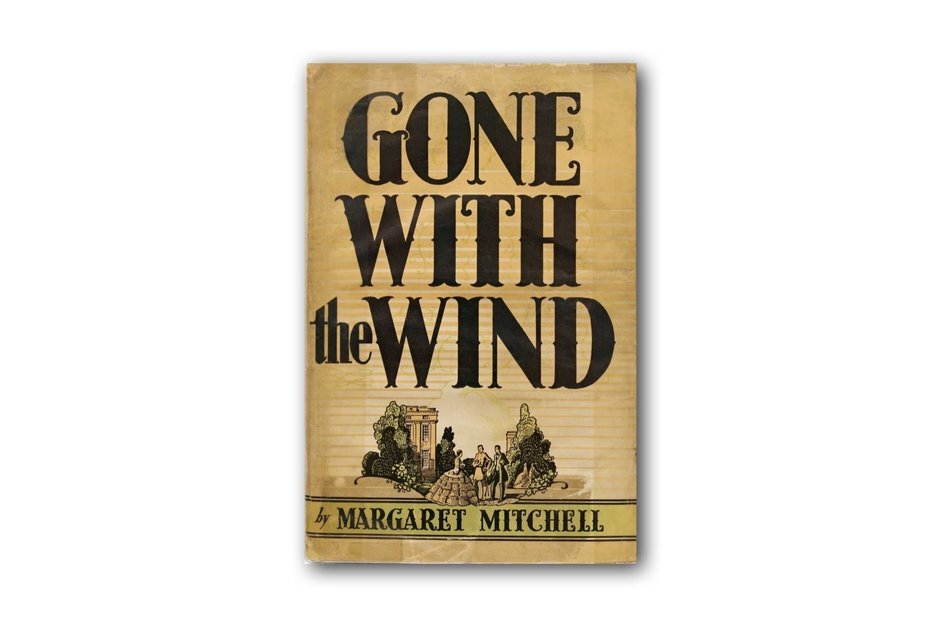
Ninety years ago, on June 30, Macmillan published Margaret Mitchell's novel “Gone with the Wind” — 1,037 pages for three dollars. In the first six months, the book sold over a million copies — a phenomenal achievement for the era of the Great Depression. Today, the novel's total circulation has exceeded 30 million copies. Realnoe Vremya's literary critic Ekaterina Petrova examines how the book went from a cultural phenomenon to radical criticism and what lay behind the creation of this long-lived text.
Writing a book out of boredom
In 1926, 25-year-old former journalist Margaret Mitchell sat in her tiny apartment in Atlanta. An ankle injury complicated by arthritis confined her to home and ended her career at the Atlanta Journal. The apartment, consisting of a living room and bedroom (where the closet was converted into a kitchen), the Mitchells lovingly called “The Dump.” Her recovery dragged on, and her husband John Marsh, who worked as the public relations director at Georgia Railway and Power Company, grew tired of carrying books from the library on the streetcar. One day, he brought home a 1923 Remington typewriter and placed a stack of paper on the table:
— Write your own book to amuse yourself, John told his wife.
And Mitchell began to write, not even thinking about publication. She hid the manuscript from friends and acquaintances, hiding it under a towel when guests came. Margaret started her work from the end. The first sentence she typed was:
— She could not understand either of the two men she had loved, and now she had lost both.
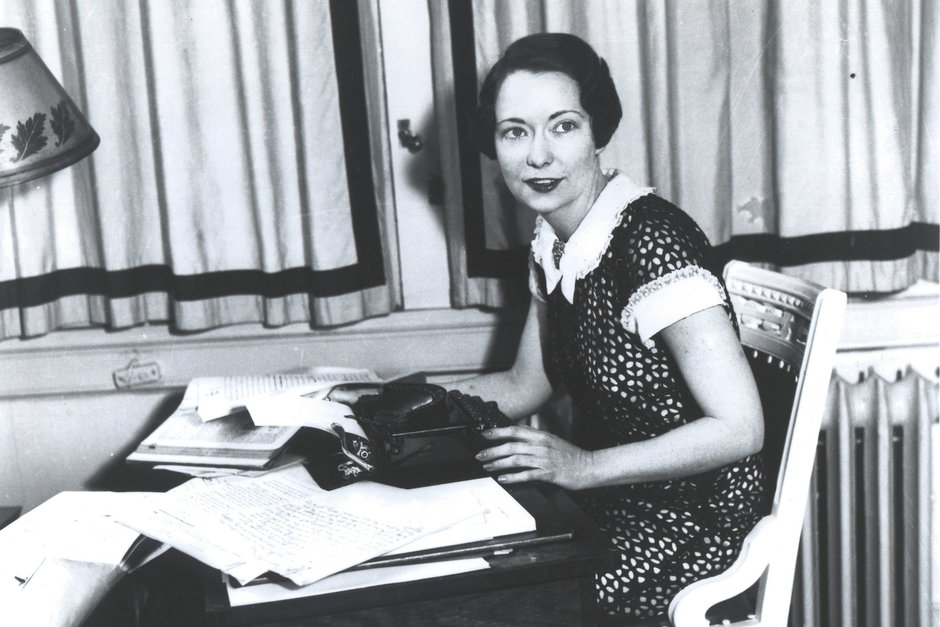
This technique — writing the ending first — she borrowed from her time at the Atlanta Journal, considering it the key to a successful text.
— I pictured every detail clearly in my head before I sat down at the typewriter, — she explained. “Then the characters can't get out of control and do things you didn't plan.
Around this final scene, Mitchell built the entire story, from the second chapter unfolding the plot from antebellum life to war and Reconstruction, and wrote the first chapter last. Mitchell completed the main part of the novel in three years, creating nearly seventy chapters stored in manila envelopes.
The plot was not born immediately. Before starting her main novel, Mitchell wrote a tragic story, “Ropa Carmagin” — about the love of a white girl and a mixed-race youth during Reconstruction. She showed the story to her husband, but he was not impressed and advised her to think of another plot. In early 1927, Mitchell began writing a novel about the Civil War era. She chose Georgia rather than Virginia, which, in her opinion, had received too much attention in previous war books.
Mitchell grew up on the stories of Confederate veterans. Her mother was the president of the Historical Society in Atlanta, and her daughter had access to an extensive library. Rumors had it that Mitchell even rode horseback with Confederate veterans to verify details of that era. Margaret meticulously checked information:
— I spent ten years reading thousands of books, documents, letters, diaries, and old newspapers, — she wrote to a reader in 1937.
The main character was initially named Pansy O'Hara. Mitchell conceived her as a spoiled and headstrong coquette who matures on a cotton plantation ravaged by war. The decision to rename Pansy to Scarlett was made just before publication. She rewrote the name by hand in the final edit, and it appears in the text more than two thousand times. Perhaps Mitchell wanted to connect her heroine to another atypical literary Southerner — Hester Prynne from Nathaniel Hawthorne's “The Scarlet Letter.”
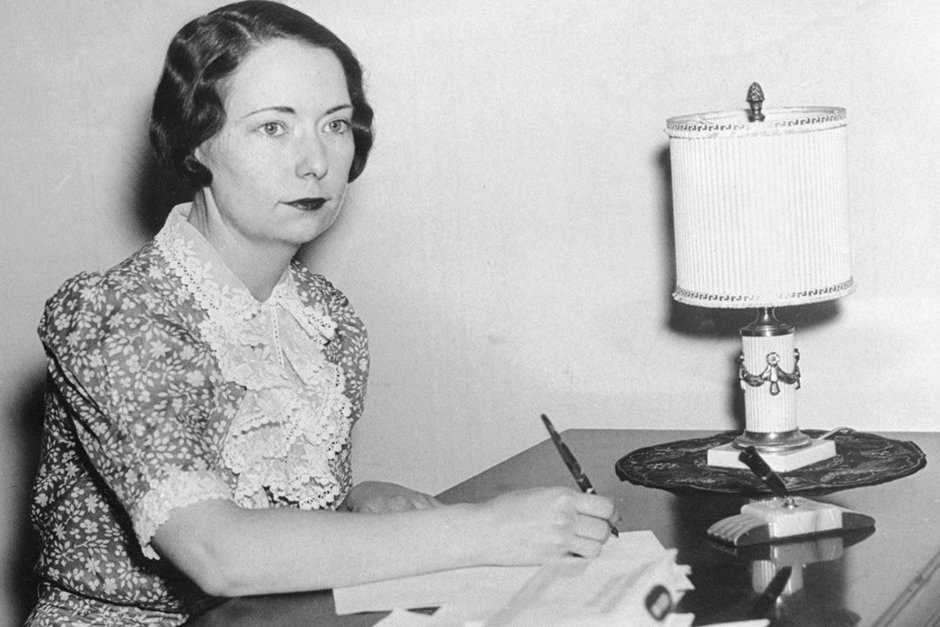
Mitchell harbored no illusions about Scarlett's character. Journalists constantly asked if she had written the heroine based on herself. For a long time, Mitchell evaded the question, but one day she lost her temper:
— Scarlett was a whore, and I am not.
However, the writer's life and her character intersected in details. Margaret, like Scarlett, was engaged three times and married twice. The widowed Scarlett provokes a scandal by dancing a quadrille in mourning. Margaret Mitchell also shocked the public by performing an almost erotic Apache dance at a debutante ball.
The prototypes of the main male characters were real men in Mitchell's life. At 18, she became engaged to Harvard graduate and U.S. Army Lieutenant Clifford Henry. He was an excellent marksman, wrote poetry, knew literature and philosophy, and was shy and gentle. Mitchell portrayed Ashley Wilkes, Scarlett's main love, just like that. Henry died in France during World War I, and every year on the anniversary of his death, Mitchell sent flowers to his parents, calling Henry the great love of her life. But the traits of her first husband, bootlegger Berrien Upshaw, went to Rhett Butler. Their marriage lasted only three months: Upshaw beat and attempted to rape Mitchell, and she left him. For the next 27 years, she kept a pistol in her nightstand in case he returned. However, Upshaw's unprincipled nature, passion, and tendency to earn money illegally made him an ideal prototype for the blockade runner Butler.
Mitchell gave Rhett Butler's appearance and mannerisms to Rudolph Valentino. In 1923, she interviewed the era's leading sex symbol. The meeting made a deep impression on the journalist; at parting, Valentino picked her up and carried her off the hotel terrace. The description of Scarlett's first impression of Butler literally repeats the description of Valentino in that very article:
— He looked older, his face was so swarthy that his white teeth flashed in contrast to his skin. His eyes were bored but polite, his voice hoarse, low, enveloping.
By 1932, Mitchell's leg had almost healed, but she was thoroughly tired of the manuscript. Only the first chapter and a few war scenes were missing, but Margaret abandoned the work. The text gathered dust under towels for three years until the spring of 1935, when Macmillan editor Harold Latham arrived in Atlanta. He was hunting for new manuscripts in the South and, through a mutual friend — editor Lois Cole, who worked at the local Macmillan branch — learned about Mitchell's novel. Cole had not read the manuscript but believed in her friend's talent and convinced Latham that the book was worth his attention. At first, Mitchell denied the existence of the novel. But when an acquaintance remarked that she was not serious enough to write a novel, Mitchell, in a fit of ambition, gathered all the envelopes and took them to Latham's hotel. He bought a suitcase to carry them and read the manuscript on the train to New Orleans.
Even after handing over the manuscript, Mitchell hesitated and asked for it back. Latham, afraid she would give the book to another publisher, ignored her request. In July 1935, Macmillan offered her a contract: a $500 advance (of which $250 were paid immediately) and 10% royalties on each copy sold up to 10,000 copies and 15% after. The terms were sensational for a debut novelist, and Mitchell agreed.
But she underestimated the volume of edits and promised to deliver the book by the following spring, which turned into seven months of frantic work. Margaret verified dialects, rewrote chapters dozens of times, and added historical details. Incidentally, Mitchell is still the only author critics have failed to catch in a historical inaccuracy. Together with her husband, she cut and rearranged parts and rewrote the first chapter. And most importantly — changed the heroine's name: Pansy became Scarlett.
Mitchell submitted the manuscript to the publisher under the title “Tote Your Heavy Load.”
Macmillan rejected the title, and the writer sent a list of 24 options, including “Tomorrow Is Another Day” and “Ba! Ba! Black Sheep.” “Gone with the Wind” was 17th on the list, but with a note that she liked it best. Margaret took it from a poem by English Decadent poet Ernest Dowson:
— I have forgot much, Cynara! gone with the wind... — Mitchell also inserted this line into the text: in the scene of the flight from Atlanta, Scarlett wonders if the wind has also carried away Tara itself.
In June 1936, when the book came out, Margaret had no idea what fame and scandal would befall her. The open ending, where Scarlett mutters “Tomorrow I'll find a way to get Rhett back," provoked a flurry of letters. Mitchell was categorical in her decision. While preparing the edits, she warned the publisher: “I will change the ending as you wish, except to make it happy.” To readers, she answered briefly:
— I think Rhett could have found someone better.
One million in six months
On June 30, 1936, Macmillan published Margaret Mitchell's novel “Gone with the Wind.” The first print run was 176,000 copies. The entire run sold out in three weeks. Mitchell expected to sell 5,000 copies, but reality exceeded all forecasts.
The novel set incredible records for the Great Depression era. 50,000 copies were sold per day. In the first six months, a million readers bought the book. And this at a price of $3 — an unprecedentedly high cost for that time. By the beginning of the 21st century, global sales had exceeded 30 million copies in 40 languages. “Gone with the Wind” had overtaken “Uncle Tom's Cabin” in sales by the mid-1940s.
However, success also brought problems. International copyright was imperfect in those years, and pirates actively exploited this. Mitchell, along with her brother Stephens and husband John Marsh, spent years in litigation with foreign publishers releasing unauthorized and poor-quality versions of the novel. These lawsuits drew attention to gaps in legislation and ultimately helped tighten copyright protection for American writers.
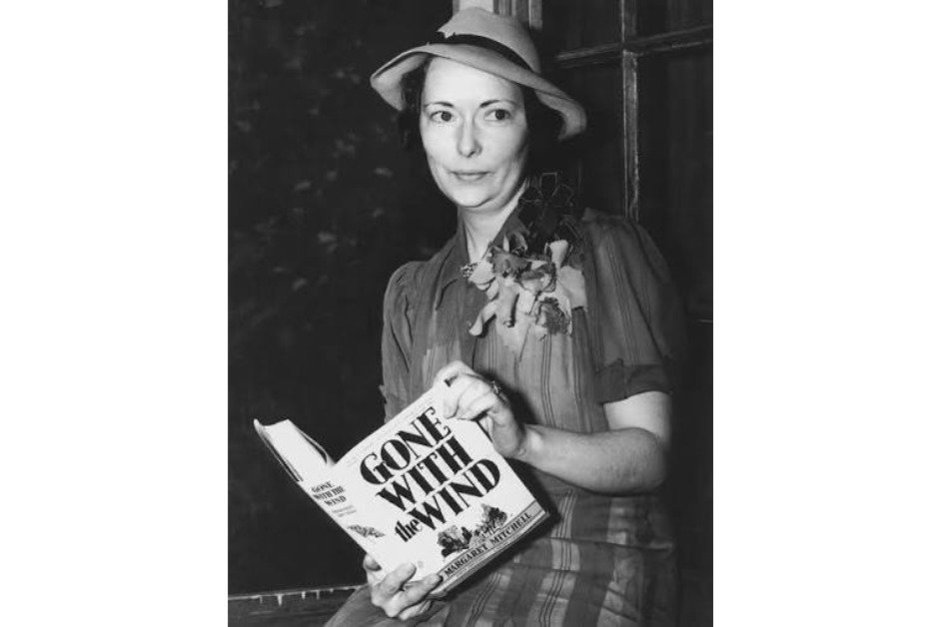
In May 1937, the novel received the Pulitzer Prize in the category “Best Fiction Book.”
Interestingly, the same year saw the release of “Absalom, Absalom!” by William Faulkner — also a novel about the Civil War and the decline of the South. But unlike the optimistic “Gone with the Wind," Faulkner's Southern Gothic showed societal decay and the curse of slavery. The Pulitzer committee chose Mitchell.
The readers' delight was not shared by literary masters. They relegated the novel to mass literature, a second-tier bestseller. The New York Sun noted a successful copying of the structure of “War and Peace," but Mitchell rejected the comparison, stating:
— Tolstoy and other Russian writers are boring.
Other critics looked for borrowings in “Vanity Fair," but Mitchell said that in childhood, she would rather have been skinned alive than read Thackeray. But the harshest accusations concerned plagiarism. In 1937, Susan Lawrence Davis, author of “The True Story of the Ku Klux Klan," sued Mitchell. Davis claimed that “Gone with the Wind” was a fictionalized retelling of her documentary work. She prepared a 400-page proof, pointing to identical cover colors, matching battle sites, and the use of the same post-war neologisms: scalawag (a contemptuous term for Southerners who cooperated with former slaves) and carpetbagger (a contemptuous term for Northerners who profited from the ruined South). Davis demanded $6.5 million in compensation, but the judge dismissed the case as unfounded.
There were also rumors that the novel was written by Mitchell's husband John Marsh or that she paid Sinclair Lewis, the first American Nobel laureate, for the text. Mitchell did not comment on these rumors.
“Gone with the Wind” remained the only novel published during Margaret Mitchell's lifetime. After the book's release, she refused any literary sequels. The writer explained that she was no longer interested in literature. However, the reasons were deeper. She spent all her free time answering readers: in the first years after publication, Margaret replied to every letter.
With the outbreak of World War II, Mitchell turned to charity: she sold war bonds, raised money for the Red Cross, rolled bandages for the front, wrote letters to soldiers, and even sponsored the construction of two cruisers. In 1941, she secretly created a fund at Morehouse College, an African American institution, to pay for medical school tuition. Thanks to this scholarship, more than 50 African Americans became doctors. According to legend, Mitchell funded these scholarships in memory of her maid, who died painfully of cancer without receiving help due to segregation restrictions.
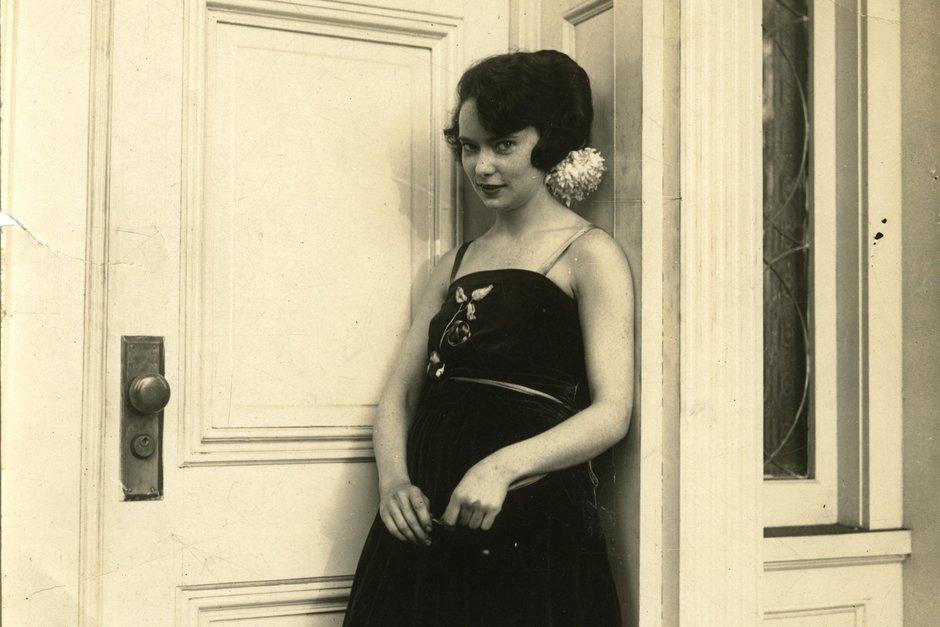
By the end of the 1940s, when the hype around the book had subsided, Mitchell began considering ideas for a new novel. But on August 16, 1949, she was hit by a car at an intersection in Atlanta. Margaret never managed to write anything. In 1996, for the 60th anniversary of “Gone with the Wind," the publisher released the story “Lost Laysen," which Mitchell wrote at 16. It was found among her father's papers and donated to the writer's museum.
Mitchell herself insisted on the destruction of the “Gone with the Wind” drafts. After her death, her secretary and building caretaker burned the manuscript in a trash can. Margaret believed that unfinished work should not be published. Nevertheless, the last four chapters survived; they were found in the publisher's archives. These pages are now on display at the Atlanta History Center.
Frankly, my dear
The film rights to “Gone with the Wind” were bought a month and a half after the book's release. Even before publication, Macmillan sent the synopsis to major studios, including MGM and Warner Bros., but they all refused — frightened by the large-scale and expensive shoot. However, David Selznick, who had just opened his own studio and had already produced “King Kong” and “Anna Karenina," decided to take a risk. In July 1936, he paid $50,000 for the rights — at the time, the highest sum for a debut novelist. Later, Mitchell was annoyed by rumors that Selznick was willing to pay $100,000 and that other producers offered to buy the rights for $150,000.
Mitchell did not participate in the film's production. She worried that the film would not capture the spirit of the book and would not meet public expectations, and flatly refused to publicly associate with the project. Later, Selznick offered her his Oscar for Best Picture as a token of gratitude, but she refused. However, in 1942, she accepted a $50,000 bonus he sent as a gesture of appreciation.
Turning the two-volume novel into a screenplay required the efforts of 16 writers. The main work was done by Sidney Howard; his version ran six hours. Selznick and director Victor Fleming locked themselves in an office for a week to cut the script. They decided not to eat so as not to disrupt the work rhythm. On the fifth day, Selznick lost consciousness from hunger, and on the sixth, Fleming suffered a retinal hemorrhage from lack of sleep. The script was then handed over to F. Scott Fitzgerald for polishing. He wrote the most iconic scenes: Scarlett and Butler's dance at the charity ball, Melanie's childbirth, the flight from burning Atlanta, and Ashley's furlough visit.
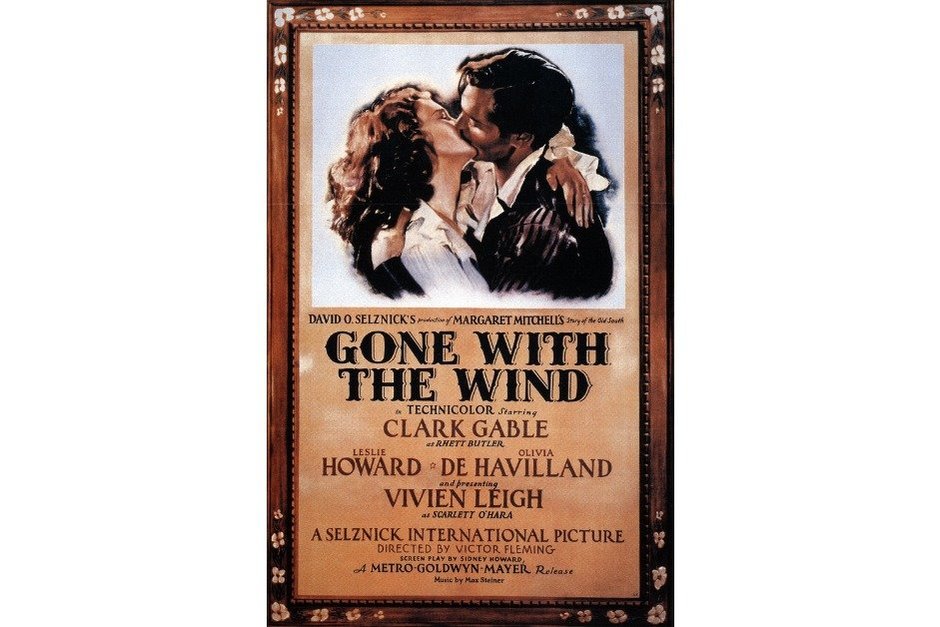
The shoot lasted 140 days. For the escape from burning Atlanta scene, the “King Kong” sets had to be burned. They were taking up space on the lot Selznick rented for building Tara. Instead of lengthy dismantling, the director ordered the old structures to be repainted, a few city facades hung, and set on fire. The actress for Scarlett had not yet been chosen, and Clark Gable was on other shoots, so the silhouettes of the main characters against the fire were played by stunt doubles.
The search for the lead actress took two and a half years. Selznick auditioned about 1,400 girls. Margaret Mitchell wanted Scarlett to be played by Katharine Hepburn, who had previously played a Northerner in “Little Women.” But Selznick was categorical:
— I can't imagine Rhett Butler chasing her for ten years.
The producer saw Vivien Leigh in the film “Fire Over England” and invited her for a screen test. There were many dissatisfied with the choice. The “Florida United Daughters of the Confederacy” considered that a British actress insulted “Southern womanhood," the “Confederate gray uniforms," and the heroes of the War for Independence.
In the finale, Rhett Butler utters the phrase: “Frankly, my dear, I don't give a damn.” At the time, the word “damn” was considered profane and prohibited by the Hays Code. Selznick considered it important to end the film with this exact phrase and began a lengthy correspondence with the Producers Association. On November 1, 1939, a month and a half before the premiere, an amendment was added to the Code allowing “damn” in historical films. The phrase topped the American Film Institute's list of most famous movie quotes.
The premiere took place in Atlanta on December 15, 1939, and turned into a three-day celebration. Thousands of fans gathered at the theater to greet the stars. The film won 8 Oscars out of 13 nominations, including Best Picture, Best Actress, and Best Director. “Gone with the Wind” became the first color film to win Best Picture. The record for the number of awards stood for 20 years until “Ben-Hur” won 11 statuettes in 1959.
Hattie McDaniel, who played Mammy, became the first African American actress nominated for and winning an Oscar. Initially, she was not going to be invited to the ceremony. After lengthy negotiations, including with the assistance of actor Clark Gable, the invitation was sent. True, McDaniel and her agent were instructed to sit in the corner of the hall, away from the other guests.
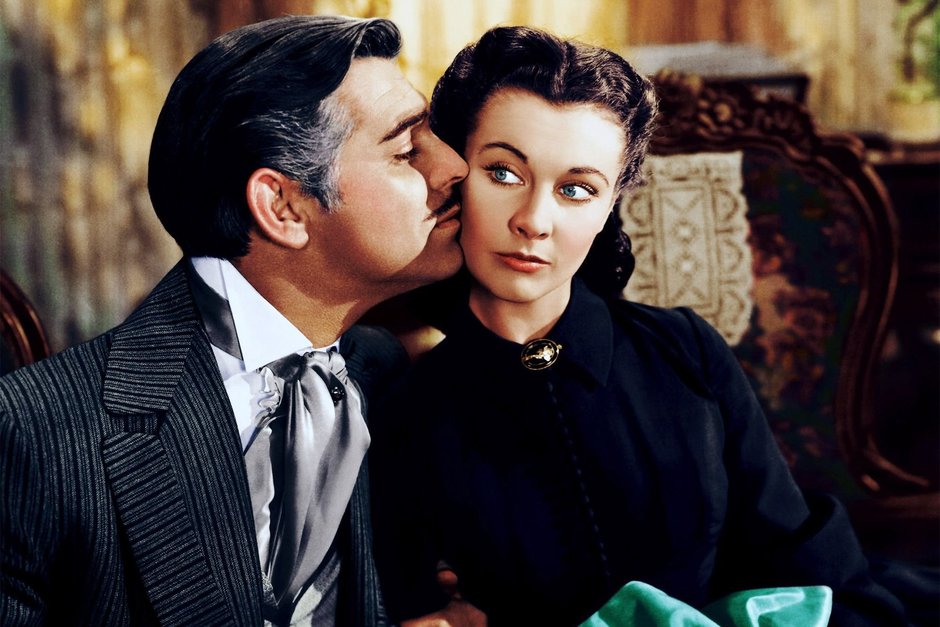
In 1976, HBO bought the rights for television broadcast. On June 11, the four-hour film was watched by 130 million Americans out of a population of 218 million. Over four weeks, HBO showed the film another 14 times, drawing tens of millions of viewers.
“Gone with the Wind” still remains the highest-grossing film in history. The adaptation turned the book into a cultural symbol. In 1939, Macy's department store devoted several floors of its main store to film-related merchandise under the slogan “The Old South comes to the North.” In 1989, the film was entered into the National Film Registry as culturally, historically, and aesthetically significant.
104 times “nigger”
The main criticism of the novel is its depiction of slavery and war. Mitchell grew up on stories of “Southern heroism” and long did not understand that the Confederacy had lost:
— I was ten when I learned that General Lee had been defeated; I was outraged by the news. I still find it hard to believe, — the writer said.
She described the war from the words of eyewitnesses, and her grandmother consulted her throughout the work. The novel became revisionist, following the “Lost Cause of the Confederacy” concept. In this version, the South is a flourishing civilization with a chivalrous attitude toward slaves, and the Northerners are barbarian destroyers. Mitchell herself was glad that her book helped refute the impression of the South people got from “Uncle Tom's Cabin.” The racial question is central to the novel: the word “nigger” appears 104 times — spoken by black characters, white characters say “negro” (202 times). Mitchell also used the word “darky” 124 times and “black” 115 times. A total of 545 mentions of race on 1,037 pages.
The film echoed the book's ideology. Opponents of the adaptation even before filming argued that a film romanticizing slavery would strengthen racism in the US and sympathy for Nazi Germany. Unions and rabbis wrote to Selznick:
— 'Gone with the Wind' resurrects theories of racial inferiority that science has rejected, but which Hitler uses against the Jews.
In Nazi Germany, the novel was published in 1937; reviewers praised the patriarchal and racial order. In four years, the book went through 16 editions, but in 1941 it was banned. Hitler and Eva Braun, who admired Gable, watched the film in their home cinema many times.
After the film's release, African American critics called it “a weapon of terror against black America.” Carleton Moss wrote that the film “offers a motley collection of flat black characters that offend black audiences," singling out Hattie McDaniel's Mammy as “particularly disgusting.” Teenager Malcolm X, the future leader of the Black rights movement, recalled:
— I was the only negro in the theater, and when Butterfly McQueen began her performance, I wanted to crawl under the rug.
In the black press, the film was called more dangerous than the 1915 silent film “The Birth of a Nation”: "'The Birth of a Nation' was such blatant lies that any idiot could see through it. 'Gone with the Wind' is a subtle lie, so subtle that millions will swallow it.”
Despite protests, the white press, including The New York Times, published enthusiastic reports. At the Atlanta premiere, there was not a single African American actor due to segregation laws. But the choir of the Ebenezer Baptist Church, where ten-year-old Martin Luther King Jr. sang, performed in slave costumes against the backdrop of a model of Tara.
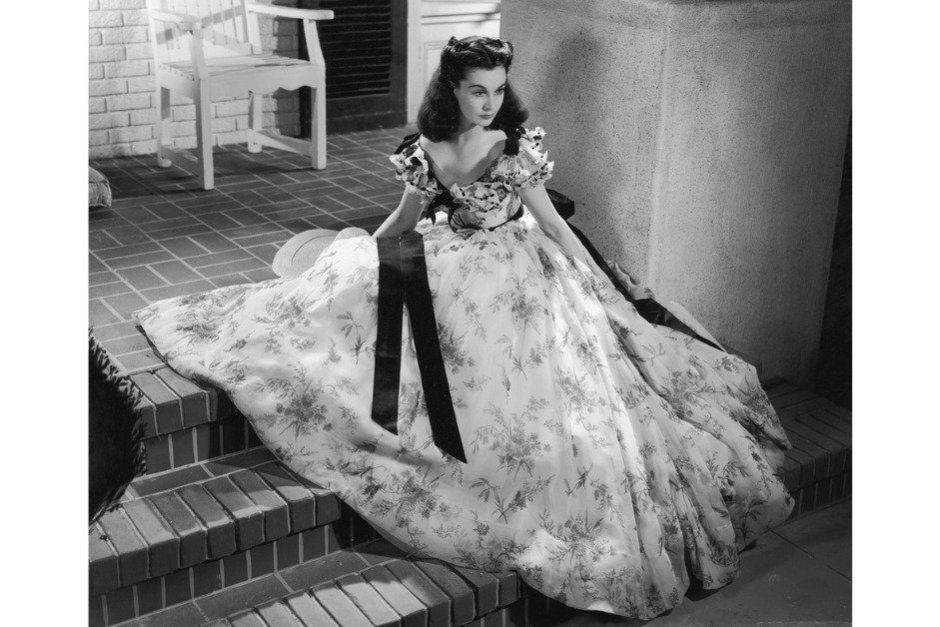
In 1982, researcher Zack Metter added a new item to the film's criticism. He called the scene where Rhett Butler forces himself on Scarlett a “romanticization of marital rape.” Metter considered particularly harmful not the scene itself, but the following morning:
— Scarlett stretches lazily among the rumpled sheets with an expression of satisfaction on her face. Obviously, the viewer is supposed to understand that this stormy night revealed Scarlett's true passion for her husband. This scene romanticizes one of the most dangerous myths about sexual coercion — the myth that women actually like it.
In 2020, amid protests following the murder of George Floyd, the screenwriter of “12 Years a Slave," John Ridley, published an open letter to HBO Max in The Los Angeles Times. He called for the removal of a film that “romanticizes the Confederates and legitimizes the notion that their separatist movement was something noble, rather than a bloody rebellion to preserve the right to own people.” The next day, HBO Max temporarily removed the film from the catalog. Later, the film was returned with an introductory word from film historian Jacqueline Stewart, who promised to “place the film in its multiple historical contexts.” Stewart explained:
— It is precisely because of the ongoing painful patterns of racial injustice that 'Gone with the Wind' should remain in circulation. It is an ideal text for studying the manifestations of white supremacy in popular culture.
However, she also noted that actors Hattie McDaniel and Butterfly McQueen “bring notable humanity to their stereotypical roles” thanks to their unique facial expressions and gestures. Researchers acknowledge: Selznick's decision not to allow black actors to the premiere and McDaniel's place at a separate table at the Oscar ceremony illustrate “how deeply racism limited opportunities for Black people.”
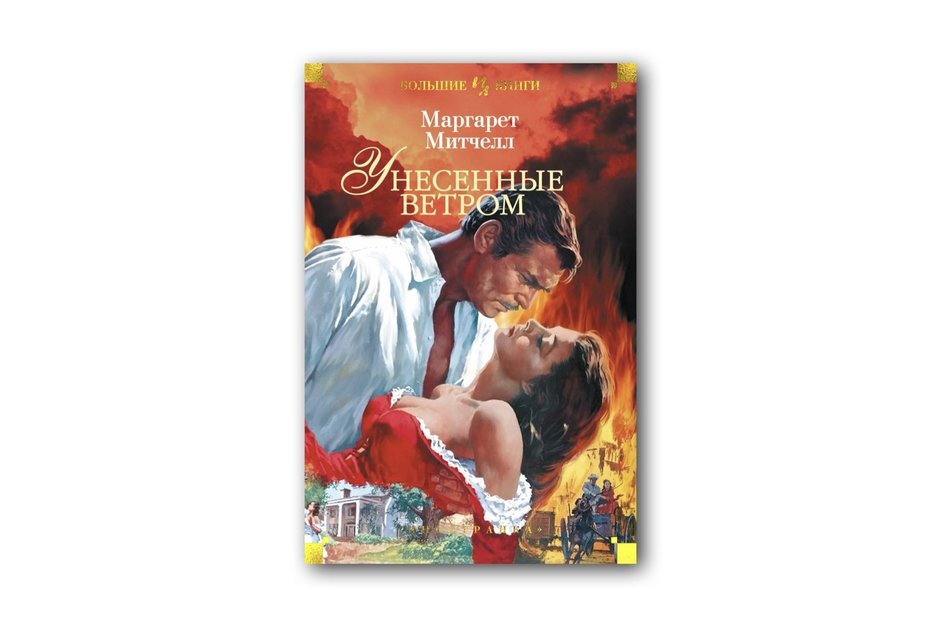
Today, the novel remains at the center of controversy. Historian Kelley Carter Jackson, who teaches a course on slavery in film, says of her students:
— They say: 'I love “Gone with the Wind” and I hate “Gone with the Wind.”'They love the aesthetic, but they know I'll make them dig deeper. And when they dig, they say: 'This is terrible.'
According to 2014 polls, the novel remained the most read book in the US after the Bible. The Library of Congress included it in the list “Books That Shaped America.” At the same time, researchers emphasize: the novel defeated “Uncle Tom's Cabin” in ratings, cementing for decades an image of the South that never existed. And this battle of interpretations is unlikely to end. Every year, new attempts appear to reinterpret Mitchell's legacy, from the official sequel “Scarlett” in 1991 to the parody “The Wind Done Gone” by Alice Randall, which the heirs unsuccessfully tried to ban.
Publisher: Azbuka
Translation from English: Tatyana Ozerskaya, Tatyana Kudryavtseva
Number of pages: 1088
Year: 2026
Age rating: 16+
Ekaterina Petrova — literary critic for the online newspaper Realnoe Vremya, host of the Telegram channel «Булочки с маком».