Radik Salikhov: “They say the Tatars were invented by Mardzhani — this is simply falsifying history”
Director of the Sh. Mardzhani Institute of History — on the results of 30 years of work and what still needs to be done
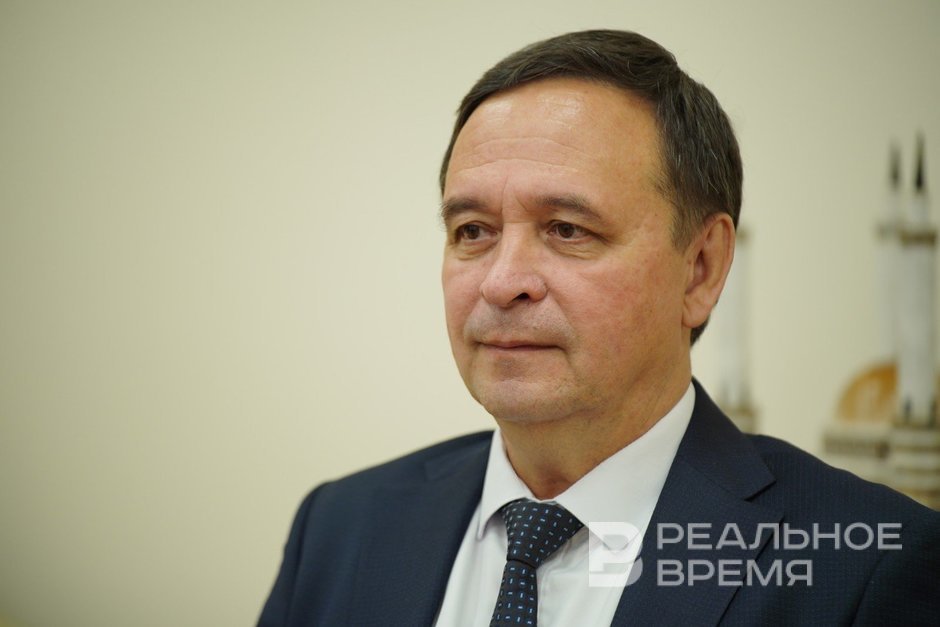
The Sh. Mardzhani Institute of History of the Tatarstan Academy of Sciences celebrated its 30th anniversary. The international conference “Historical Science in the Context of Civilizational Development and International Cooperation” was timed to this memorable date. In an interview with Realnoe Vremya, the institute's director, Radik Salikhov, who has worked there since the very first days of its opening, sums up the institution's activities. According to the scholar, despite the achievements, the history of the peoples of Tatarstan requires deeper research.
“The creation of a separate scientific structure was an urgent need”
— Radik Rimovich, you have been working at the Sh. Mardzhani Institute of History since the very beginning of its activity. Do you remember the atmosphere that prevailed here when part of the departments of the Institute of Language, Literature and History became the base for creating the institute?
— The institute was filled with enthusiasm, especially in the history and archaeology departments. The creation of a separate scientific structure was an urgent need. It was already on the agenda in the late 1980s, when the issue of writing a large, comprehensive history of the Tatar people, based on new sources and research approaches, became acute. In the G. Ibragimov Institute of Language, Literature and History throughout the 1990s, there were heated discussions about the ethnogenesis of the Tatars, the origin of the people, and the interpretation of certain events. A completely correct and balanced decision was made to create a separate institute so that it could purposefully deal specifically with historical issues at a professional level.
It was also very important that the institute was established by decree of the first president of the republic, Mintimer Sharipovich Shaimiev, and was headed by the well-known statesman and public figure Rafael Sibgatovich Khakimov, a supporter of new trends in historical science. Most importantly, he was the creator of a special creative atmosphere in the research team. The first years of the institute passed with enthusiasm and optimism, despite the fact that there were certain difficulties and the necessary research infrastructure did not appear immediately. But many bright scientific events, discussions, disputes, and plans took place, which ultimately began to be implemented as part of the preparations for the 1000th anniversary of Kazan.
— Can we say that the result of the first decade was determining the date of Kazan's foundation?
— The determination of the city's foundation date took place before the 2000s. The conclusion of the institute's Academic Council on this matter dates back to June 17, 1999. Before that, there were two years of intensive research. The development of a unique methodology stimulated the development of other scientific historical directions — source studies, archaeology, and auxiliary historical disciplines. It had a serious impact on establishing close contacts and cooperation between the young institute of history and leading institutions of the Russian Academy of Sciences and foreign scientific centers. Importantly, when applying this methodology and determining the age of the capital of Tatarstan, broad interaction was established with representatives of the natural sciences. The results of archaeological research underwent multi-layered natural-scientific expertise, which formed the basis for determining the millennium date.
— Has the agenda changed now? For example, the dispute between supporters of the Bulgar and Horde theories of the origin of the Tatars no longer seems relevant?
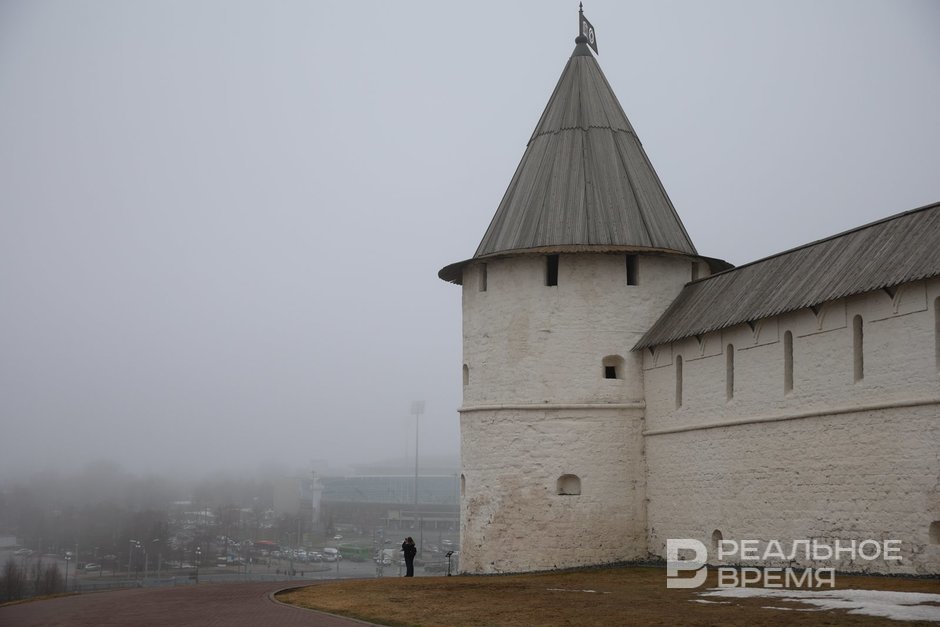
— Disputes, especially in the non-scientific environment, about the origin of the people in one form or another are still ongoing. The concept of Bulgarism, which dominated the Soviet period, of course, had a very serious impact on public consciousness. But I would not say that the discussions are of a global nature. The question of the origin of the people, their relationship both to Volga Bulgaria and to the Golden Horde, remains relevant.
Yes, at the beginning of the 1990s, there were two opposing points of view: either we are descendants of the Volga Bulgars, who were conquered by the Mongols, or conversely, descendants of the conquerors who came from the East. However, most of our scientists considered the ethno-political processes of the Middle Ages to be a more complex phenomenon in which there is no place for extremes. The history of the Tatar people is viewed in modern historiography in close interconnection and conditionality of various stages of statehood: from the empire of the Xiongnu, the Turkic Khaganates, Great and Volga Bulgaria to the Golden Horde and the Kazan Khanate. What is defining for the ethnic and cultural development of the Tatar people is their historical existence within Russian civilization, in fraternal unity with the Russian and other peoples of our country.
“Among the current tasks are preserving the national identity and historical unity of the Tatar people”
— When did the institute, alongside the Tatars, begin to study the history of other peoples of the Volga region?
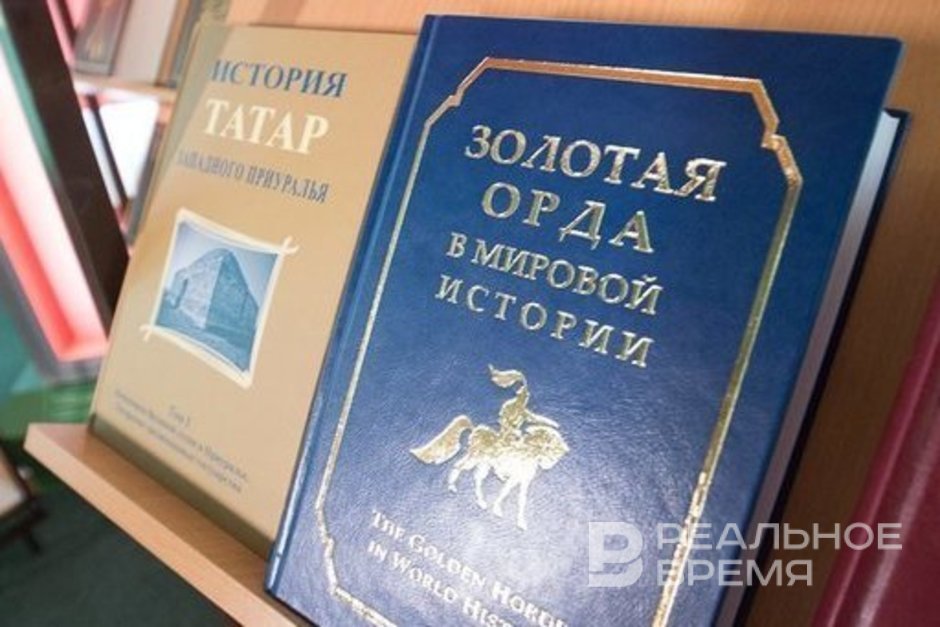
— The main work during which our institute developed was the seven-volume “History of the Tatars from Ancient Times.” Among the main fundamental points in preparing this edition was the firm conviction that the seven-volume work is not just a history of the Tatars, but a history of all the peoples of our region. Because it is impossible to examine the past of the Tatars in isolation from the history of the fraternal peoples of our republic, outside the context of the history of the Russian state. Today, our institute has developed an entire direction studying the regional aspects of the past of the Russian, Turkic, and Finno-Ugric peoples, as well as their cultural heritage.
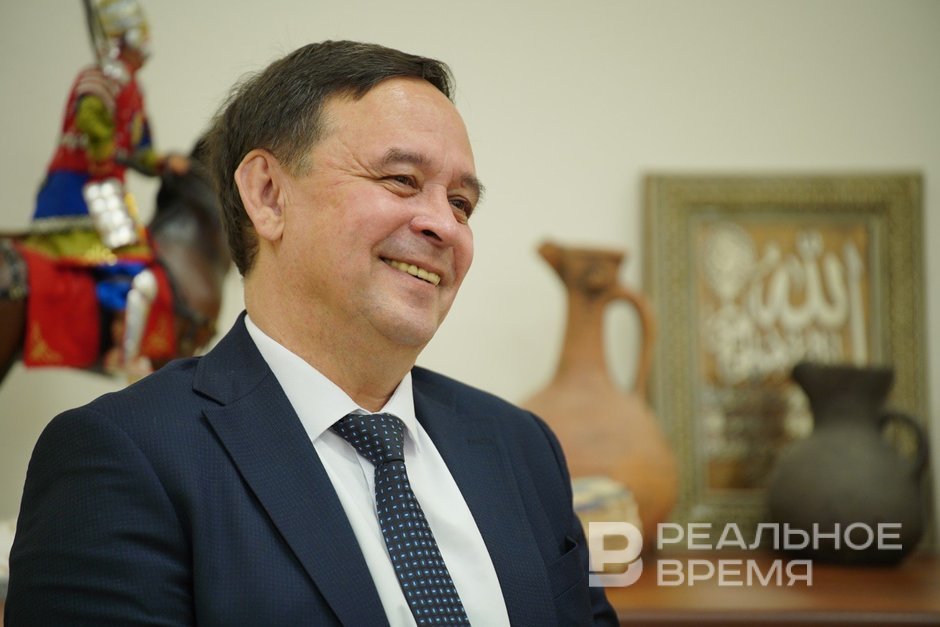
— A conference was held dedicated to the 30th anniversary of the institute. What else is planned? Plans were announced for an academic edition of the selected works of Shigabutdin Mardzhani.
— There are many plans, many publications are being prepared. This is connected both with the growing role of the Academy of Sciences of the Republic of Tatarstan in the scientific world of Russia, near and far abroad, and with the adoption of serious research programs and projects, such as “History and Culture of the Peoples of Steppe Eurasia," “Tatars in Service to the Fatherland.”
We are also implementing several state programs of the Republic of Tatarstan. A prominent role in this work is played by the extraterritorial approach; we study the history of a people living on a vast territory from the Tatar Strait to Kaliningrad. This is a large Tatar world that has an ancient and multifaceted history. We are preparing, as you noted, works on Islamic heritage, a whole complex of works on the history of the Ulus of Jochi and the post-Horde space.
We are actively developing the direction of social anthropology and everyday life, with a number of doctoral and candidate dissertations being prepared on it. A large layer of research is connected with the history of the peoples of the Volga and Ural regions from the perspective of estate culture, because it has not been studied before; it is the topic of the relationship between estate and ethnicity. And, of course, we are particularly interested in economic history: the history of the contribution of the peoples of our republic to strengthening the economic might of the Russian state, the development of our country's international trade ties, primarily with the countries of Central Asia and the East. This was relevant in the Middle Ages, and during the reforms of Peter the Great and Catherine the Great, and it is relevant today, because our region and our peoples continue to actively defend and promote Russia's interests, including on the international stage.
— What challenges does the institute face? In the mid-1990s, there was a different political agenda; what is happening now? You published an article in “Historical Ethnology” where you also engaged in polemics on some topics.
— Among the current tasks are preserving the national identity and historical unity of the Tatar people. It is necessary to work comprehensively and consistently on studying the history of the ethnonym “Tatars," because various speculations sometimes arise around it, sometimes consciously instigated by various kinds of publicists or ordinary dilettantes. Our ethnonym, which we inherited thanks to a centuries-old past, is being stripped of its historical foundation. They say that the Tatars were invented by Mardzhani or that this self-name of our people appeared only in the Soviet period. Of course, such reasoning is unprofessional; it is simply falsifying history.
We have conducted research on the history of the Golden Horde as the cradle of the ethnogenesis of the Tatar people, because the ethno-cultural foundation of the Tatar people emerged during the period of this medieval Eurasian power. It was then that the Tatar literary language was formed, in which professional literary works appeared, and the ethnonym “Tatars” ceased to be just a self-name and became known far beyond the Ulus of Jochi. All sources — Russian and foreign — call the Golden Horde the state of the Tatars. And the main capital domain of this state is located on the historical territories of the modern Tatar people, in the Volga region. First and foremost, this is the city of Bolgar, which was the first capital of the Golden Horde, where, as we believe, the meeting of Alexander Nevsky and his friend, Khan Sartak, took place. It was here that the desire for friendship and brotherhood manifested itself not only between the rulers but also between the Russian and Tatar peoples. And if we consider that in 985, the first treaty of friendship was concluded between Volga Bulgaria and the Old Russian state, then we can speak of a thousand-year tradition of brotherhood and unity between Russians and Tatars.
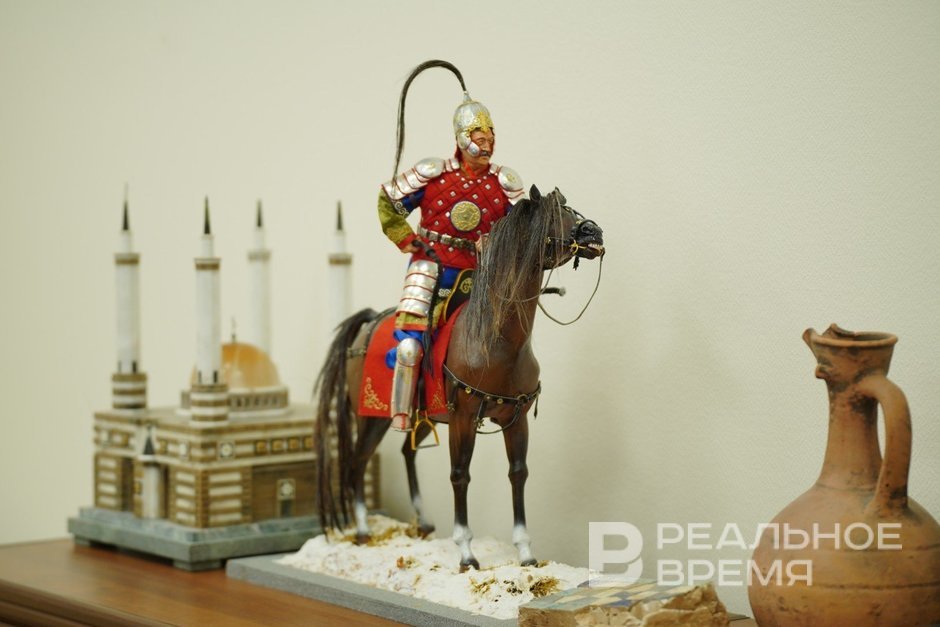
Why is the history of the Golden Horde so important? Because it is an integral part of the historical and cultural heritage of the Russian Federation; its main monuments are located on the territory of our country. For example, the complex of mausoleums near the village of Lapas in the Astrakhan region, where the great khans of the medieval Eurasian empire are buried. We see a huge interest from friendly countries in this history. And we share the view that the heritage of the Golden Horde cannot be privatized — it is the heritage of many peoples and states. In Russia, including in our republic, Golden Horde studies are on the rise; we closely interact with colleagues from the Russian Academy of Sciences and other scientific centers. Today, there is a very serious, business-like exchange of opinions on discussion platforms, joint analysis of sources and interpretation of events that took place in the Golden Horde, as the topic is complex, difficult, and in many ways dramatic, leaving an ambiguous mark on the historical memory of peoples. Our task is to overcome some negative consequences of this memory and at the same time show an objective picture of the existence of a huge country on the territory of Eurasia that had a colossal impact on the subsequent ethno-political development of the continent.
There are very relevant challenges. Now we are facing attempts to distort the ethnic history of the Tatar people: cases of non-scientific constructivism appear, pursuing the goal of dividing peoples. Some parts of the Tatar population are being pressured to change their ethnic self-awareness in certain territories, attempts are being made to privatize the historical and cultural heritage of the Tatar people, or some myths are being invented to replace the real historical picture.
All this, of course, has a very negative impact on the same issues of national identity and national unity of the Tatar people. These are, for example, attempts to single out Mishar Tatars, Kryashens, and Teptyars as separate ethnic groups from the Tatar people, although science recognizes these groups as subcultural and subconfessional groups of Tatars. In this regard, further comprehensive research is needed, the identification of new sources, and their presentation to the public to confirm the unity of our people despite all its religious and ethnographic diversity. We must respect this diversity, but in no case question the centuries-old unity of the people.
In the article you mentioned, I spoke about concepts through which people who are poorly versed in the material and have a weak understanding of the real picture of our development are trying to interpret our history. They do not notice the successes of the historical path we have already traveled. This is the so-called theory of the post-nation, according to which it turns out that the peoples of our country have no right to any form of statehood; some local communities led by imams are enough for them... This is a theory of primitive reservation for national minorities, which is being promoted in the West today. This theory is dead; it has nothing in common with the positive ethnic and ethno-cultural processes taking place in our country, where regions and republics are actively supported — all the multinational diversity of the country. And we see what successes modern Tatarstan has achieved as one of the supporting regions of the Russian Federation, one of the locomotives of the Russian economy. That is, how can one talk about a post-nation when we are a nation with high goals and a certain mission in this world?
“We should pay attention to points of contact, not conflict plots”
— A few years ago, announcing that we are developing a Center for the History of the Golden Horde, you said that Kazakhstan might have a similar one. And Kazakhstan has also seriously taken up the study of Horde history.
— We have no disagreements. Historically, the Golden Horde had two wings. The right wing is, conventionally speaking, sedentary, urbanized regions; the left is steppe culture. Although the latest research shows that there was also a steppe urban culture: archaeologists are finding remains of cities. And about us, it can be said that there was a symbiosis of nomadic and sedentary cultures. It was a single state. As I said, the Golden Horde became a cradle of ethnogenesis for both the Tatars and the Kazakhs and other Turkic peoples, the foundation of their statehood. Therefore, we have no particular disagreements.
In principle, Kazakh researchers and partners also hold the view that it will not be possible to pull the blanket over themselves, because the scientific process rejects such ideological constructs. Our scientific community, which includes Kazakh, Moscow, Kazan, and Siberian researchers (and now Uzbek researchers are also joining), we all hold the position that we should study this history together, pay attention to points of contact, not conflict plots.
— One of the valuable qualities of the institute is its presence on the internet. A significant part of your books can be downloaded online. This decision was probably not made immediately?
— This is a fundamental position: history should be the property of the entire society. We work at the expense of the budget of the Republic of Tatarstan, and the results of this work should be accessible to every person. In general, I believe that we are even falling short in this direction; we need to interact even more actively with the public, with the local history movement, although we have taken quite serious steps in this direction. About ten years ago, there was some criticism directed at us. They said we had become cocooned, frozen in our academic shell. I agreed to a certain extent with that criticism.
Over the past ten years, serious changes have occurred. We have developed quite prominent scientific educators who constantly give lectures, run blogs, and cooperate with the media: Iskander Izmailov, Bakhtiyar Izmailov, Liliya Gabdrafikova, Elena Mironova, Radik Iskhakov, Anvar Aksanov, Ilnur Mirgaleev, Aidar Gaynutdinov, Dina Gatina-Shafikova, and others.
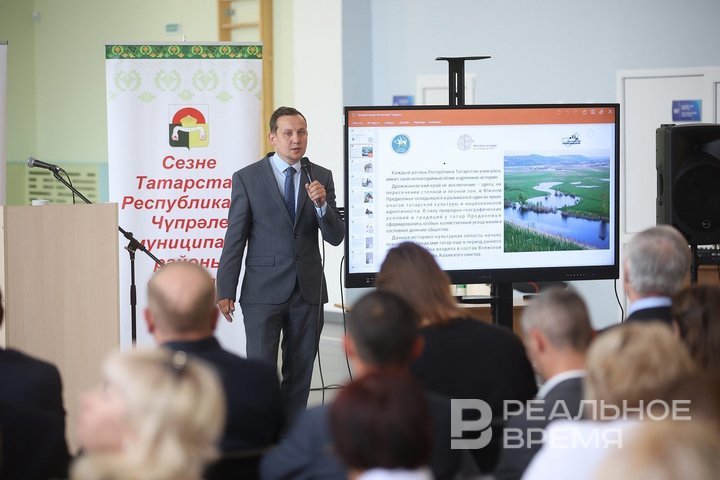
We, for example, created the lecture hall “We Must Live and Remember," which is focused solely on popularizing the contribution of the peoples of Tatarstan to the victory over fascism during the Great Patriotic War. We travel to populated areas, districts, and speak at higher educational institutions. In this regard, I want to note Alina Galimzyanova and Ilnara Khanipova. It seems to me that our institute is open to society, but we need to continue working, strengthening this openness by using new formats of educational activities. And, of course, your support is also very important, because journalists are our closest partners and like-minded people in popularizing historical knowledge.
— Probably, additional motivation for employees is important in this regard.
— First, one of the main motivations is recognition in society. This is extremely important for a specialist in the social sciences. Popularizing history, paradoxically, helps researchers to succinctly and clearly formulate their ideas and bring them to a wide audience. But there must be a balance between serious academic work and popularization. On the one hand, within our professional community, we communicate at highly specialized forums and conferences; on the other hand, new information cannot remain only there; it must reach people in some accessible form.
By the way, among the most important topics of the institute that concern and inspire us, I want to point out the concept of serving the Fatherland, which has a unifying character and helps develop new methodological approaches to studying our national history. When this concept remained unattended, we missed a huge layer of history in which service was the meaning of life for a huge number of outstanding representatives of the Tatar people — for example, the estate of service Tatars, statesmen, public and political figures, even cultural figures of the early 20th century. We rarely talk about the fact that, for example, Galimjan Barudi was a convinced monarchist and supporter of the unity of the state, a fierce opponent of any revolutionary sentiments. The theme of interethnic relations is also directly connected with this concept, because there is nothing more precious and stronger than peace and harmony between peoples and people united by love for their Fatherland.
In this regard, among our main topics is the theme of the Great Patriotic War. A sacred theme that preserves the memory of the feat of our ancestors on the battlefields and on the labor home front. We continue fundamental research and devote a lot of time to popularizing the feat of Tatarstan residents in the victory over fascism.
Speaking about the motivation of scientists, the state notices and encourages our work. At the anniversary conference, at the plenary session, a number of our employees were awarded high state awards of the republic, including for their active civic position, for work with the population, and among young people. We are very grateful to the leadership of Tatarstan for such attention to our institute.
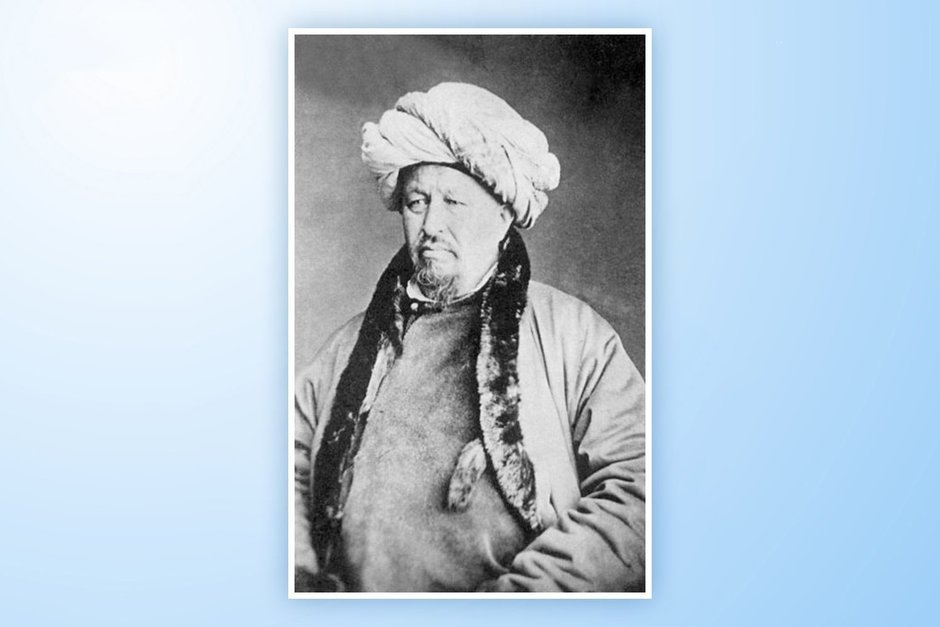
“We have great prospects for work”
— The institute has many departments. Are there any priority ones at the moment? I read, for example, that in your assessment, the 17th century has not been studied sufficiently.
— Every historical period is still insufficiently studied. Huge layers of documents have not been identified; they need comprehensive study and interpretation. Let us take, for example, the Soviet period and the role of the regional economic councils that existed during Khrushchev's time. What was their activity at the regional level? What was their interaction with the regional party committee? What were the achievements during this period, what were the miscalculations? This is one of the nuances of the history of the 20th century, our recent history. Now we have approached a big topic — the study of the development of the space industry in the country and the role of our republic in this process. Regardless of the period and the accessibility of the source, there are moments that we need to study further.
As for the 17th century, here we need to further study the estate structure of society, which also raises many questions. And history in general — the economic, administrative, and military history of our region during this difficult period of overcoming the Time of Troubles, the participation of our region in these events. The service Tatars and the entire Kazan region played a major role. Suffice it to recall that the Kazan militia marched with the icon of the Kazan Mother of God — this is also a significant fact. And there are also the reforms of Peter the Great, which are fundamentally the consequences of the 17th century. We need to look at the documents; we have started this work, recently we had a good conference together with leading source scholars from the Russian Academy of Sciences. There is a good, business-like, interested conversation among narrow specialists who understand the nuances of these sources. At the same time, alongside Russian sources, there are also Eastern ones — these are somewhat different documents; we identify them, study them, analyze them, and compare them with state records. This is quite complex work; it requires highly professional personnel.
The history of Tatar Jadidism has not been fully studied; its nature has not been fully researched. At the same time, its influence extended not only to the Volga region but also to Central Asia. Or, for example, the topic of the exodus of a huge number of Tatars to Central Asia — this also needs to be understood: how they adapted, what contribution they made, how it strengthens ties between peoples and states.
We have great prospects for work. Now, interaction with federal institutions is at a good level: the Russian Academy of Sciences, the Russian Historical Society, the Russian Military Historical Society.
— Different scientists work at the institute, authoritative specialists, and sometimes their opinions diverge. How do you, as director, treat such disagreements?
— We do not have a rigid emphasis on the “director-subordinate” relationship; we are colleagues, we are a team. We have largely horizontal management in the scientific field. These are outstanding scientists. I treat each with deep respect, whether it is a young researcher who has just defended their candidate's dissertation and is beginning their journey, or a seasoned doctor of sciences known throughout the world. We have different points of view. For their discussion, there is the Academic Council, whose meetings are not formal; we argue right at this round table.
We also publish five journals. Each has an editorial board where we discuss pressing issues. There are moments when different points of view collide, but we come to some common denominator. It is clear that key issues will be elements of discussion, which is why we have revived discussion clubs. At the same time, we agree on the fundamental positions I outlined at the beginning. We are a united team in terms of the issues I am talking about. We stand guard over our history — against falsifications and distortions. We work to preserve national identity, interethnic and interfaith peace and harmony.
— Your conference had a section for young scientists. It used to be said that there were problems with historical personnel. How are things now?
— History for every person begins with family: grandparents, native village, native region, the graves of ancestors. It would seem that we are discussing the history of the people and the country, but in fact we are discussing our ancestors, so we must be extremely careful here.
I cannot stand journalistic adjectives when some sharp historical questions arise. Here, a balanced, benevolent conversation is needed.
We should not operate with some sharp phrases, because history is part of you, part of a person's dignity.
You are right, there was a time when we were very worried about young personnel. Recently, especially after we became part of the Academy of Sciences of the Republic of Tatarstan, the situation has changed. The support of the president of the academy played a significant role. We have good competition for graduate school — several people per spot. Currently, 12 graduate students are studying, and the number of applicants is not decreasing. Good young people have appeared in medieval history, modern history, and contemporary history. I hope that after finishing their studies, they will join our academic family.
Now we are organizing a whole series of summer schools for young scientists and specialists. This year, the second school on the history of the Golden Horde was held, which is an absolutely new format. For the first time, we will hold an ethnological school in Kyrlay. Listeners from all over the country will come to a Tatar village with a magnificent museum of Gabdulla Tukay, hear Tatar speech, and get acquainted with our wonderful culture.
— The seven-volume history of the Tatars was written more than 10 years ago. Is there a plan to release a continuation or new editions of the publication?
— Absolutely. The identification of sources in archives continues. They provide new material. We are now actively developing auxiliary historical disciplines — for example, heraldry, population genetics, paleogenetics, which were poorly used in previous works.
Social anthropology is not reflected in the seven-volume work. We, by the way, are going to write the history of Soviet Tatarstan in a new edition. What is the miracle of the republic's economic breakthrough in the post-war years? It is clear that Fikryat Tabeev and other leaders played a great role in this. But other factors should also be revealed.
And why did a cultural breakthrough occur in the republic at that time? Look at the poets, writers, musicians, and directors of the 1960s: Marsele Salimzhanov, Ravil Faizullin, Renat Kharis, Radif Gatash, Rustam Mingalim, Almaz Monasypov, Renat Enikeev, Fasil Akhmetov, Renat Tazetdinov, Nailya Garaeva, Rafael Ilyasov, and many others. And our scientists? Every name is a star: Indus Tagirov, Milkasym Usmanov, Alfred Khalikov, Ravil Fakhrutdinov. Outstanding people whose memory lives on. A true Tatarstan miracle in all spheres of life, the foundation on which the Republic of Tatarstan arose.