Why the number of teams at the FIFA World Cup was increased to 48
Three reasons why the number of national teams has tripled from the original number
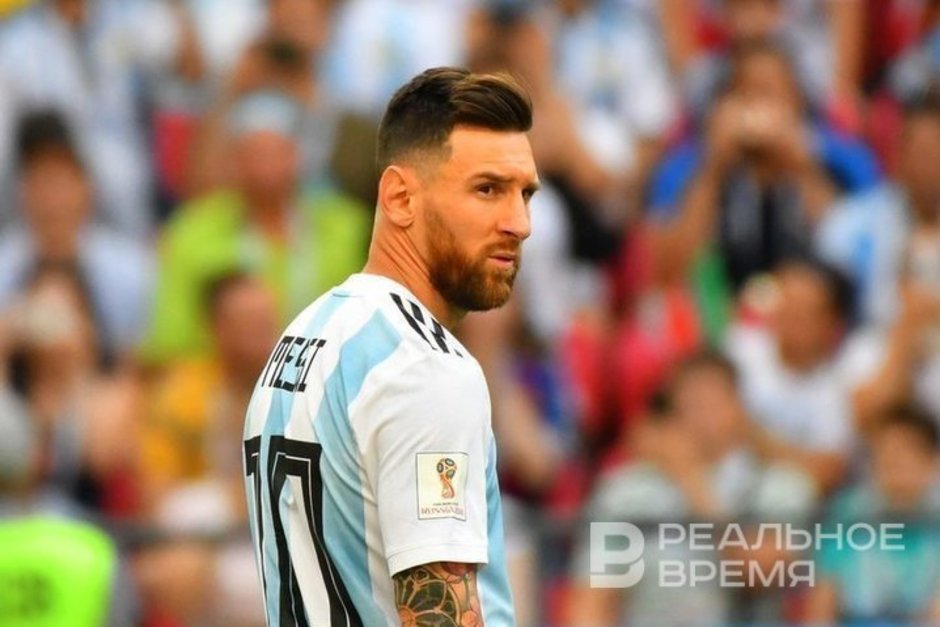
A record number of national teams — 48 — will start at the FIFA World Cup. About the reasons why FIFA continues to expand its main tournament and the World Cups that can be compared to the current one in terms of tension and political instability — in the material by Realnoe Vremya.
Africa's demarche and the cancellation of transfers to Italy
Tomorrow, June 11, the World Cup will kick off with the match Mexico vs South Africa. The competition calendar has decreed this, as the World Cup matches are divided among three countries on the American continent — besides Mexico, Canada and the USA will also host them. They will join the fray on June 12.
If we delve into memories of previous World Cups, few can compare to the current one in terms of an atmosphere of military escalation. Among post-war World Cups, the English one in 1966 stood out for its scandalousness. It would seem that the African Football Confederation had only recently been formed (1957), gathering only three national teams for continental tournaments — Ethiopia, Sudan, and Egypt. But the wave of decolonization increased the number of independent states to 16, and all of them boycotted World Cup qualification, disagreeing that the winner would also have to play play-off matches, while teams from Europe and America qualified directly.
In the end, the best team from Asia — the DPRK — went directly to the World Cup and made a “test shot” to the head of the qualification rules, beating Italy and finishing ahead of them in the group stage. The global consequence was FIFA's decision to award one full quota each to Asia and Africa for subsequent World Cups, and since then only representatives of the Australian continent have been disadvantaged. The local consequence was the refusal of the losers from Italy to sign new contracts with legionnaires in Serie A, which negatively affected Inter, whose management had already agreed on contracts with the German Franz Beckenbauer and the Portuguese Eusebio.
A record number of teams already at the qualification stage
48 participant teams are perhaps the most controversial decision regarding this World Cup, criticized even more than the three host countries. After all, this year there has already been a European Championship held simultaneously in three countries — we are talking about futsal, which could be seen live in Latvia, Lithuania, and Slovenia. Examining the dynamics of the increase in the number of participant countries at the World Cup, it is easily traceable and quite explainable. Since the period when World Cup qualification began, there were 16 teams, and the last World Cup under this scheme was Argentina 1978. Then 10 teams from Europe, 3 from South America, and 1 from the rest of the Americas, Asia, and Africa competed. But even with such a number of European teams, Czechoslovakia (the reigning European champion), Belgium and Yugoslavia (medalists of the European Championship), England and the USSR did not qualify for that World Cup.
In addition, Asia and especially Africa were growing stronger before our eyes; moreover, the latter was increasing exponentially since the beginning of decolonization. In 1957 — three independent states developing football; in 1966 — 15 independent states, five times more. Another 10 years later — 26 states. In general, the decolonization process led to 70 teams entering World Cup qualification for the 1966 World Cup, and 107 for the 1978 World Cup. This required urgent decisions, and 24 participants went to the World Cup in Spain in 1982.
By the 1994 World Cup in the USA, 148 national teams had already entered. The ongoing process of decolonization was joined by the process of the collapse of countries in Europe, when the USSR and Yugoslavia gave birth to a total of 20 states — 15 from the USSR, and 5 at that time from the former SFRY. UEFA responded by increasing the number of national teams at the European Championship from 8 (Euro 1992) to 16 (Euro 1996). FIFA was next, increasing the number of participants in the final tournament to 32 at the 1998 World Cup, when 174 national teams had already entered qualification.
The number of states continues to grow in the 21st century; currently, 210 teams have entered World Cup qualification, mainly due to microstates — Andorra, Gibraltar, Kosovo, Liechtenstein, San Marino, the Faroe Islands. UEFA itself was forced to increase the number of participants in the European Championships to 24. Ethiopia eventually split into Eritrea, Sudan, and South Sudan; India into Pakistan and Bangladesh; Montenegro with Kosovo, etc., separated from Yugoslavia. But this is not the only factor that influenced such a sharp increase in participants for the 2026 World Cup.
There are now more and more national teams composed of European footballers
The aforementioned 1966 World Cup was also memorable for the introduction of a ban on the naturalization of footballers. This rule has now been abandoned. Therefore, the Algerian team that beat Russia in the group stage of the 2014 World Cup is not the national team of the country, but of Algerian communities settled in France, many of whom even played for the youth teams of the “three-colored” (France). The strongest, like Zinedine Zidane or Karim Benzema, continued to choose the French national team; weaker players chose the land of their ancestors. Morocco played at the World Cup in Russia, with players gathered from Belgium, the Netherlands, Spain, and France. Previously, natives of Morocco played for Spain (Jose Luis, Pepito Ramos, Roberto López Ufarte); in the last 10 years, the reverse process has begun. For the current Moroccan national team, Brahim Díaz and Anas Salah-Eddine, medalists of the European Championships as part of Spain, will play. As a result, European Moroccans took fourth place at the last World Cup, although there were very few Moroccan Moroccans there.
Currently, there are European national teams of Albania (twice a participant in the final stage of the European Championship) and Kosovo, gathering their footballers from across the continent; Bosnia, composed of European Bosniaks, has also qualified for the current World Cup. Vladimir Pereturin's phrase “About fathers from Suriname," uttered during the 1988 European Championship final between the USSR and the Netherlands, was related to the fact that natives of the former colony played for the Dutch. Now, almost the entire Suriname national team consists of Dutch players, but it did not qualify for the World Cup. But the Curaçao national team, assembled on the same principle, will play. And in the team from the American continent, there are Riechedly Bazoer (European champion 2012), Sherandy Sambo (European champion 2018), Sonntje Hansen (European champion 2019), Tahith Chong (bronze medalist of Euro 2016), Armando Obispo (bronze of Euro 2017).
The national teams of Ghana, Cape Verde, Canada, Qatar, Tunisia, and Turkey are assembled “one athlete from all over the world.” The Congo national team, for which Rubin Kazan player Chris Mavinga used to play, seems to be a World Cup debutant with Spartak Moscow player Theo Bongonda in the lineup. But there is also European junior champion Gaël Kakuta from the French national team, and two former Englishmen, Axel Tuanzebe and Aaron Wan-Bissaka, who played in an unforgettable Europa League final against Spanish Villarreal as part of Manchester United. It was made unforgettable by a penalty shootout of 11 kicks, when victory for the Spaniards was brought by a kick from their goalkeeper Gerónimo Rulli, who now defends the colors of the Argentine national team. In total, the Congolese have five former Belgians and five former Frenchmen.
Previously, Ghanaians had relatives among Europeans — the Boateng cousins (Jerome for the German national team, Kevin-Prince for the Ghanaian national team at the 2010 and 2014 World Cups), the Williams brothers (Iñaki for the Ghanaian national team, and Nico for the Spanish national team at the 2022 and 2026 World Cups). Now, Luca Zidane, the son of famous Frenchman Zinedine Zidane, will be in goal for Algeria; Rani Khedira, the brother of famous German Sami Khedira, will play for Tunisia; Timothy Weah, the son of former football star and then President of Liberia George Weah, will defend the colors of the USA. These are not national teams of their own countries; they are national teams of footballers, mostly from Europe, who have roots in these countries. And Bosnia, assembled from all over Europe, managed to leave the Italian national team out of the World Cup. This gives an understanding that while Russia is unable to assemble even one competitive national team, the favorites of world football — England, Belgium, Germany, the Netherlands, Spain, France — are already on an industrial scale replenishing the national teams of Asia, America, and especially Africa.
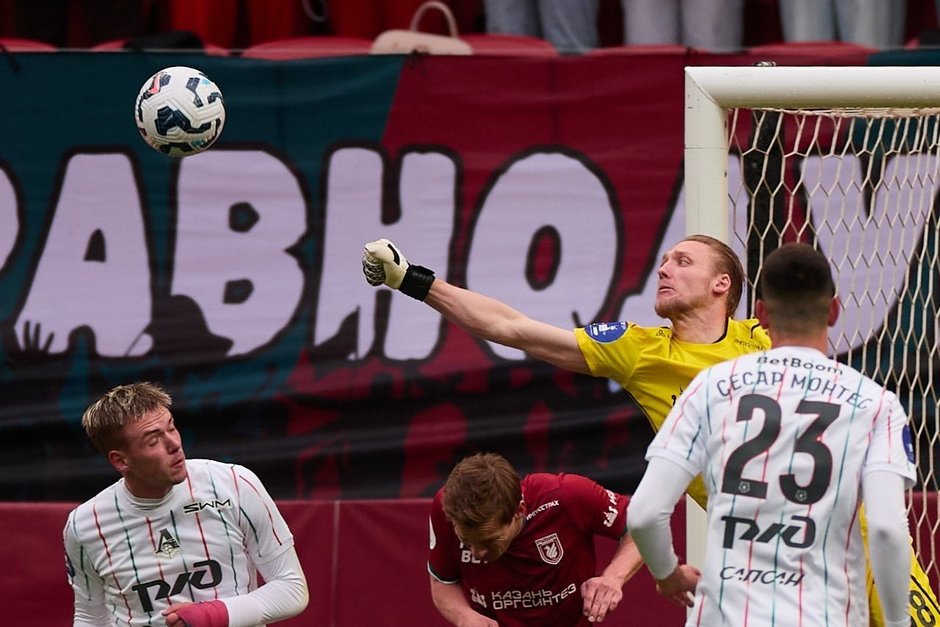
The last championship of star veterans
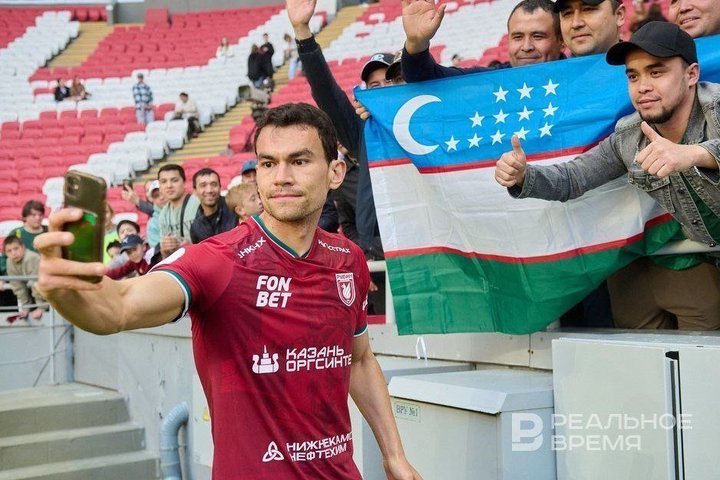
Interestingly, four former Rubin Kazan players will play at the World Cup. Frenchman Montassar Talbi, playing for Tunisia; Rustam Ashurmatov from Uzbekistan; Carl Starfelt from the Swedish national team; and South Korean Hwang In-beom. Since the Korean left Rubin for Seoul, using FIFA's contract suspension right, it's doubtful he has many fans in Kazan now. Likewise, two natives of Sweden, Armin Gigovic and Dino Husic, playing for the Bosnia and Herzegovina national team. They also fled from FC Rostov while under active contracts. Plus Roderick Miller for the Panama national team, a current player for the Turan club from Tovuz, coached by Kurban Berdyev.
Additionally, 12 current players from the Russian Premier League will go to the World Cup, as well as 26 footballers who played in the recent past, mainly for the national teams of Iran and Uzbekistan. It is worth recalling that at the 1998 World Cup, when the number of teams increased to 32, the only connection with Russia (which did not qualify) was the Nigerian Augustine Eguavoen, who had recently signed a contract with Moscow Torpedo.
What else is interesting? Previously, only former CSKA player Nikola Vlasic could boast of his star sister, Blanka Vlasic, a Croatian world athletics star in high jump. From this World Cup onwards, there are three such players, since Qatar goalkeeper Meshaal Barsham has an older brother who was a high jump superstar, Mutaz Barshim. South African Ime Okon has a younger brother, Udeme Okon, who already became a bronze medalist at the World Championships in the 400m relay last year, plus he has gold from the 2024 World Junior Championships.
Scottish goalkeeper Craig Gordon will turn 44 in December, and from the time he debuted for the national team at Euro 2000 to the current start, there has been a 26-year gap.
For Lionel Messi, Cristiano Ronaldo, and Mexican goalkeeper Guillermo Ochoa, this World Cup will be their sixth; for Oliver Neuer, Luka Modric, and Uruguayan goalkeeper Fernando Muslera — their fifth.
The US national team will feature Giovanni Reyna and Sebastian Berhalter, whose fathers played for the US national team back in 1994. Moreover, Claudio Reyna played in the home World Cup that year, and Gregg Berhalter made his national team debut in the autumn of the same year.