Venezuela's Dream: How Miguel Bonnefoy wrote the Venezuelan saga of the 21st century
Family mythology and the history of a country in the novel “The Jaguar's Dream”

Miguel Bonnefoy has been building a literary territory between France and Latin America for many years. The novel “The Jaguar's Dream” continues the line the writer established in his early books: the family chronicle always becomes a way to tell the story of an entire country. The new novel brought Bonnefoy two major French literary awards of 2024 — the Grand Prix of the French Academy and the Femina Prize. Upon receiving the latter, the writer said that his native language is not French, but Spanish. “The Jaguar's Dream” is written in French, but it addresses the memory of Venezuela, its family legends, political upheavals, and local myths. The literary critic of Realnoe Vremya, Ekaterina Petrova, tells how Bonnefoy intertwines the personal, historical, political, and magical.
Miguel Bonnefoy's family geography
Miguel Bonnefoy was born in Paris in 1986; his father is a Chilean writer, and his mother is a Venezuelan diplomat. Miguel grew up between Venezuela, Portugal, and France, studied at French lyceums abroad, and later studied literature at the Sorbonne. In an interview, Bonnefoy said that his father instilled in him a love of literature as a craft, while his mother fostered an interest in poetry and other arts. According to him, his father taught him to see the structure of a novel, while his mother drew attention to the music of the sentence and the poetic resonance of the text.
He also grew up in a family of emigrants and exiles, and therefore never perceived national borders as something that defines human identity. The theme of moving between countries and cultures runs through all of Bonnefoy's books. In the novel “Octavio's Journey," he turned to Venezuela; in “Black Sugar," he returned once again to the Caribbean world; in “Heritage," he told the story of his father's family and his life between France and Chile; and in “The Inventor," he turned to the historical figure of Augustin Mouchot.
Critics call him an heir to the traditions of magical realism. However, Bonnefoy is interested less in the miraculous for its own sake than in how family memory turns real events into legend. In this sense, “The Jaguar's Dream” looks like a continuation of all his previous work. It is the story of his mother's family, in which the writer once again returns to Venezuelan soil to tell a life as a waking dream. At the same time, the new novel grew out of a very specific family story. Bonnefoy said:
“It's an absolutely family story. Antonio Borjas Romero is my grandfather.”
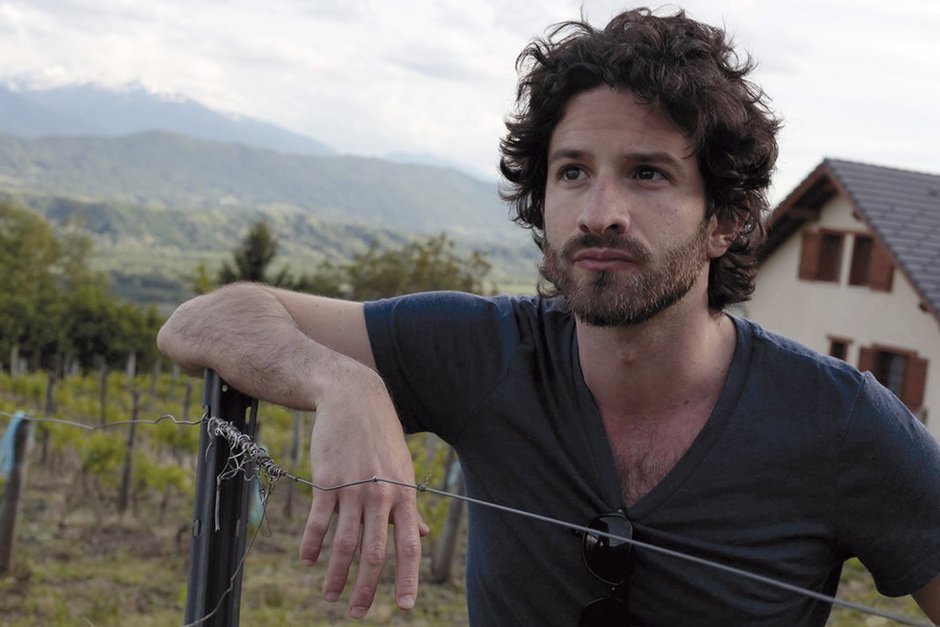
The writer preserved the real names of the characters and relied not only on family stories but also on his grandfather's autobiography, newspaper publications, and archival documents. He emphasized that the mute Teresa, who raised the orphaned Antonio, really existed, and that his grandfather's story is well documented. From the fate of one family, Bonnefoy built a narrative about several generations who pass through Venezuela's oil boom, political conflicts, and social changes.
Oil, dictatorships, and medicine
Before the novel's main characters begin to act, Maracaibo itself takes the stage. Bonnefoy turns this city on the shores of the lake of the same name into almost an independent character. It was here, at the beginning of the 20th century, that Venezuela's largest oil fields were discovered. The first well was drilled in 1917, and large-scale extraction began in 1922. By the end of the 1920s, oil had become the country's main export, and the lake region grew into the center of the national economy. The story of Bonnefoy's characters develops simultaneously with the history of a country that the oil boom rapidly takes from the agricultural era into the industrial age.
The city grew so quickly that it changed not only the economy but also the way of life. Maracaibo was considered the economic center of western Venezuela and was even called the “first city” of the country due to its early adoption of modern urban services. Lake Maracaibo provided the country with oil, enabled shipping, and connected the region to the Caribbean Sea. The population of the lake region increased along with the influx of workers and migrants. Bonnefoy shows Venezuela's history through the fate of a family from Maracaibo, a city that found itself at the very center of the country's oil transformation.
But along with modernization, politics constantly intrudes into the lives of the heroes. 20th-century Venezuela experienced a series of authoritarian regimes, coups, and crises. After Juan Vicente Gómez came to power in 1908, the country lived for almost three decades under the strict control of a military dictatorship. It was during this period that oil revenues began to change the country's economy, although the majority of the population remained poor.
Later, Venezuela experienced another period of military rule, associated with the regime of Marcos Perez Jimenez. In the novel, this dictator appears not only as a historical figure. Bonnefoy writes that at the moment the dictator fled the country and was in the air on board an airplane, Ana María was giving birth to her daughter, Venezuela, and cries of “Viva Venezuela!” were already sounding in the streets.

After the overthrow of Pérez Jiménez in 1958, the country transitioned to a democratic system, but political instability did not disappear. Economic crises, mass protests in the late 1980s, coup attempts in 1992, and Hugo Chavez's rise to power in 1998 became part of the national history. Bonnefoy constantly reminds us that his characters' fates unfold within a larger historical process.
A special place in this story is occupied by Ana María. She is the first female doctor in her region and one of the symbols of social change. This plotline is also based on real processes that took place in Venezuela in the first half of the 20th century. Women gradually gained access to medical education and professional careers, although they faced serious restrictions. For example, Lya Imber became the country's first female doctor in 1936; Sara Bendahan received her medical degree in 1939. At the same time, many female medical graduates did not yet have the right to vote. In the novel, Ana María fights for women's rights and becomes a figure of social modernization.
The novel itself is structured as the story of several generations of one family. The mute beggar woman Teresa finds a foundling, Antonio, on the steps of a church in Maracaibo. Antonio journeys from poverty to become a renowned surgeon. Ana Maria becomes a doctor and his companion. Their daughter is named Venezuela, and then her son, Cristobal, pieces together the family history. The book is divided into parts named after the characters: Antonio, Ana Maria, Venezuela, and Cristóbal. Each generation reflects a new stage in the country's history, and the family saga gradually turns into a narrative about 20th-century Venezuela.
Venezuela as a family legend
Antonio Borjas Romero's fate begins on the steps of a church in Maracaibo, where the mute Teresa finds an abandoned infant and takes him in. Antonio journeys from poverty to fame as a surgeon, participates in the country's public life, helps create a university, and his daughter is named Venezuela on the day the dictatorship falls in 1958. Thus, the family saga transforms into a national epic. This principle brings the novel close to Gabriel Garcia Marquez's “One Hundred Years of Solitude” and Isabel Allende's “The House of the Spirits," where the family's history also allows us to see the country's history through the fates of individuals.
Reality in the novel constantly exceeds its own boundaries. Across the pages appear a penguin that swam from polar waters to the tropics, a ghost with a hoarse cave-like wheeze, a giant child, a sorcerer who drives people mad, and a mysterious jaguar born of a house cat. Bonnefou bends reality for the sake of fiction. However, the novel does not copy Marquez's model. Here, the miraculous remains part of everyday life, but the author structures the narrative more compactly and keeps the plot within the strict framework of a family story. This approach is closer not so much to Marquez's tradition as to the legacy of Alejo Carpentier, for whom the miraculous was born from Latin American reality itself.

Behind the family legends lies another question: who will preserve the memory of all these people. In the last generation, this task is taken up by Cristóbal — Bonnefoy's literary double. He is the one who collects the stories of his ancestors and creates a book from them. His path begins with reading. “Novels are an island surrounded by land," the hero muses, finding in literature a refuge from chaos and a way to order the past. Here, memory only continues to live when it turns into narrative.
Therefore, movement between countries is as important for the novel as movement between generations. Venezuela dreams of Paris and leaves her homeland, and then her son Cristobal grows up between European and Latin American cultures. Venezuela and France — the countries that defined the biography of the author himself — constantly appear in the narrative. However, the novel does not view emigration as a rupture. On the contrary, Cristobal returns to his family's history precisely because of living away from it. Distance strengthens the connection to the homeland, rather than destroying it.
All these lines converge in the image of the jaguar. Folk legend has it that in every litter of cats, one jaguar is born, which the mother drives away from the others so that it will not kill its siblings. This story determines the fate of Antonio, Ana Maria, Venezuela, and Cristobal — people who go beyond circumstances and choose their own path.
At the same time, the symbolism extends far beyond the family metaphor. In the pre-Columbian cultures of Mesoamerica, the jaguar represented power, strength, and the ability to move between the worlds of the living and the dead. The Maya associated it with the underworld, ancestors, and memory, and many peoples considered the jaguar a guide between different dimensions of existence. The jaguar's dream in the novel can be seen as a space of collective memory, where the country's history and the voices of past generations meet.
The poetics of memory
On the third day of his life, Antonio Borjas Romero was left on the steps of a church on the street that today bears his name.
The first sentence of the novel sets the scale of the narrative. A few lines cover a person's journey from birth to legacy, and then open the story of four generations of one family. Bonnefoy builds his prose on a dense system of images. He saturates the text with natural motifs, connects reality with myth, and constantly turns to visual details. Ships, jungles, tropical birds, seascapes, giant insects, and exotic animals create a particular narrative rhythm. The writer explained that he considers language his main territory and seeks to combine French and Spanish in a single synthesis, to give French a “tropical coloring” and conceal all the seams of this fusion.

Behind this imagery lies a strict composition. The novel spans nearly a century but maintains a relatively small size — almost 260 pages. Bonnefoy constantly shortens the distance between events. He moves his characters quickly through decades, using foreshadowing and flashbacks. Admittedly, the rapid movement of the plot does not always leave room for psychological depth.
Nevertheless, “The Jaguar's Dream” unites several levels of narration into a single whole. The novel can be read as a family chronicle, as a history of Venezuela, as a book about memory, and as a literary heritage of the Bonnefoy family. “The Jaguar's Dream” gives the past new meaning and connects disparate generations into a single story.
Publisher: NoAge
Translation from French: Nina Khotinskaya
Number of pages: 256
Year: 2026
Age rating: 16+
Ekaterina Petrova — literary critic for the online newspaper Realnoe Vremya, host of the Telegram channel «Булочки с маком».