Sergey Kozko: “When I was invited to Kazan, I didn't consider it a step backward”
Interview with the ex-player and member of Rubin's coaching staff — about football, competition, and a school of life
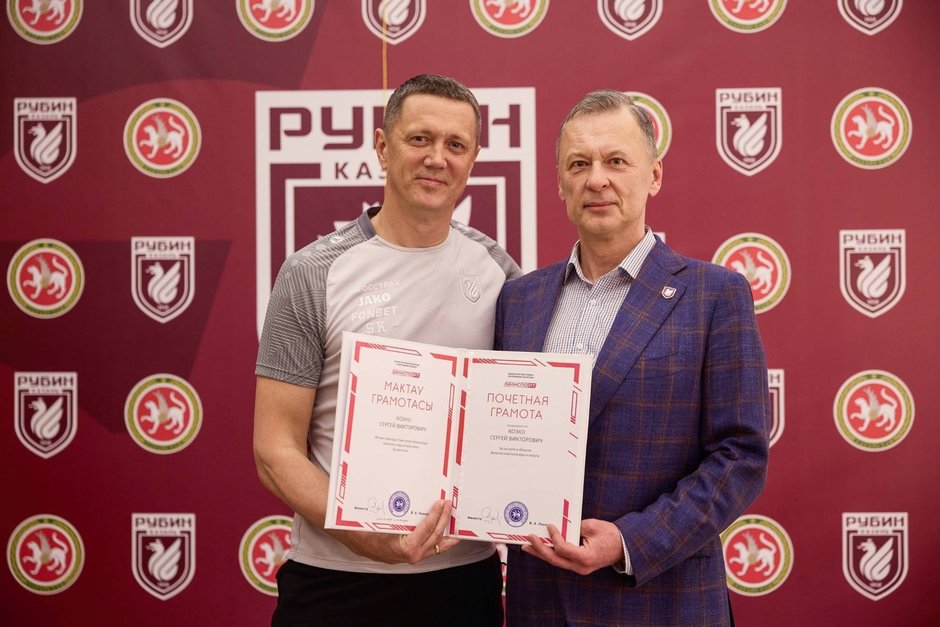
Sergey Kozko is among the veterans of the Kazan football club. He guarded Rubin's goal in two periods — from 2002 to 2004 and from 2008 to 2009 — and later worked on the coaching staff: first with the youth team in 2012–2015, and from 2018 with the main squad. In an interview with Realnoe Vremya, Kozko spoke about his path in football, including how he began his career in the same football structure as Sergey Semak and ended it on the same team with him.
“We had a vertical structure”
— Sergey, your first senior team was Asmaral from Kislovodsk, one of the reserves of Moscow Asmaral, which gathered talented youth in the early 1990s. Did you cross paths there with Sergey Semak?
— No. I played in Kislovodsk, and Semak played in Petrozavodsk, where the team was called Karelia. As far as I know, there was a vertical structure: the main team was based in Moscow, Kislovodsk was in the first league, and Petrozavodsk was in the second. But, in principle, both of our Asmarals — both Moscow and Kislovodsk — could invite players from Petrozavodsk. Actually, it was a good project; it just ended like that.
— Do you think so? After all, Asmaral launched the era of private teams. Many of them, like Moscow or Anzhi, had no base or school, and therefore quickly disappeared. Asmaral itself simply bought Krasnaya Presnya — in the end, it all turned to sand.
— I remind you that not only the Soviet Union collapsed back then — essentially, everything collapsed, and against this background, a private team was created. At a time when nobody was really paying money anywhere, we had stable salaries and good equipment, which was important. Under this project, in Kislovodsk (which I can talk about), promising guys from different regions were gathered. For example, Sergei Grishin played for us, who later became known for his career at Dynamo Moscow.
Over time, when they started tightening the screws on Al-Khalidi, including his property, they took away the base, which was the former dacha of Brezhnev, and everyone started having problems. Then we were told: “Guys, whoever wants — can leave.” Half the team left immediately. But I was young, 18 years old, and at that time I didn't play for money anyway. Especially since we were fed and clothed, and we played there practically for free for more than half a year. I even had to play in the field — six matches, coming on as a substitute, because only 12–13 of us remained. By the way, Sergei Grishin also stayed then; those were tough times, but for us young ones, it was a school of life.
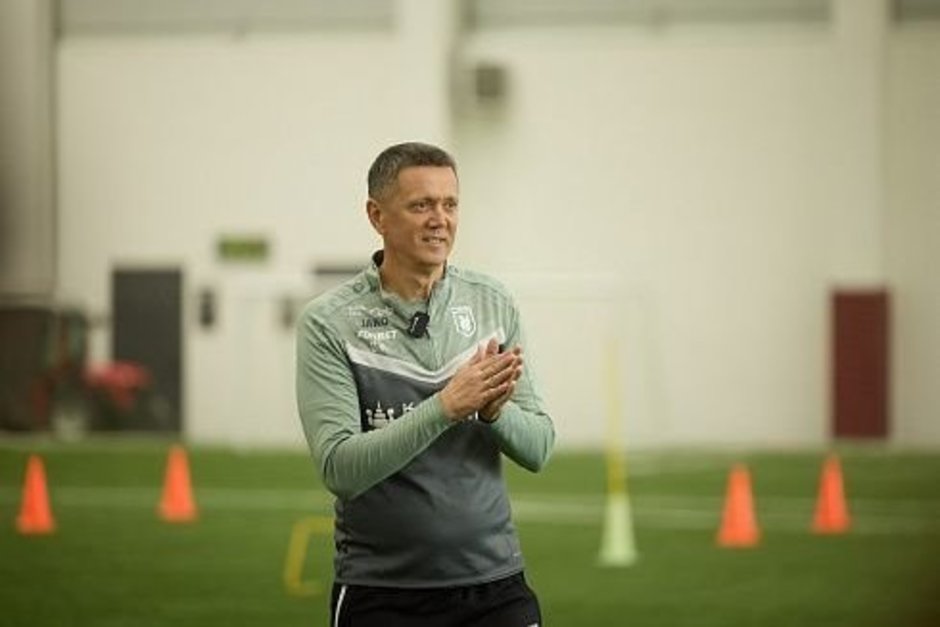
“There was no big gap between football in the city and in the countryside in the USSR”
— You're used to difficulties, having been born in a village.
— Actually, in the village of Spitsevka in the Stavropol Krai, which was 40 kilometers from Stavropol. We moved to the city when I was 10. At the same time, I started playing football in Spitsevka from the first grade. Since I later trained at the Stavropol sports school and can compare, I'll say that there was no big gap between football in the city and in the countryside during the USSR. For example, in Spitsevka, we had a coach who himself had played at the level of the lower leagues of the USSR, not just a guy off the street. The training sessions themselves were interesting; we were developing a foundation, not just a coach throwing a ball and saying “Play!” And when the family moved to Stavropol, I was enrolled in the local team at the Krasny Metallist plant, and a year and a half later, I was invited to the football school of Stavropol Dynamo.
In the USSR, a footballer finished his career and often went to become a children's coach because his salary was not much different from a sports school salary. Now, a famous footballer playing at the Premier League level can earn very big money, tens of times higher than the average salary, and certainly more than children's coaches' salaries. As a result, they have no motivation to go into this field, so I think honor and praise to those masters who, after their careers, still go to work as children's coaches.
For example, like our Alexander Bukharov or Igor Denisov from St. Petersburg. They decided to connect their lives with children's football and can not only explain theory but also show all the subtleties of football mastery. Take the elementary nuances of Bukharov: how he shielded the ball with his body when receiving a pass to the far leg, making it impossible to get near him, or how he played with his head — he was taught that. Many children's coaches who do not have such experience are objectively unable to demonstrate certain technical skills. Nowadays, it is not uncommon for those who did not make it into big football and have no playing experience to coach children. And what is a child? You need to show and explain everything so that they can feel for themselves what a professional player has lived through over years of a career.
— How did it happen with you?
— In Stavropol, we had Vadim Borisovich Sokolov, may he rest in peace. He showed us everything: how to act in a particular game situation. Seemingly small things, nuances, but they build an understanding of the game. (Sokolov's son — Vadim Sokolov Jr. — played for Rubin in the 2001 season — author's note).
Or another example: under Leonid Slutsky, we had the Korean Hwang In-beom. In his first game against CSKA, while facing away from two opponents and looking over his shoulder before receiving the ball, he moved into free space. We were stunned: it looked like some kind of fantasy! At the same time, in our football 30 years ago, many could do that. People were so versatile, and their understanding of football was incredible — there used to be many such players. It's no wonder that in the 1990s, there were many of our players in European championships.
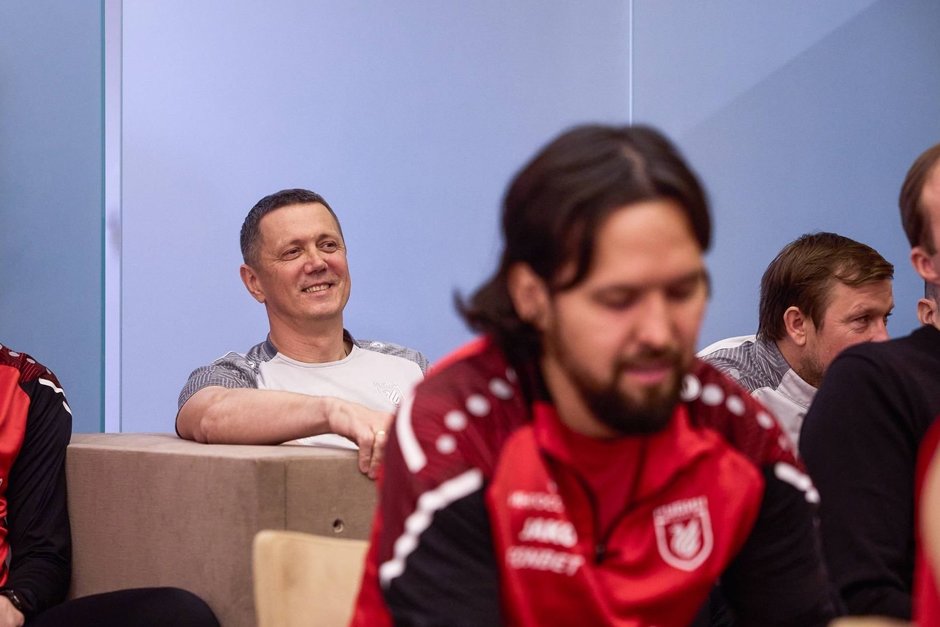
“Ignatiev's football was more combinative”
— You spoke about the importance of “showing and telling” for a coach. When you moved to the senior team of Stavropol Dynamo, who did you watch?
— It was the experienced goalkeeper Anatoly Pata, who was 17 years older than me (unfortunately, he passed away in early 2025). In Stavropol, there were three goalkeepers, but Zurab Sanaya broke his finger, and Pata was suspended for two yellow cards. This gave me the opportunity to debut at the top league level of the Russian championship in a game against Lokomotiv. After that, I played the remaining four matches until the end of the season. Later, in the first league, Vladimir Malakhov joined us. By the way, he later was my coach in the reserves and then became the goalkeeping coach for the main Dynamo squad.
— How did your move at the age of 24 to Moscow Torpedo-ZIL happen?
— I was invited to the training camp by my friend Arsen Minasov, who later became one of the first football agents, working with Roman Shirokov. I crossed paths with Arsen back at Asmaral, when he played there for the first half of the season and quit football, even though he was only 27. He played for us as a supporting striker — short, technical. But even then, it was clear that he had a knack for agent work: he had very good communication skills, which are important in this profession.
— A year after your move to Torpedo-ZIL, that team successfully competed with Rubin for a ticket to the top league.
— Yes, that was in 2000, when we, under the guidance of Boris Ignatiev, accomplished the task. Personally, for me, Boris Petrovich's training sessions seemed more modern than what I was used to. At that time, he tried to instill in us — as coaches do now — the transition from defense to positional attack through short and medium passes. Previously, they tried to play simpler, kicking the ball from the goal, and then, fighting for the second ball, they started building an attack. But with Ignatiev, a more combinative style prevailed; he tried to play passing, worked on exits, adjustments, and changing the direction of the ball.
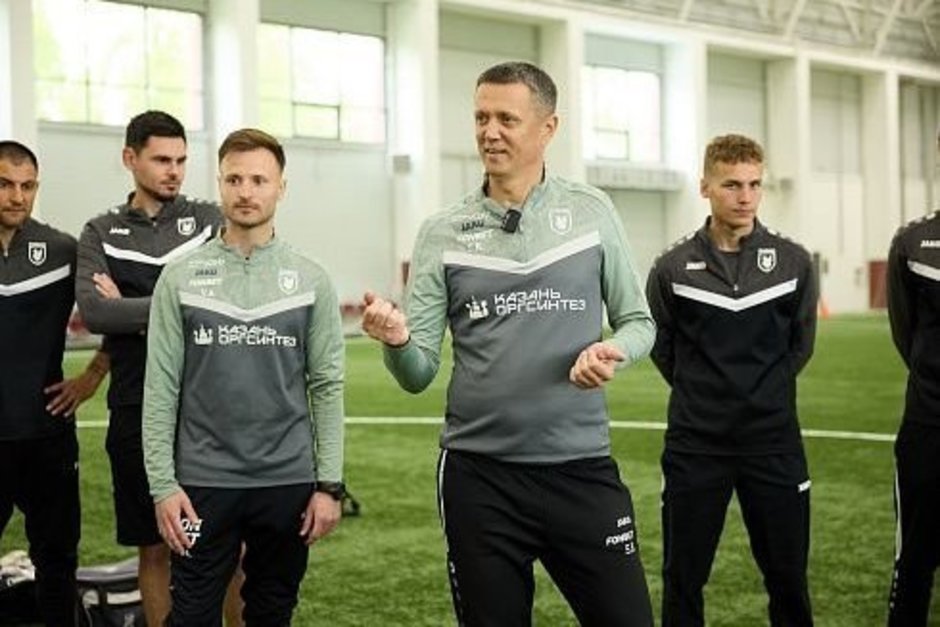
“With the arrival of Evgeny Kucherevsky, our football changed, became simpler”
— Did you have a goalkeeping coach then?
— Yes, it was Vladimir Sergeevich Belousov, who, in his time as a footballer, played in the field and then worked as a head coach. When Torpedo-ZIL was headed by Evgeny Kucherevsky, the goalkeeping coach became Alexander Podshivalov. With the arrival of Evgeny Mefodievich, our football changed, became simpler — as he was used to since Soviet times, when he won gold with Dnepr Dnipropetrovsk. With Kucherevsky, we switched to long passes, physical football, pressing, where everyone fights and pushes, although there were players in the team who preferred a combinative style. The Adzhindzhal brothers, for example. Ultimately, they left Torpedo-ZIL.
— What do you remember about the confrontation with Rubin for a ticket to the Premier League?
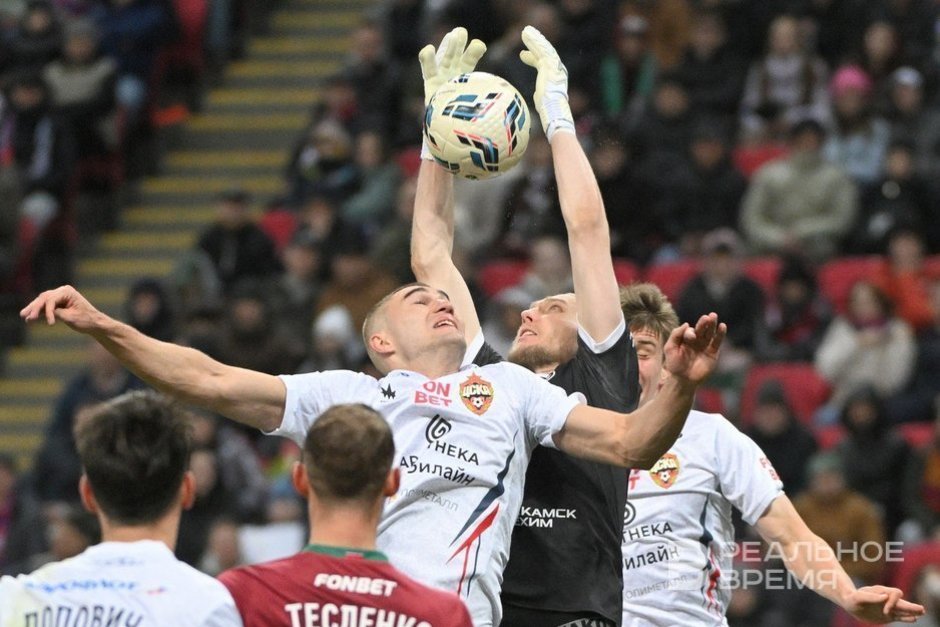
— There was an interesting moment: we were playing in Moscow against Nalchik, and in the same round, Rubin was playing in Saratov. We are winning; Rubin is losing. Everything seemed to be going normally. And suddenly, about five minutes before the end, it was announced over the stadium that Rubin had won in Saratov. We got a bit nervous, and then Nalchik had a super-dangerous moment. Two players came out on our Misha Sinev, who was backing up, and closer to the penalty area, he lunged at the one controlling the ball. He passed to his partner, who came out one-on-one with me, and I came out to the edge of the box, reducing the angle. And the Nalchik player shoots to the far corner. I turn around and see: the ball hits the crossbar, bounces down, hits the ground, and flies over the head of the opponent running for the rebound, straight into my hands. If he had run a little slower, he would have run the ball into our goal. And that's it; it would have been a draw, and Rubin would have caught up with us in points and overtaken us on additional indicators.
“I tell goalkeepers: 'Don't hold on to anything; enjoy it'"
— We already touched on your move from Torpedo-ZIL to Rubin, from the Premier League to the first division.
— What attracted me was that Kazan was inviting me as the number one goalkeeper. I was a young footballer then, I wanted to play, and in the previous season, I had only played seven games. So I didn't even worry about dropping from the Premier League to the First Division. For a person who has been playing football since childhood, it is important to realize himself, and for that, you need to play. Yes, you can warm the bench in a superclub, or you can go to a simpler team, a lower league, but play there and enjoy it. Yes, you may not earn much, but later at the end of your career, you will realize that you played and realized yourself as a goalkeeper.
And there were talented goalkeepers who simply lost themselves by sitting on the bench. For example, behind Igor Akinfeev at CSKA. That is why I always tell goalkeepers: “Don't hold on to anything; enjoy it. The money will come and find you if you do everything right; you will get your contract.” Look at Akinfeev: how old is he, and he still can't get enough of playing; he loves the thrill.
— I remember his debut in May 2003 in Samara, where Akinfeev debuted because Mandrykin had three yellow cards. CSKA won that match, and Akinfeev saved a penalty at the end. And in 2004, Igor played for the first time against Rubin, replacing Sergei Semak.
— Yes, then Mandrykin was sent off at the end. Akinfeev came on, but he couldn't save our penalty; Roni scored a brace, and we won 2–1. And to conclude this long digression: when I was invited to Kazan, I did not consider it a step backward — on the contrary, it was a step forward. I was honored to be invited as the number one goalkeeper, and in one year, we solved the task of moving up to the Premier League.
“Berdyev calmed us down: 'Don't worry, we'll start winning now'"
— Sergey, at Rubin, you expected a fight for the number one spot, since there were three competitors at once: the experienced Aleskarov and Gaus, and the young Kharchik. In the end, everyone played at least a little, and you had 18 games out of 34.
— Yes, I played most of the championship matches then, but after the first two home games, I got a concussion and missed part of the tournament. It happened during training when one of our players, coming out one-on-one, hit a wet ball into my head from five meters. After that, I spent two weeks in a corset.
— We touched on the promotion to the Premier League, but we didn't mention personal feelings. You were 28 then, and you had played at that level with Torpedo-ZIL, but there was no team-wide experience. Plus, Rubin invited many foreigners.
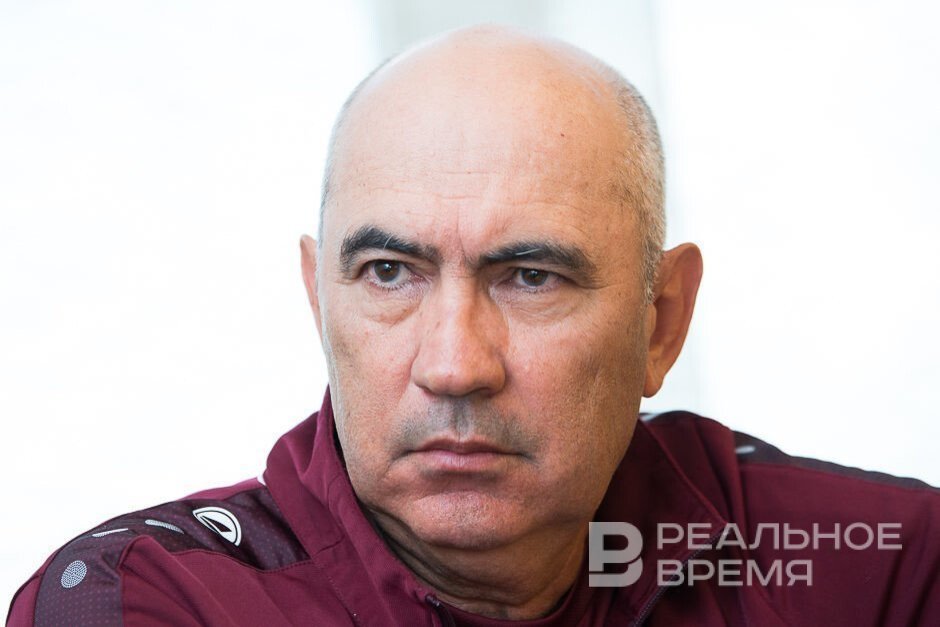
— Actually, the turning point was our first match against CSKA, when we lost heavily 0–4. Nothing worked there: we acted timidly and lost that game not even physically, but psychologically. When even a simple pass wasn't working for anyone. Although we must admit: it was early spring, the field at Dinamo was terrible, the grass hadn't grown, just dirt. But the opponents played! And we were all constrained, stiff. When we entered the locker room upset, Berdyev calmed us down: “Don't worry, we'll start winning now. We're not going to be relegated; this was just the first pancake. Drop all this tension; you're tight, your legs are shaking. Everything will be fine; the main thing is to give yourself on the field, a hundred percent commitment.” That's exactly how it turned out.
“Chizhov and I developed very good friendly relations”
— What did the Kazan fan seem like to you?
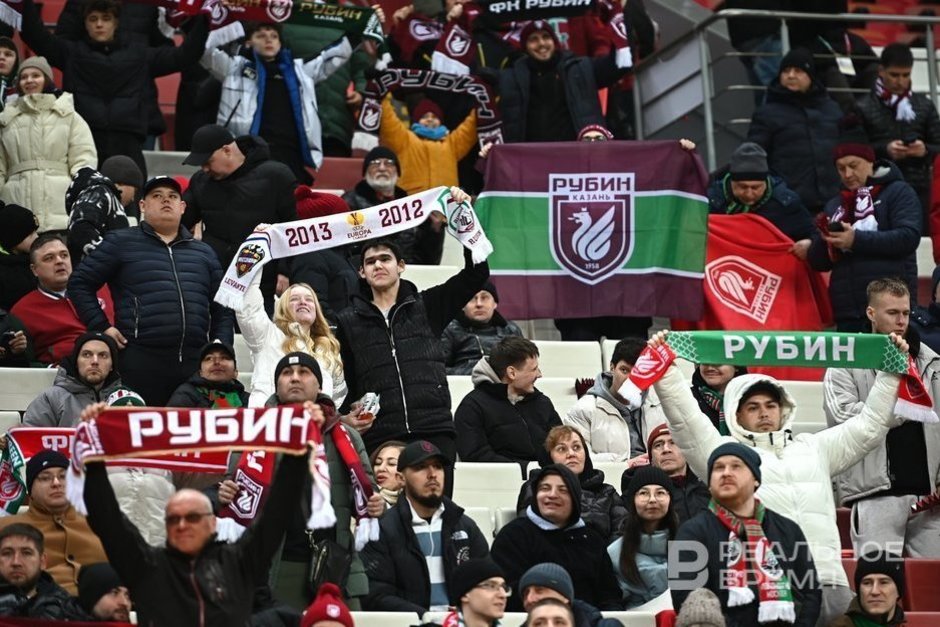
— I never asked myself: what is he like? He seems uninitiated, but at the same time... Look, here's a paradox. We played in 2002 in the First League. I remember matches with Nizhnekamsk, Smolensk — and there, and there, almost full stadiums of fans. Although it was the First League, and the visiting teams were largely unknown. The next year, we moved up to the Premier League, the stadium was packed again. In 2004, we started the championship poorly, hovering just below the middle of the table. And then — a half-empty stadium! Where's the logic? After all, a couple of years ago, some Chita would come and fill the stadium. Now we're playing, conditionally, against Lokomotiv, and the stadium is half-empty. Or, for example, in 2008, we became champions, and the stadium was full, but in 2009, we also won the championship, but somehow interest faded, and the stands were half-empty. I can't understand what this is connected with?
— In 2004, you shared the goal with Valery Chizhov.
— Yes, in 2004, we competed with Valery Chizhov. We developed very good friendly relations. We still keep in touch. Interestingly, we are the same age and our birthdays are close: mine is April 12, his is April 14.
— Tell us about Rubin's international matches in 2004.
— As for Rubin's matches in the UEFA Cup, we were really looking forward to them, but the debut was unsuccessful. Having won 2–0 away, we lost 0–3 in Kazan. With time, I can characterize this as a lack of experience in international cup matches. We thought that since we won away, it would be easier at home.
— Why, having settled in at Rubin, did you decide to return to Moscow, to the same Torpedo-ZIL, which by then had been renamed FC Moscow?
— I was invited to Moscow, and my family lived in the capital, the children studied, so I took this rash step. Now, of course, I regret it, because in Rubin, I was the starting goalkeeper. I believe that if a goalkeeper is doing well in one team, he should not look for another. Better is the enemy of good. It's easier for a field player in terms of moving: there are substitutions, other positions. For a goalkeeper, if something doesn't work out right away, you can end up on the bench and without practice. Therefore, each goalkeeper has his own team. He should be loyal. Seryoga Ryzhikov did the right thing by not leaving Kazan practically until the end of his career.
When my contract with Moscow was ending, Rubin told me that they were inviting new goalkeepers and that Sergey Ryzhikov would be the number one. But if I came and won the competition, I would play. I returned to Kazan. And I even managed to play a few matches. After Ryzhikov's injury, I replaced him in the game against Dynamo, then there was a cold shower from Spartak — 0–3, and then we beat Moscow, coming from behind 0–1. Ryazantsev and Kabze scored, and I pulled the ball out on the last minute with a split. And what's most annoying is that when I was in very good form, in the first half of a match in Samara, I was injured in a collision with Roman Sharonov. I tried to continue the game but realized I couldn't even walk. The hematoma was so bad that my leg was blue, and it took a month to heal. After that, I no longer played in championships for Rubin, except for matches in the National Cup.