Seven lives of Beatrix Potter
To the 160th anniversary of the British children's writer and artist Beatrix Potter
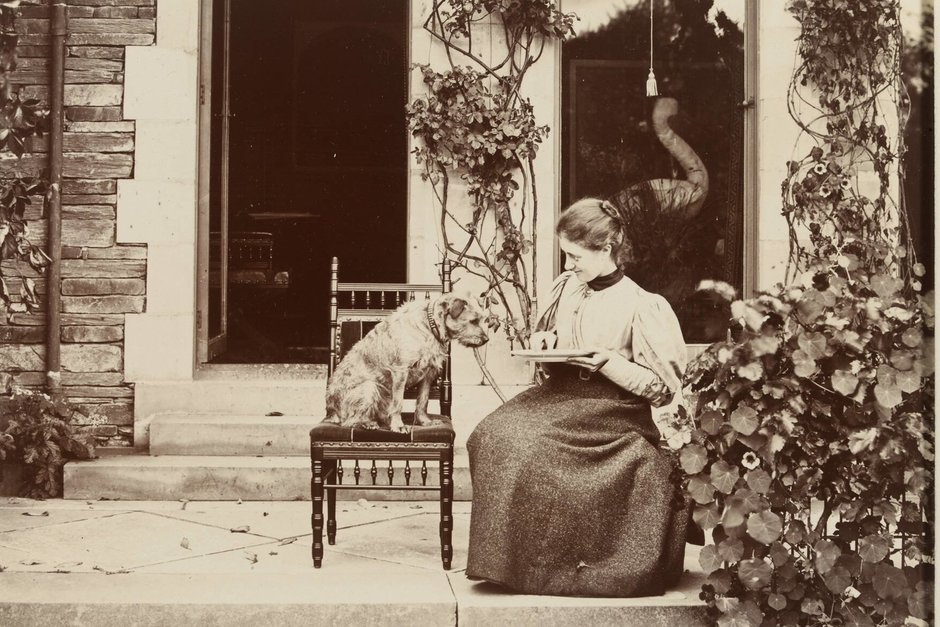
The world remembers Beatrix Potter as the creator of Peter Rabbit and other fairy-tale characters, whose stories have sold more than 250 million copies. But Potter herself, in the second half of her life, increasingly defined herself less as a writer. She managed farms, bred sheep, fought developers, and gradually became one of the largest private landowners in the region. And if you remove the books from her story, Potter's biography would still remain the biography of an extraordinary person — an artist, naturalist, scientist, entrepreneur, and farmer. The literary critic of Realnoe Vremya, Ekaterina Petrova, tells the story of seven lives of Beatrix Potter.
Life #1: The artist
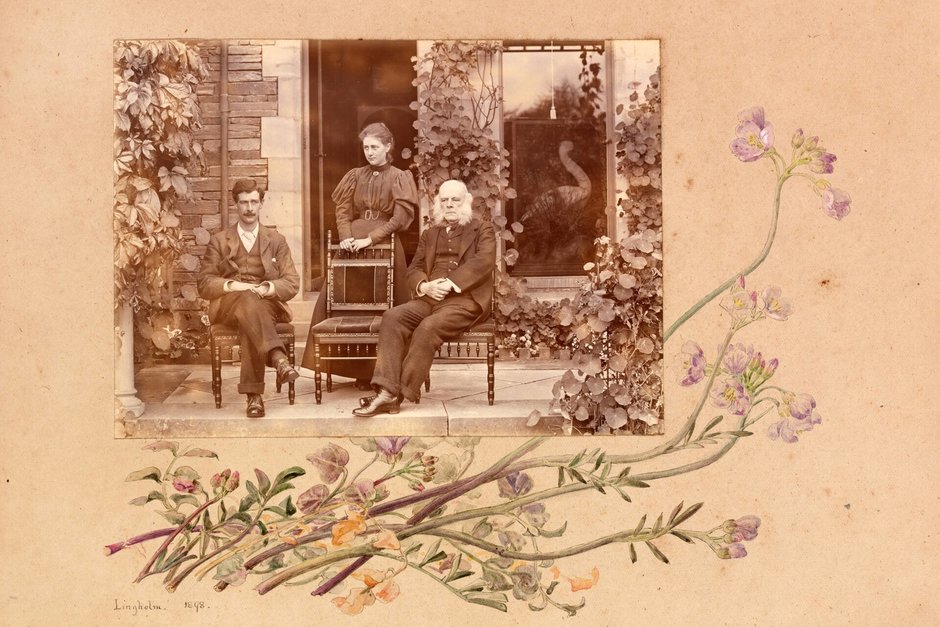
Beatrix Potter's childhood was spent in a large house on Bolton Gardens in Kensington, London. Her parents did not send her to school and entrusted her education to governesses. After her younger brother Bertram left for boarding school, Potter spent almost all her time alone. She studied geometry, French and German, as well as Latin poetry, but her free hours were invariably devoted to drawing. Later, the writer said she was grateful to fate for her “neglected” education: a more rigorous school, in her opinion, “would have rubbed out some of the originality.” In her diary, Potter left another confession:
— It's always the same — drawing, painting, sculpting, an irresistible desire to copy any beautiful object that catches one's eye.
Even in moments of anxiety, she picked up a pencil and once noted with a smile that she caught herself carefully sketching a dustbin in the yard. This activity restored her peace of mind.
Her parents encouraged Potter's interest in drawing and observing nature. Her father took his daughter on photographic walks, her mother introduced her to watercolor, and trips to the Natural History Museum turned into anatomy lessons for animals, which Potter immediately sketched. Later, Pre-Raphaelite artist John Everett Millais highly praised her ability to observe nature and accurately convey what she saw.
At the same time, Potter did not reject academic training. Her parents hired drawing teachers for her, and at fifteen, she received a student certificate from the Art Department of the Committee on Education and Art. Beatrix Potter copied paintings by John Constable at the South Kensington Museum, attended Royal Academy exhibitions, and carefully recorded her impressions in her diary. But mechanical learning quickly disappointed her.
— Painting is difficult to teach if the teacher and the student look at nature and art in different directions, — she recorded on May 28, 1883.
After one oil painting lesson, Potter noted with irritation that the teacher only talked about smoothness of strokes, softness of color, and lightness of shadows, “until nothing remains of the drawing.” Beatrix chose her own method: look at nature, notice details, and draw again.
Life #2: The naturalist
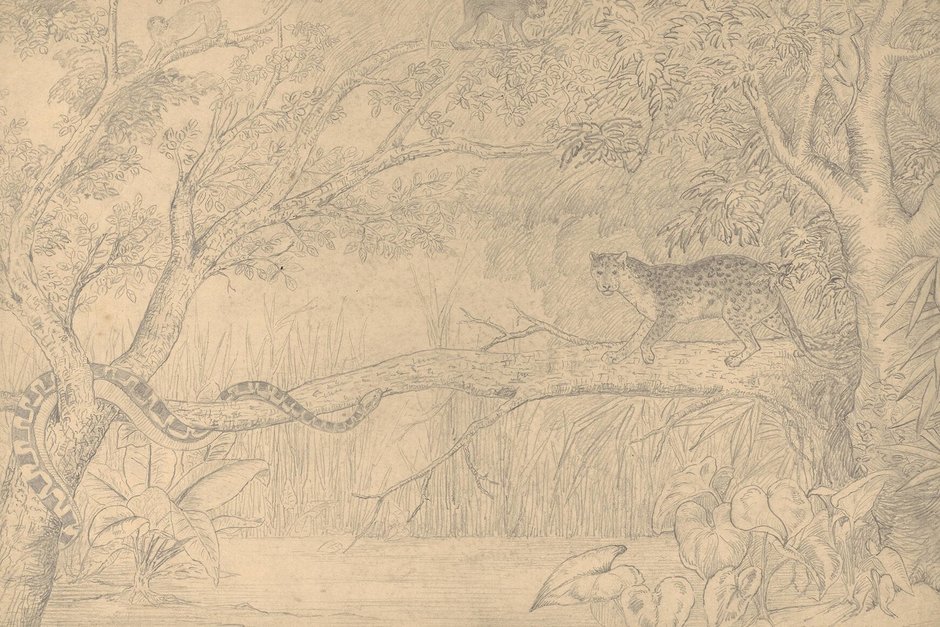
Potter observed animals as carefully as she did plants, insects, and rocks. Together with her brother Bertram, she spent hours watching frogs, a tortoise, salamanders, bats, voles, and rabbits, and in the corner of the nursery, she kept a collection of insects, shells, bird eggs, minerals, and fossils.
Every summer, the family left London for Scotland and later for the Lake District. There, Potter first gained the freedom to explore the world around her on foot or in a small pony cart, and she returned home with new pets: mice, rabbits, newts, caterpillars, and birds that joined her home menagerie. In the countryside, Beatrix felt she had found her place.
— Why do people love living in London so much? — she wrote in her diary.
She called the city where she was born “unloved” and wrote that her family's true interests and joys had always been connected to the north of England. These trips taught Potter to look at nature with the eyes of both an artist and a researcher. She spent hours watching birds, plants, fungi, insects, and lake landscapes, and then transferred what she saw into her albums. Scientific accuracy never interfered with her imagination.
— I remember that in childhood I half-believed in fairies and wholly played with them. What could be more real than preserving a child's world of fantasy, balancing it with knowledge and common sense? — she recorded on November 17, 1896.
Life #3: The mycologist
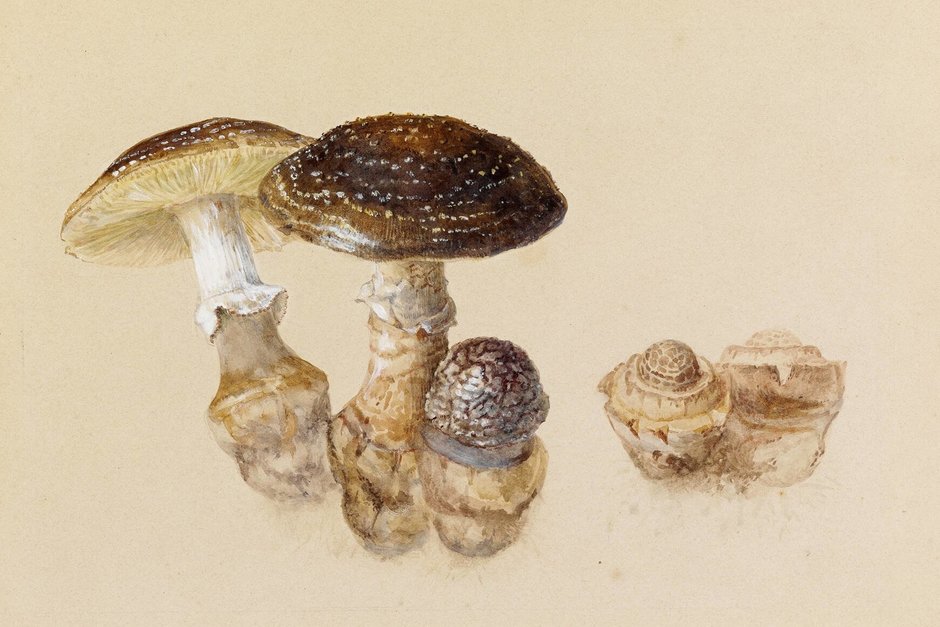
In the mid-1880s, fungi became Beatrix Potter's main passion. At first, she collected them during summer trips to Scotland and the Lake District, and then she began to study them systematically. Potter searched for new specimens, identified species, made hundreds of detailed watercolors, and learned to transfer onto paper what she saw through a microscope. Biographer Linda Lear noted that Potter never separated art and science. She drew nature primarily as she saw it.
Gradually, drawings alone were not enough. Potter became interested in how fungi reproduce, began observing spore germination, and recorded the results of her experiments. Over ten years of work, she prepared the study “On the Germination of the Spores of Agaricineae," accompanied by a series of microscopic illustrations.
With the help of her uncle, chemist Sir Henry Roscoe, Potter submitted the study to the Linnean Society of London — one of Britain's leading scientific societies. In 1897, botanist George Massee presented her paper at a meeting, as Potter herself was not allowed to be present (women were barred from such gatherings). Later, Potter withdrew the paper when she realized some samples had been contaminated, but she did not stop her research and continued working with the microscope and fungal cultures for several more years. It was only in 1997, exactly one hundred years after that meeting, that the Linnean Society formally apologized to Potter posthumously for the sexism she had experienced.
After the director of the Royal Botanic Gardens at Kew, William Thiselton-Dyer, refused to recognize Beatrix's work on the same level as that of professional scientists, she was not given the opportunity to continue an academic career. Nevertheless, specialists continued to highly value her scientific accuracy. Mycologists still use Potter's watercolors to identify fungal species, and part of her work is housed in the Armitt Museum, as well as the Perth Museum and Art Gallery. In 1967, mycologist Walter Findlay included many of her drawings in the book Wayside & Woodland Fungi, thus fulfilling Potter's wish to one day see her fungal illustrations published in a separate edition.
Life #4: The writer
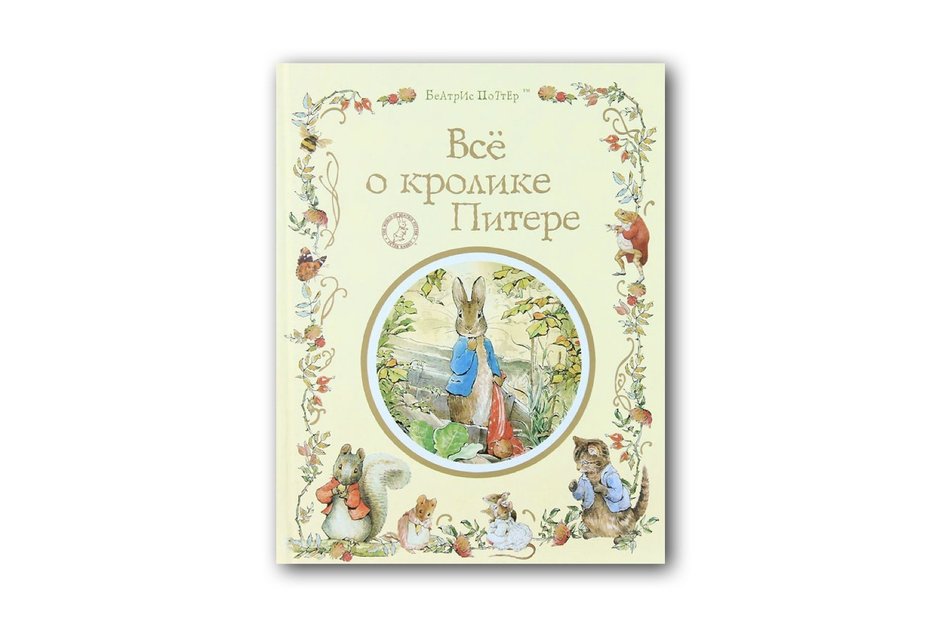
In September 1893, 27-year-old Beatrix was visiting Dunkeld, Scotland, and wrote a letter to five-year-old Noel Moore, the son of her former governess. The boy was ill with scarlet fever, and Potter, having run out of news, made up a fairy tale.
— My dear Noel, — she wrote, — I don't know what to write to you, so I shall tell you a story about four little rabbits whose names were Flopsy, Mopsy, Cotton-tail, and Peter.
Alongside, Potter sketched a long-eared Peter standing on his hind legs and illustrated the letter with expressive ink drawings. This letter was the first of many that Potter sent to the Moore children over the years, featuring the adventures of her pets.
Seven years later, Beatrix borrowed the preserved letter from Noel and reworked it into a book dummy. Six London publishers, including Frederick Warne & Co., turned it down. This was partly because the author insisted on a small format and a price affordable for a child.
— Little rabbits cannot afford to spend six shillings on one book and would never buy it, — Beatrix explained to an acquaintance.
So, in December 1901, Potter printed 250 copies of “The Tale of Peter Rabbit” at her own expense, with black-and-white illustrations and a color frontispiece. The edition was tiny, just the right size to fit in a child's palm. The entire print run sold out among relatives and friends so quickly that in February 1902, another 200 copies had to be printed.
The success of the private edition made Frederick Warne & Co. reconsider. The publisher agreed to publish the book on the condition that Beatrix make the illustrations in color. In October 1902, “The Tale of Peter Rabbit” was released in a commercial edition of 8,000 copies and was instantly sold out. Within a year, sales had exceeded 50,000 copies, and the book has never been out of print since. Potter quipped:
— The public must love rabbits! What a terrible quantity of Peter.
Thus began a series of twenty-three little books, which Beatrix Potter produced at a rate of two or three a year, working with editor Norman Warne. Instead of the ponderous morality of Victorian edification, the writer offered dry northern humor and a businesslike tone, with the main character breaking rules without repentant final tirades.
— It is much more pleasant to address a real living child… I often think that was the secret of Peter Rabbit's success — it was written to a child, not to order, — Potter said.
Life #5: The entrepreneur
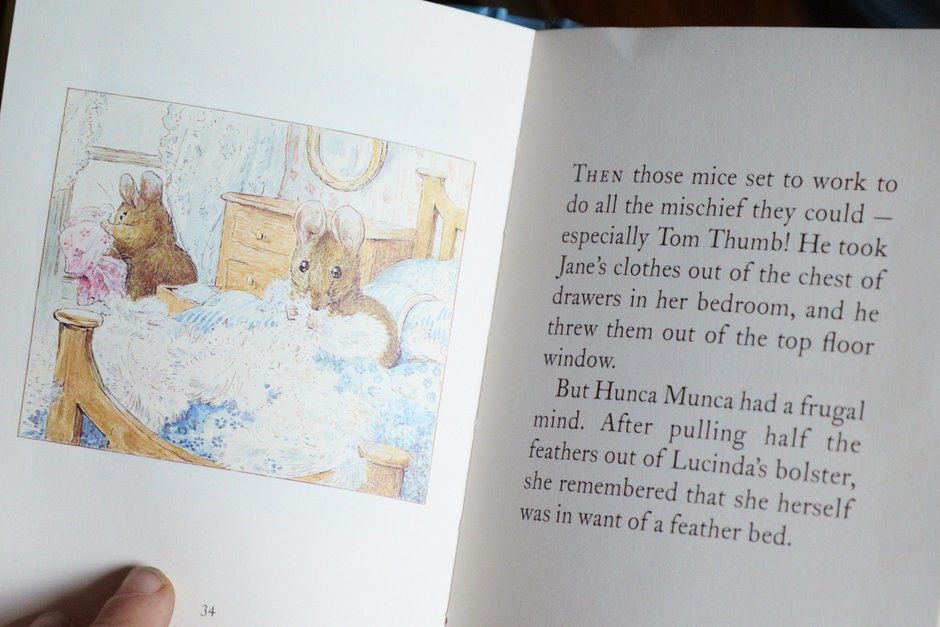
In 1903, Beatrix Potter sewed a rag doll of Peter Rabbit and registered it at the London Patent Office. It was the world's first licensed literary character. The concept of a “personal brand” only appeared in the 21st century, but Potter began building hers a hundred years earlier. She controlled every detail of the design, from the tiny format that fit a child's palm to the color reproduction of the watercolors.
Then Beatrix, together with Frederick Warne & Co., launched what today is called merchandise. These were coloring books, board games, wallpaper, porcelain sets, and figurines. All of this brought Potter an independent income. Merchandise featuring Peter Rabbit and other characters was sold at Harrods department store at least from 1910. Journalist Joy Lanzendorfer wrote in 2017 in Smithsonian magazine:
— Potter built a retail empire out of her 'bunny book,' which today is worth $500 million… She created a system that generates income for all licensed characters — from Mickey Mouse to Harry Potter.
And writer Nicholas Tucker, on the pages of The Guardian, called her “the first author to license her characters for toys and household goods that are still sold today.” This stream of income from books and merchandise turned the storyteller into a landowner.
Life #6: The farmer
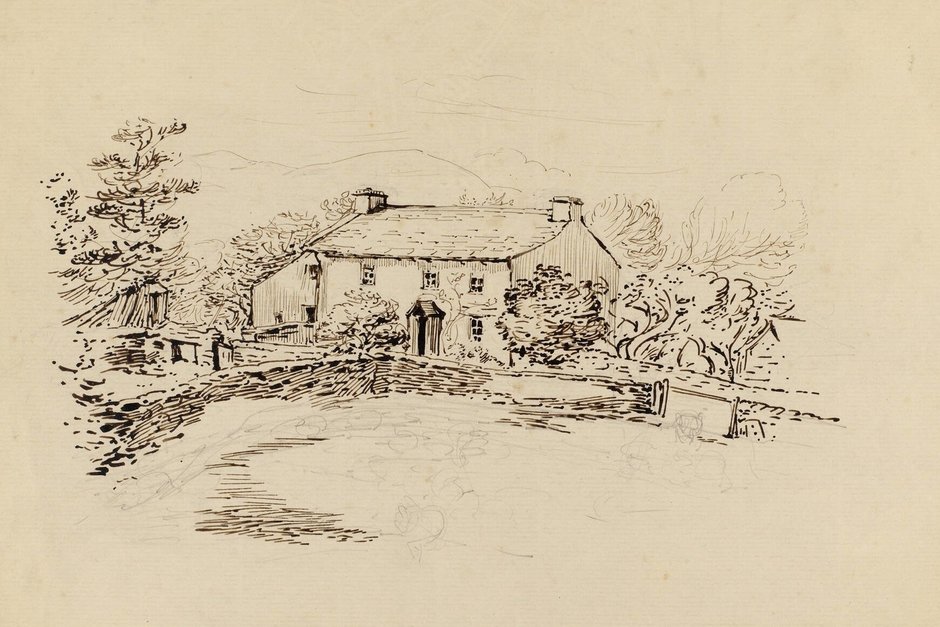
Beatrix Potter's most dramatic transformation began with a loss. In the summer of 1905, Norman Warne proposed to Beatrix, but within a month, he died suddenly of pernicious anemia. Devastated, Potter used her book royalties and a small inheritance to buy Hill Top Farm in the village of Near Sawrey, in the heart of the Lake District. She had long dreamed of her own corner in this settlement and called it “almost the perfect little place of all that I have ever lived in.” Later, she wrote of the house:
— It is here that I come to be quiet and at peace with myself. It is I, the deepest me, the part with which one must be alone.
Potter threw herself into farming. The tenant John Cannon and his family remained as managers, and she learned everything herself: she raised pigs, cows, chickens, and later added sheep. To formalize the boundaries of her landholding, she turned to a local firm of solicitors, W.H. Heelis & Son. That was how William Heelis entered her life. With his help, she purchased an adjacent pasture, and in 1909, Castle Farm, just across the road from Hill Top. In 1913, overcoming further resistance from her parents (who now grumbled that Heelis was “just a country solicitor”), Beatrix married him and permanently moved to Castle Cottage.
Hill Top remained a working farm and her personal studio, while Beatrix herself seriously took up sheep. Canon Hardwicke Rawnsley introduced her to Herdwicks — a hardy native breed that had grazed on the open fells for centuries. Potter hired the best shepherd, Tom Storey, and in 1923, she bought the extensive Troutbeck Park Farm, a former deer park, and stocked it with a flock of over a thousand. She thus became one of the largest breeders of Herdwicks in the county.
Soon, the village folk no longer saw the London writer in her. Mrs. Heelis walked around in woolen skirts and wooden clogs, and her sheep won prizes at local shows. By the end of the 1920s, the flock managed by Beatrix, under Tom Storey's watchful eye, had won numerous awards, and Potter herself was often invited to judge competitions. In 1942, she was elected President of the Herdwick Sheepbreeders' Association — the first woman to hold that position. But she did not live to take office.
Life #7: The conservationist
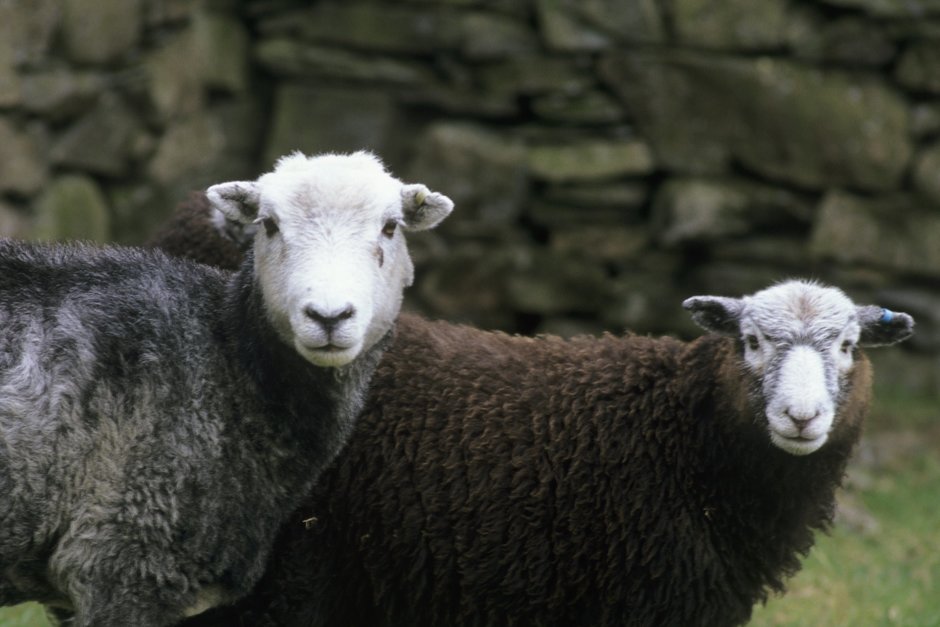
Long before the word “ecology” came into common use, Beatrix Potter already understood that it was the people who had lived on this land for centuries who needed saving. Her guide to the world of nature conservation was Canon Hardwicke Rawnsley — one of the three founders of the National Trust and a long-time friend of the writer. It was he who infected Potter with the idea that the wild beauty of the hills and valleys must be preserved whole, along with the pastures, stone walls, and the farming way of life. Later, already a major landowner, she turned into a fierce fighter for the preservation of local nature.
Potter acted as a prudent strategist. She invested her book royalties in acquiring old farms and then restored them, personally ensuring that each house contained an antique item of local craftsmanship and that the fields were stocked with Herdwicks and Galloway cattle. Beatrix became a recognized expert in traditional Lakeland crafts, furniture, and stonework.
In 1930, together with her husband, Potter entered into a partnership with the National Trust to purchase and manage the hill farms of the extensive Monk Coniston estate, including the famous Tarn Hows. For seven years, she served as the unpaid steward of the estate until the Trust was able to buy back most of the land from her.
— I want a sufficient number of old farms to be in the hands of the Trust, — she wrote in 1934.
When Potter passed away in December 1943, she left the National Trust 14 farms and over 4,000 acres of land, along with flocks of sheep. To this day, this remains the largest land gift to the Trust in the Lake District. Today, millions of tourists see this place exactly as it is: with heather-covered hills, white farmhouses, and grazing Herdwicks. Much of this became possible thanks to the decisions of a woman in a woolen skirt and clogs. Peter Rabbit made Beatrix Potter famous, but her other six lives turned the children's writer into a figure of national significance.
Ekaterina Petrova — literary critic for the online newspaper Realnoe Vremya, host of the Telegram channel «Булочки с маком».