Shortage of stores and communication: how Kazan book publishers are faring
Not only Tatgiz — who is responsible for the spiritual enrichment of the city's residents
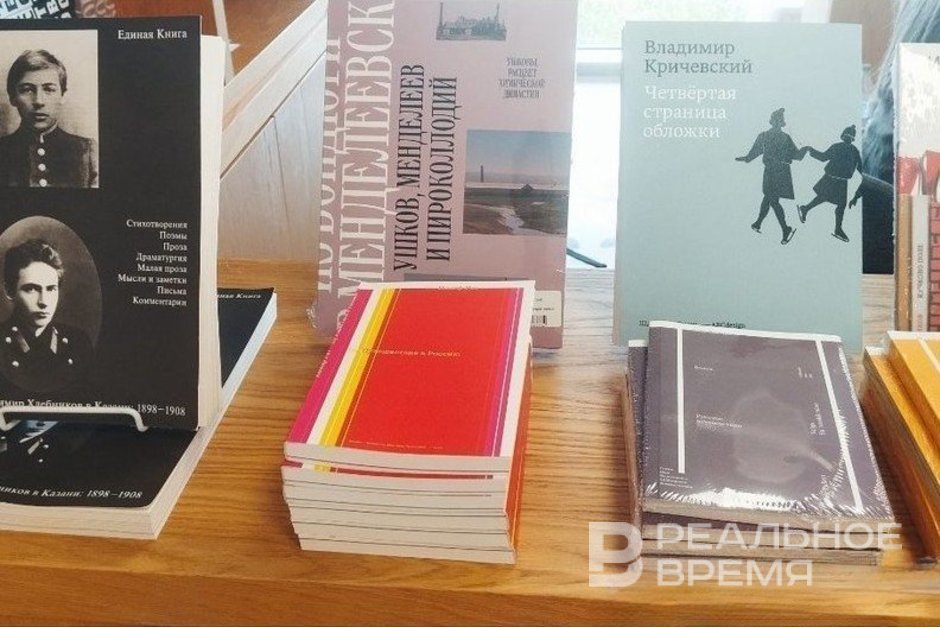
There are not many private publishing houses in Kazan — they can be counted on one hand. At the same time, their books are well known: these are publications on Orthodoxy, Islam, local history, as well as colorful children's books. Despite their modest scale, Kazan publishers fill important niches — from releasing rare scientific and reprint literature to supporting local authors and promoting bilingual children's content. Realnoe Vremya looked into the challenges they face amid shrinking book retail, how they solve promotion issues, and how they cope with severe printing cost pressures.
Is Tatgiz changing?
Compiling a list of such book publishers in Kazan is not easy. The difficulty lies in deciding who to include. There are companies that simply prepare advertising brochures, calendars, and gift editions, but little can be said about their books or mission.
At the same time, the largest player in this market is the Tatar Book Publishing House (Tatknigoizdat LLC) with a century-long history. It publishes so-called socially significant literature, most of which later goes to libraries, as well as publications funded by grants and targeted programs. Questions about TKIs work have always been numerous. For example, the 2024 report of the Accounts Chamber of the Republic of Tatarstan indicated that the enterprise's “warehouses and stores hold finished products produced between 2012 and 2022” worth 31.2 million rubles. TKI receives quite large sums from the republican budget — for instance, in 2020, a figure of 53 million was mentioned.
In September last year, TKI was headed by Rustem Galiullin, editor-in-chief of the magazine “Kazan Utlary," who immediately set a course for working with sales and authors. There are also many commissioned books here, as well as those printed for commercial profit — at the publisher's own expense. Last year, TKI moved into the Center for Unique Craftsmanship. In 2025, TKI's sales revenue amounted to 120 million rubles, with a net profit of about 2 million.
Another example of a major publisher that could only have emerged in Kazan is Magarif-Vakyt, which produces textbooks in the Tatar language. Its net profit was 2.5 million rubles on revenue of 60.7 million.
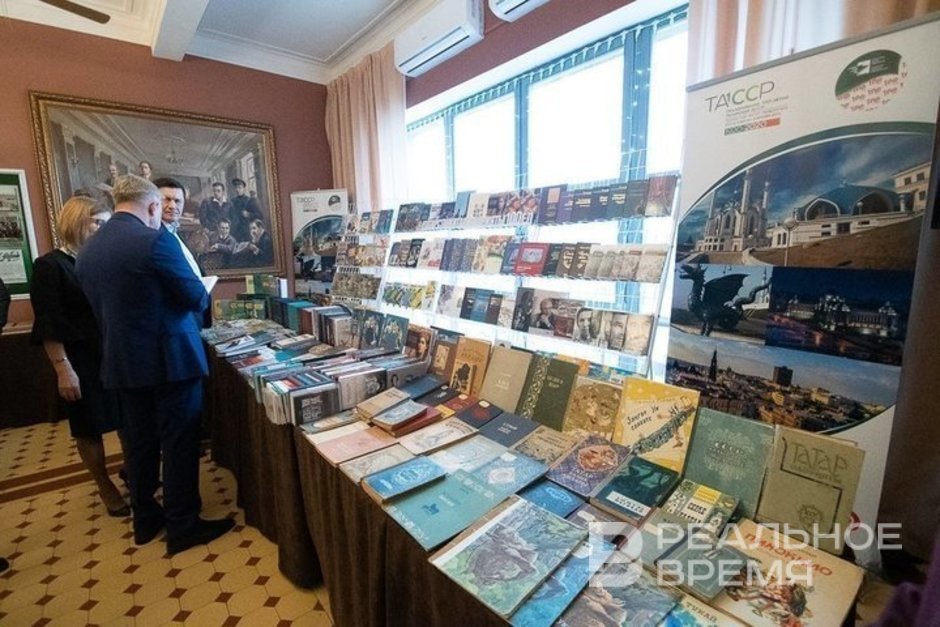
Kazan is a center of spiritual literature
The city has a particularly noticeable presence of publishers focused on spiritual literature. For instance, Sergey Buzukin Publishing House closely collaborates with the Museum of the Kazan Icon, the Kazan Theological Seminary, and the Kazan Diocese. Among its projects are the journal “Izvestia po Kazanskoy Eparkhii” and a book for the 300th anniversary of the Peter and Paul Cathedral. The company gained fame with its series “From the Collections of Kazan Bibliophiles” — reprint editions on the history and ethnography of the Kazan region.
“The publishing house is engaged in the complete preparation of future books for printing: editing, selection of material, illustration, that is, the creation of the product itself," notes the director of the publishing house, Sergey Buzukin. “We do not handle sales ourselves, but we always discuss the cost of the future edition with the authors. Sometimes people want to publish 50–100 copies, sometimes even a dozen. This is where the 'educational' work begins: what print runs can be produced in what ways — from digital printing to offset, what the cost will be, and we always arrive at the optimal option.”
About 10 publications are in the works annually, which may not seem like much, but the projects can be complex from both a scholarly and design perspective. There are few publishers dealing with such rare literature in Kazan, and each is well-known. So the small “Sergey Buzukin Publishing House” is widely recognized.
Another publisher familiar to parishioners is Logos, opened in 1999 by Valentin and Maxim Andreev. Among their well-known books are “Temples of Our Memory," “Revival of Orthodox Churches of the Kazan Land," and “The Miraculous Kazan Icon of the Mother of God. The Zealous Intercessor of the Christian Race.” Their name was made by the guidebook “Republic of Tatarstan. A Fascinating Journey.” Logos-Press LLC recorded a loss of 21.5 million rubles last year.
“Our main challenge and threat is that we could simply be demolished," says Maxim Andreev.
“Logos Publishing House is located in the very epicenter of the 'New Portovaya' development; skyscrapers are growing all around, and a publishing house that produces more than two hundred thousand books and magazines annually is becoming just a plot of land for potential development. We are not against the development of the city and the republic, but those who have shaped and continue to shape its sustainable image through publications should have special patronage! Stone will eventually turn to sand, but the fortress of books and writing will endure for eternity!”
If we talk about Islam, the figures of the Khuzur publishing house are impressive. Sales revenue last year was 73 million, and net profit was 27.6 million. In 2025, Khuzur published 63 books with a total circulation of 256,000, of which 16 were new. As well as 104,000 copies of the magazines “Shura," “Din wa Magyshat," and “Umma.” The publishing house gives away many of these books — as happened with the well-known “Kazan” edition of the Quran.
“There is a demand for spirituality; according to recent research, religious literature has been purchased more," says Rishat Hazrat Khamidullin, Deputy Mufti of Tatarstan and head of Khuzur. “Mostly these are prayer books, daily du'as, du'as for difficult life situations. There are many books related to psychology, where authors try to examine various problems and their solutions through the lens of Islam. And, as always, first place goes to how to learn to read namaz and the basics of Islam — these are the most in-demand books. The main problem in the book market is that many translations of well-known classical theological works are published, into which translators and editors insert their own comments, giving their own interpretation of the text on behalf of the author, thereby distorting these works.”

Write, local historians!
Companies such as Yulbasma use the capacities of printing houses. Guzel Khasanova founded the firm in 2011 while on maternity leave, publishing a book with a grant from the Ministry of Economy of Tatarstan. In 2025, Yulbasma's sales revenue amounted to 5.1 million rubles, with a net profit of about 1.8 million. The assortment includes about 30 books, with some now being sold electronically. Khasanova publishes many books starting from an idea, rather than fulfilling someone's order. For example, that is how she decided to publish a poetry collection by Yoldyz Minnulina.
It can be said that this is also the most well-known private bilingual children's publisher, for example, having released the “Green Book” (“Yashel kitap”) on ecology. Under the Tamga brand, they also publish books on local history, art, and local history, such as about the Old Tatar Settlement. Given its profile, the publisher also faces the task of selling these books.
Khasanova notes that this year there have been difficulties in interacting with readers due to restrictions on the use of certain social networks. The audience “migrates” between them, and maintaining all accounts or gathering users in one specific place becomes difficult.
“For publishers to fully develop as an industry, appropriate infrastructure is needed, which, in my opinion, is insufficient at the regional level," Khasanova lists the problems, noting that book chains are reducing the number of stores. “Second is the absence of professional competitions where new releases would be reviewed annually and evaluated by the professional community. There are no such competitions at the regional level, although they are always a tool for identifying authors and assessing particularly successful solutions. Third, at the regional level, it is extremely difficult for non-state publishers to participate in procurement for replenishing libraries, schools, and kindergartens. Our books are purchased to replenish the collections of Moscow schools, but despite our offers, we have never been able to participate in procurement to replenish the collections of school libraries and schools in Tatarstan in all our time of operation.”
Interest in local history, local history, and art unites small publishers. There are those who prepare books on commission, such as Glavdizain or Zaman. The latter had revenue of 5.1 million in 2025 and a net profit of 1.8 million rubles.
The Center for Contemporary Culture “Smena” also has its own publishing house — these books are consistently presented at their own book festivals. This is almost 40 publications, including the sixth series of “Kustoda” — small brochures with travel notes and memoirs of Tatar authors. Or the already republished autobiographical texts of Gabdulla Tukay.
Interestingly, many entrepreneurs note that while the rise in paper prices hit them hard, the introduction of banned topics and age restrictions has practically not affected Kazan publishers — they simply do not produce such books.