Kazan kremlin takes on the cultural code of Kazan
A multi-year exhibition project launched in the Prisutstvennye mesta buildings
Today, an exhibition created by the National Museum of the Republic of Tatarstan and the Kazan Kremlin Museum-Reserve, with the participation of six other institutions, opens in the exhibition halls of the Pri sutstvennye Mesta. “The Cultural Code of Kazan: Spiritual Heritage and Traditions” is planned to run for a year and a half to over two years, with exhibits rotating and the venue becoming a place for lectures and research.
“This path will not be a short-distance sprint”
The exhibition effectively has two titles. In Tatar, it is “Kazannyn mädäni asyltashlary: rukhi miras häm tamyrlar” (“The Cultural Treasures of Kazan: Spiritual Heritage and Roots”).
— These titles complement each other, — explained Faizrakhmanov. — Indeed, here are presented the treasures of the Tatar people, of Kazan, of Tatarstan, each with unique stories. Ahead for this project are lecture halls, activities, and interactive elements.
The Minister of Culture of Tatarstan, Irada Ayupova, recalled the recent filming of the historical-cultural competition “Tarkhan”:
— Watching the participants, I realized that perhaps the most important thing that has happened in recent years is that we have begun to turn more often to the search for our own — not just roots, but the philosophy and origins of our worldview.
— This project is a path, — the minister noted. — I very much hope that this path will not be a short-distance sprint, but a consistent revelation to everyone of ever-new depths.
— We would like the project to be ongoing and changing. Because it is about us, about what exists in the republic, but created in partnership with museum and scientific institutions, — explained the director of the museum-reserve, Ilnur Rakhimov, noting that scientists actively participated in creating the exhibition.
Who prepared the exhibition
Indeed, besides the named organizers, exhibits were provided by the Museum Complex of Kazan, the N.I. Lobachevsky Scientific Library, the Museum of Archaeology of the Republic of Tatarstan, the Sh. Marjani Foundation for the Support and Development of Scientific and Cultural Programs, the State Museum of the History of Religion in St. Petersburg, and collector Gulshat Nugaybekova. This amounts to over 500 exhibits showcasing Tatar history in areas such as religion, trade, crafts, and education.
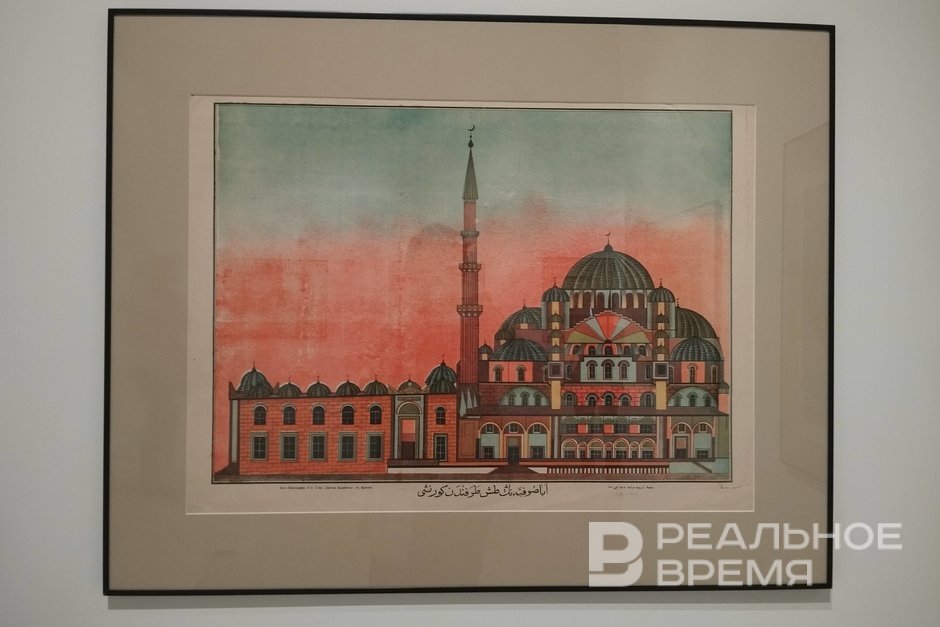
Several halls are also dedicated to the exposition “Shamails: Word and Image” (including ancient handwritten and printed examples, and even contemporary suprematist ones). They feature not only texts but also views of Constantinople and Mecca. A significant portion, incidentally, was provided by the Museum of the History of Religion. Its director, Yekaterina Teryukova, said:
— When the question arose of inviting us to participate in the exhibition, our curators and restorers approached this task responsibly: “We must deliver the prints in perfect condition.” As a result, the restorer's annual graphic plan was completed in the first three months of the year.
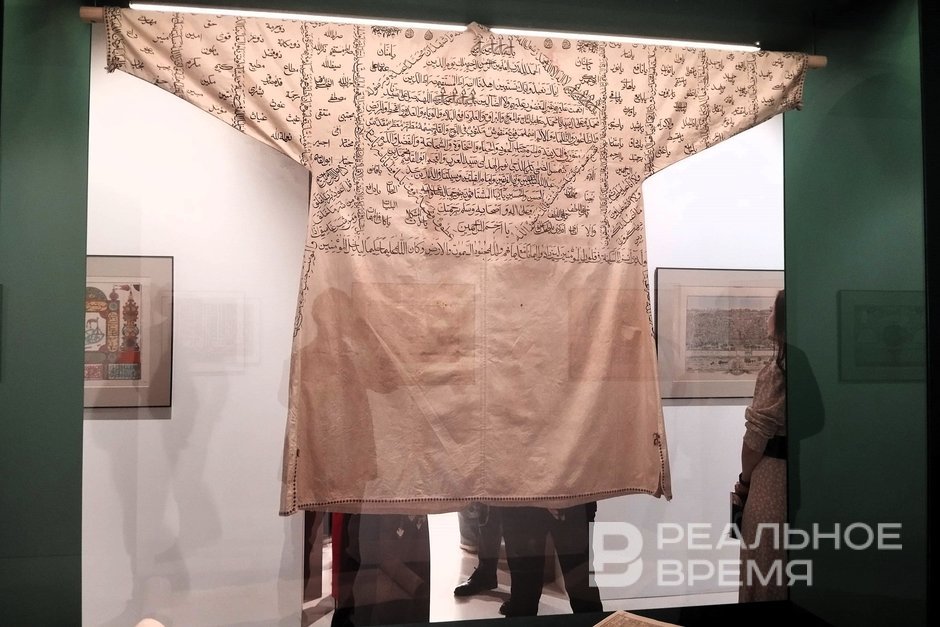
Also located here is a rare item from the St. Petersburg museum — a murshid's (Sufi teacher's) shirt, which has no direct analogues in the world. The fabric is inscribed with Arabic texts; this garment had a therapeutic function.
The exhibition curator is Ksenia Parshina from the Tsaritsyno Museum-Reserve. In 2025, she prepared the project “The City and Craft: A Meeting in Kazan. Traditional Art of the Volga Tatars” there.
— The most difficult task for the authorial group was not to find an answer, but to find a field and create a space where each of our visitors can ask themselves the question: what is the cultural code of Kazan for them, what does it mean to be Tatar for them. And it does not matter who this visitor is, — noted Parshina
Faith, trade, education
The main part of the exhibition begins with the “History and Origins” section, covering the period from Volga Bulgaria to the Kazan Khanate. Here, for example, there is a section dedicated to the cult of the horse and warrior: stirrups, plaques, sabers. On the other side — the feminine: pendants, bracelets, combs...
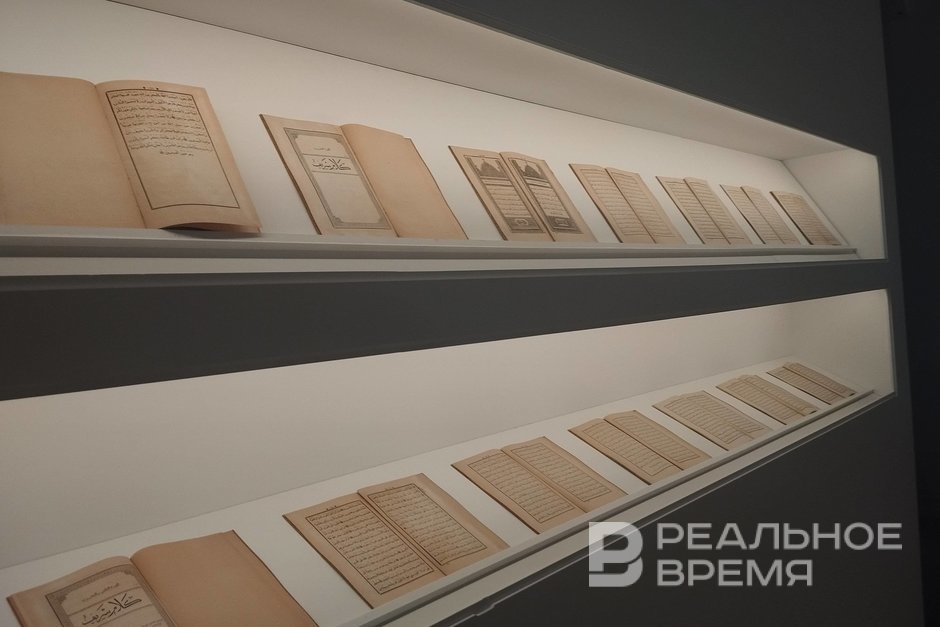
Another section is “Word and Faith”: a Quran printed in 30 parts, miniature editions, amulet cases, a tafsir. In the center, designers have created an image of a minaret. In general, much praise is due to the exhibition's design: some items we may have seen before, but in the Pri sutstvennye Mesta, they have been given a new perspective. Moreover, journalists were shown the exposition during assembly, before all the glass was in place, which added a certain warmth to the viewing process.
The “Trade and Craft” section will likely interest children because of its interactive merchant figure. The bazaar is a place to showcase folk crafts: an elegant collection of ichigs (embroidered boots), kalfaks (headwear), and kalyapushis (skullcaps) is displayed. Also here are merchant advertisements and, for example, a complete set-up for the production of steel musical lamellae.
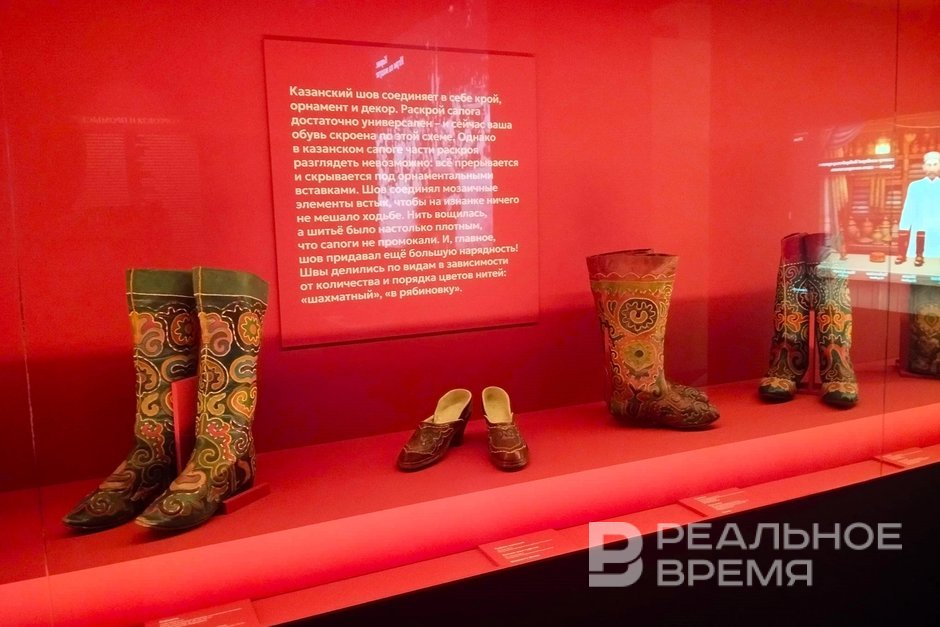
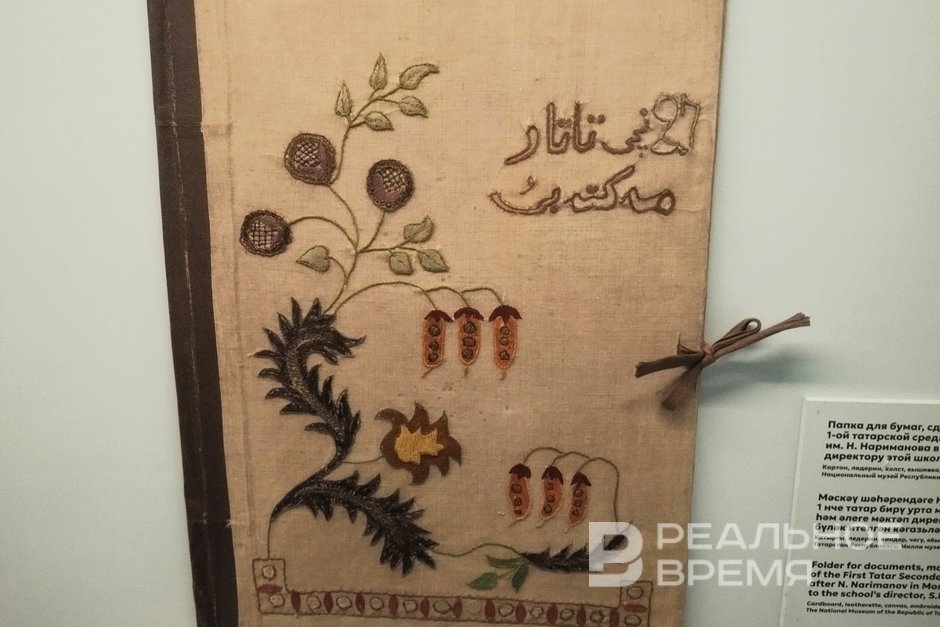
The exhibition logically concludes with the story of the intellectual revolution at the turn of the 19th–20th centuries. Notably, there is a very interesting stand about educational pioneers: Lyabiba Khusainova, Fatikha Aitova, and Sara Shakulova.
However, interestingly, with rare exceptions, the museum's cultural code does not extend beyond the revolution (although some of the figures continued their work after October). The phenomenon of preserving identity in the era of internationalism and Soviet globalism likely deserves not one, but a series of lectures. After all, the cult of animals, the apologia of the warrior image, the religious movement, Jadidism, the women's question — these themes continued to develop in the 20th century, despite the obvious and brutal rupture. This is why the exhibition resonates deeply — in it, one can see not only what has been lost but also what exists now.