The oldest profession, dreams before death, technological decline of civilizations
Interesting science news of the week
Fair skin, gluten intolerance, resistance to baldness — traits established in Europeans as a result of directed natural selection. As death approaches, a person experiences increasingly vivid and realistic dreams. We may not hear from aliens because civilizations likely only reach high technological levels for short periods. 220,000 years ago, humans were already quarrying stone. In half of cases, AI chatbots provide “problematic” answers to medical questions, with one in five answers being “very problematic.”
FAIR SKIN AND RESISTANCE TO ALCOHOLISM IN EUROPEANS ARE RESULTS OF DIRECTED SELECTION
An international team of researchers has devised a method to identify traces of directed natural selection in genetic data. Directed selection is a process where one version of a particular gene proves more beneficial for survival and reproduction. This version is then more frequently passed on to subsequent generations, meaning the trait it determines is more common in the modern population than others. For example, the gene for light skin color in humans was advantageous in northern latitudes because lighter skin allows for more vitamin D absorption than darker skin. Thus, Europeans (or, as they are now called, Western Eurasians) fixed this trait in their genotype.
Until now, anthropologists believed that directed (rather than random) selection in human evolution was extremely rare. Analysis of ancient human DNA had previously identified only 21 such cases.

However, the new genome analysis method has shown that scientists were mistaken, and directed selection has influenced us more than we thought. Data from nearly 16,000 individuals living in Northern, Western, and Southern Europe over the past 18,000 years was “run” through this analysis. It turned out that evolution purposefully “pruned” or “amplified” hundreds of variants of different genes! Moreover, selection accelerated in the last 10,000 years — when humans became farmers.
More than 60% of the 479 identified “directly selected” alleles determine traits in many modern Europeans. For example, these are genes responsible for fair skin, red hair, gluten intolerance, resistance to leprosy, low risk of baldness, arthritis and alcoholism, blood types III and IV, and so on.
All of these, for one reason or another, were likely beneficial for species survival at different stages of evolution (like fair skin). Scientists still don't understand what advantage red hair conferred, but the trait is definitely a result of directed selection. Some genes were initially beneficial at certain stages of population development but later became subject to negative selection. For example, over several thousand years, resistance to tuberculosis increased in the population, but about 3,500 years ago, it decreased.
THE CLOSER DEATH, THE BRIGHTER THE DREAMS
Scientists from Italy studied the dreams and visions of people nearing death. They were assisted by hospice workers and other palliative care specialists. It was found that the closer death approaches, the brighter and more realistic a person's dreams become. And these are most often not nightmares, but calming images for the patients.
Accounts of what people see before death are common, but the scientific community has viewed them skeptically for years. Terminal dreams were explained by delirium or the effects of medication. However, scientists became interested in these visions. Why does the brain produce them?
The data collected by the Italian scientists revealed patterns. The plots people see before death are almost identical — meetings with their deceased loved ones, sometimes even as waking visions. Another group of dreams and visions includes symbolic images of transition: doors, stairs, bright light. 90% of such dreams brought peace and tranquility. Only 10% of patients had anxious dreams.

The Italians concluded that dreams and visions in the weeks or days before death serve an important psychological function — reducing the fear of the unknown and helping to accept the inevitable passing.
WE STILL HAVEN'T MET ALIENS BECAUSE TECHNOLOGICAL FLOURISHING OF CIVILIZATIONS IS TOO SHORT
The Fermi paradox still troubles us: why haven't we yet found evidence of other intelligent life in the universe? Astronomers search for technosignatures, and there is a well-funded organization in the US, SETI, dedicated to searching for extraterrestrial life — yet still, silence...
Scientists from Cornell University (USA) developed 10 scenarios for the development of a technological civilization like ours. They considered different types of governance, access to resources, and other parameters. The result was a stochastic model of the dynamics of such societies. Civilizations experience collapses between cycles of development. This is because technological development depletes resources. A catastrophe occurs, and technological development ceases. Then everything starts anew. Even the longest-lived civilizations are technologically active for only part of their existence (the scientists introduced the parameter “time of technological activity”).
And this, according to the American scientists, is what hinders the detection of our extraterrestrial counterparts. For most of their existence, a civilization simply does not emit detectable technosignatures. Thus, galaxies appear empty — even though they might be teeming with intelligent beings.

The authors of this work also speculate on Earth's future. Even small changes in resource consumption rates, recovery capacity, and risk levels could push the system into a cycle of regular crises. Alternatively, they could ensure a long flourishing period. It depends on what we choose.
HUMANS WERE MINING MINERALS 220,000 YEARS AGO
Early humans were hunter-gatherers. They made stone tools — we've known this for a long time. But from what? It's unlikely that suitable cobblestones of sufficiently soft rock for knapping were conveniently scattered everywhere. In the first tens of thousands of years of the species' existence, that was the case: go hunting — find a good stone — pick it up — profit!
As the species evolved, humans became smarter. The first specialized extraction appeared: people knew where the needed resource was located and purposefully went on expeditions to obtain it. Scientists believed we figured this out late: humans began going to deposits en masse about 40,000 years ago. But now, an international team of archaeologists has found evidence that one of the oldest professions is actually mining.
In the Jojosi locality in eastern South Africa, scientists studied grasslands 140 km from the coast of the Indian Ocean. The thickness of geological deposits in the gullies here reaches 5 meters, making them easy to study: a kind of “layer cake” with visible strata. Here, they found 12 sites with artificial flakes of hornfels (a rock used to make many ancient Pleistocene tools). There were once large natural outcrops of this stone. The soil in this layer was sieved with a millimeter mesh, revealing millions of tiny stone fragments. All of this was manufacturing debris generated when prehistoric craftsmen knocked off pieces of rock to carry back to their settlement and turn into tools.
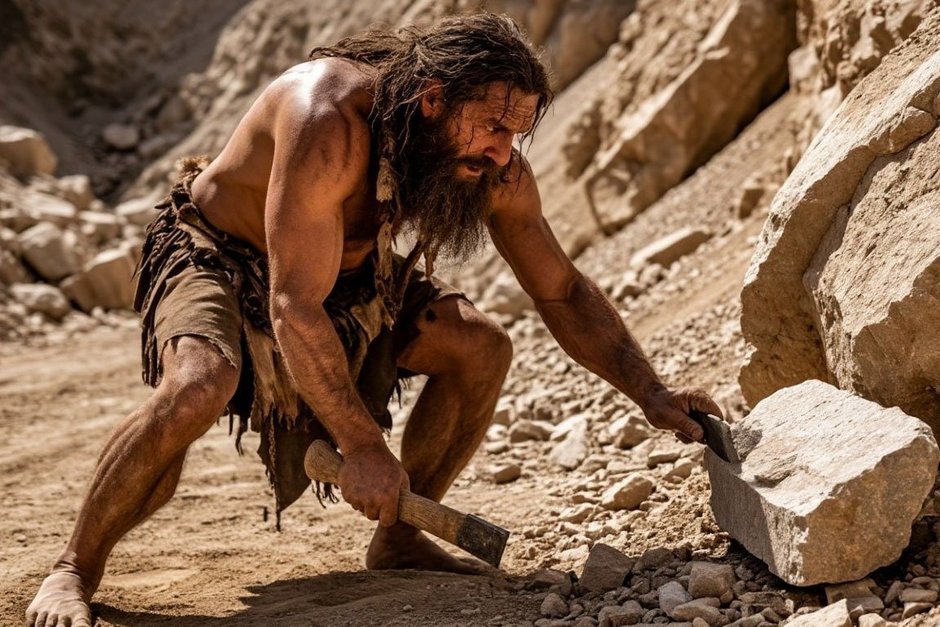
Most importantly, there was no evidence of a permanent settlement near this deposit. This means people did not live here permanently but only established a quarry, coming here on “mining expeditions.” The sensational discovery was the age of this find: humans were quarrying stone here 220,000 — 110,000 years ago. That is, for a hundred thousand years in a row, they constantly returned here to collect material and leave. History leaves only one question unanswered: did they pass this knowledge down from generation to generation, or did the ancient miners simply periodically stumble upon convenient boulders emerging from the ground, collect stone, and leave?
CHATBOTS CONFIDENTLY GIVE PROBLEMATIC ANSWERS TO HALF OF MEDICAL QUESTIONS
The University of California conducted another LLM experiment: they tested how popular chatbots based on large language models answer medical and health questions. Admit it, you've asked a neural network why your head hurts. Well, the scientists asked too. In February 2025, they asked ten questions each about cancer, vaccines, stem cells, nutrition, and sports training to the five most popular chatbots in the world. Professional doctors evaluated the answers.
The news is not good. In nearly half of the cases, the answers from popular chatbots to medical questions should not be used. Scientists rated 49.6% of the answers as problematic. Poor quality of references (incomplete and unverified information), stable hallucinations, fabricated citations, and poor readability are the main complaints.

Grok gave the highest number of highly problematic answers. The neural networks answered best about vaccines and worst about stem cells and nutrition. Meanwhile, the neural networks were more than confident in themselves; out of a total of 250 questions asked, the chatbot refused to answer only two.