Relocants left until elections: bill on seizing property of those who left stalls in State Duma
Initiative of Tatarstan’s State Council and Ayrat Farrakhov not included in tentative work plan for final Duma session
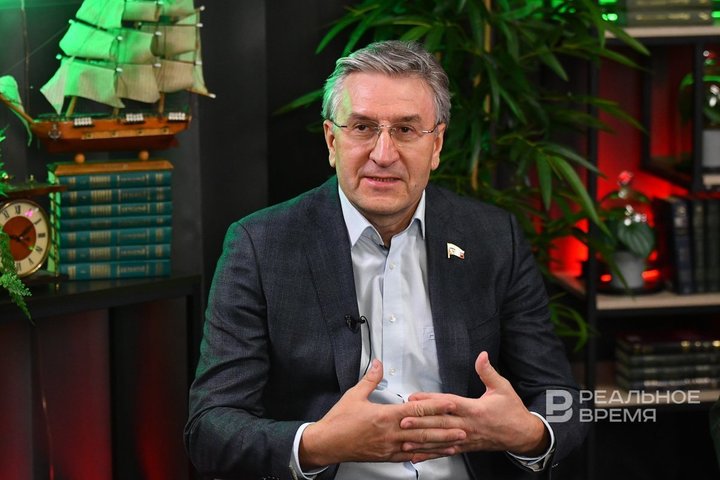
A bill initiated by the State Council of Tatarstan, ready for a second reading, concerning the seizure of property belonging to relocants has not been included in the work plan for the final session of the eighth convocation of the State Duma. The official reason for the postponement is the lack of an opinion from the Domestic Policy Directorate of the Presidential Administration of Russia. It is possible that authorities intend to revisit the issue after the election of a new State Duma. More details in this report by Realnoe Vremya.
Relocants not a priority in legislative work
A high-profile legislative initiative by the State Council of Tatarstan, aimed at countering discrediting statements by those who left the country, remains unimplemented. The bill on seizing property of relocants has languished in the State Duma for nearly a year without progress, and there is almost no chance it will be adopted in the current political season. Sources from Realnoe Vremya indicate it could theoretically be revisited after the election of a new State Duma in the fall of 2026.
The draft law with the long, dry title “On Amendments to the Code of Administrative Offenses of the Russian Federation, Regulating the Rules for Bringing to Administrative Responsibility Offenders Located Outside the Russian Federation” was not included in the work plan for the final session of the State Duma, the Russian parliament's press service told Realnoe Vremya.
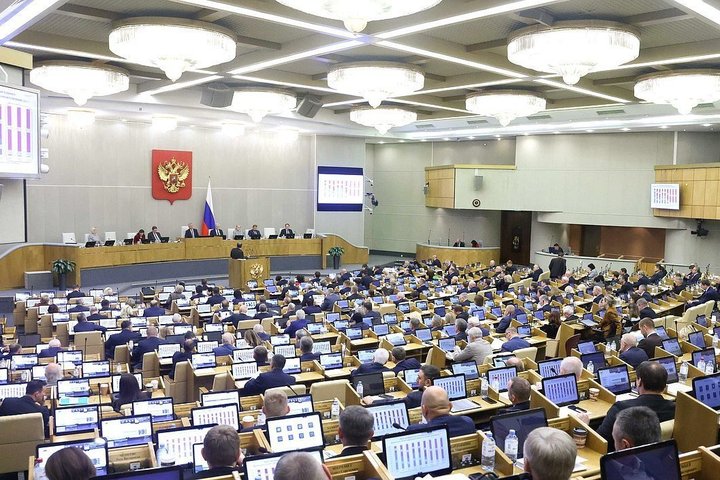
The indicative program of legislative work for the spring session contains about 200 bills, with a significant portion under the purview of the Committee on State Building and Legislation. About 40 bills related to restructuring the state system and constitutional rights of citizens have been submitted.
However, relocants were not prioritized in legislative activity. The last update on the progress of the bill on penalties was on May 13, 2025. “Indeed, this bill is not included in the session's work," the Russian parliament's press service confirmed to Realnoe Vremya. Thus, the mechanism for securing the seizure of assets from those who spoke out against the special military operation remains at a conceptual level.
“They still have property, accounts here, receive income”
Two years ago, the State Council of Tatarstan launched a legislative initiative to hold relocants administratively liable for any offenses directed against the country's interests. The draft law was developed with State Duma deputy from Tatarstan Ayrat Farrakhov and submitted to parliament on October 17, 2024.
It was brought up for discussion in the first reading on May 13, 2025, and approved by the vast majority of parliamentarians. As Farrakhov explained during the State Duma meeting, the offenses include discrediting the Armed Forces (Art. 20.3.3 of the Administrative Code), inciting hatred or enmity (Art. 20.3.1), calls to violate Russia's territorial integrity (Art. 20.3.2), dissemination of false socially significant information in media and the internet (Art. 13.15), and production and distribution of extremist materials (Art. 20.29).
A total of 5-6 types of administrative offenses are to be addressed by amendments to the new version of Part 3 of Article 1.8 of the Administrative Code. The aim is for relocants to “feel the negative consequences of their unlawful activities, and for potential offenders to be deterred from following their example," Ayrat Farrakhov explained at the time. According to him, these measures would serve to prevent the commission of new offenses. The bill does not provide for the complete confiscation of relocants' property. Seizure would be imposed as a precautionary measure to enforce court decisions.
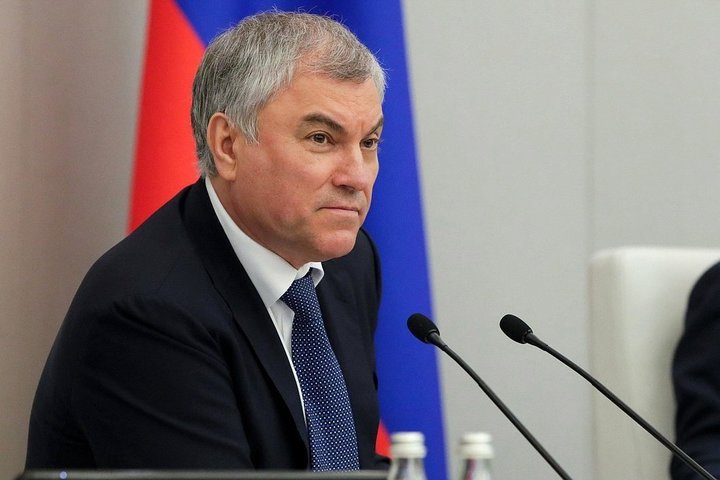
— This also applies to foreign agents who engage in illegal activities, trying to destroy the state, our values, doing everything to weaken the country, and thinking that since they've left abroad, no one can touch them. That's not the case, — warned State Duma Chairman Vyacheslav Volodin during the meeting. — They still have movable and immovable property here, accounts, they rent out their apartments, buildings, and receive income.
What the domestic policy directorate will say
By that time, a significant portion of Russian show business stars had expressed support for their country, the soldiers, and the residents of Donbas. But some artists took a different stance, speaking out against the SMO and leaving the country. In August 2022, members of the State Duma working group to investigate anti-Russian activities in the cultural sphere (GRAD) released a list of 142 celebrities who had not publicly supported the special operation in Ukraine. Some of these artists subsequently returned to Russia, but only briefly.
The bill's authors hoped to bring it to a second reading during the current session. According to Ayrat Farrakhov, the bill's provisions are fully ready for adoption. The office of the State Duma Committee on State Building and Legislation clarified that the coordination process is underway.
— To proceed to the second reading, an opinion from the Domestic Policy Directorate of the Presidential Administration, as well as several other directorates, is required. No amendments will be introduced to it. The bill is ready for the second reading, although technical amendments are possible, — the office acknowledged. They did not specify potential timing but added that State Duma deputy Ayrat Farrakhov is handling the operational oversight of the bill.
The Tatarstan parliament explains the prolonged passage of the initiative by the complex political situation. The bill was introduced somewhat hastily, Marat Galeev, a deputy of the State Council of Tatarstan, told Realnoe Vremya.
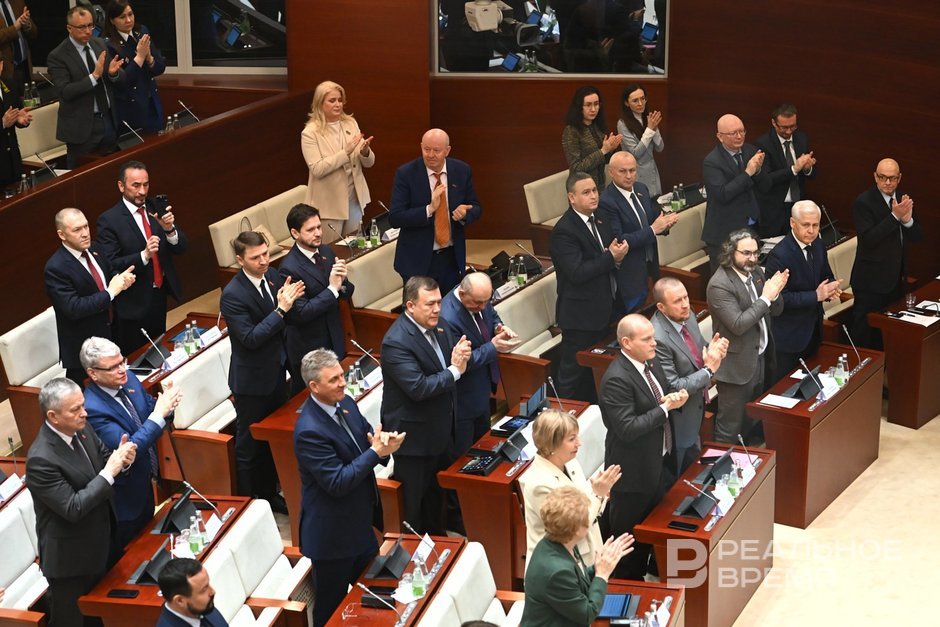
— It was quite an emotional introduction. There were resonant statements, and they are always emotional. But a law should not be guided by emotions, — the Realnoe Vremya source said.
— Punitive measures, in my deep conviction, are far from the best option, — the parliamentarian reasoned. — This is not specifically about this bill. My general view of life is that there should be more incentives than punishments. After all, we constantly hear “ban," “prohibit” — it's gaining momentum. But I believe the general approach should be different.
Foreign agents exist, but no sanctions
— It would seem that granting foreign agent status and seizing the property of those who criticize the SMO from abroad looks like a logical tightening of measures against offenders. The first mechanism works without fail, but the financially sensitive sanctions seem to have stalled? Why? This question remains unanswered for me, — reflected Professor Andrey Tuzikov, Doctor of Sociological Sciences.
According to him, the strength of society is based on unity.
— When, during geopolitical turbulence, a split occurs into “Russia that left," “Russia that is fighting," “Russia that is enjoying itself," and others, that is certainly unhealthy, — he said. — I am not calling for everyone to march in lockstep, but if you are a citizen of the country, you must be with it. As Akhmatova said: “Love Russia even in her misfortune.” Phrases like “I live here, I don't live there” are echoes of the ideology of global nomadism. As for relevance, as far as I know, a significant portion of those who left have returned. But this crowd in the style of Pugacheva and Slepakov, forgive me, does not represent Russian society.
Thus, according to the expert, it is wrong to say that the bill could split society.