“Wings of Bars” win Russian wheelchair basketball cup
Kazan team claims previously unattainable trophy
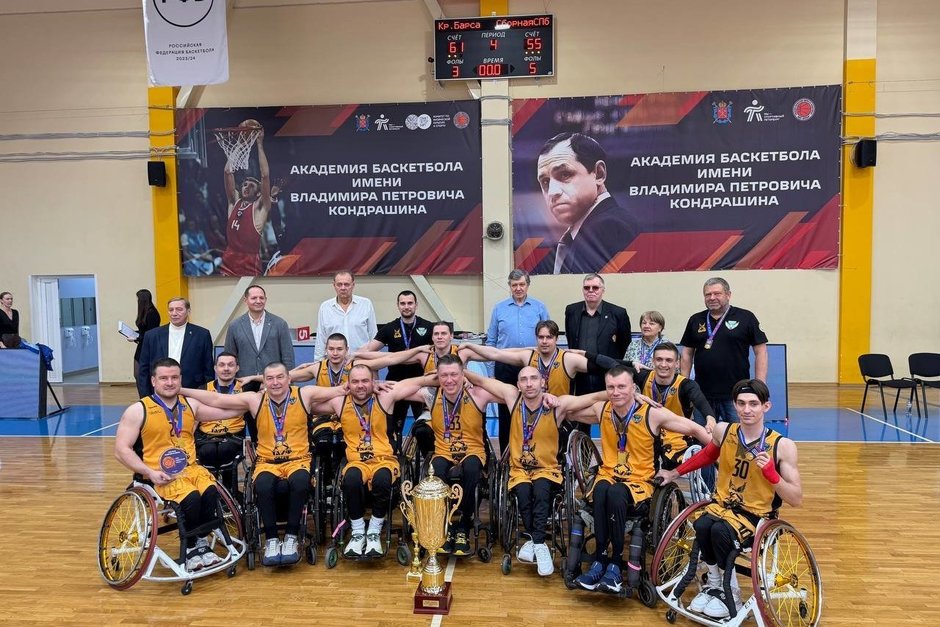
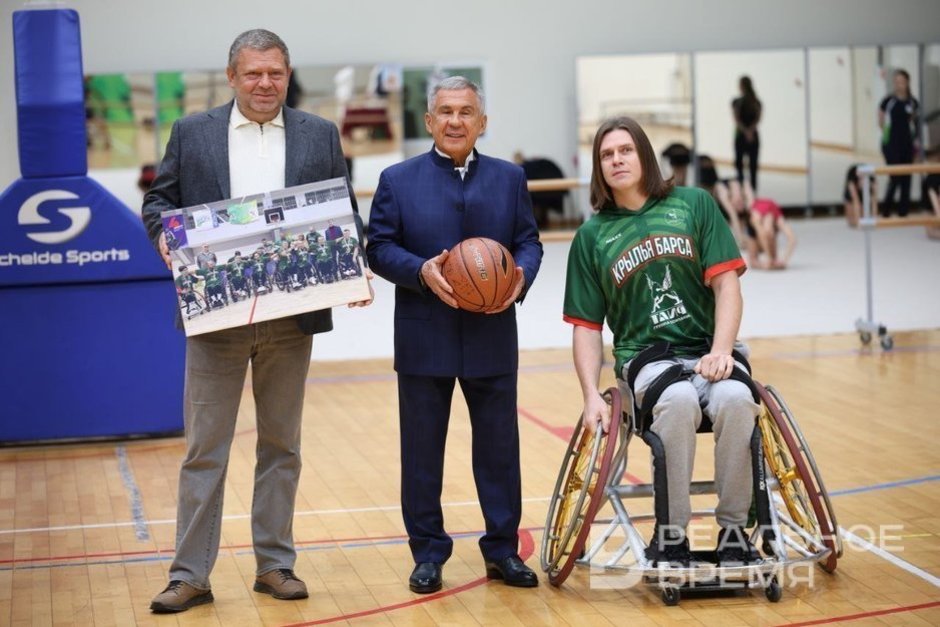
The Russian Wheelchair Basketball Cup final concluded in St. Petersburg. The competition among the country's four strongest teams was won by the “Wings of Bars” team. Kazan defeated the St. Petersburg united team (“BasKI”) with a score of 61:55. This marks the first victory in the history of the Kazan team, the reigning national champions, in the prestigious trophy competition. More details in this report by Realnoe Vremya.
A RELAY FROM HEROIC PARALYMPIANS
The first official wheelchair basketball tournament of 2026 took place against the backdrop of the brilliant performance of Russian Paralympians in Italy and a ceremonial reception with Russian President Vladimir Putin. This speaks to the attention given to this group of athletes, which must not wane. Meanwhile, we see that only four teams gathered in St. Petersburg, without regulars from Tyumen and the team from Ulyanovsk, which is missing its second consecutive official competition, having not shown up for the final round of the Russian Championship at the end of last year. Paralympic sports and their development are entirely the prerogative of the state, and only significant state involvement can explain the competitiveness of our champions in Italy.
Thanks to a reliable partner, JSC TAIF, the two-time Russian champions, “Wings of Bars," are developing at the level of professional teams. During the off-season, Kazan filled their time with friendly matches against opponents from Turkey, and then traveled to Antalya for a pre-season training camp.
They entered the tournament's opening match against Moscow's “Falcon” as the best-prepared team among the four contenders for the Russian Cup. Moscow captain Fyodor Yurku opened the scoring, while Kazan captain Vasily Kochetkov tied it — historically significant as these were the first points of the new season.
Let's highlight a couple more details. For instance, with the score 30:19 in favor of Kazan, a perfect play was executed involving only the ball and “Wings of Bars” player Dinar Kamaliev. He passed to Vsevolod Salin and rolled towards the opponent's basket. Salin passed to Kochetkov, who returned the ball to Dinar, now in a prime scoring position, and he scored.
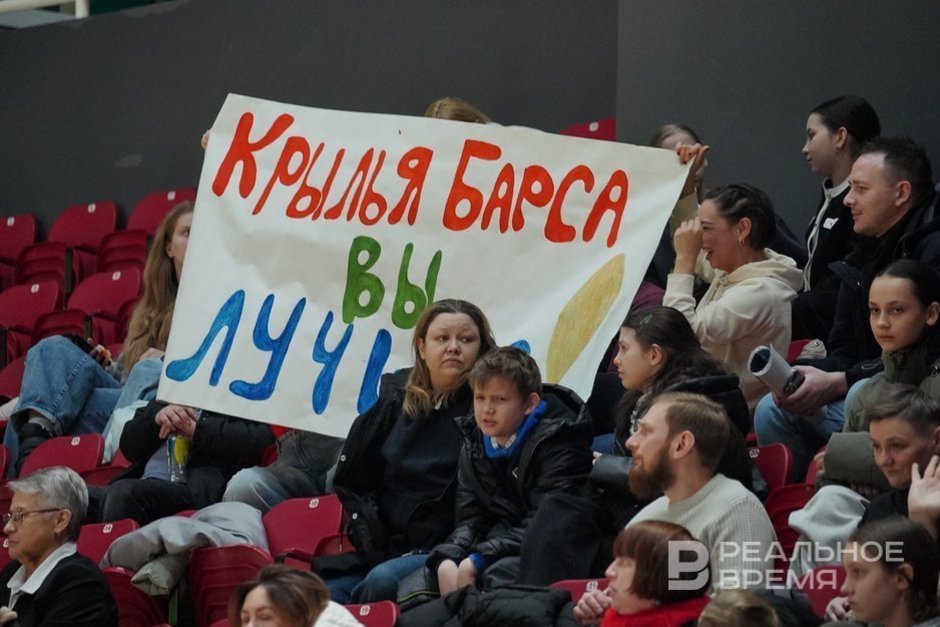
Ideal team coordination, matched only by other Kazan movements later in the second half when Kochetkov, Albert Bagamanov, and Vladimir Kuchin combined for another two points. The reaction of Moscow's Alexander Godzhurov was telling; he threw up his hands in frustration, unable to counter the champions. The final score was a 57:42 victory for “Wings of Bars," achieved in their yellow uniform, likely symbolizing their previous championship status.
LIKE GOOD OLD BANDY
In the other game of the opening round, “BasKI” from St. Petersburg defeated “Legion-Ugra” from Nyagan 75:32, thus setting the level of aspiration for the Cup participants. Three teams of roughly similar class and one weaker — reminiscent of 20th-century bandy, with the USSR and Sweden, slightly weaker Finland, and Norway as the underdog. Such a dynamic lasted over 20 years.
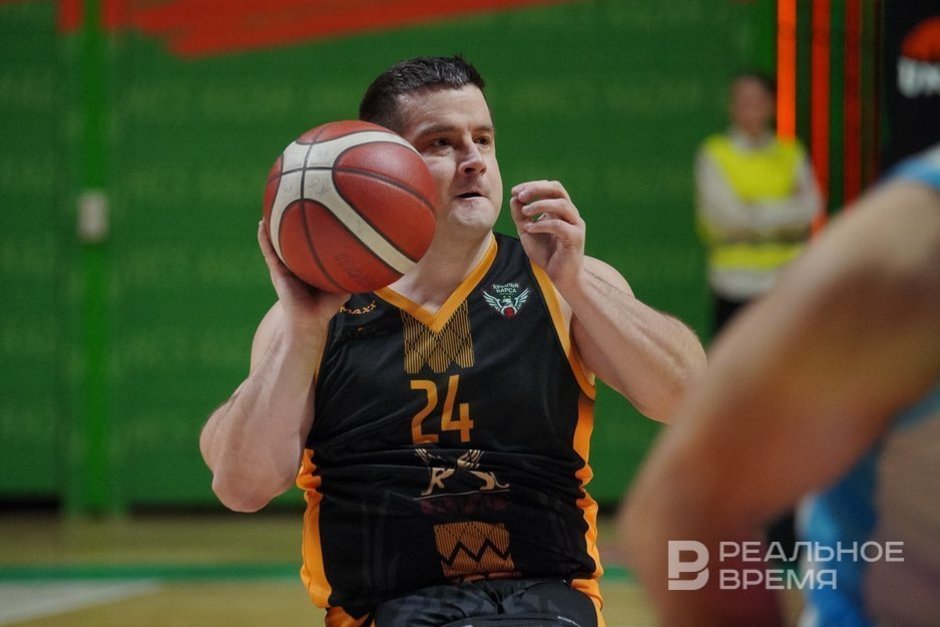
Changing into their black uniform, which fans had seen during their games against the Turks, “Wings of Bars” crushed “Legion-Ugra” (86:29). Meanwhile, the game between St. Petersburg and Moscow showed more fight: 62:45 in favor of the hosts, the team from the Northern capital.
Interestingly, before the tournament started, the main roster of the Russian national team and a list of candidates were announced. From “Wings of Bars," Kamaliev, Kochetkov, and Salin made the main team, while Bagamanov, Kuchin, and Viktor Kaynov are on the candidate list. Moscow contributed six players to the main roster, including “Falcon” President Alexander Valov, and three candidates. Also notable are three representatives each from Tyumen and Ulyanovsk (whose teams missed the Cup matches) and one player from the Smolensk team “Krepost.”
On the third day, Moscow secured its first win of the season, beating the team from Khanty-Mansiysk — 79:34. The main event of the day, as described by the commentator during a pre-game mic check with “one, two, three, four, real basketball on air," was the clash of the two titans of Russian wheelchair basketball, which, by the way, drew a substantial crowd to the St. Petersburg sports complex stands. From the walls, images of Vladimir Kondrashin and Alexander Belov, legends not only of Soviet but also world basketball, looked down.
...LIKE IN KONDRASHIN'S GOOD OLD SPARTAK
Watching from the sideline was Gennady Shchetinin, a former Leningrad “Spartak” player, once coached by Kondrashin and a teammate of Soviet basketball stars like Grishaev, Gorin, Maltsev, Pavlov, Kharchenkov. The new coach of “BasKI” continues the line of coaching by someone from classical basketball, as was the case during the time of Andrey Makeev, who died in 2021. Makeev, of course, was a higher-level player than Shchetinin, but Gennady Evgenievich is also a name. Suffice to say that under his guidance, players like Karasev, Kisurin, and Pashutin began their careers in the professional team — players longtime UNICS fans remember on the court. Shchetinin's assistant is playing coach Dmitry Sitnikov, and Anatoly Kirillov, who previously combined player and head coach duties, remains. This mirrors the situation at “Wings of Bars," where Vasily Kochetkov leads his teammates not only as the most experienced player but also as the designated playing coach.
The game between St. Petersburg and Kazan was made more heartfelt by the commentary of Moscow “Falcon” captain Fyodor Yurku, who deserves our gratitude. Having played his match against Nyagan, he could have gone to the stands but instead took the commentator's position, giving the audience deeper insight than any outsider could offer.
St. Petersburg has four players in the national team squad and two candidates, but this is somewhat misleading. In the final day of the group stage, the country's best teams met on the court, with the best coaching staffs on the sidelines.
“BasKI” took the lead from the start, at one point achieving an 11-point advantage — 24:13. But Kazan, minute by minute, with every push of the wheelchair, erased the deficit, like snow slowly but surely melting from the streets. At the end of the third quarter, an accurate shot by Kochetkov put “Wings of Bars” ahead — 34:35, but a technical foul returned the lead to the hosts — 38:35.
“BASKI” ON THE DEFENSIVE (PLAYING LIKE SHCHETININ)
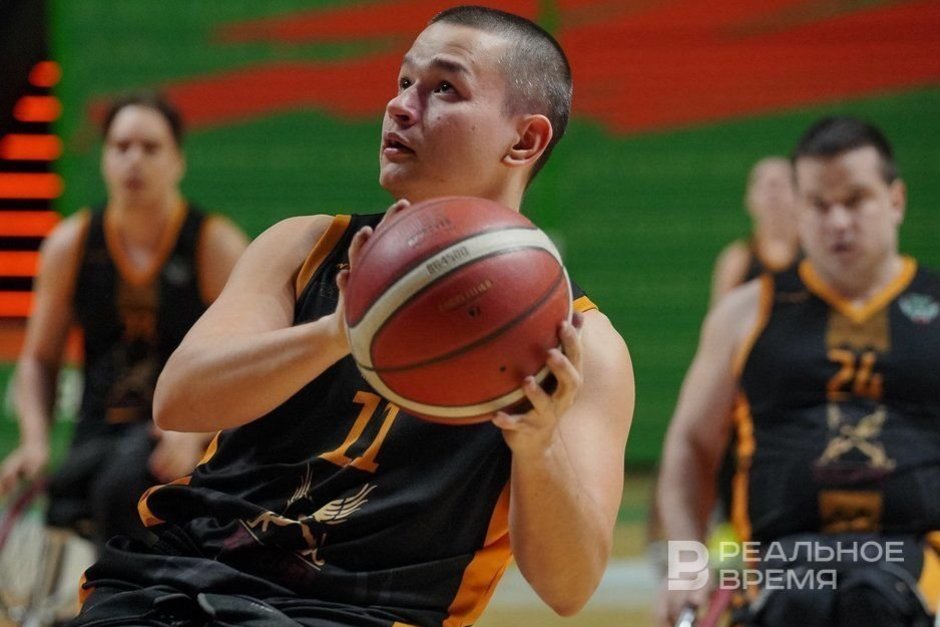
Kazan did not force the pace, but in the fourth quarter, they not only took the lead but, with two consecutive accurate shots from Bagamanov, secured a solid advantage — 42:47. Special mention goes to Albert, as he scored both from mid-range and under the basket, demonstrating the variety of his skills.
St. Petersburg would not have been invincible in Russian wheelchair basketball for so many years if they had stopped fighting in front of their fans and a new coach with a very solid playing background. Especially since “BasKI” had Konstantin Timofeev on their roster, who, just six months ago, missed an open shot under the basket in the final seconds of a game against Kazan. There was a popular Soviet song, “What do you dream of, cruiser Aurora?” — quite fitting for Timofeev. Perhaps now he'll dream of scoring, because in this case, Timofeev was accurate — 50:51. Kochetkov's mid-range shot made it 50:53, seemingly securing “Wings of Bars” victory with 1 minute and 7 seconds left. But Sitnikov and Ermolinsky scored four points, putting the hosts ahead — 54:53, using up a minute and Shchetinin's timeout. Scoring after a timeout is a sign of top coaching; it shows the team is well-trained. Kazan had only seven seconds left to respond.
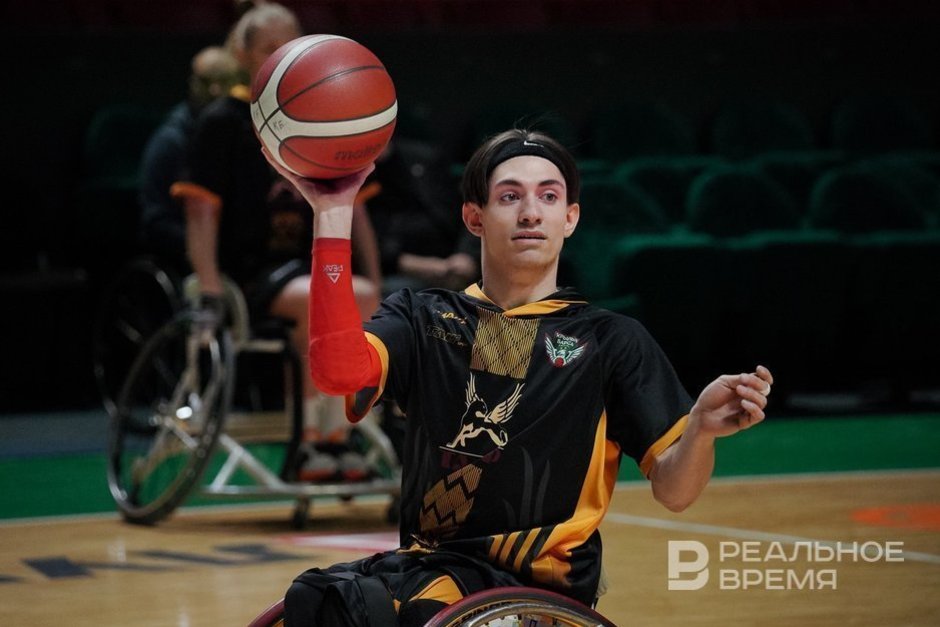
Returning to those final seven seconds — the “Wings of Bars” coaching staff immediately called a timeout, and the camera captured the calm Kazan coaches meticulously explaining to their players how to execute the final play. Then, many on the court seemed to have their minds freeze. First, St. Petersburg's Andrey Litvyak started blocking Kochetkov before play even resumed, as the Kazan captain was rolling to the sideline to inbound the ball — unacceptable interference. Litvyak realized his mistake, apologized several times, Kochetkov took the ball, and the Kazan coaching staff called another timeout, their second in a row. Kazan coach Sergey Chistov explained in a quick comment to Realnoe Vremya: “I explained who would inbound the ball and where Bagamanov and Salin needed to be for Seva to receive it, but they positioned themselves on the inbound side, so we had to take another timeout to get it right.”
Ultimately, Kazan positioned themselves correctly, and St. Petersburg's Evgeny Ermolinsky was assigned to guard Kochetkov. Later, I heard someone say “Ermolinsky couldn't hold Kochetkov.” That is absolutely false. The last seven seconds need to be watched at least ten times to follow every player's actions. Only then can one see how simply yet effectively Bagamanov played, rolling diagonally across the court, taking the tenacious St. Petersburg player Vasily Laykov with him. Consequently, Laykov, mindful of Bagamanov's four consecutive points, essentially played no defense. Vladimir Kuchin's movement drew two of St. Petersburg's tall players — Litvyak and Sitnikov — leaving Sitnikov to guard Kuchin under the basket, where Vladimir rarely misses. Artur Galstyan engaged Timofeev, blocking him so Kochetkov could move freely, and together they blocked Ermolinsky's path. In the end, Ermolinsky, the only home player clearly trying to execute his task of hindering Kochetkov, could do nothing against Vasily.
CHISTOV'S TEAM'S BROWNIAN “MOTION UPWARD”
This seemingly chaotic, “Brownian” movement of Kazan on the court was the reigning champions' “movement upward.” In seven seconds, they executed a simple give-and-go: Kochetkov's pass to a completely free teammate, Salin, a cross-movement exchanging positions, and Salin's return pass to Kochetkov. Perfect in terms of the two-player interaction! Brilliant in terms of the other three players' teamwork, maximizing the difficulty for the opponents! Marvelous to watch!
Particularly telling was the reaction of one St. Petersburg fan, who clutched her head as soon as Kochetkov received the ball. He was in a prime scoring position, with minimal resistance, as the waving arm of the relatively short Ermolinsky, who did everything he could, was no problem for Kochetkov.
His teammates did everything to ensure Kazan's top scorer faced no resistance finishing the play, allowing him two seconds to aim, breathe, and calmly bank the ball in. Genius!
KAZAN RETURNED TO THEIR YELLOW UNIFORM
The semifinals played out differently. Kazan crushed Nyagan, while St. Petersburg faced serious resistance from Moscow's “Falcon," winning only 63:56. But crucially, the psychological advantage for Kazan heading into the final was building; now the “Timofeev dream” could haunt all five St. Petersburg players. Considering the psychological factors (two consecutive heartbreaking losses) and physical condition (greater energy expended the day before, two hours less recovery time), “Wings of Bars” took the court as favorites.
One change: Kazan returned to their yellow uniforms. Regarding the lineup, experienced players Kamaliev and Kaynov started, leaving young players Galstyan and Salin on the bench, who entered when the score was 14:12 in favor of Kazan. The prolonged presence of Kazan's youth on the court established a 21:14 lead, pleasing the Kazan fans. However, St. Petersburg soon cut the lead to a minimum — 20:21 — until Bagamanov scored from under the basket to give Kazan needed points.
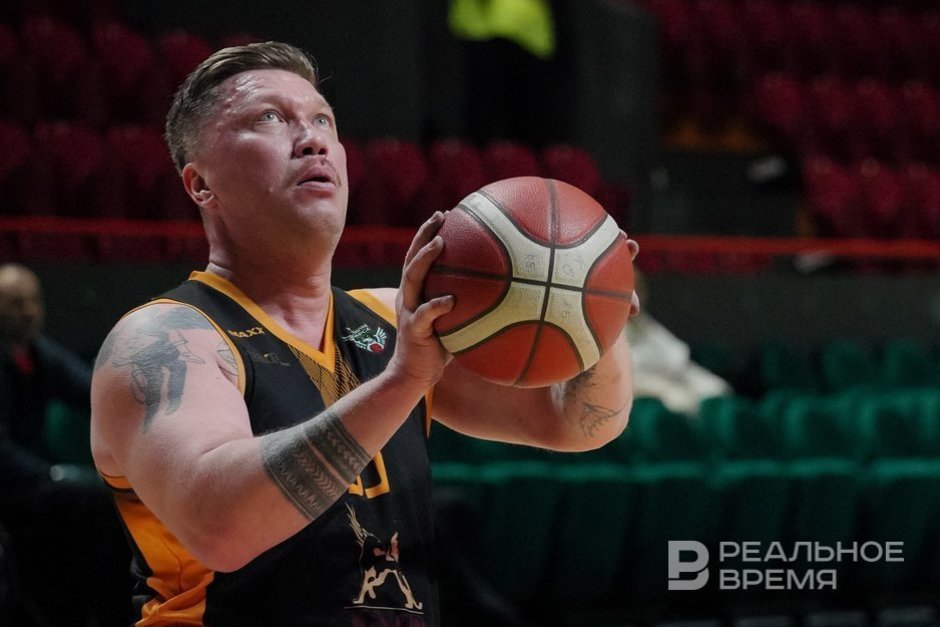
A halftime score of 22:23 indicated very low scoring for both teams, with defense dominating offense. In the third quarter, St. Petersburg managed to build a 6-point lead but lost it by the end — 37:37. What was frustrating: St. Petersburg had the advantage in rebounds under Kazan's basket, sometimes scoring on second or third attempts. Another 6-point deficit in the final quarter, and Kazan again caught up — 53:53. But it was concerning that Kazan constantly played catch-up. Still, they caught up (55:55), then scored six consecutive points. 61:55 — victory for “Wings of Bars," claiming the first Cup in their history.
In the end, the accumulated fatigue of four days of competition told on St. Petersburg's aging leaders, while the winners' deeper bench, the excellent Kochetkov who hit two three-pointers and delivered unmissable passes, made the difference. Crucially, Kazan overcame their last remaining barrier, winning the long-awaited national Cup.