A boy from Mississippi: How Tom Sawyer conquered the world
150 years ago, the novel by American writer Mark Twain “The Adventures of Tom Sawyer” was published

Today marks 150 years since the first publication of “The Adventures of Tom Sawyer.” Mark Twain's book was first released in Great Britain on June 9, 1876, and later appeared in the United States. Over a century and a half, the novel has become one of the most famous children's books in the world. Today, even people who have never read the novel know Tom Sawyer. At the same time, Mark Twain himself saw his book as more than just a story for children. The literary critic of Realnoe Vremya, Ekaterina Petrova, tells us who the real Tom Sawyer was and how the hero from the book conquered the world.
A hymn to childhood
To understand why this story outlived its author and did not disappear along with the 19th century, it is worth looking at its origins. Almost everything that surrounds Tom Sawyer grew out of Mark Twain's own memories. More precisely, Samuel Langhorne Clemens, who spent his childhood on the banks of the Mississippi.
When Clemens was four, his family moved to the town of Hannibal, Missouri. At the time, it was a small river port. Every day, steamboats docked here, bringing with them news, travelers, traders, and adventurers. Decades later, the writer recalled Hannibal in his book “Life on the Mississippi” as a “white town drowsing under the sun of a summer morning," which came alive with the arrival of a steamboat.
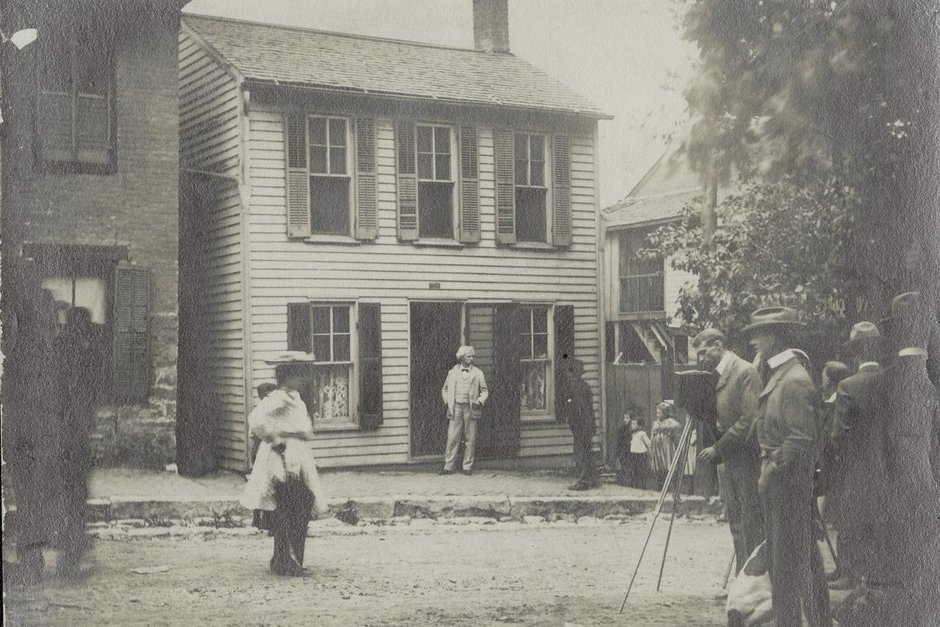
It was Hannibal that became the basis for the fictional St. Petersburg. Mark Twain barely concealed this source of inspiration. Real places from his childhood are easily recognizable in the novel. The limestone cave near the town became McDougal's Cave. The islands on the Mississippi suggested places for Tom and Huck's adventures. Even the house where Tom lives with Aunt Polly so closely resembled the Clemens family home that researchers used the description from the novel when restoring the writer's actual house in Hannibal.
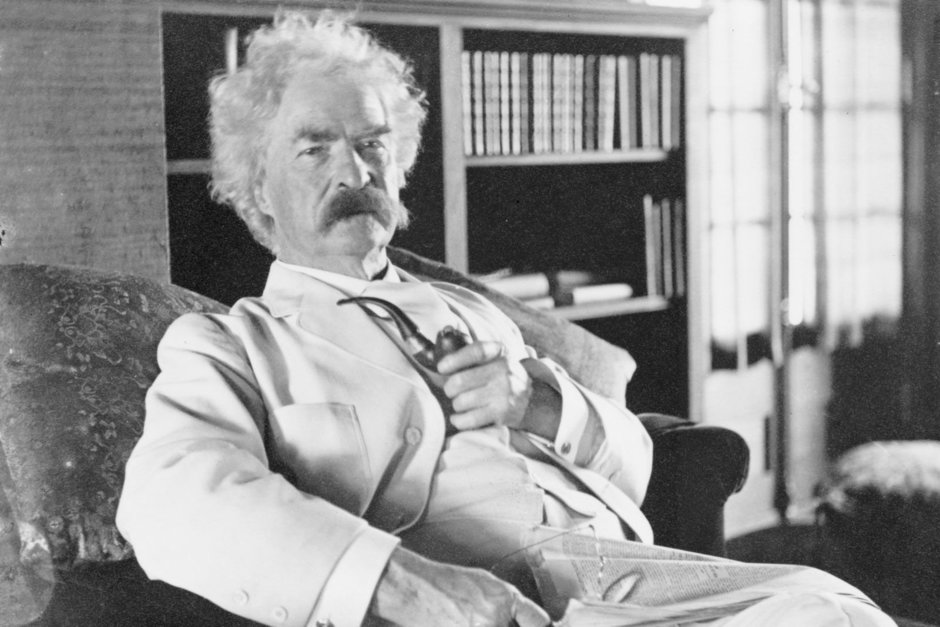
However, Twain transferred not only landscapes but also his own childhood into the book. The future writer grew up as a sickly child. His mother often forgave his pranks, and he constantly tested the boundaries of what was allowed. Years later, many of these memories found their way into his books, including “The Adventures of Tom Sawyer.”
Tom himself also turned out to be not one person but several. In the preface to the English-language edition of the novel, Twain indicated that most of the adventures in the book actually happened, and that the hero himself was not a portrait of a single boy but a combination of traits from several real people. The writer clarified that he took himself and his schoolmates John Briggs and Will Bowen as his basis.
In one scene, Tom skips school; in another, he hunts for treasure; in a third, he dreams of becoming a pirate. Such games indeed occupied the boys in Hannibal. Clemens and his friends would role-play as Robin Hood, pirates, and heroes of adventure novels that all of America was reading at the time. The children in the book run away to an island and declare themselves pirates. In reality, Clemens and his friends often explored islands on the Mississippi. The scene where Tom and Becky get lost in the cave is based on a real cave south of Hannibal that the future writer knew well from childhood.
At the same time, the world of the novel turned out to be noticeably brighter than the real Hannibal. In his childhood, Clemens often encountered death and poverty. He lost a sister and a brother, was left without a father early on, and witnessed violence and river accidents. In “Tom Sawyer," many of these disturbing impressions remained off-screen, although traces of them can be seen in the graveyard murder story and in the figure of Injun Joe.
Even the name of the protagonist has a very real history. In June 1863, Mark Twain met a local firefighter named Tom Sawyer in San Francisco. The man was already considered a celebrity after helping save 90 passengers during a shipwreck. The writer became friends with him. They often met during Twain's three-year stay in the city. Robert Graysmith, in his book “The Adventures of the Real Tom Sawyer," writes that the firefighter would tell Twain stories of his own escapades, and the writer would listen attentively and sometimes take notes. According to him, Clemens once warned:
“Someday I'll put you between the covers of a book.”
Researchers still debate how much this man influenced the character's image. Twain himself told different versions over the years. First, he spoke of several prototypes; then he claimed he invented the character entirely on his own. Most likely, both versions have merit. The writer could indeed have taken the name Tom Sawyer from his firefighter acquaintance. But the character himself he assembled from his own childhood, his friends, his memories of Hannibal, and dozens of observations he had accumulated over many years.
The dark side of boyish adventures
It seems that Tom Sawyer lives in a world where any nuisance can be turned into an adventure. He skips school, fights with other boys, secretly swims in the river, falls in love, runs away from home, and constantly tests Aunt Polly's patience. But the further the plot develops, the more noticeable it becomes: Mark Twain did not just write a cheerful book about teenage pranks. Behind the story of boyish games lies a tale of fear, violence, death, and social norms that children inevitably have to face sooner or later.
At the beginning of the novel, adults have almost no control over what is happening. Tom constantly escapes supervision and perceives life as an endless game. He tries on the roles of pirates, robbers, and heroes of his favorite books. Together with his friends, the boy creates his own world with its own laws. When Tom, Huck Finn, and Joe Harper run away to Jackson's Island and declare themselves pirates, they are essentially rejecting the adult world and its responsibilities. Mark Twain portrays childhood as a space of freedom where imagination is more important than rules.
Such a hero is directly connected to the tradition of the picaresque novel. Tom constantly breaks established norms, wriggles out of trouble, and turns punishments into victories. He acts not through force but through resourcefulness. Even in Sunday school, he trades gathered trinkets for prize tickets and receives a Bible, although he knows the Holy Scripture less than most students. Tom does not fight the system openly. He learns to use its rules to his advantage.
But one day, the game ends. One night in the graveyard, Tom and Huck witness the murder of Dr. Robinson. Injun Joe kills the doctor and frames Muff Potter, and the boys swear to remain silent, fearing for their own lives. After this scene, the tone of the novel changes noticeably. Anxiety and a constant anticipation of danger replace the harmless pranks. Injun Joe is the main source of this danger. He appears again and again, each time reminding the heroes that the adult world is structured differently from children's games. His character links several plot lines together: the murder, the treasure hunt, the attempted attack on Widow Douglas, and the finale in the cave. Thanks to him, the novel constantly balances between comedy and thriller. A funny scene can be immediately followed by a mortal threat, and an adventure can unexpectedly conceal the risk of death.
This is especially evident in the cave episode. Tom and Becky get lost in a labyrinth of underground passages, cannot find a way out for several days, and suffer from hunger and thirst. While searching for the way out, Tom unexpectedly spots Injun Joe among the tunnels. After the heroes are rescued, the townspeople seal the entrance with an iron door. Later, Tom realizes that Injun Joe was left inside. When people return to the cave, they find him dead near the sealed exit.
The novel barely mentions slavery, even though the action takes place in a society where slave labor played an important role. The book contains racial stereotypes of the era, and the image of Injun Joe later became a target of criticism due to its caricatured portrayal of Native Americans. The ideal world of childhood exists alongside social contradictions that the novel only partially reveals.
The “Tom Sawyer effect”
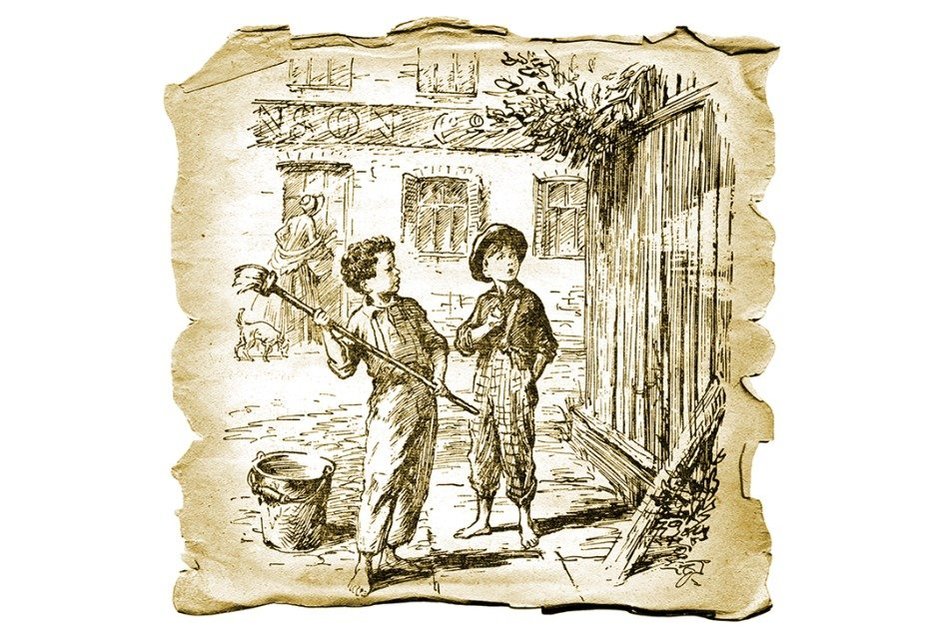
Perhaps no other episode in the book has become as famous as the fence-painting incident. Many people know it even if they have never read the novel. It all begins with a punishment: Aunt Polly makes Tom whitewash a long, tall fence. For the boy, this meant a lost Saturday and a huge amount of work. Tom quickly turns the situation to his advantage. When Ben Rogers passes by, he pretends that whitewashing the fence is a rare privilege:
“Whitewash? Why not? It's not every day a fellow gets to put a fence in order.”
As a result, Ben not only agrees to work in his place but also gives away his own belongings for the privilege. Soon, a line forms at the fence of boys wanting to repeat his success. By the end of the work, Tom has collected a whole collection of children's treasures, having done almost nothing himself. This is why the scene is often called the first lesson in marketing. Tom creates an artificial scarcity and convinces others that ordinary work has a special value. In business literature, this technique is even called the “Tom Sawyer effect.” Marketers use it to explain how expectations and the way information is presented affect the perceived value of a product or service.
But the famous fence is far from the novel's main legacy. No less important was the duo of Tom Sawyer and Huck Finn. This pair became one of the most famous in American literature. At first glance, the boys are similar. Both dislike discipline and constantly seek adventure. However, their characters are different. Tom builds his life according to the model of adventure books. He is a romantic, a dreamer, and the director of almost all their shared schemes. Huck acts differently. He is poorly educated, believes in superstitions, lives outside the usual social framework, but understands people well and assesses situations sensibly. If Tom invents the legend, Huck checks whether it can be brought to life.
Tom brings imagination to the boys' friendship, while Huck brings practical experience. The other boys admire Huck's freedom — he does not go to school and lives without constant adult supervision. At the same time, Huck often follows Tom because Tom knows how to turn ordinary life into an adventure.
Over time, it was Huck who came to the forefront in Twain's work. Immediately after the publication of “The Adventures of Tom Sawyer," the writer began work on a new book, which he first called “Huck Finn's Autobiography.” As a result, the novel “Adventures of Huckleberry Finn” was published in 1884–1885. The new book retained familiar characters but changed the scale of the discussion. While “Tom Sawyer” is built around childhood adventures, “Huckleberry Finn” addresses the problems of slavery and racism. Many critics consider this novel to be Mark Twain's masterwork. Ernest Hemingway even wrote in “Green Hills of Africa”:
“All modern American literature comes from one book by Mark Twain called 'Huckleberry Finn'.”
Tom Sawyer's long life
When Twain completed the manuscript of “The Adventures of Tom Sawyer," he was already considered a famous American writer. In November 1875, Twain submitted the manuscript to publisher Elisha Bliss, who sent it to an artist to prepare illustrations. However, American readers were not the first to see the novel. In June 1876, London publisher Chatto & Windus released the book in Great Britain without illustrations. Twain hoped this would strengthen his rights to the work in the British publishing space and hinder the work of pirate publishers.
The calculation was only partially successful. Illegal reprints appeared almost immediately in Canada and Germany. Canada became a particularly serious problem. In the 19th century, the international copyright system did not yet function in its modern form, so publishers often released other people's books without the authors' permission. Canadian companies printed Twain's works and sold them not only domestically but also in the United States. The writer later estimated his losses from just one Canadian pirated edition of “Tom Sawyer” at $10,000 — a huge sum at the time. This fight against pirates later forced him to travel specifically to Canada to register copyright for new books.
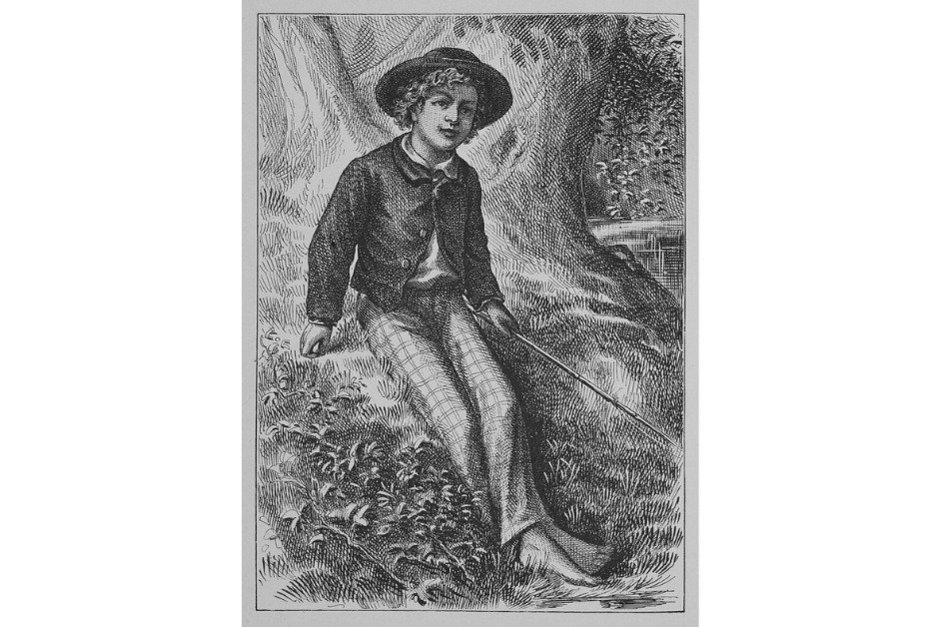
In December 1876, the American Publishing Company released the first illustrated American edition of the novel. The illustrations were created by True W. Williams, an artist considered the main illustrator of Mark Twain's works. He was the first to show readers what Tom Sawyer and Huckleberry Finn looked like. Many subsequent artists and filmmakers relied on the visual images he created. Williams did not always follow the text precisely, but his illustrations well conveyed the mood of the book and helped make the characters recognizable far beyond the literary pages.
As early as 1917, an American silent film adaptation directed by William Desmond Taylor was released. In 1930, a new American film appeared starring Jackie Coogan. In 1960, the BBC produced a multi-episode television version of the novel. Interest in the book did not disappear in the 21st century: in 2014, the film “Tom Sawyer & Huckleberry Finn” was released, combining the plots of Twain's two famous novels. Each era created its own Tom, but the main thing remained unchanged — a boy who seeks adventure and constantly tests the boundaries of what is allowed.
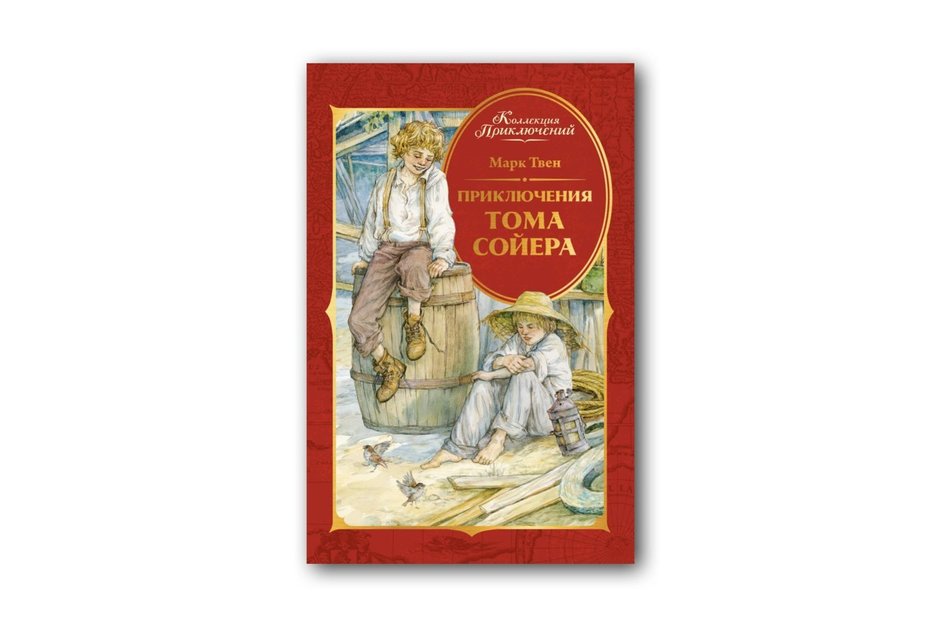
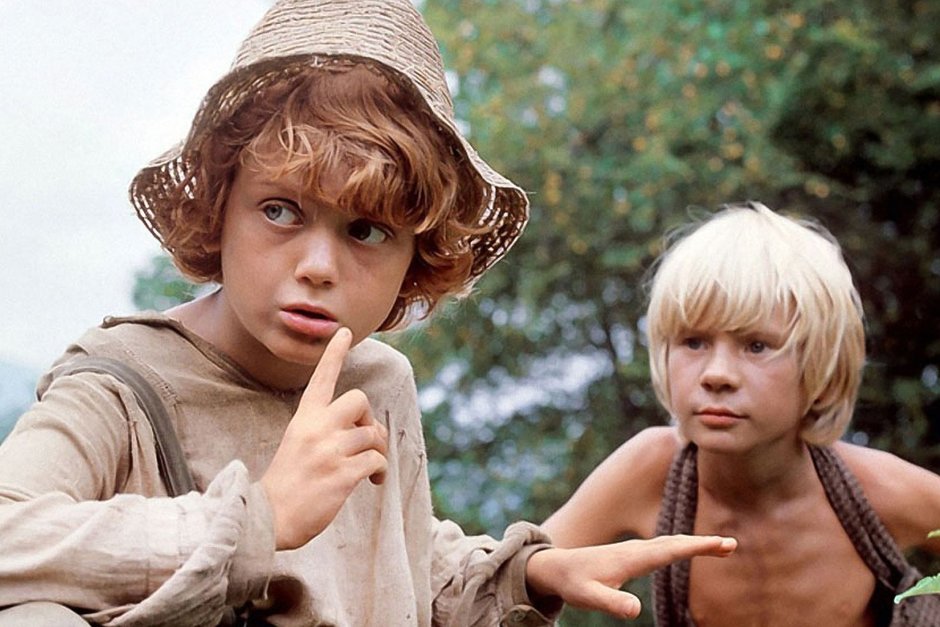
The novel occupied a special place in the USSR. It became part of compulsory children's reading and maintained this position for many decades. In 1936, the Soviet film “Tom Sawyer” appeared, and in 1981, audiences saw the multi-part film “The Adventures of Tom Sawyer and Huckleberry Finn” starring Fyodor Stukov. The novel's popularity was so high that in 1983, Yuri Andropov, responding to a letter from American schoolgirl Samantha Smith, compared her to Becky Thatcher and noted the book's fame in the Soviet Union.
Over time, the literary world of the novel also turned into a tourist space. The center of this world became the town of Hannibal. The Clemens family home was almost demolished after the writer's death, but in 1911 it was purchased, restored, and turned into a museum. Since 1912, visitors from all over the world have come here. The complex has gradually grown into several museum buildings associated with the novel's characters. Nearby appeared Tom Sawyer's famous white fence, Becky Thatcher's house, and Huck Finn's house. Each year, Hannibal receives about half a million tourists.
No less famous is the cave that served as the prototype for McDougal's Cave from the novel. Today it is called the “Mark Twain Cave.” As a child, Samuel Clemens explored its confusing corridors. It was here that Tom and Becky got lost and encountered Injun Joe. Twain wrote:
“McDougal's cave was a tangled labyrinth of winding, intersecting underground corridors that seemed endless.”
After the novel's publication, the flow of tourists was so great that by 1886, the owners began conducting regular tours. In 2019, researchers discovered an authentic inscription “Clemens” on the cave wall, which Twain had left there in his youth.
Hannibal continues to build an entire cultural industry around the novel. Since 1956, the National Tom Sawyer Days have been held here. Participants compete in frog jumping contests, paint fences, and choose the best Tom and Becky look-alikes.
Ekaterina Petrova — literary critic for the online newspaper Realnoe Vremya, host of the Telegram channel «Булочки с маком».